St. Nicholas Church in Kiliia: An Orthodox Church in Ukraine
Site at a Glance
- Popularity
- Very Low
- Country
- Ukraine
- Primary era
- Early Modern
- Eras represented
- Medieval, Early Modern, Modern
- Civilizations
- Ottoman, Principality of Moldavia
- Site type
- Religious
- Remains
- Church
On this page11 sections
History
St. Nicholas Church in Kiliia is an Orthodox church in Ukraine. Its earliest recorded mention dates to 1070, but its construction date remains disputed. The church’s building history, including repeated rebuilding, is placed between 1485 and the late nineteenth century. One tradition, recorded in nineteenth-century writing, says Stephen the Great, ruler of Moldavia, ordered its foundation in 1485 to mark Kiliia’s liberation from Turkish rule. Another dating places the church in 1476, during Turkish occupation, on the site of an earlier Church of St John.
An inscription records that the foundation was laid on 10 May 1647, and the church was completed and consecrated on 10 May 1648. Greek founders are associated with its early history, while Vasile Lupu, a seventeenth-century ruler of Moldavia, is also identified as a founder.
Later use and rebuilding
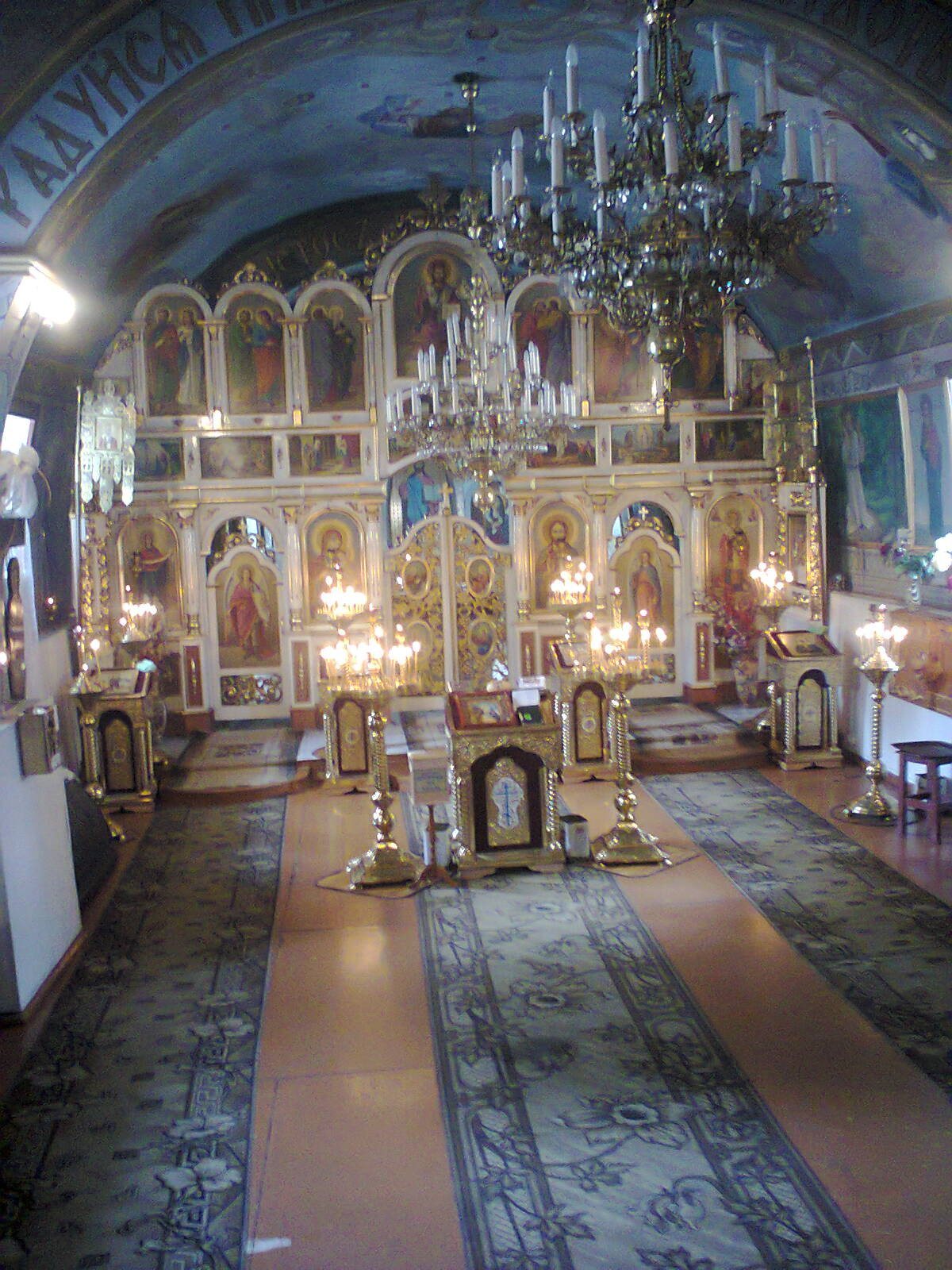
The church served as a monastery for a time and was rebuilt repeatedly. Its iconostasis, the screen separating the sanctuary from the main worship space, was replaced in 1809.
Restoration and present status
During the Soviet period, the building was used to store coal and as a dump for refuse or vegetables. Rehabilitation began in the 1970s, and restoration work took place in the early 1990s; worship resumed in 1992. Façade renovation began in 2019. The church is active and affiliated with the Ukrainian Orthodox Church. It is designated a monument of architecture of national importance.
Remains
The lowered church and its interior
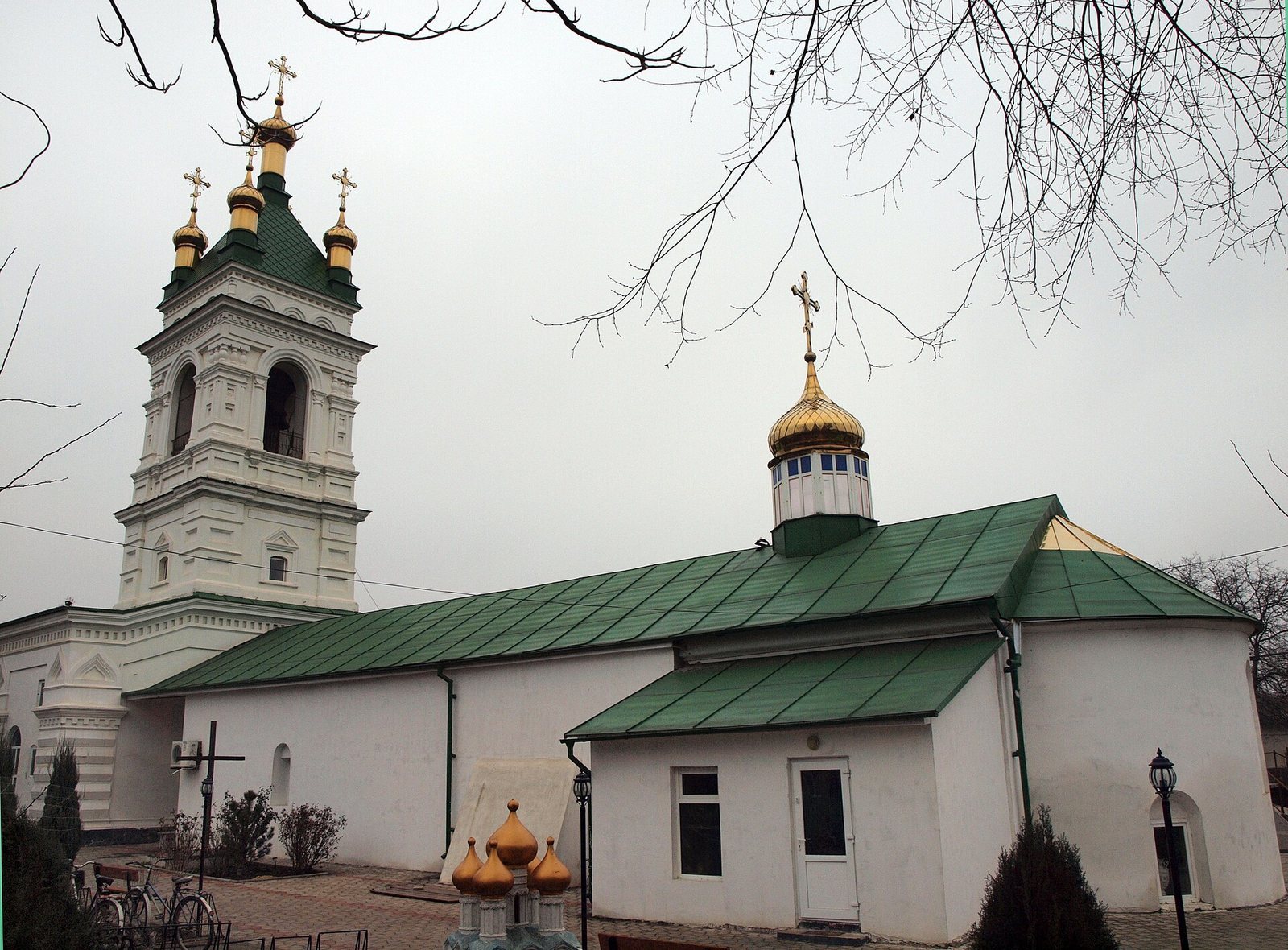
The church is a rare Ukrainian example of a partly underground building, with its interior 2.1 metres below ground level. The main structure has a rectangular plan ending in a semicircular apse, a rounded sanctuary end. Its walls are built of dressed limestone, while thin, flat bricks form the vaults and crosswise arches. The central hall has a barrel vault, a ceiling shaped like a half-cylinder, carried on those arches; a conch, or half-dome, covers the apse. One projecting support, or buttress, strengthens the south wall, and three support the north wall. A proposed explanation for the lowered construction links it to Turkish restrictions limiting the height of Christian churches to 2.5 metres.
Entrance and vestibule
A staircase descends to the church, and an earlier staircase had more steps than the present one. The rectangular vestibule connects to the main building by twelve steps and has a wooden ceiling supported by beams. The former entrance opened from the right into the vestibule. Men proceeded to the right, while women and children went left to a separate room raised one sazhen, an old unit of length, above ground level. A gallery and a separate entrance for priests were added later. Above the southern entrance, an inscription marks the foundation of the church.
Bell tower
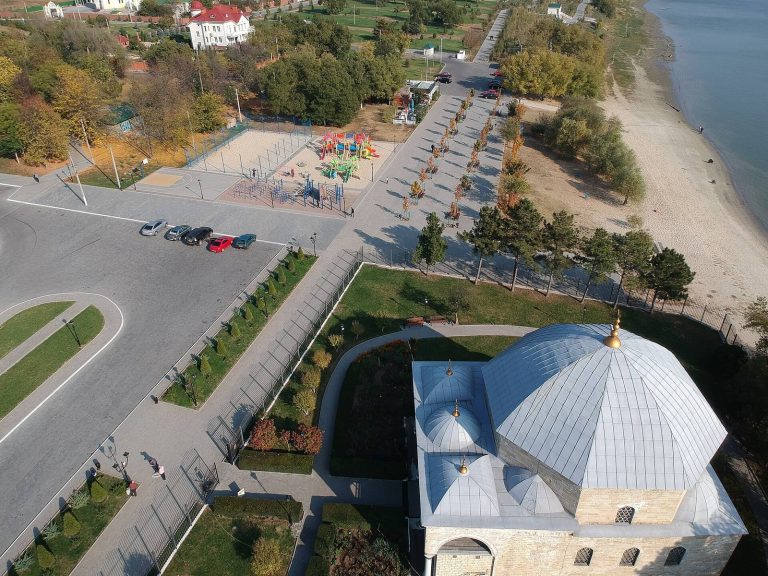
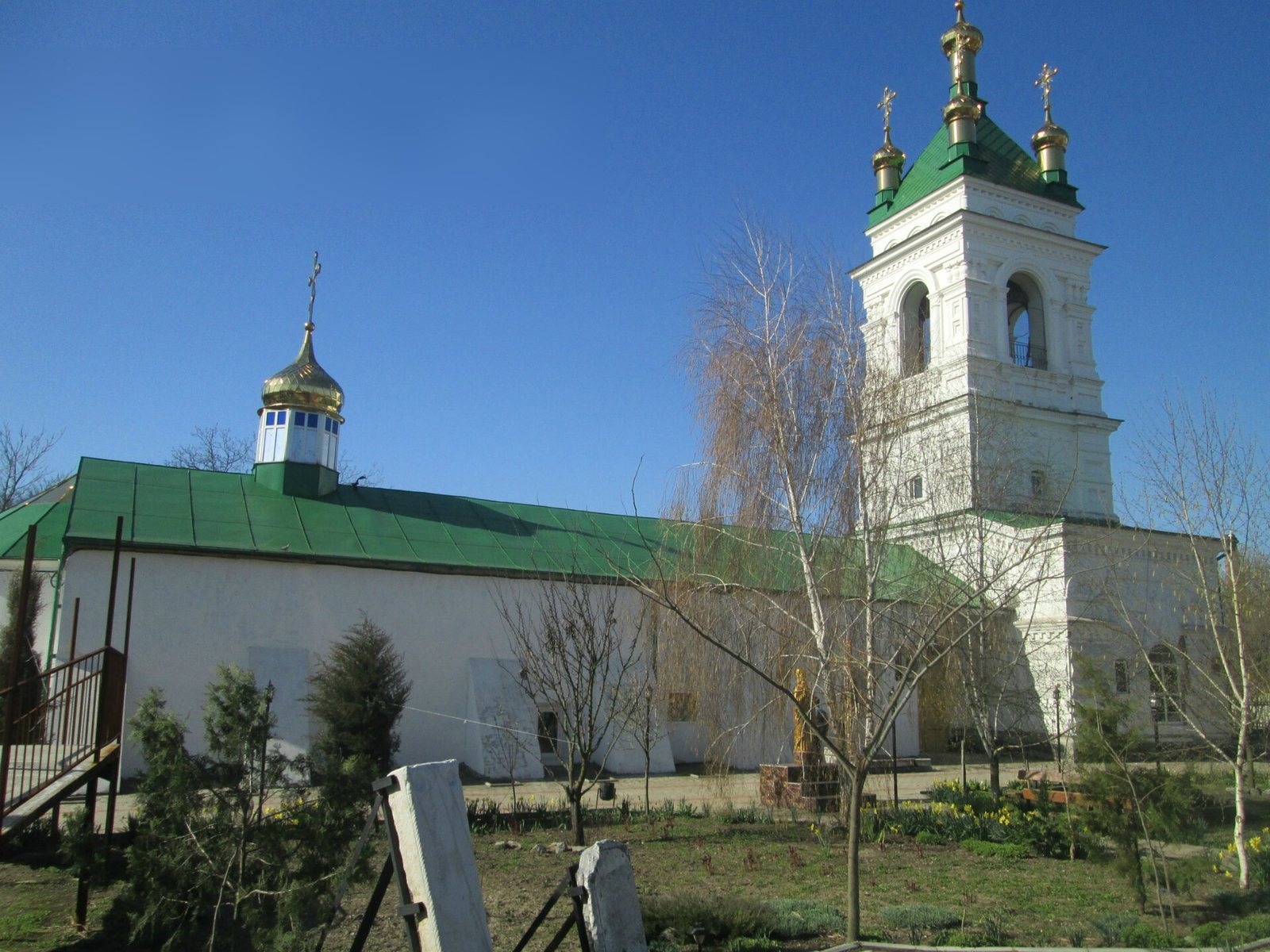
The plastered bell tower is built in three tiers of brick. Its lower tier is rectangular, while the two upper tiers are square and rise to a tent-shaped roof crowned by a dome. Smaller domes sit at the roof’s corners. The façade decoration reflects seventeenth-century Russian architectural styles. A short passage with a flat, beam-supported ceiling connects the tower to the vestibule.
Associated buildings and religious objects
Other buildings
The church complex includes a refectory, a Sunday school, and a baptistery. A dome is also identified among the features associated with the church.
Religious furnishings and texts
A surviving board from an earlier iconostasis names its commissioner as a servant of God and the son of Io Pritvan. The church’s religious objects include a Gospel in a Slavic language made by Matei Basarab, a seventeenth-century prince of Wallachia.
Churchyard memorials
A churchyard tombstone dated 1653 belongs to an Armenian priest of Kiliia. A monument to St Nicholas commemorates the church’s 350th anniversary.