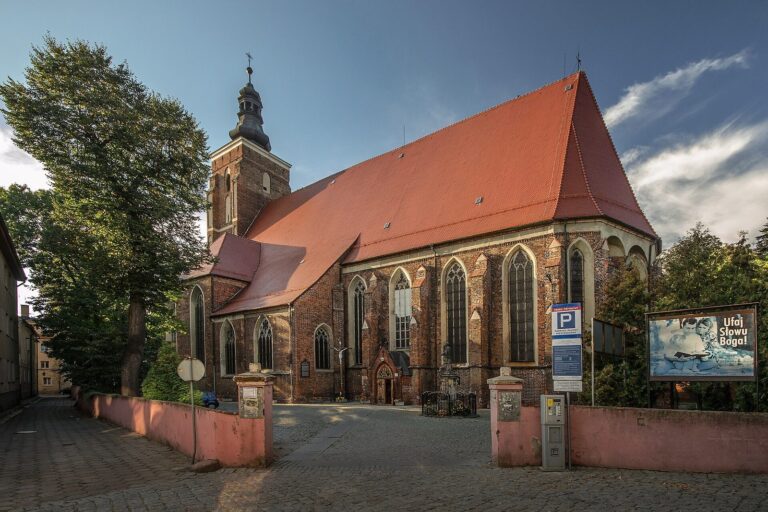
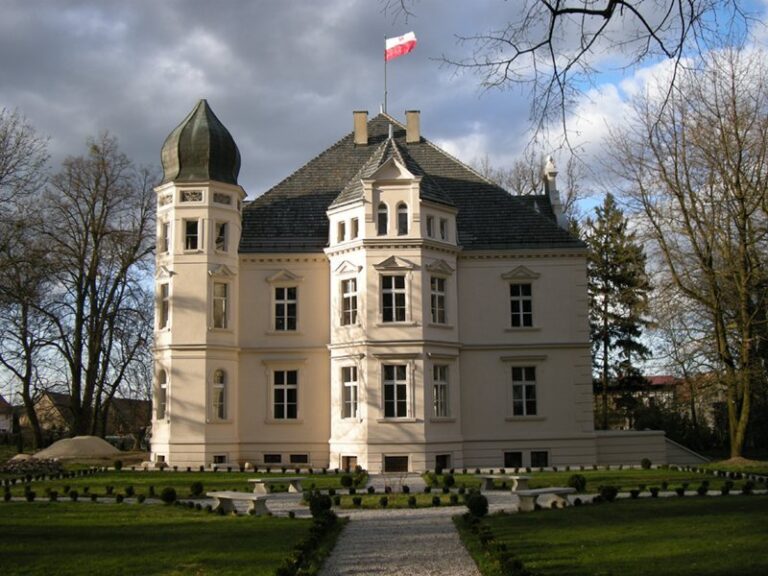
Our Lady of Częstochowa Church in Krasowice: A Former Protestant Church
Site at a Glance
- Popularity
- Very Low
- Country
- Poland
- Primary era
- Early Modern
- Eras represented
- Early Modern, Modern
- Civilizations
- German, Habsburg, Holy Roman Empire, Kingdom of Bohemia, Kingdom of Prussia
- Site type
- Religious
- Remains
- Church
On this page7 sections
History
Protestant origins
Our Lady of Częstochowa Church in Krasowice is a timber-and-brick church in Poland, probably built in 1620 as a Protestant place of worship. Protestantism, the Christian tradition that emerged from the Reformation, was then dominant in Krasowice and the surrounding area.
Repairs and Catholic use
The church was rebuilt or renovated in 1852 and repaired again in 1911. It now serves as a Roman Catholic branch church, a church serving a parish rather than forming a separate parish, and is dedicated to Our Lady of Częstochowa. This Marian title is associated with the venerated icon at the Jasna Góra monastery in Częstochowa. The church belongs to the Sacred Heart of Jesus Parish in Przeczów, within the Namysłów West deanery, a grouping of parishes, and the Archdiocese of Wrocław. Its liturgical feast falls on 26 August. The church entered the Opole Voivodeship heritage register on 26 May 1964.
Remains
Layout and construction
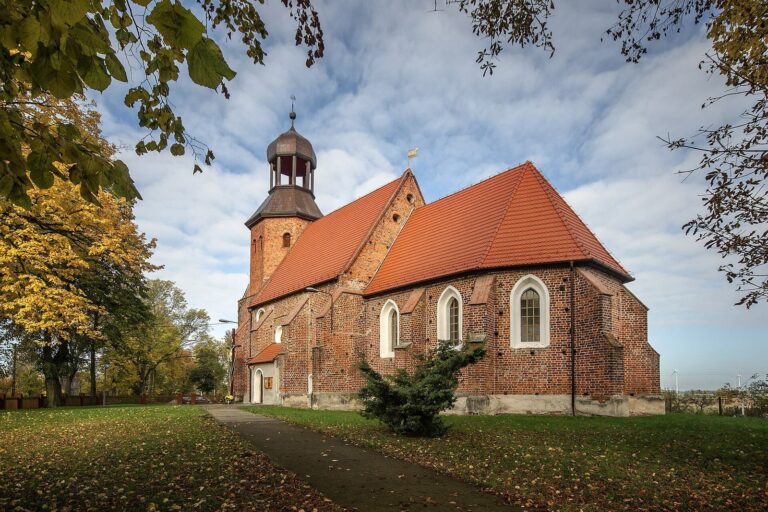
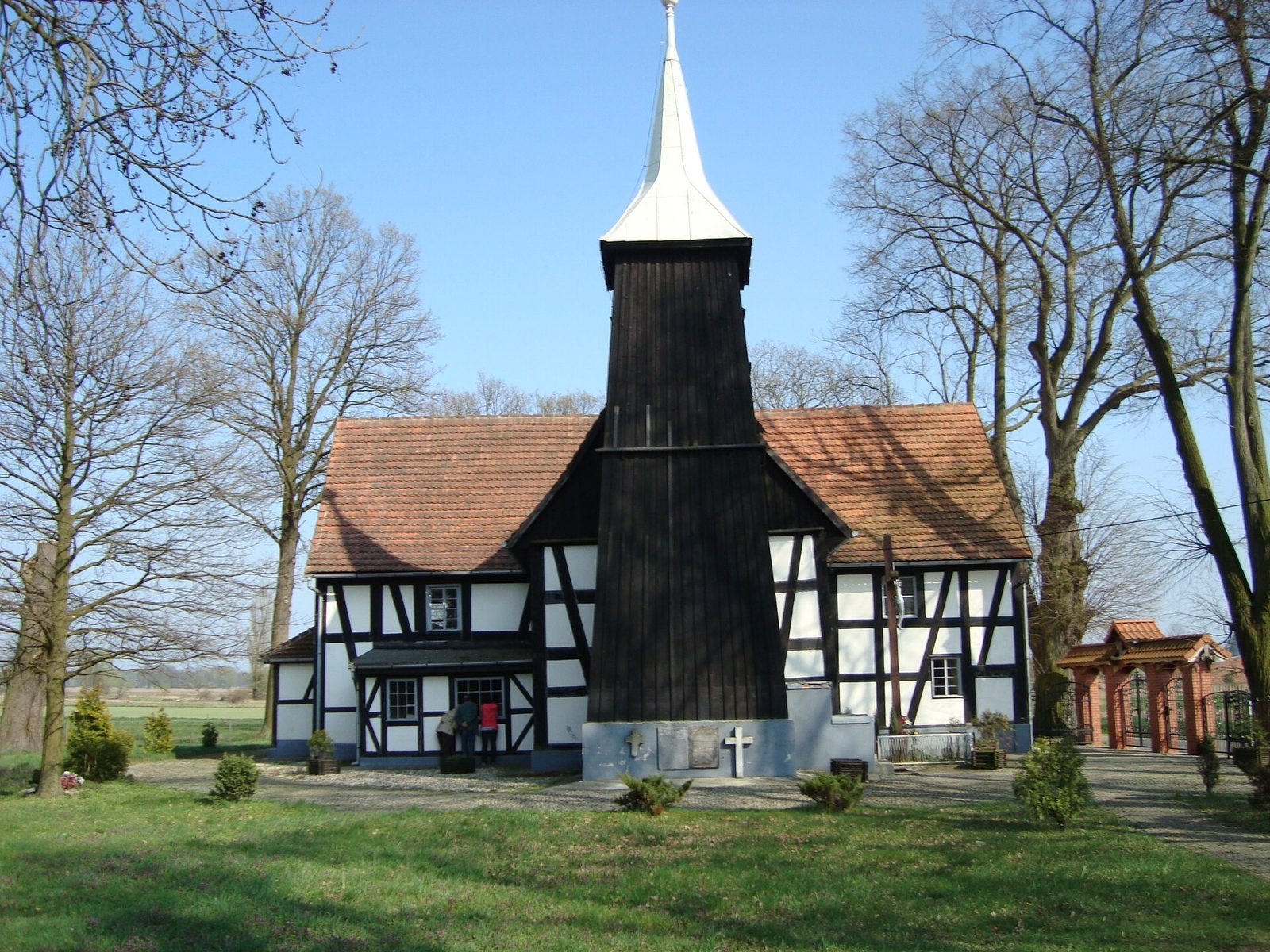
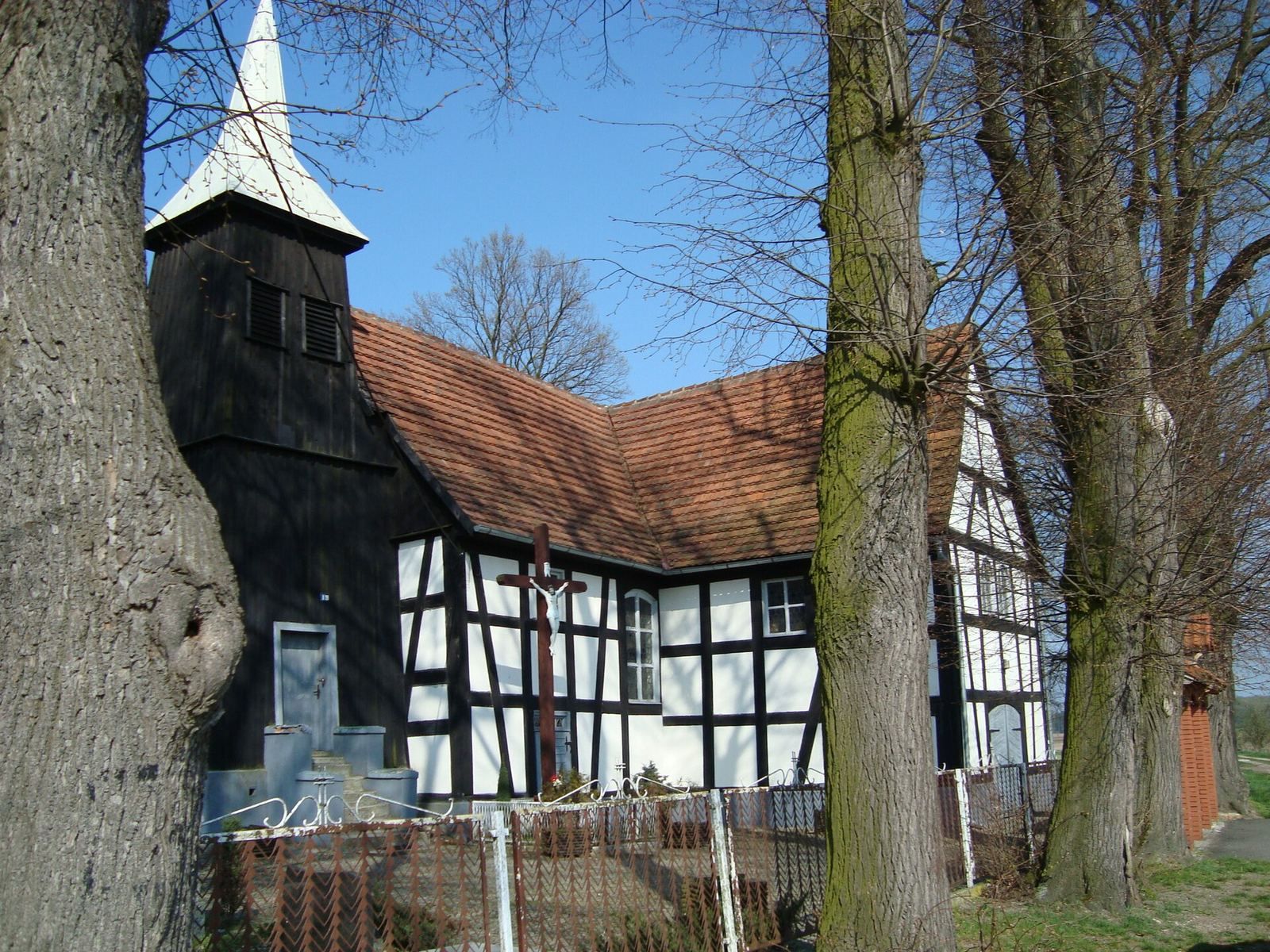
The east-oriented church has a cruciform plan and a single nave, and stands within a cemetery. Its half-timbered construction combines a timber framework with brick infill. The chancel, the area around the altar, ends in three sides. A gabled roof is covered with beaver-tail tiles, rounded overlapping roof tiles. Two annexes adjoin the sides of the chancel, each with a gallery on its upper floor.
Tower and bell
The square tower is supported by upright posts and covered with boarding. It narrows toward the top and ends in a pyramidal spire clad in sheet metal. A weather vane at its peak bears the date 1911. The tower also contains a bell cast in 1657, inscribed Sebastian Gotz cast me.
Interior and furnishings
A spacious gallery with railings formed by small upright supports occupies the upper level of the transept, the crosswise part of the church. The interior has a flat ceiling. On the north side, a sacristy, a room for vestments and service items, has a patron’s gallery above it, also fitted with a baluster railing. The Baroque altar, from the first half of the 18th century, has an image of Our Lady of Częstochowa at its center. Baroque is a European artistic style prominent in the 17th and 18th centuries. A pulpit of the same period stands where the transept meets the chancel. The organ and pews date to the 18th century.