Vigevano Cathedral: The Seat of the Diocese of Vigevano
Site at a Glance
- Popularity
- High
- Country
- Italy
- Primary era
- Early Modern
- Eras represented
- Medieval, Early Modern, Modern
- Civilizations
- Austrian Empire, Duchy of Milan, Habsburg, Holy Roman Empire, Spanish
- Site type
- Religious
- Remains
- Cathedral
On this page19 sections
History
Before the Present Cathedral
A church stood on the site before 1000. A Basilica of Saint Ambrose at Vigevano appears in records from 963 and 967, and the church was built on foundations described as older still.
Foundation and Construction
In 1529, Francesco II Sforza, Duke of Milan, recovered the duchy from the Habsburg emperor Charles V and obtained Pope Clement VII’s agreement to establish a bishop’s seat at Vigevano. The pope proclaimed the city an episcopal seat in 1530, and the new cathedral was dedicated to Saint Ambrose, a fourth-century bishop of Milan and influential Christian theologian.
Francesco II commissioned the present cathedral around 1530. Construction began in 1532 to a design by Antonio da Lonate, replacing a church dating to the second half of the fourteenth century. Francesco died soon after work started, but donations from residents, the municipality, and successive bishops sustained the project. The building reached roof level in 1553. Under Bishop Giorgio Odescalchi, it was completed in a plain, unfinished state in 1606, consecrated on 24 April 1612, and finished further into the late seventeenth century.
Caramuel’s Redesign
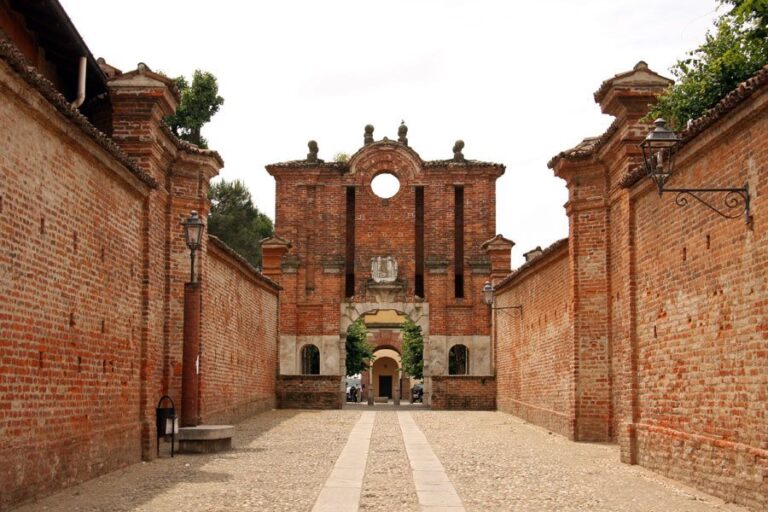
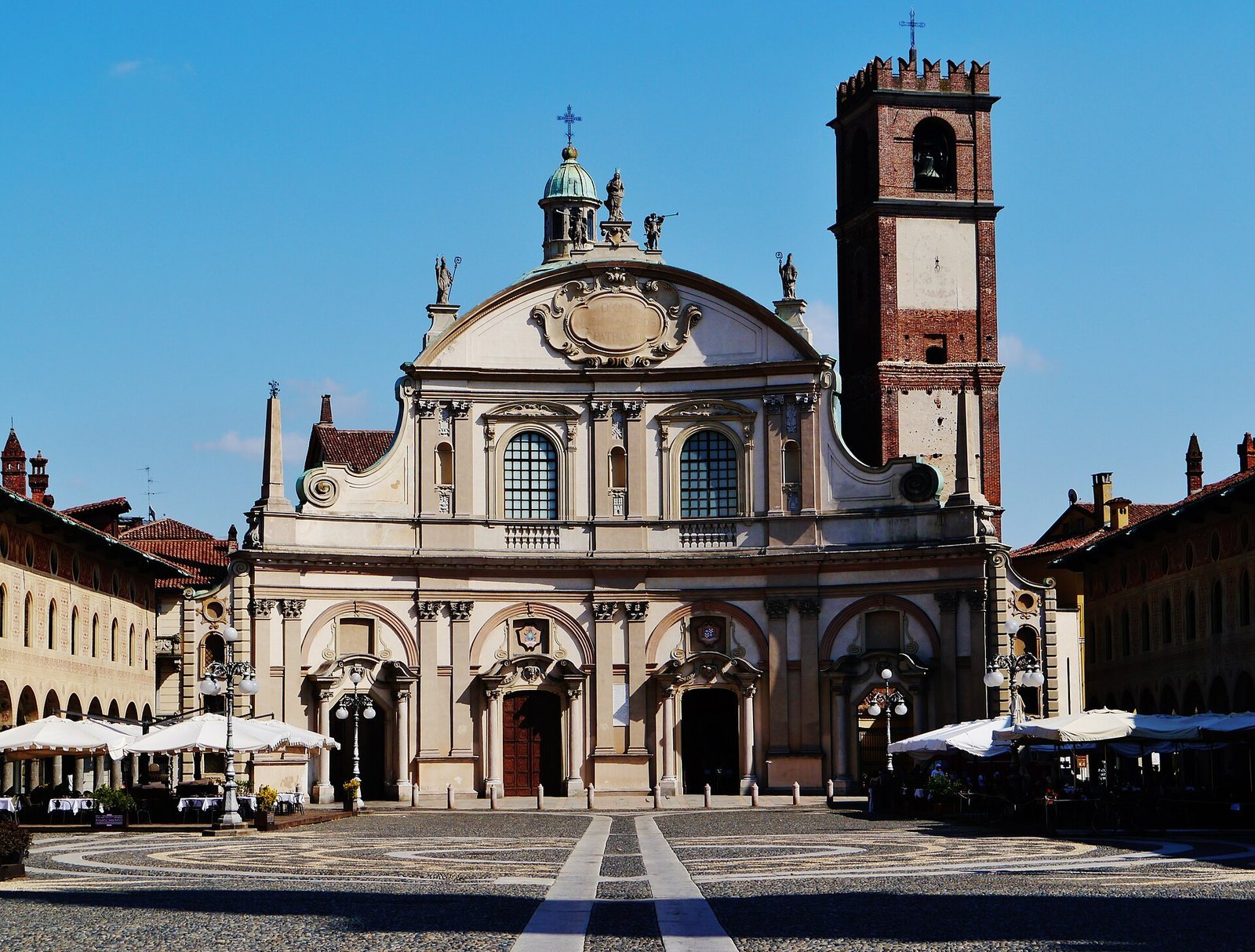
Juan Caramuel y Lobkowitz, bishop of Vigevano from 1673 to 1682, redesigned the west front. Work began in 1673 and was completed around 1680. He also arranged for the original ramp to the castle to be removed and the portico beneath the Bramante Tower to be completed. Together, these changes shifted Piazza Ducale from an entrance representing civic authority to a ceremonial forecourt for the cathedral and ecclesiastical authority.
Later Use and Restoration
Vigevano Cathedral remains a Roman Catholic church and the seat of the Diocese of Vigevano, following the Roman rite, the principal liturgical tradition of the Latin Catholic Church. Francesco II Sforza’s 1534 donation to the new diocese began the cathedral treasury. The church’s first organ was built by Gian Giacomo Antegnati in 1554, and Antonio Cagnoni directed its music from 1852 to 1879. Nineteenth-century restoration work altered and decorated the interior, including construction of a new high altar.
Remains
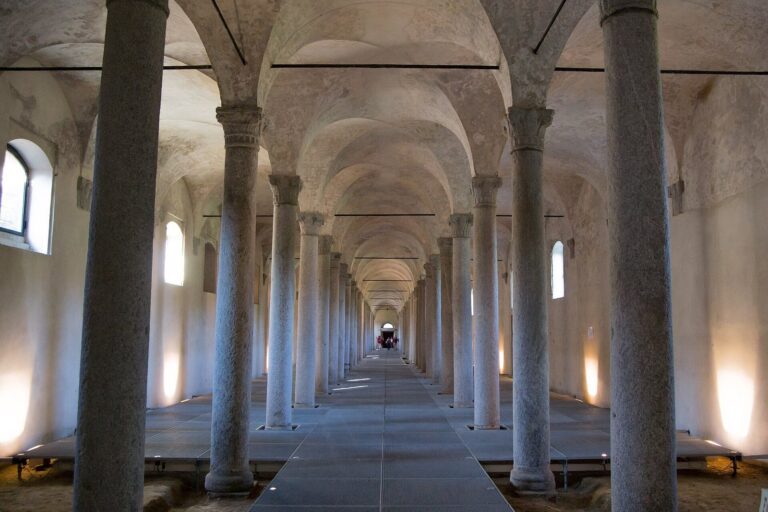
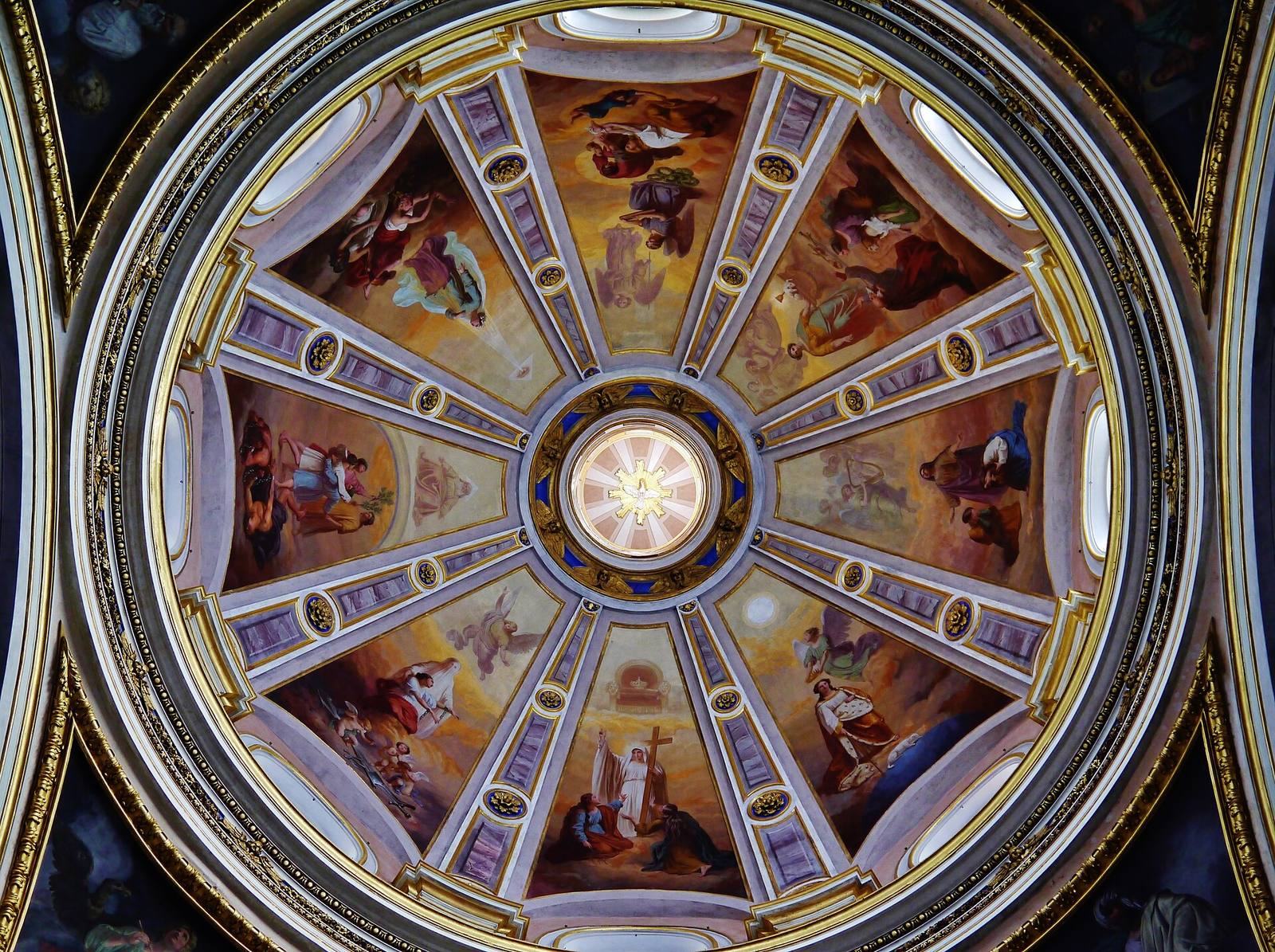
Set in Piazza Ducale, the cathedral is a Mannerist building with a monumental Baroque west facade. Its interior follows a Latin-cross plan, with a long central axis crossed by a shorter arm, and has a central nave flanked by two side aisles. The building incorporates elements surviving from earlier churches on the site.
West Facade
The concave west facade was shaped in relation to the differing axes of the cathedral and Piazza Ducale, making the church appear aligned with the square. This Baroque front contrasts with the building’s Mannerist character.
Tower, Dome, and Sacristy
The bell tower is based on a fourteenth-century tower, probably once used as the civic tower. It was raised in 1450 and again in 1818, when its present bell chamber was built; the chamber is crowned by merlons, the raised solid sections of a battlement. The dome received a copper covering in 1716, and the chapter sacristy was completed in 1753.
Earlier Church Fabric
The apse of the predecessor church was retained when the present cathedral was built. Fragments of decorative Gothic-Lombard arches from the earlier basilica’s cornice also survive.
Interior Decoration and Artworks
Nave and Main Altar
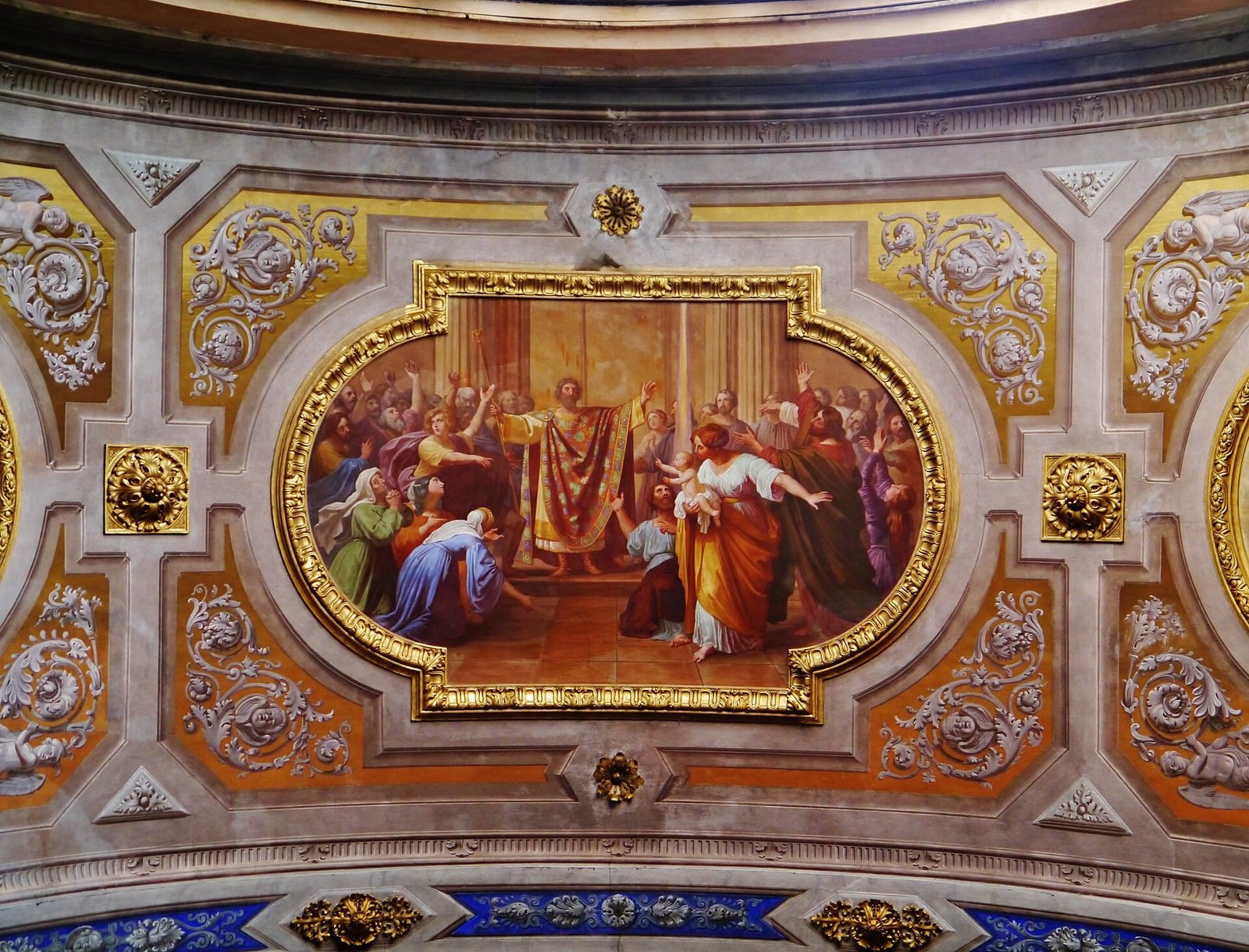
Artists Francesco Gonin, Mauro Conconi, Vitale Sala, Cesare Ferrari, and local painter Giovan Battista Garberini contributed to the decoration of the three naves. Gonin’s vault frescoes use light colors and gilding to depict episodes from the life of Saint Ambrose. Alessandro Sanquirico made the high altar in 1828–30. The presbytery, the area around the main altar, also contains a pipe organ built in 1782 by the Serassi workshop of Bergamo, positioned in the choir on the right.
Biffignandi Polyptych
The second chapel on the left is dedicated to Saints James and Christopher. Its seventeenth-century altar includes the Biffignandi Polyptych, a multi-panel altarpiece by Bernardo Ferrari. Six panels show the Madonna, or Virgin Mary, and Child with angels, the Deposition, and Saints Dominic, Francis, James the Greater, and John. A lower section depicts the Doctors of the Church, saints recognized for contributions to Christian teaching. The work is enclosed in a frame, and the Biffignandi family arms above it indicate the family’s patronage of the chapel, which was rebuilt in the nineteenth century.
Narrative Predella
Below the polyptych is a predella, the lower section of an altarpiece, whose original provenance is uncertain. Its two side paintings show prophets holding scrolls. The central panel, divided by gold bands, depicts Joseph being lowered into a cistern, Jonah thrown into the water and swallowed by a whale, and Moses with the bronze serpent. A local painter made the work in the first half of the sixteenth century; Bernardo Ferrari is a possible attribution. Its narrative treatment and coloring reflect Gaudenzian influence.
Chapel of Saint Charles
The Chapel of Saint Charles, also known as the Chapel of the Blessed Sacrament, contains the restored Gusberti Triptych and a painting of Saint Thomas of Canterbury between Saints Helen and Agatha.
Renaissance Panels
A panel dated 1502 shows the Madonna and Child with Saint Bernardino, Saint Clare, and Blessed Cristoforo Maccasoli. It came from the convent church of Madonna delle Grazie near Paragella, destroyed in 1805, and is attributed to the Piedmontese Renaissance painter Macrino d’Alba. Another panel, signed and dated 1531 by Cesare Magni, a follower of Leonardo, was donated by Francesco II Sforza in 1534. It depicts Christ among flying angels, with the Virgin and Saint Ambrose presenting Bishop Galeazzo Pietra on the left, and Mary Magdalene, Saint John, and Saint Jerome on the right. A blue background recedes behind landscapes, figures, and horsemen. A sixteenth-century Lombard painting attributed to Bernardino Gatti, known as Soiaro, shows the Redeemer on the Globe with the Madonna and Saint John the Baptist.
Monument to Bishop Galeazzo Pietra
The funerary monument of Galeazzo Pietra, Vigevano’s first bishop from 1530 to 1552, was made by a workshop in Pavia and executed by Bernardo Romano, probably a close relative of Cristoforo Romano. Formerly in the presbytery, it was moved during the 1828–30 restoration. A stone was added between the sarcophagus and its inscription.
Treasury
Books and Liturgical Objects
The cathedral treasury is displayed in a museum inside the building and contains more than 100 precious objects. Its books include a Roman missal, a Gospel book, and an Epistle book illuminated by Giovan Giacomo Decio, as well as a Roman missal illuminated by Guglielmo Girardi of Ferrara in 1455–60. Other holdings include a bishop’s crozier, a staff representing episcopal office, made of narwhal ivory, and a gilded-silver Lombard object called La Pace (the Peace). The collection also includes coral objects, chalices, goblets, monstrances used to display the consecrated Eucharistic host, and reliquaries from different periods and in varied styles.
Textiles
The textile collection includes seven Flemish tapestries woven in Brussels in 1520 in the Late Gothic International style, and five made in Oudenaarde in the early seventeenth century. Two sixteenth-century banners belonged to the confraternities of Santa Maria del Popolo and the Annunciation, lay religious associations. An embroidered gold textile was used by the pope at Napoleon Bonaparte’s coronation as King of Italy at Milan Cathedral in 1805.