Villa of Dionysos (Ancient Dion): A Roman Private Residence
Site at a Glance
- Popularity
- Very Low
- Country
- Greece
- Primary era
- Classical
- Eras represented
- Classical
- Civilizations
- Roman
- Site type
- Domestic
- Remains
- Elite Residence
On this page9 sections
History
The Villa of Dionysos was an affluent private residence in the ancient Macedonian city of Dion, Greece, built around AD 200 during the Roman period. It was among the city’s largest and most impressive private houses.
A fire destroyed the villa. An earthquake may have triggered the blaze.
Remains
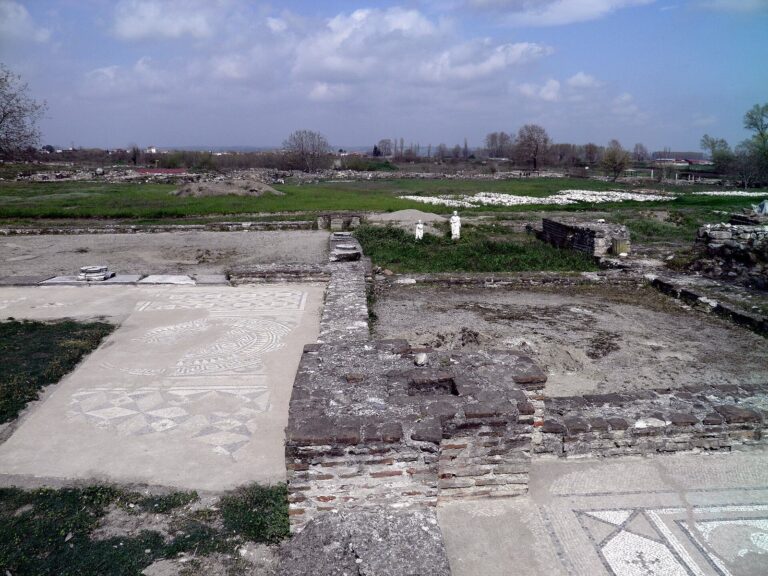
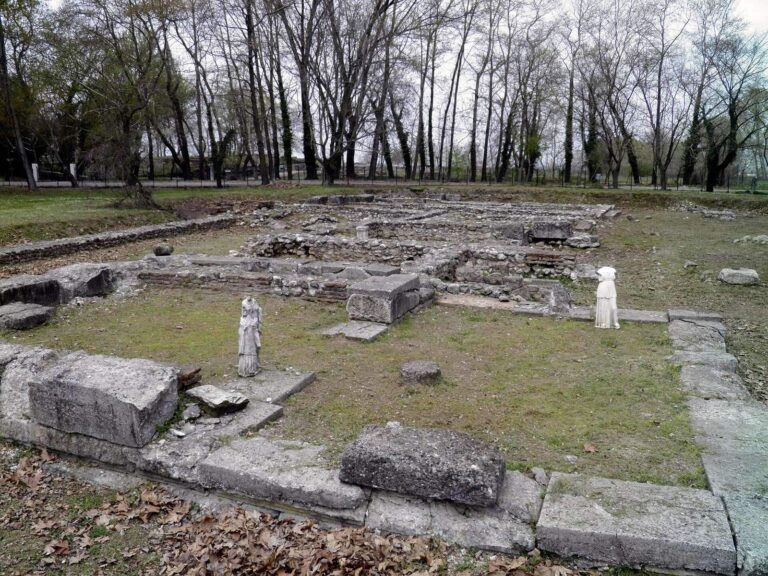
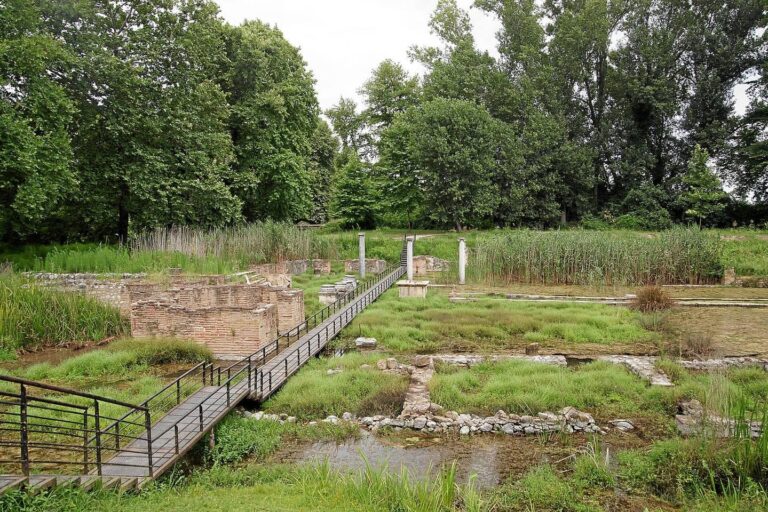
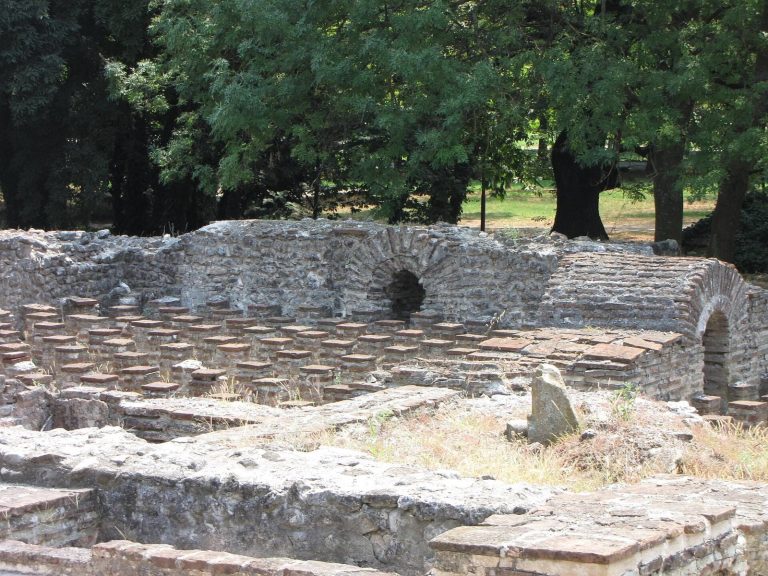
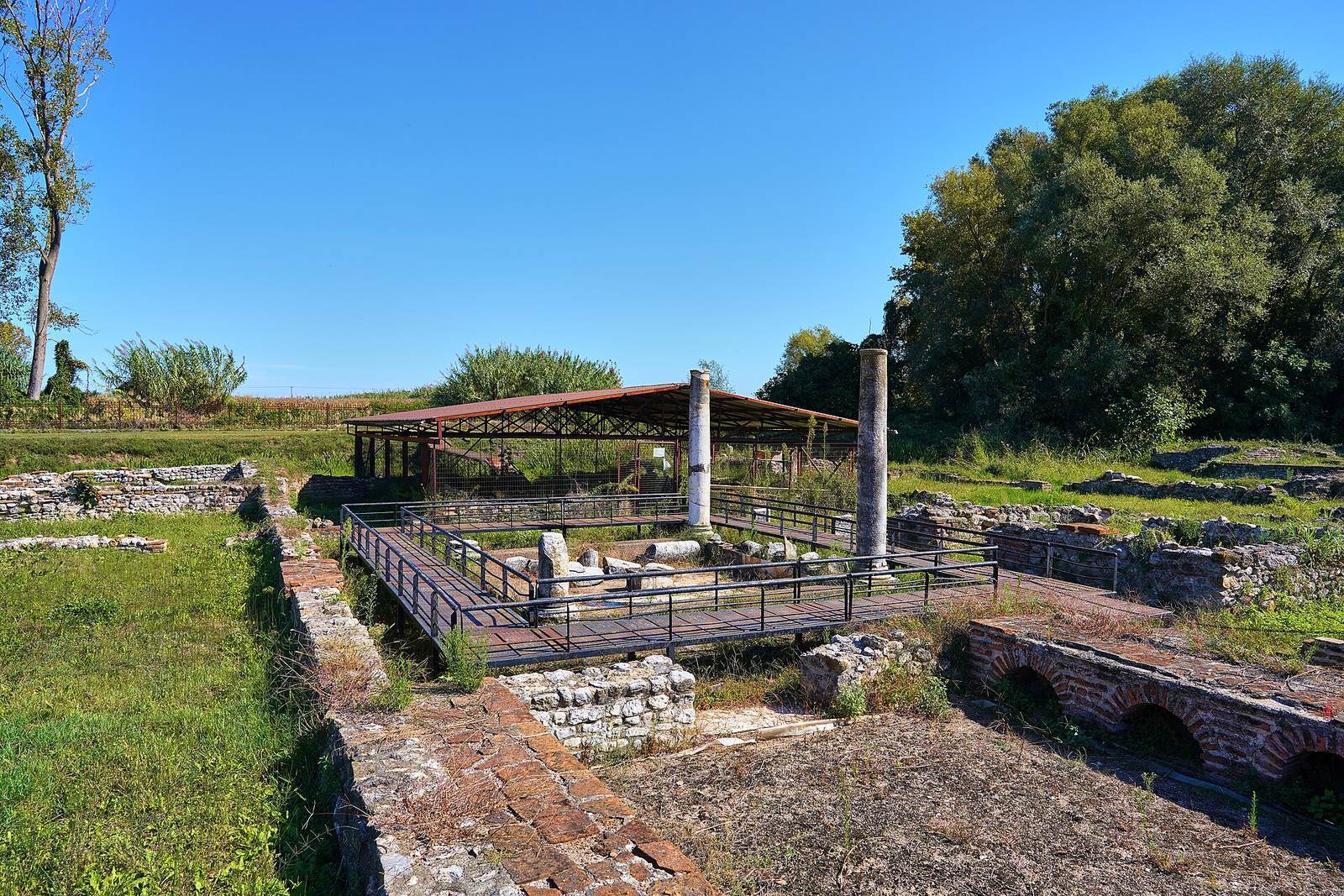
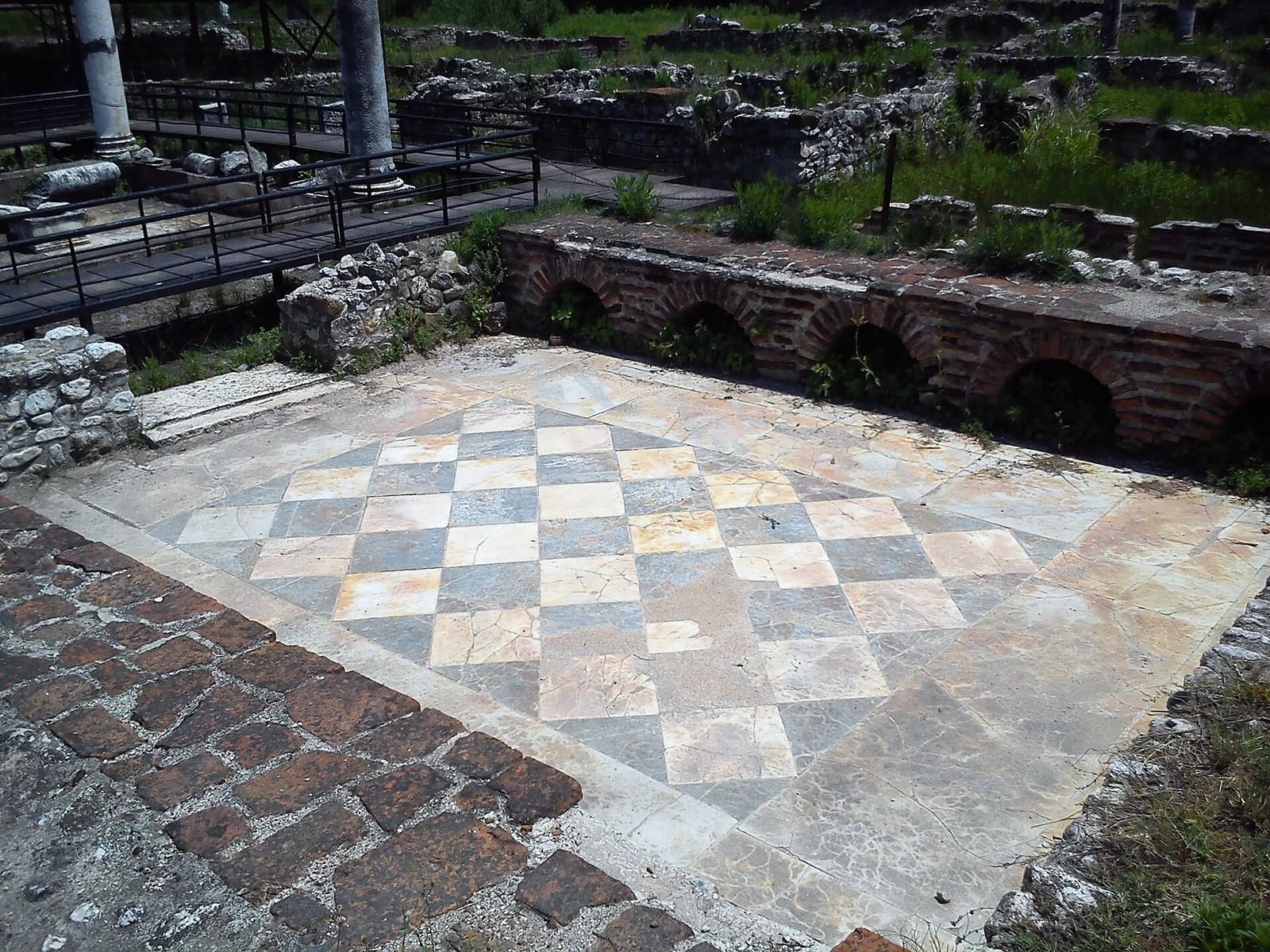
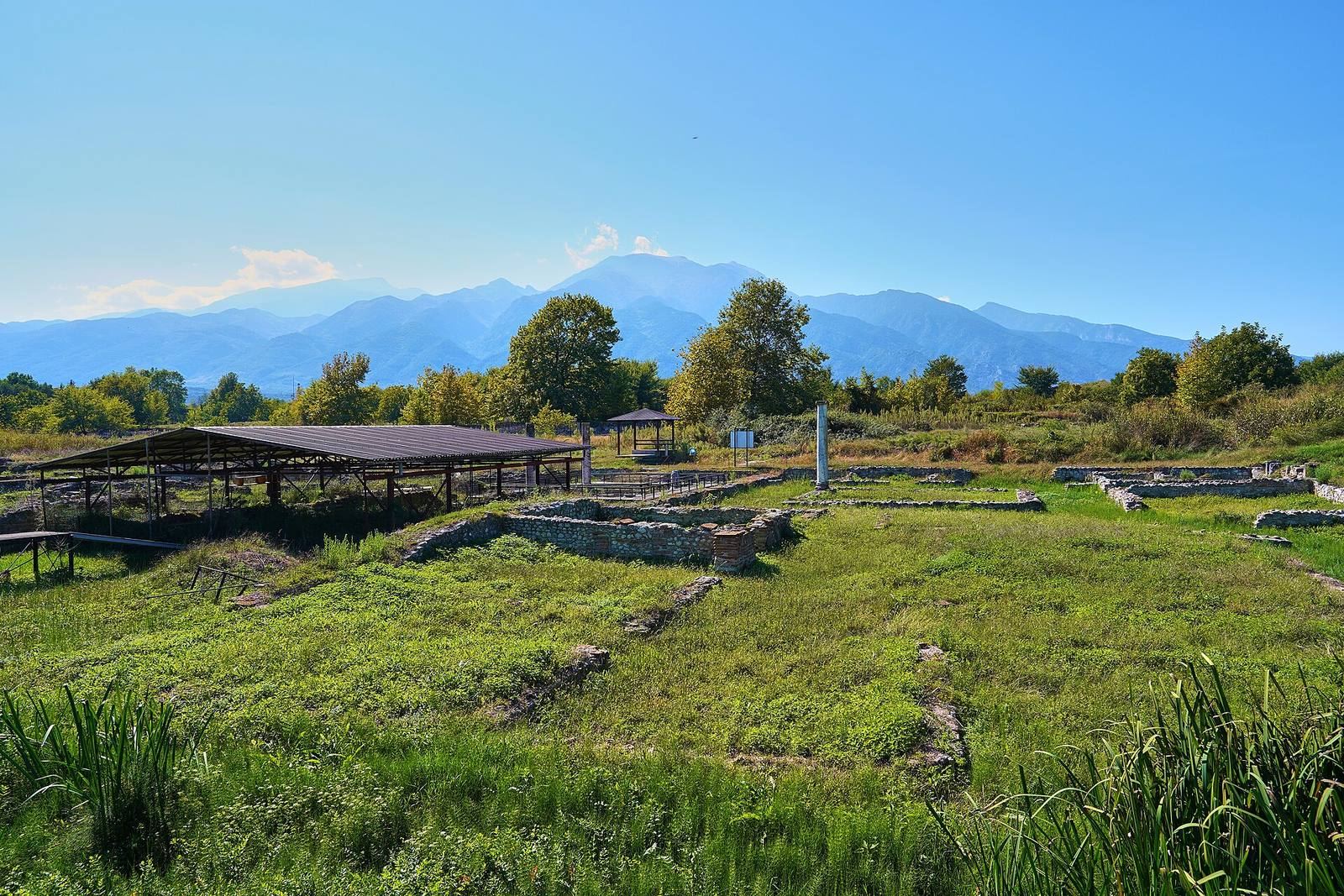
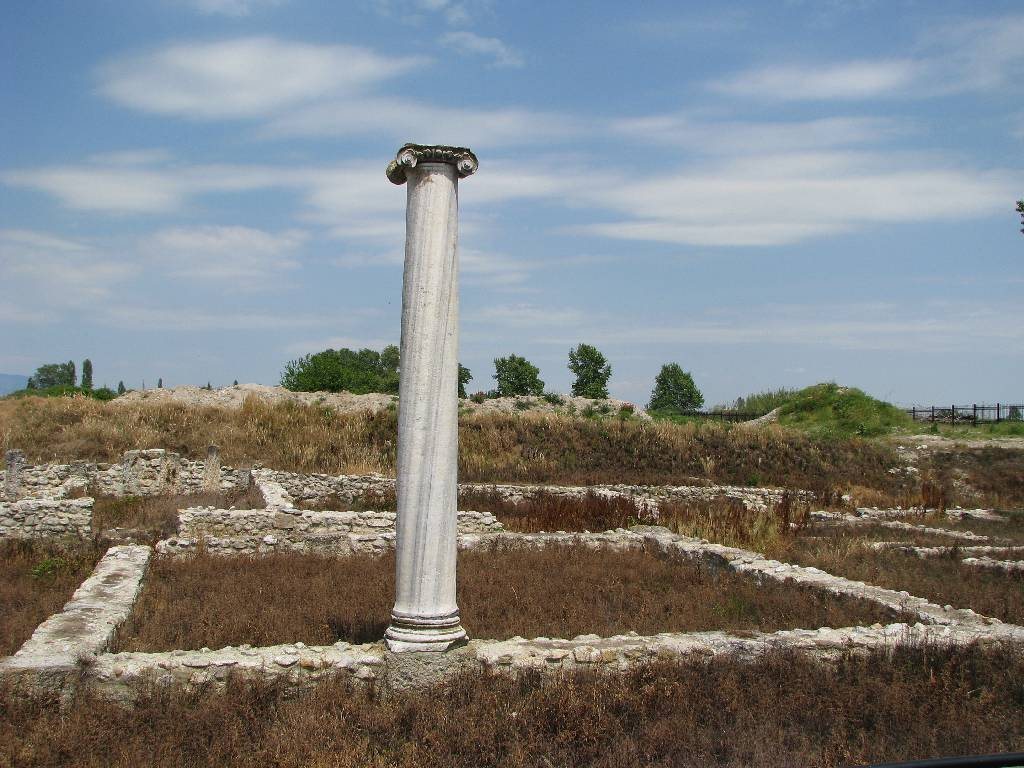
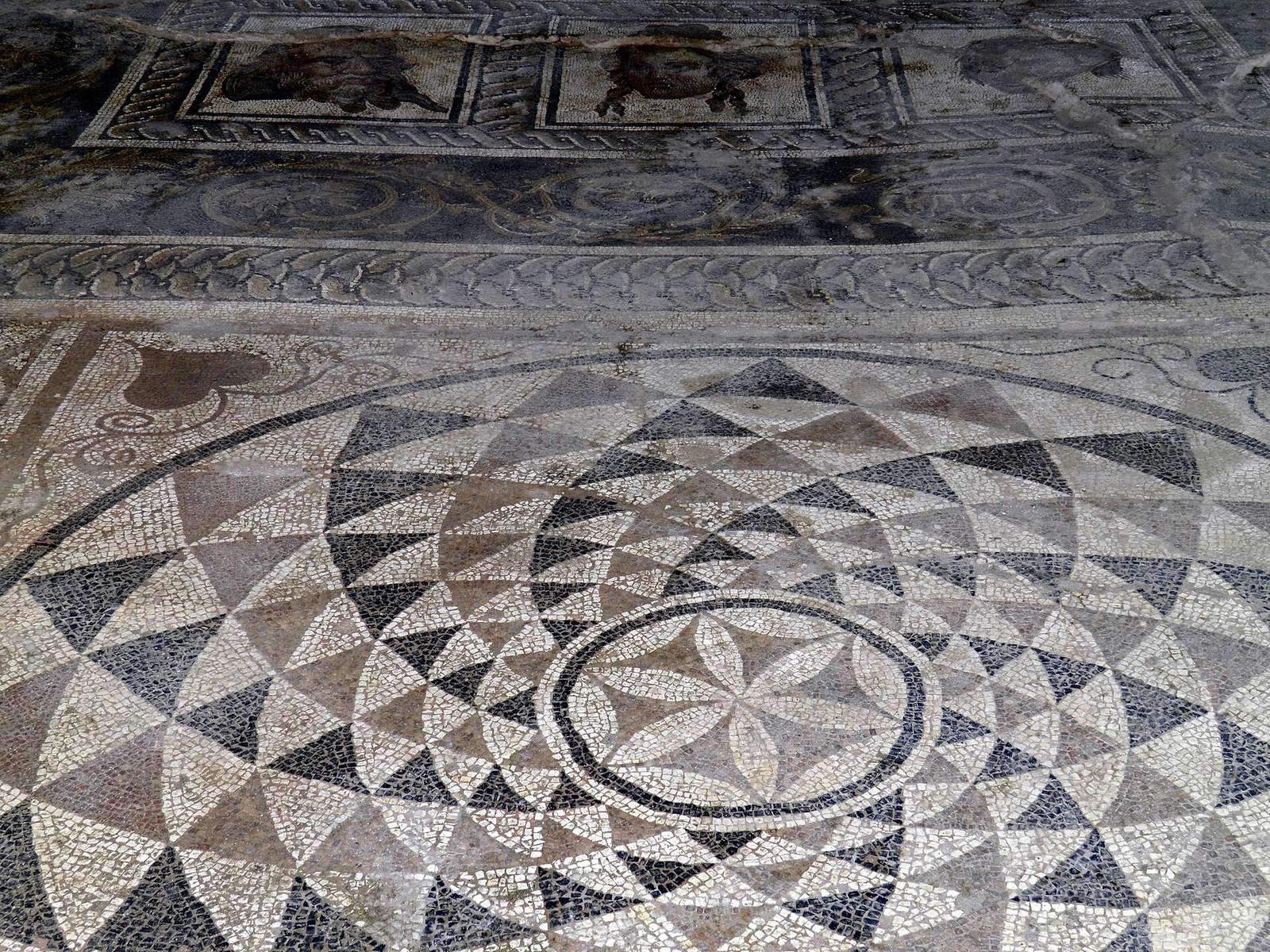
The house stood beside a bath complex in the northeastern part of ancient Dion, along a smaller street. Shops and workshops lined the approach to its courtyard. The residence also contained commercial spaces and a small bath. Its courtyard was surrounded by columns in the Ionic style, one of the classical Greek column designs, and opened onto a large dining room and several smaller rooms. Geometric mosaics decorated other floors.
The banquet hall
Floor mosaic
The nearly square banquet hall covered about 100 square metres. Its richly coloured floor mosaic placed a large central scene of Dionysus among three smaller panels above and below it, which depicted theatrical masks. A spiral-patterned band separated the scenes from a broad checkerboard design around the walls, where couches were arranged. The mosaic’s central image shows Dionysus, the Greek god associated with wine, facing forward in a chariot. He raises a drinking vessel in his right hand and holds a staff associated with his worship in his left. A frightened, elderly Silenus, a figure linked with Dionysus, stands beside him in a tunic. Two sea centaurs, mythological marine creatures, guide the sea panthers pulling the chariot and carry a vase on their shoulders. Dark blue or violet waves contrast with the white ground and make the figures appear raised and monumental.
Objects from the hall
Finds from the banquet hall included bronze horse heads, figures of Heracles, the Greek hero, and a satyr, a mythical being associated with Dionysus. Decorative fittings from a wooden couch were also recovered.
Smaller rooms and sculpture
The Dionysus room
One smaller room had a semicircular niche containing a statue of Dionysus with a horn in his left hand. The room’s floor bore a geometric mosaic. The statue was a second-century cult image, an object venerated in religious practice, and the room may have been used for the worship of Dionysus.
Philosopher statues
Four statues represented Epicurean philosophers. Epicureanism, a school founded by Epicurus, valued freedom from distress and thoughtful moderation. Three figures were pupils; the fourth was a bearded man holding an open scroll, apparently their teacher. In the third century, the pupils’ heads were reshaped with portrait features, perhaps to portray members of the household.
Portraits and other sculpture
Works found in the rooms also depicted members of the imperial family, deities, and ordinary people. They included portraits of Agrippina the Elder, mother of Emperor Caligula, and Faustina the Younger, wife of Emperor Marcus Aurelius. Other finds included a female statue, a young warrior, fragments of a statue of Nike, the Greek personification of victory, and a head of Nike modeled on a fifth-century BC original.
The villa was especially noted for its exceptionally well-preserved floor mosaics. Part of the ruins is now covered, and the banquet-hall mosaic depicting Dionysus has been transferred to the Dion Archaeological Museum.