Temple of Isis at Dion: A Roman-Era Sanctuary in Greece
Site at a Glance
- Popularity
- Very Low
- Country
- Greece
- Primary era
- Classical
- Eras represented
- Classical
- Civilizations
- Ancient Greek, Roman
- Site type
- Religious
- Remains
- Sanctuary
On this page10 sections
History
Earlier cult and the Isis sanctuary
The Temple of Isis at Dion was a sanctuary in ancient Dion, Greece, whose central temple belonged to a second-century AD building phase and the Severan period, the Roman imperial dynasty of the late second and early third centuries. Its earlier phases preceded the sanctuary’s development as a place of worship for Isis, an Egyptian goddess whose worship spread beyond Egypt. The central temple honored Isis Lochia, a title associated with protecting women in childbirth and after delivery.
Before the Isis sanctuary took shape, the site was associated with fertility and motherhood and was probably dedicated to Aphrodite and Artemis, Greek goddesses linked with fertility and childbirth. Hellenistic statues and inscriptions, along with traces of earlier buildings, reflect these earlier phases. The Hellenistic period followed the conquests of Alexander the Great and extended from the late fourth to the first centuries BC.
The Roman sanctuary developed in a principal phase that included three temples, with another temple added farther south at a later time. Isis festivals drew people to the area each spring and autumn. Farmers, craftspeople, and traders sold goods that included animals and gold and silver objects. Entry into the sanctuary was limited to initiates. Pilgrims spent the night there in the hope that Isis would come to them in dreams and hear their prayers.
Destruction and continued worship
A natural disaster destroyed the sanctuary in the fourth century AD. Flooding, an earthquake, or a combination of the two is considered the likely cause, rather than Christian action. Offerings and cult statues remained undisturbed. Worship of Isis continued through the transition to Christianity, and the sanctuary appears to have remained in use into the early Christian period.
Remains
Courtyard and temple complex
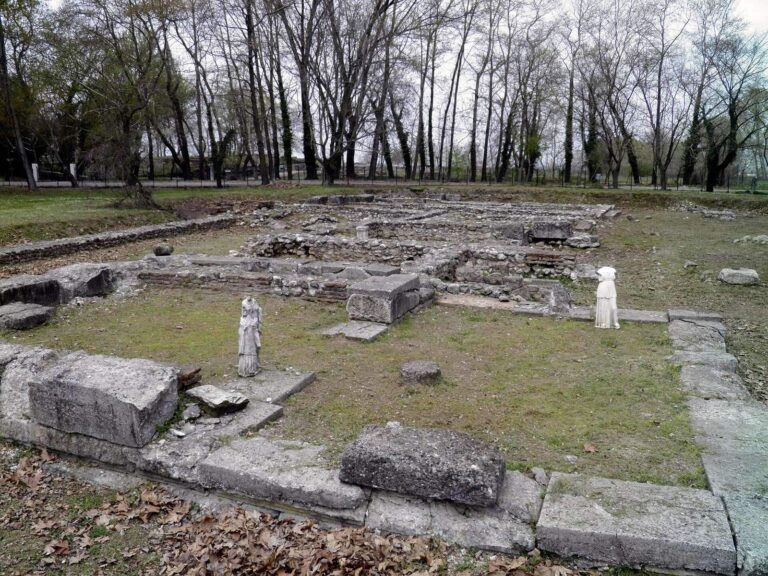
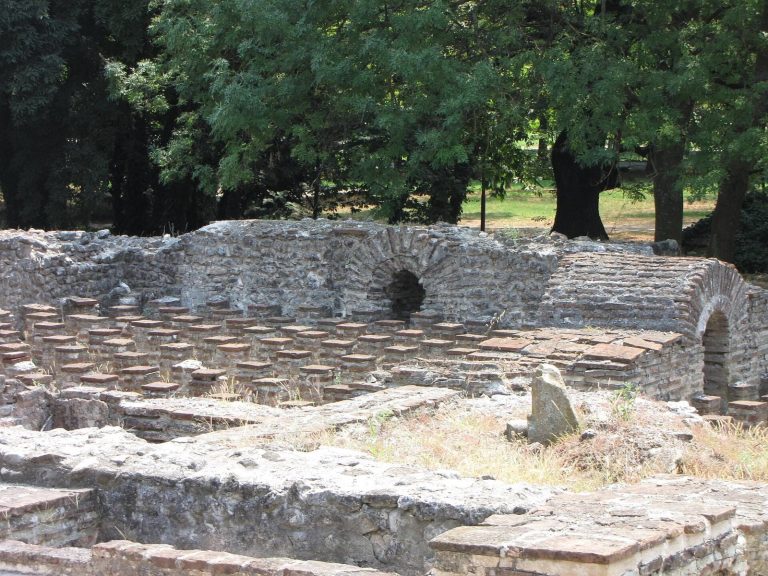
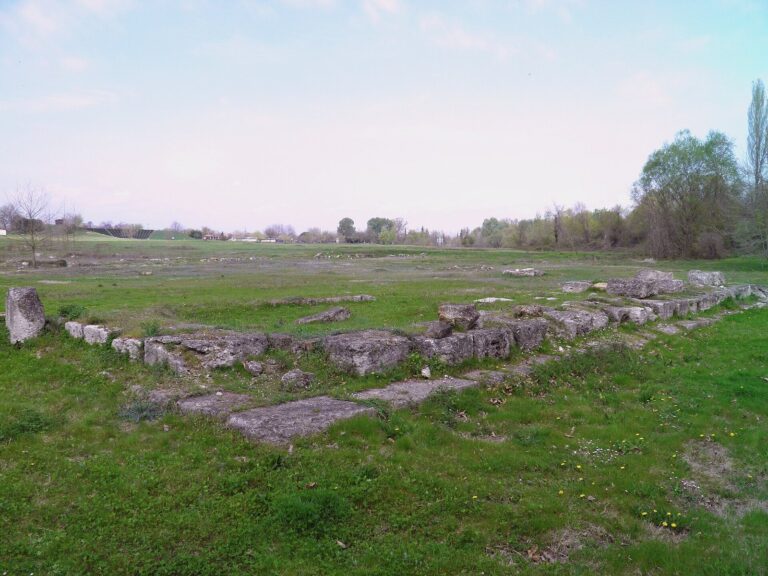
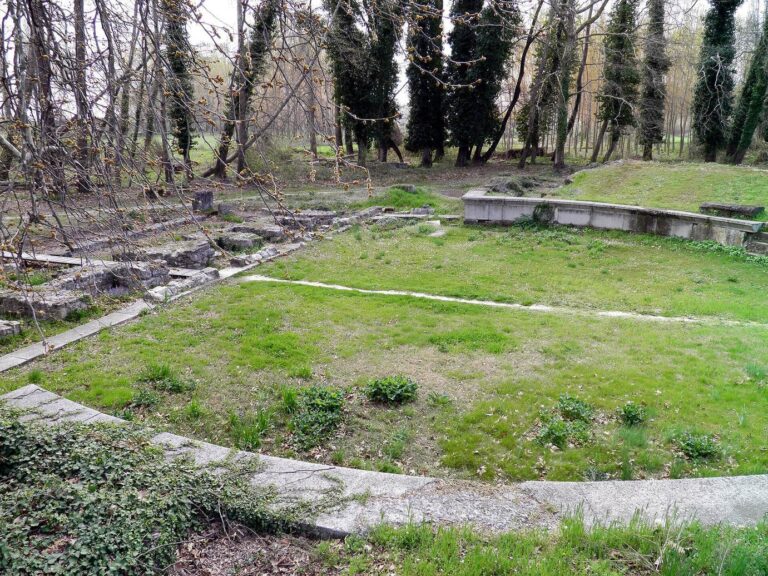
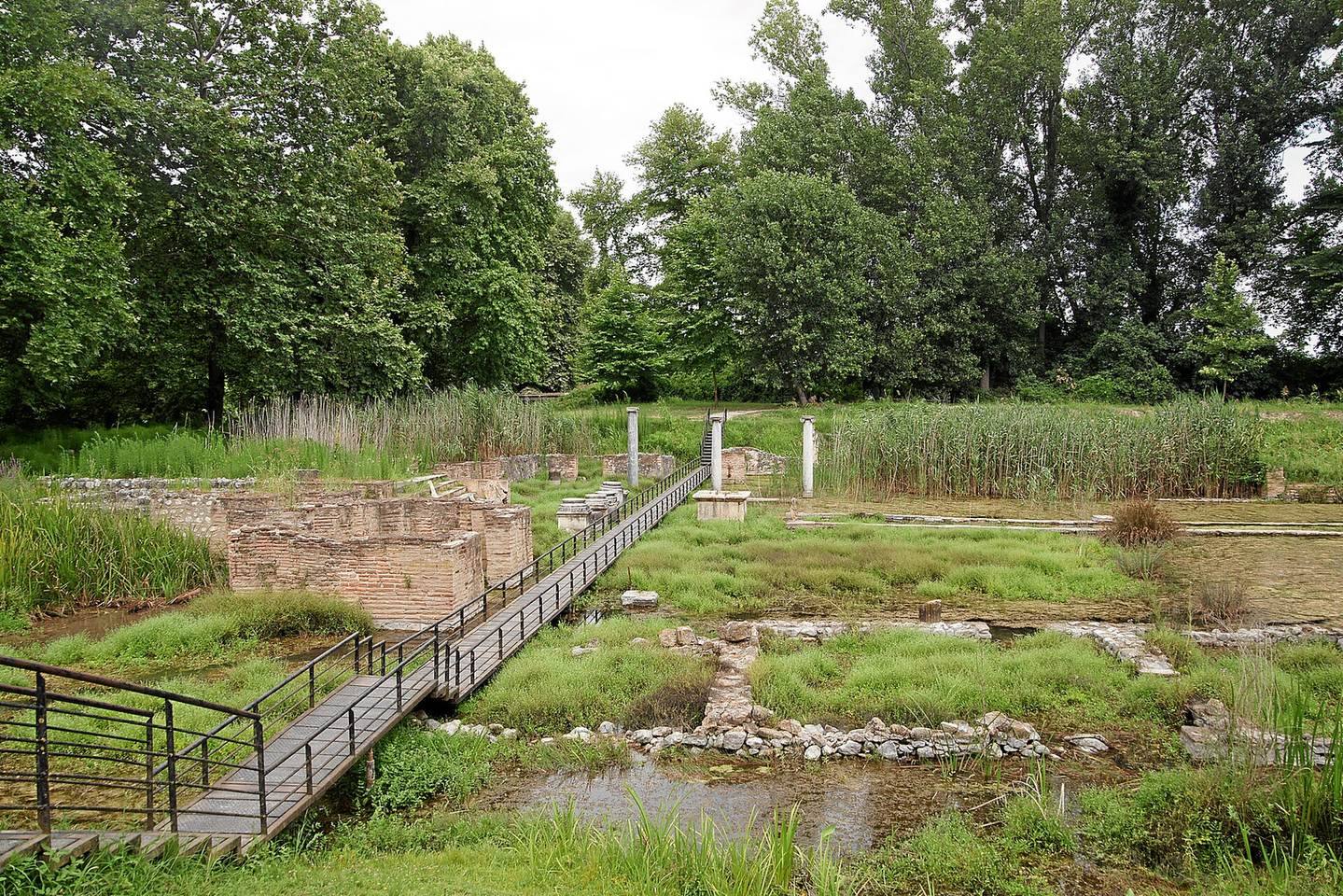
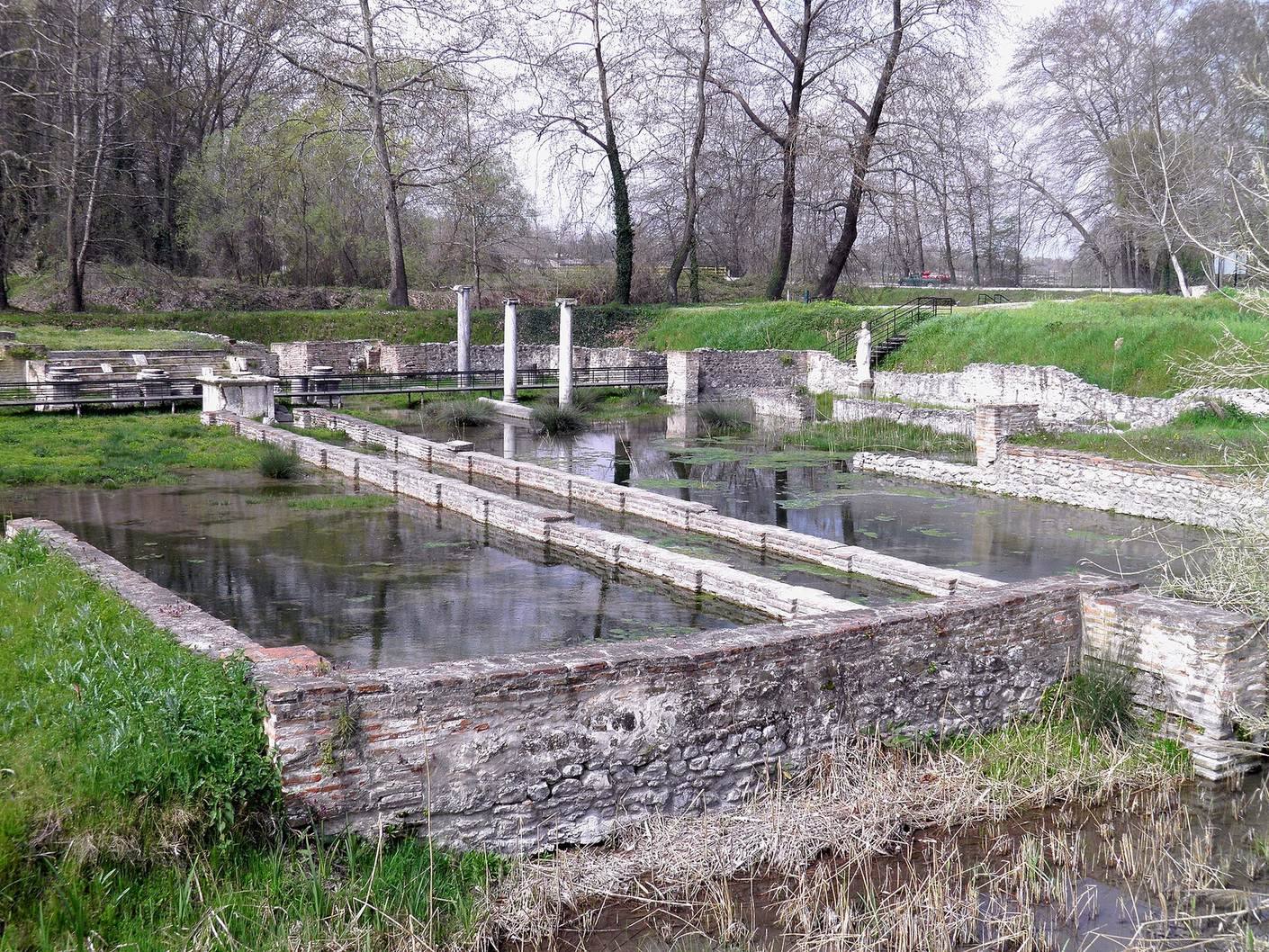
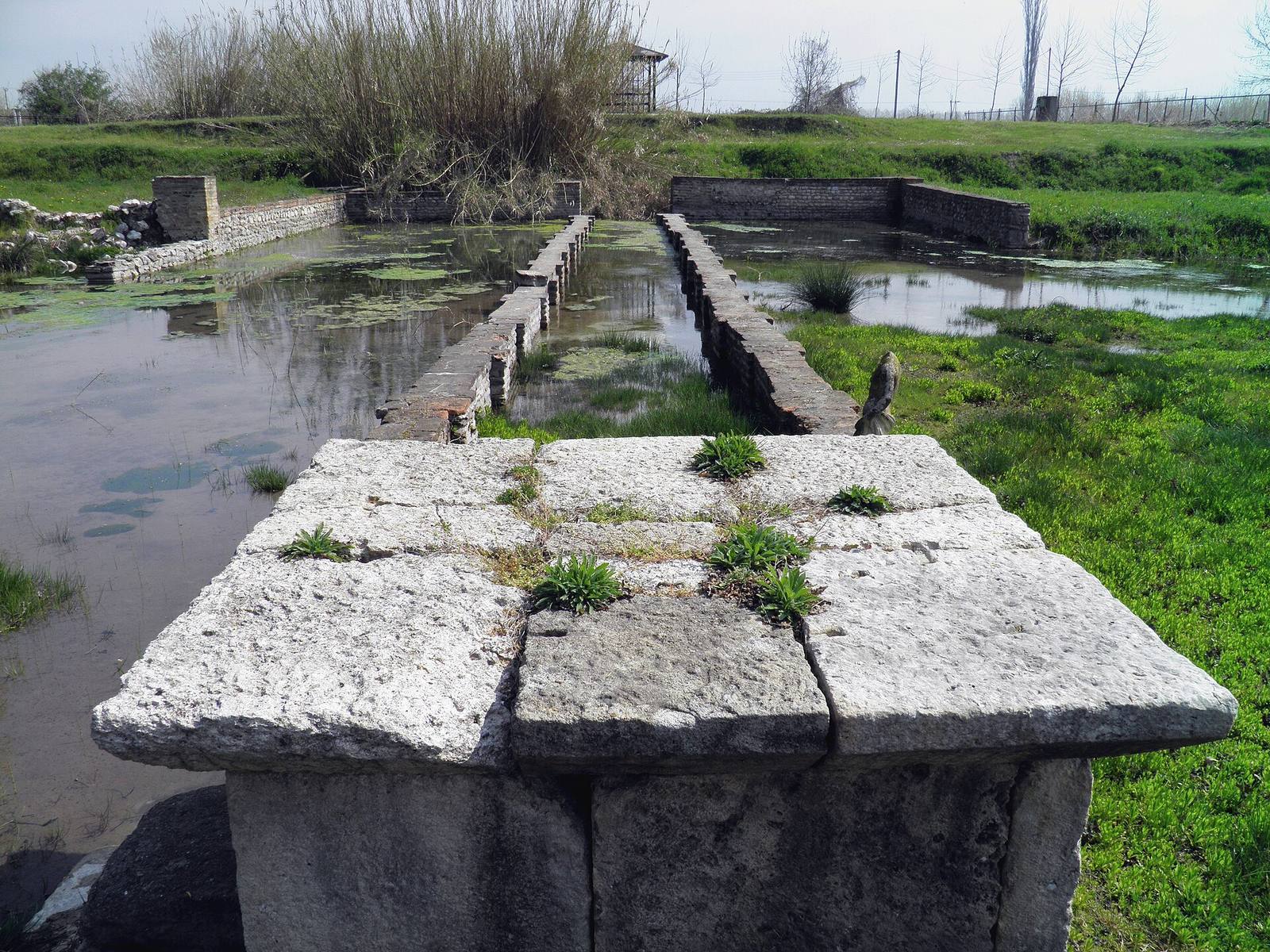
The sanctuary stood beside the Bafyras River, opposite the Temple of Zeus Hypsistos, meaning Zeus the Highest. Its buildings surrounded a central courtyard. From the main eastern entrance, a paved strip crossed the courtyard between long walls and represented the Nile. A second entrance on the north side passed through a monumental entrance structure. The sanctuary occupied ground associated with springs regarded as sacred, and its waterways were thought to evoke the Nile.
Central temple of Isis Lochia
The main temple stood on the west side of the courtyard. Four columns marked its front, leading to an antechamber and an inner sanctuary with a large sacrificial altar. The building rested on a high platform and had Severan-period architecture. Marble steps retained impressions left by worshippers. Two marble bulls representing Apis, the sacred bull deity of ancient Egyptian religion, stood on the steps of the central altar. A relief from the temple façade shows a goddess holding a sheaf and a scepter.
Northern temple of Aphrodite Hypolympidia
North of the main temple was a smaller, single-room building dedicated to Aphrodite Hypolympidia, a title meaning “of the foot of Olympus.” A pool at its center received water from beneath the goddess’s statue. A cult statue associated with this temple dates to the second century BC.
Southern two-chamber temple
A two-chamber temple stood south of the central building, with an antechamber and an inner sanctuary. Its deity is unidentified, though Aphrodite is a possible identification. A Hellenistic statue of Eros, the Greek god associated with love, was found there.
Southern temple of Isis Tyche
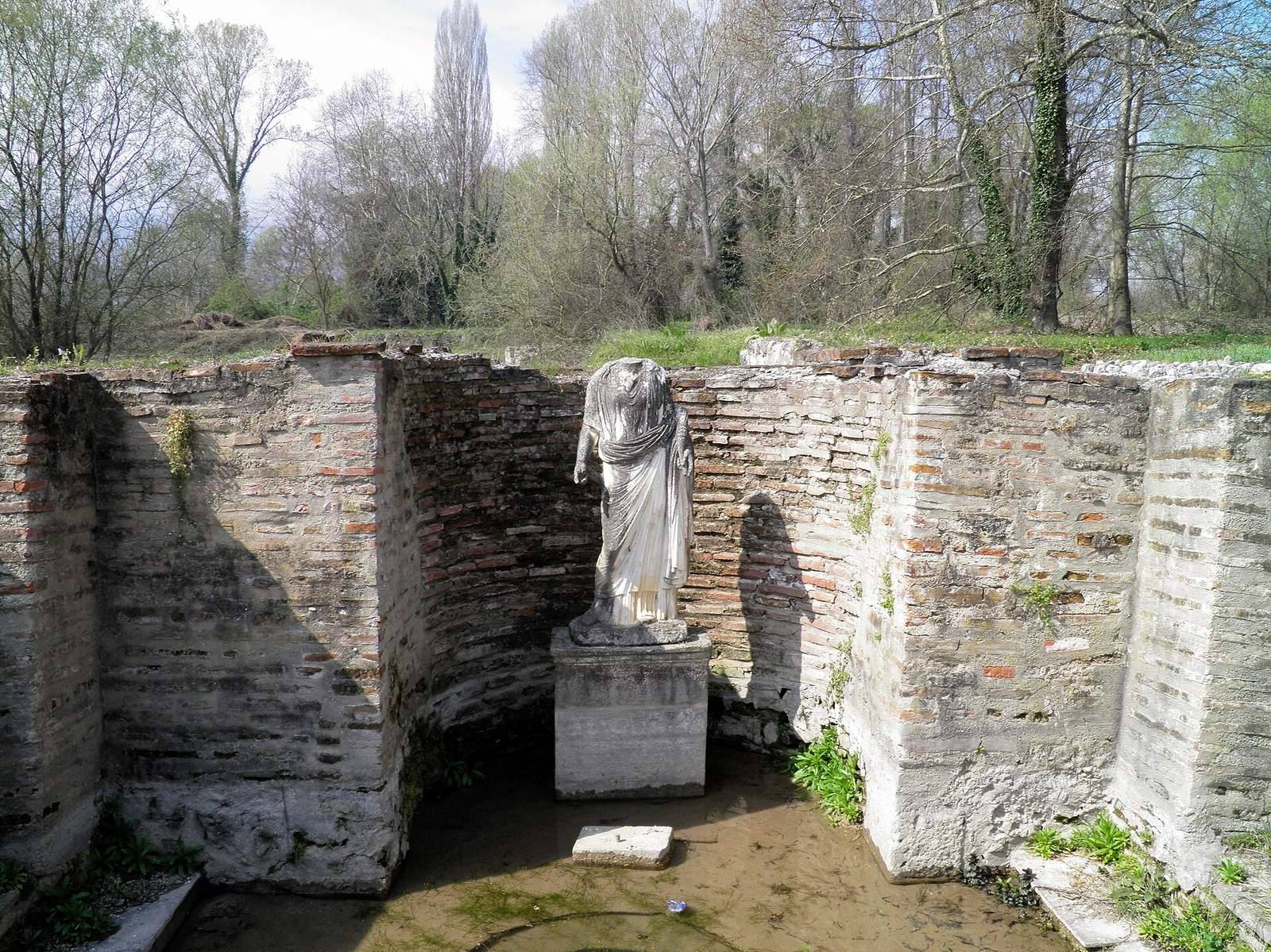
Farther south, the later temple of Isis Tyche had different masonry and stood beyond the alignment of the other buildings. Its dedication to Isis Tyche, a title associated with Tyche, the Greek personification of fortune, is supported by a recovered statue and an altar inscription. An enclosed pool in the temple received water from a sacred spring that remains active. The headless cult statue found there depicts a standing goddess in a delicate tunic and mantle. Its marble pedestal had first supported a statue of Cassander, king of Macedon in the late fourth century BC, at the Temple of Zeus Olympios.
Water features and northern hall
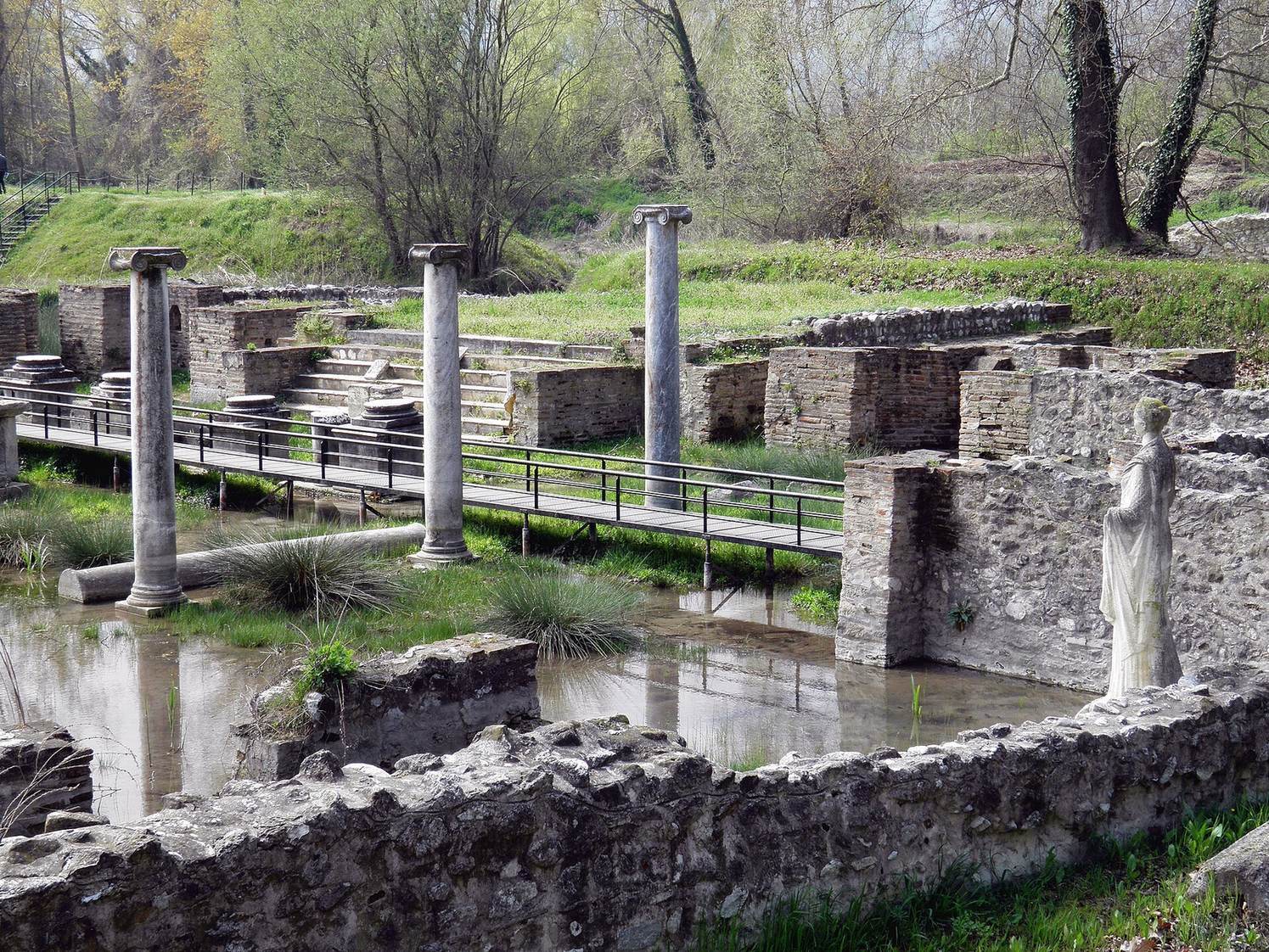
A marble basin formed another part of the sanctuary, and statues were reflected in its water. Much of the ruin lies underwater today, with water from the spring that also flowed through the sanctuary in antiquity.
A roofed colonnaded hall on the north side included a space where pilgrims slept as part of ritual practice, and a room containing statues of sanctuary benefactors. Its columns followed the Ionic order, with scroll-shaped capitals. Auxiliary buildings occupied the southern wing. In a room in the northern gallery, excavators found bases for three benefactors’ statues and a standing statue of Julia Frugiane Alexandra on its pedestal. The city of Dion had honored her with the statue in the second century AD. Two other inscribed bases, bearing Greek and Latin texts, had supported statues of Maxima and Antestia Jucunda. Sculptures recovered from the sanctuary are now in the Dion Archaeological Museum.