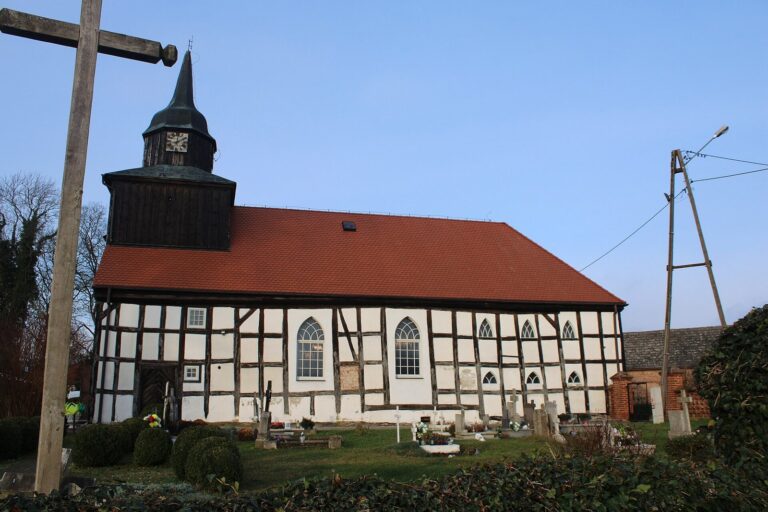
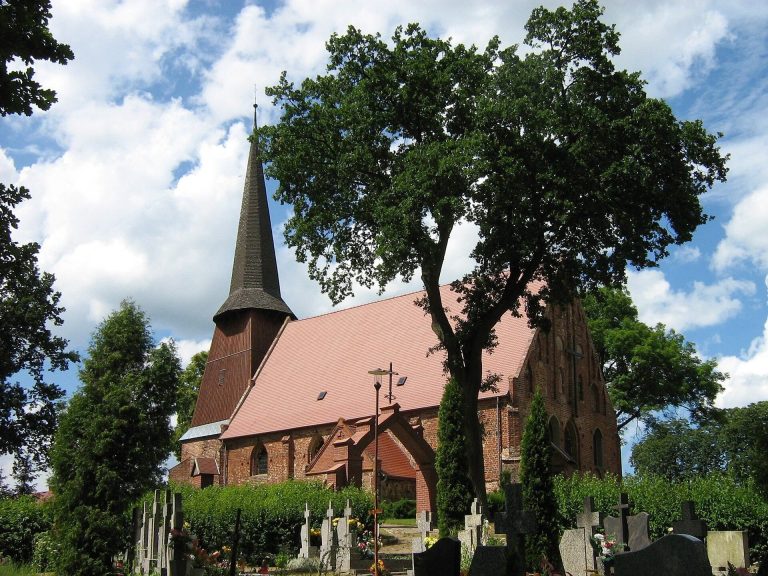
Church of St Joseph the Worker in Rybokarty, Poland
Site at a Glance
- Popularity
- Very Low
- Country
- Poland
- Primary era
- Medieval
- Eras represented
- Medieval, Early Modern
- Civilizations
- Unclassified
- Site type
- Religious
- Remains
- Church
On this page6 sections
History
Construction and parish role
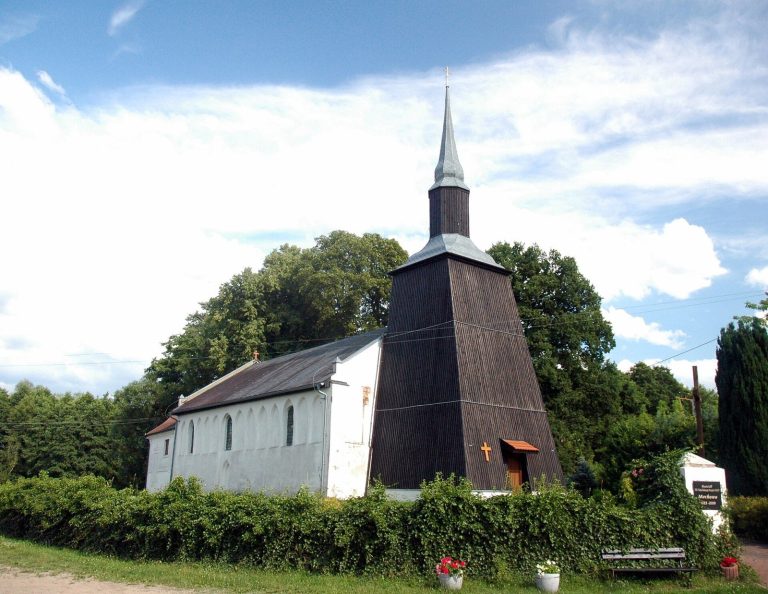
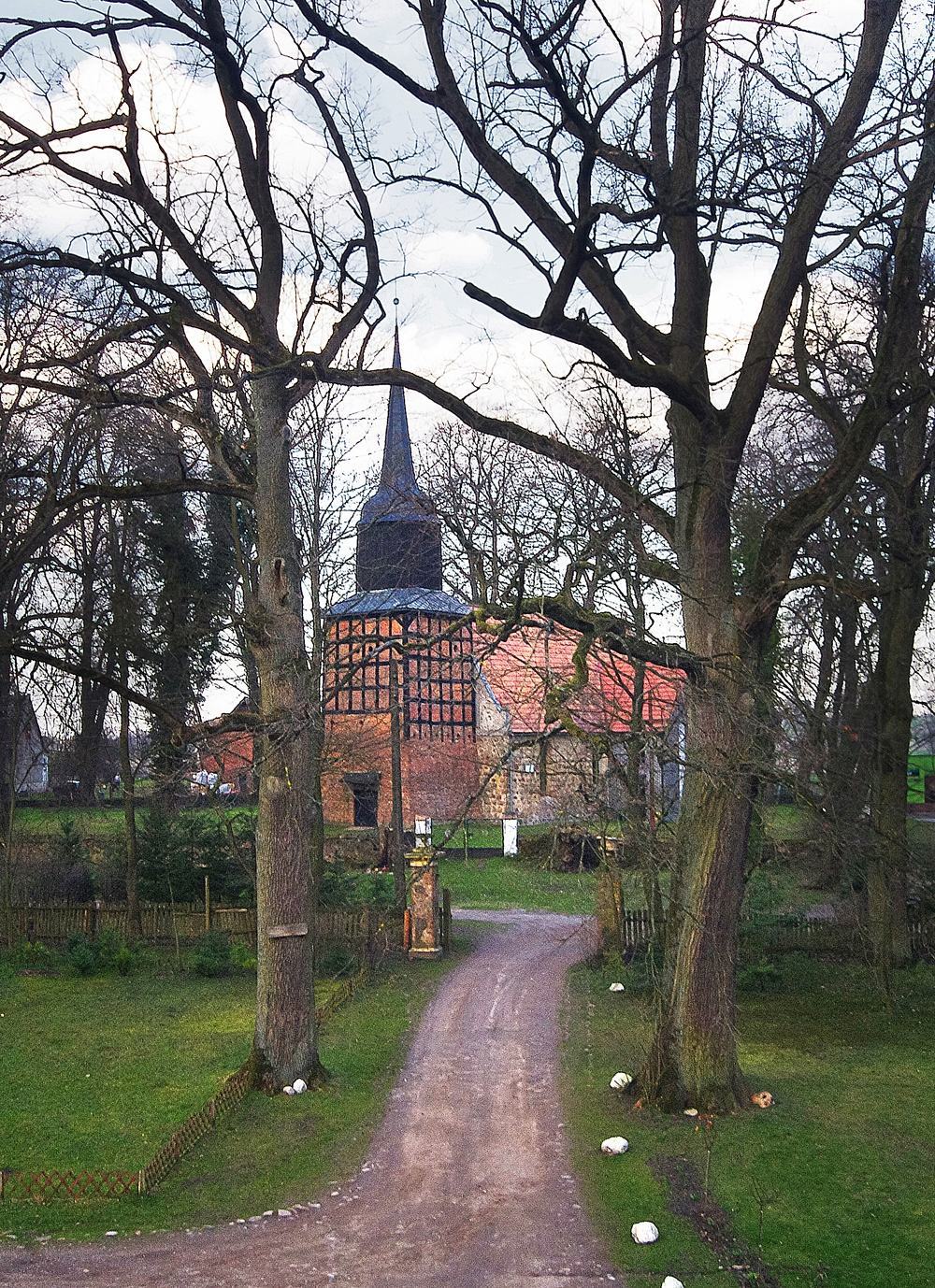
The Church of St Joseph the Worker in Rybokarty, Poland, is a Roman Catholic church built in the fifteenth century. It is a filial church, meaning a subordinate church served by a parish, and belongs to the Parish of the Assumption of the Blessed Virgin Mary in Gryfice. Its dedication refers to St Joseph the Worker, a Catholic title for Joseph, the husband of Mary and foster father of Jesus.
Later changes and renewed Catholic worship
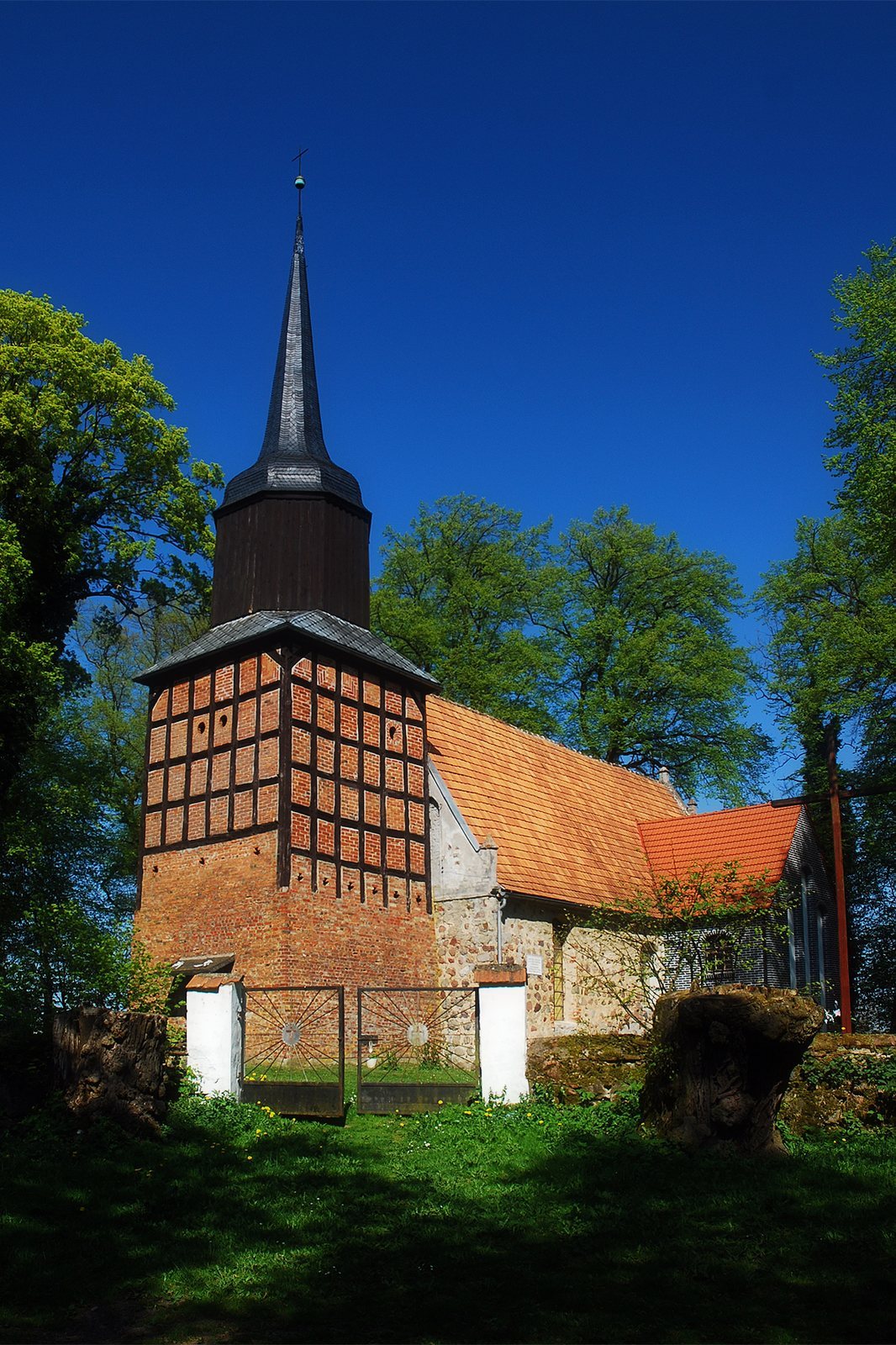
A tower was added in 1690, and the church was partly remodeled in the eighteenth century. After the Second World War, it was reconsecrated for Catholic worship on December 1, 1945, by Feliks Kwilas, a priest of the Society of Christ, a Catholic religious congregation. A Gothic triptych formerly held in the church was transferred after 1945 to the Church of the Assumption of the Blessed Virgin Mary in Gryfice.
Remains
The church has a rectangular, single-nave plan, with one main worship space rather than multiple aisles. It is aligned east to west beneath a gabled roof. A sacristy occupies an annex on the southeast side, while a stone wall encloses the church grounds.
Exterior and tower
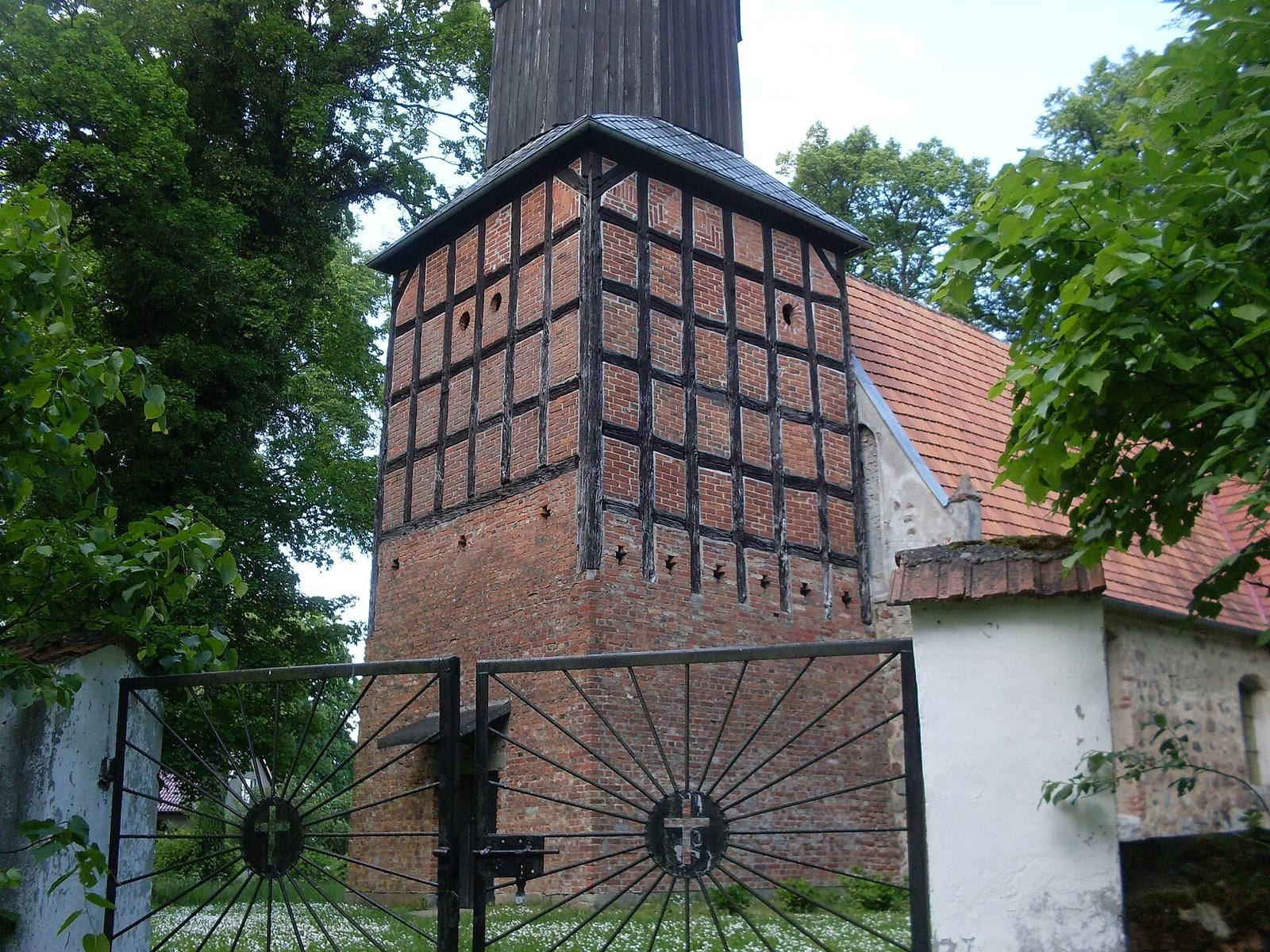
Pointed-arch blind recesses, decorative recesses that do not pass through the wall, adorn the eastern gable. The tower is built of stone on its lower storey and has a timber frame with infill above. An octagonal Baroque tower cap crowns it.
Interior and furnishings
A wooden beam ceiling spans the interior. The surviving furnishings include a wall-mounted pulpit with steps, a canopy and a back panel, as well as a choir gallery with an organ case. The Baroque altar is decorated with columns, acanthus ornament and small angel figures. Its central Crucifixion scene is flanked by saints; the predella, or lower section of the altarpiece, depicts the Last Supper, while the crowning section shows the Entombment.