Lyubsha: An Early Medieval Fortified Settlement in Russia
Site at a Glance
- Popularity
- Medium
- Country
- Russia
- Primary era
- Medieval
- Eras represented
- Medieval
- Civilizations
- Unclassified
- Site type
- Military
- Remains
- Fort
On this page8 sections
History
Lyubsha is a fortified settlement on the Lyubsha River in Russia, with a Finno-Ugric stronghold in place by the turn of the sixth to seventh centuries. The site later became a stone-and-earth fortress associated with the arrival of South Baltic Slavs.
Finno-Ugric settlement and contacts
Finno-Ugric refers to languages in the Finnic and Ugric branches of the Uralic language family. Finds from Lyubsha link the settlement to contacts connecting the Kama region, southern Ladoga, Finland, and central Sweden. The pattern has been interpreted as showing that communities identified historically as Permians, Veps, Chud, and Sum initiated contact with Scandinavians, with Slavic communities becoming involved later. These historical names do not correspond uniformly to modern ethnic identities.
Slavic fortress and decline
The settlement was destroyed by fire in the late seventh or early eighth century. An attack by Ilmen Slavs, Slavic communities associated with the Lake Ilmen region, has been proposed as the cause. A stone-and-earth fortress was built or rebuilt from the late seventh century into the first half of the eighth, in connection with the arrival of a South Baltic Slavic population. Archaeologist E. A. Ryabinin placed a rebuilding on a stone foundation around 700. Lyubsha is regarded as one of Russia’s earliest Slavic forts and as predating Ladoga.
The fortress served mainly as a defensive stronghold and as a military and administrative post controlling the mouth of the Volkhov. It had ceased to function by the end of the ninth century, though the date and circumstances remain uncertain. Staraya Ladoga, also known historically as Aldeigjuborg, then became the Volkhov’s new watchpoint.
Reconnaissance excavations were carried out around the turn of the 1960s and 1970s by S. N. Orlov, G. S. Lebedev, and V. P. Petrenko. A St Petersburg expedition led by Ryabinin resumed excavations in 1997, and archaeological investigation has continued. Lyubsha is designated a cultural heritage site of federal significance in Russia.
Remains
Fortified promontory
The promontory fort, a defended site on projecting land, stands on the bank of the Lyubsha River, a tributary of the Volkhov. It lies on the Volkhov’s right bank, opposite Staraya Ladoga and roughly 1.5–2 km downstream. The fortified area measures about 45 × 45 m and is enclosed by a curved raised earthwork, or rampart, about 70 m long and up to 18 m wide at its base. Its defenses developed from a timber enclosure on an earthen bank into a stone-and-earth structure.
Earlier settlement and timber defenses
Traces of a Finno-Ugric fishing settlement dating to the third century have been identified at Lyubsha. The earlier defenses consisted of a stockade, a fence of upright timbers, set on an earthen rampart. The associated archaeological layer contains abundant fish bones, hand-formed pottery, bone tools, and hearths. This material is characteristic of early Iron Age settlements studied around Ladoga, a regional archaeological period associated with the use of iron.
Stone-and-earth fortress
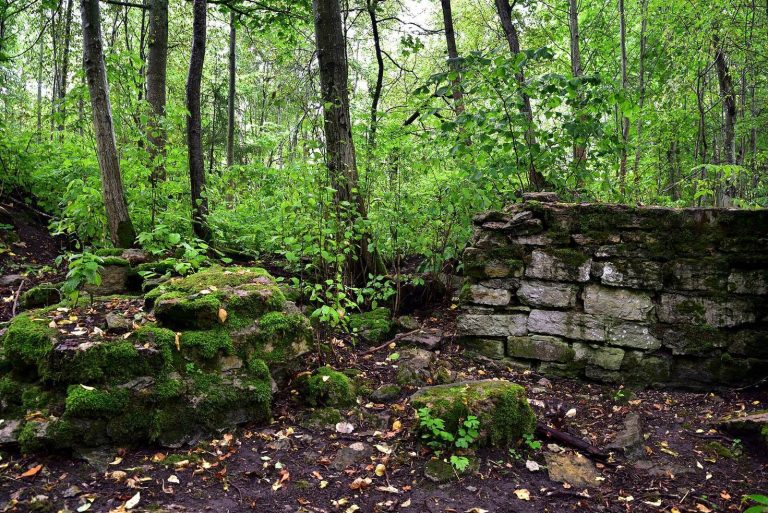
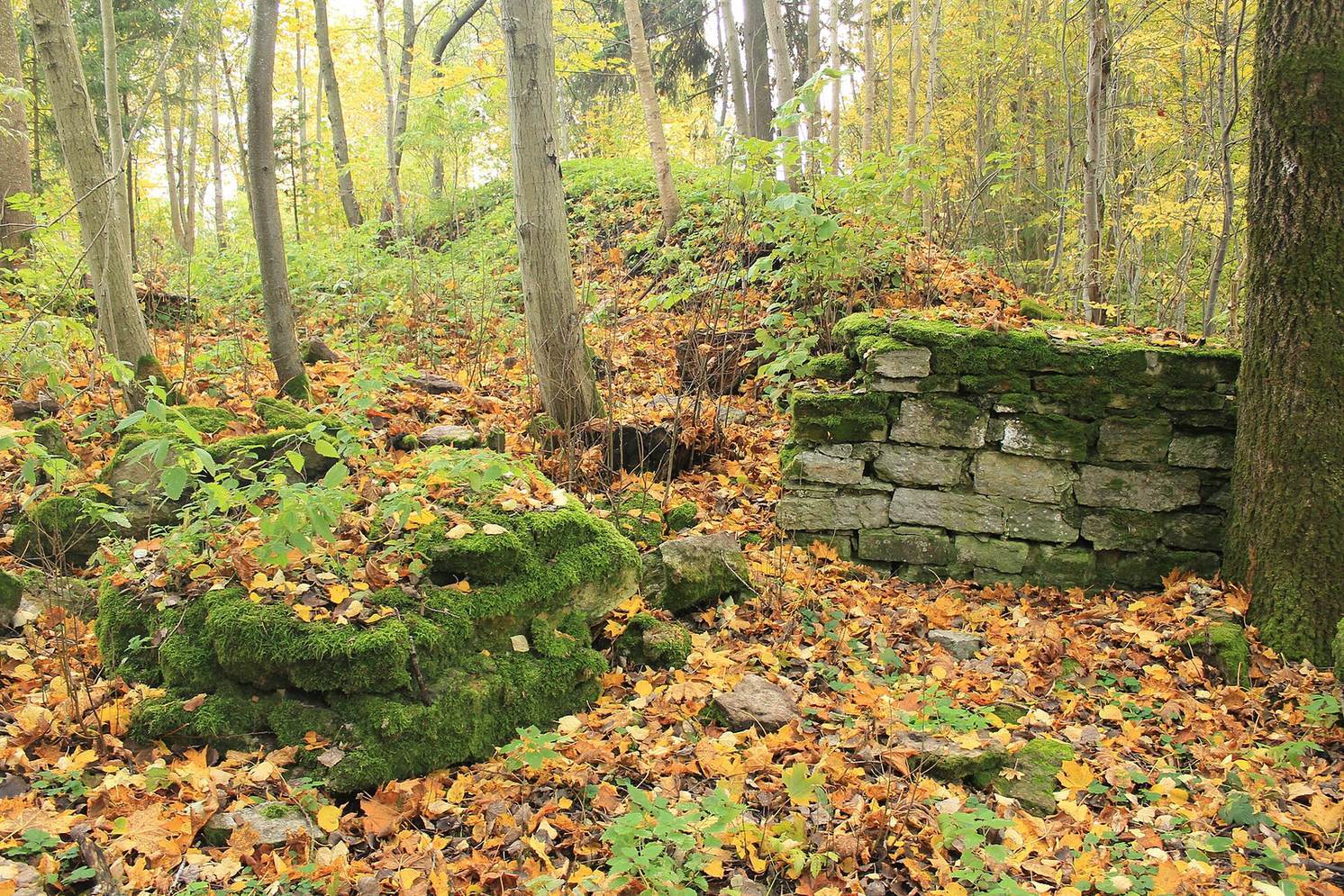
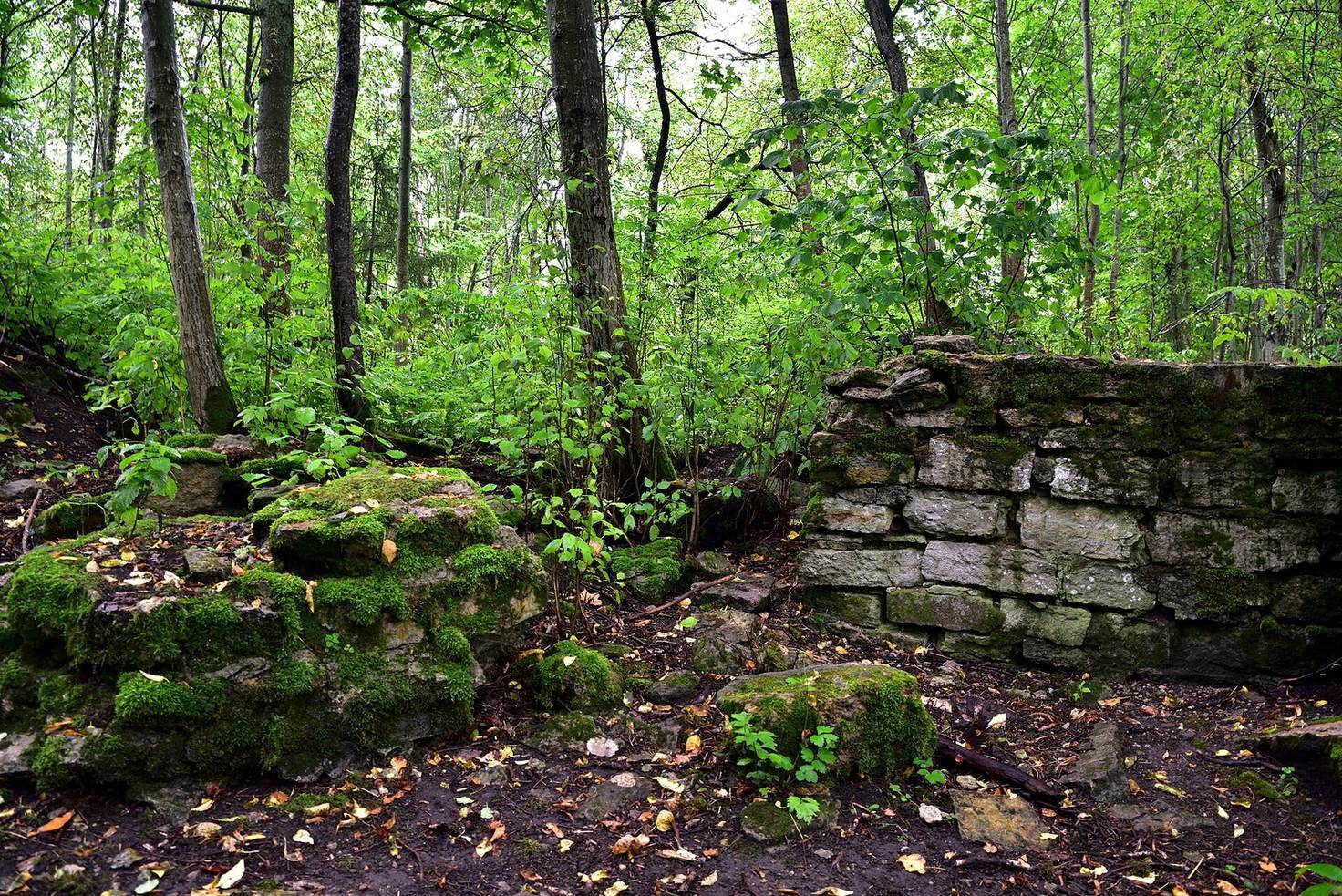
The later defenses used flat stone slabs as an outer facing for the earthwork. Surviving masonry reaches up to 2.2 m high, and remains of additional retaining walls and timber defenses along the rampart top have also been found. The earthen wall is thought to have stood about 3 m high, faced with natural stone on both sides and topped by a timber log wall. The complete defensive structure has been estimated at about 7 m in height.
Finds and regional parallels
Nevolino-type belts, associated with the Nevolino archaeological culture of the Kama region, and other chance finds form part of the site’s material remains. The fortress’s layout and dimensions have been compared with contemporary hill forts associated with Great Moravia, an early medieval Slavic polity in Central Europe.