Monastery of Gyromeri: A Medieval Ecclesiastical Center in Greece
Site at a Glance
- Popularity
- Very Low
- Country
- Greece
- Primary era
- Early Modern
- Eras represented
- Early Modern
- Civilizations
- Ottoman
- Site type
- Religious
- Remains
- Monastery
On this page11 sections
History
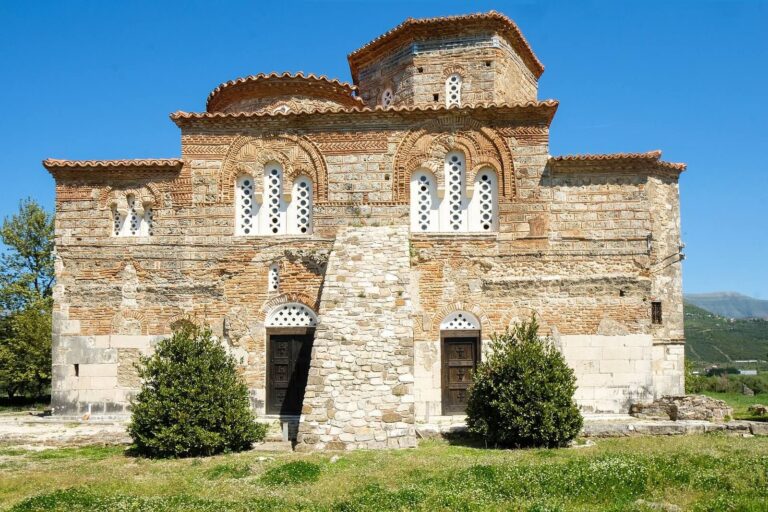
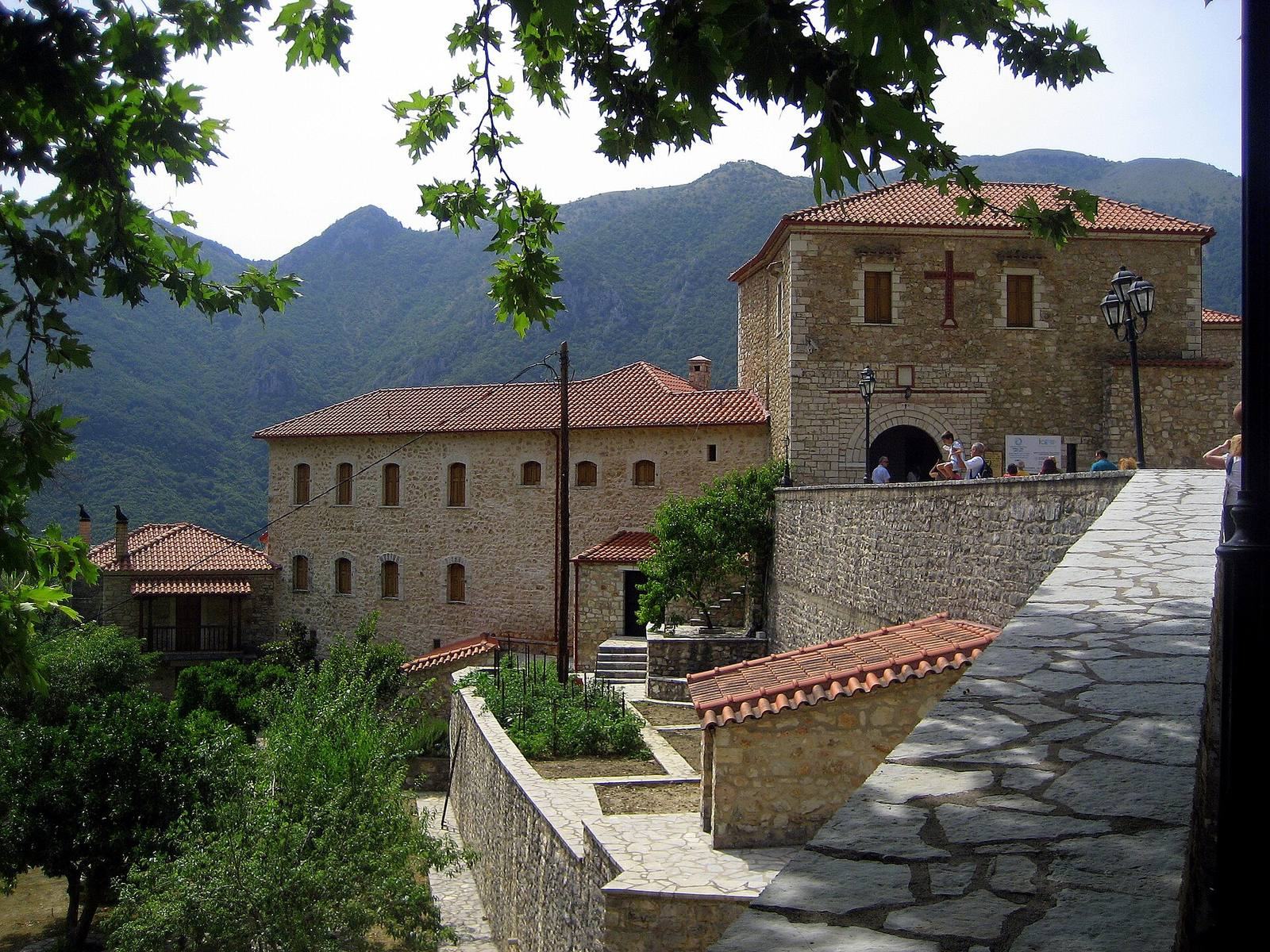
The Monastery of Gyromeri is a medieval monastic center near the village of Gyromeri in Thesprotia, Greece. The hermit Venerable Nilus Erichiotis founded it in 1311, 1312, or 1313, during the Despotate of Epirus, a medieval Greek polity that emerged after the Byzantine Empire fragmented in 1204. Dedicated to the Virgin Mary, the monastery soon gained renown and attracted generous donations from local lords and Epirus’s rulers.
Foundation and early patronage
In his testament, Nilus entrusted the monastery’s protection to John II Komnenos Doukas, ruler of the Despotate, and John’s wife, Anna Angelina Palaiologina. He also named local lords Nikolaos Apsaras and Aristarchis Kapandritis as protectors. Nilus died in 1335.
Patriarchal authority and later support
Following the Ottoman conquest and the settling of church administration, the monastery came under the patriarch’s direct authority rather than that of a local bishop. Its abbot served as the patriarch’s representative, or exarch, and the monastery became the seat of a patriarchal exarchate.
In 1568, Oxyotis, an Epirote expatriate from Pogoniani living in Wallachia, renovated the monastery and secured grants and special privileges for it from the Danubian Principalities. A gold-sealed charter of Peter, ruler of Wallachia, was among the documents associated with these grants. In 1780, Alexander Ypsilantis, also ruler of Wallachia, set the monastery’s annual subsidy at 12.5 thalers, silver coins of the period.
The Diocese of Gyromeri
A decision by Ecumenical Patriarch Neophytus VII in 1800 raised the earlier exarchate to the status of the Diocese of Gyromeri and placed it under the Metropolitanate of Ioannina, an ecclesiastical province headed by a metropolitan. Until the diocese was permanently abolished in 1895, the monastery alternated between serving as the diocesan seat and as the seat of the exarchate.
In 1928, the Ecumenical Patriarchate transferred the monastery’s administration to the Holy Metropolis of Paramythia, Filiates, and Gyromeri, now called the Holy Metropolis of Paramythia, Filiates, Gyromeri, and Parga. The continued use of “Gyromeri” in the metropolitanate’s name recalls the monastery’s long service as a diocesan seat. The monastery remains a pilgrimage destination for the wider region.
Remains
Church architecture
Principal church
The principal church follows a four-column cross-in-square plan, with a dome over the central space and arms extending around it.
Outer narthex
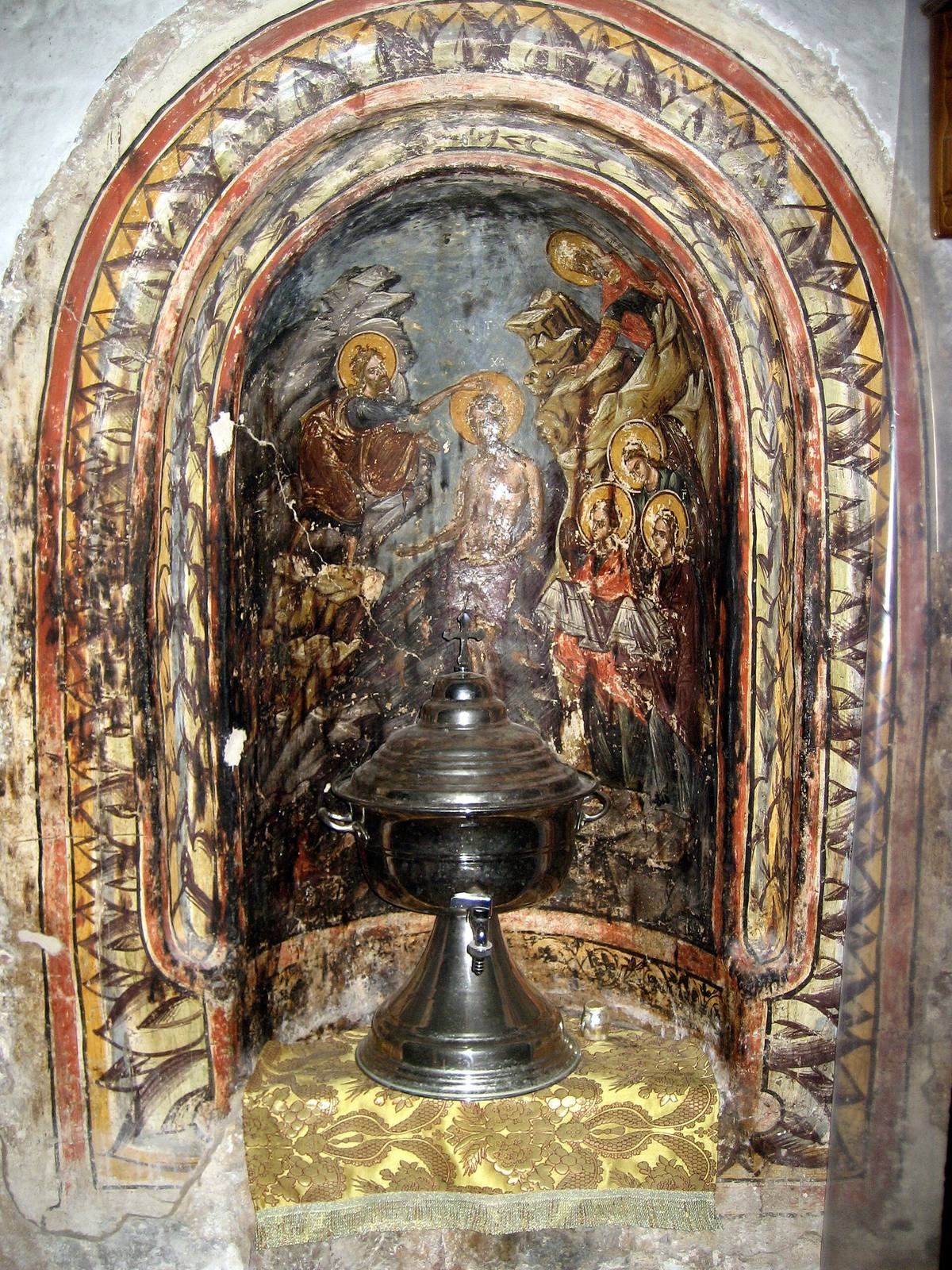
The outer narthex, an entrance vestibule outside the main entrance hall, has painted surfaces bearing numerous graffiti and coded notes.
Furnishings and collections
Icon screen and icons
The monastery’s carved wooden icon screen, which separates the sanctuary from the main worship space, dates to the eighteenth century. Its portable icons are from the nineteenth century or later, except for the original icon of the Virgin Mary, which dates to the fourteenth century.
Liturgical objects and manuscript
The monastery keeps chalices, reliquaries, and manuscripts. One manuscript is a sixteenth-century codex, or manuscript book, containing the liturgical service of Venerable Nilus.