Dikteon Andron: A Minoan Cave Sanctuary in Crete
Site at a Glance
- Popularity
- Very High
- Country
- Greece
- Primary era
- Bronze Age
- Eras represented
- Stone Age, Bronze Age
- Civilizations
- Minoan
- Site type
- Religious
- Remains
- Sanctuary
On this page13 sections
History
Dikteon Andron, also known as Psychro Cave, is a Minoan sacred cave on Mount Dikti in eastern Crete, Greece. Its use probably began in the Early Minoan period, around 2800–2300 BCE, although traces in the entrance vestibule point to earlier activity. The Minoan periods were phases of Bronze Age civilization on Crete. The cave served as a place of worship and pilgrimage, especially during Middle Minoan IIIA. In Minoan times, Malia was the nearest major urban centre.
Minoan and later activity
Finds indicate activity from Early Minoan and Middle Minoan times through the Geometric and Orientalizing-Archaic periods, successive phases of ancient Greek material culture. In the upper cave, the lowest undisturbed deposits show a transition from Kamares ware, a distinctive Minoan pottery, to the earliest Mycenaean levels. Mycenaean culture developed in Bronze Age mainland Greece. Geometric-period material from these deposits dates to the ninth century BCE, while finds from later periods are fewer. Pottery also points to use after the Roman period.
Zeus traditions and the cave’s identity
Ancient traditions connected Dikte with the birth or upbringing of Zeus, but the name could refer to a cave, mountain, or sanctuary. The location of the place in these stories was already disputed in antiquity. Apollodorus, Diodorus Siculus, and Agathocles associate Zeus’s birth with a cave on Mount Dikte. In one account, nymphs raised him on milk from the goat Amalthea. Another says that Adrasteia and Ide cared for him while the Kouretes, mythic guardians, protected him from Cronus, his father, who intended to swallow him.
A tradition related by Athenaios says a sow’s grunts concealed the infant’s cries. It also describes pigs as sacred to the Cretans, who would not eat pork. Other ancient writers place Zeus elsewhere or combine different locations: Hesiod puts him in a cave beneath Mount Aegaeon, while Apollonius of Rhodes links Dikte and Ida with his upbringing. Some references may concern the Idaean Grotto. Lucian of Samosata, meanwhile, describes Zeus bringing Europa to the Diktaean cave for their divine marriage.
The identification of Psychro Cave with the ancient Diktaean cave remains contested. Arthur Evans and David George Hogarth advanced it around the turn of the twentieth century. In 1988, Charles Crowther proposed instead that the sanctuary lay at Palaikastro and that nearby Petsofas was Mount Dikte. Joseph A. MacGillivray and Hugh Sackett considered this proposal quite likely, and William D. Furley and Jan Maarten Bremer called it virtually certain. Mieke Prent judged the Psychro identification probably incorrect in 2005. A cave on Mount Aegaeon has also been considered as a possible location.
Rediscovery and excavation
A hunter found a bronze bull statuette in the cave around 1880. The discovery prompted local treasure hunting and the recovery of many bronze objects and terracotta figurines, particularly from the upper cave. Joseph Hatzidakis and Federico Halbherr conducted an informal excavation in 1886. Evans and John Linton Myres began systematic exploration in the mid-1890s, followed by Joseph Demargne later in that decade. Hogarth directed more extensive work around 1900.
Hogarth’s work substantially disturbed the cave deposits. Excavators blasted fallen blocks from the upper cave’s roof, and the rich black earth had already been ransacked. John Boardman published a study of finds from these and other excavations in 1961.
Remains
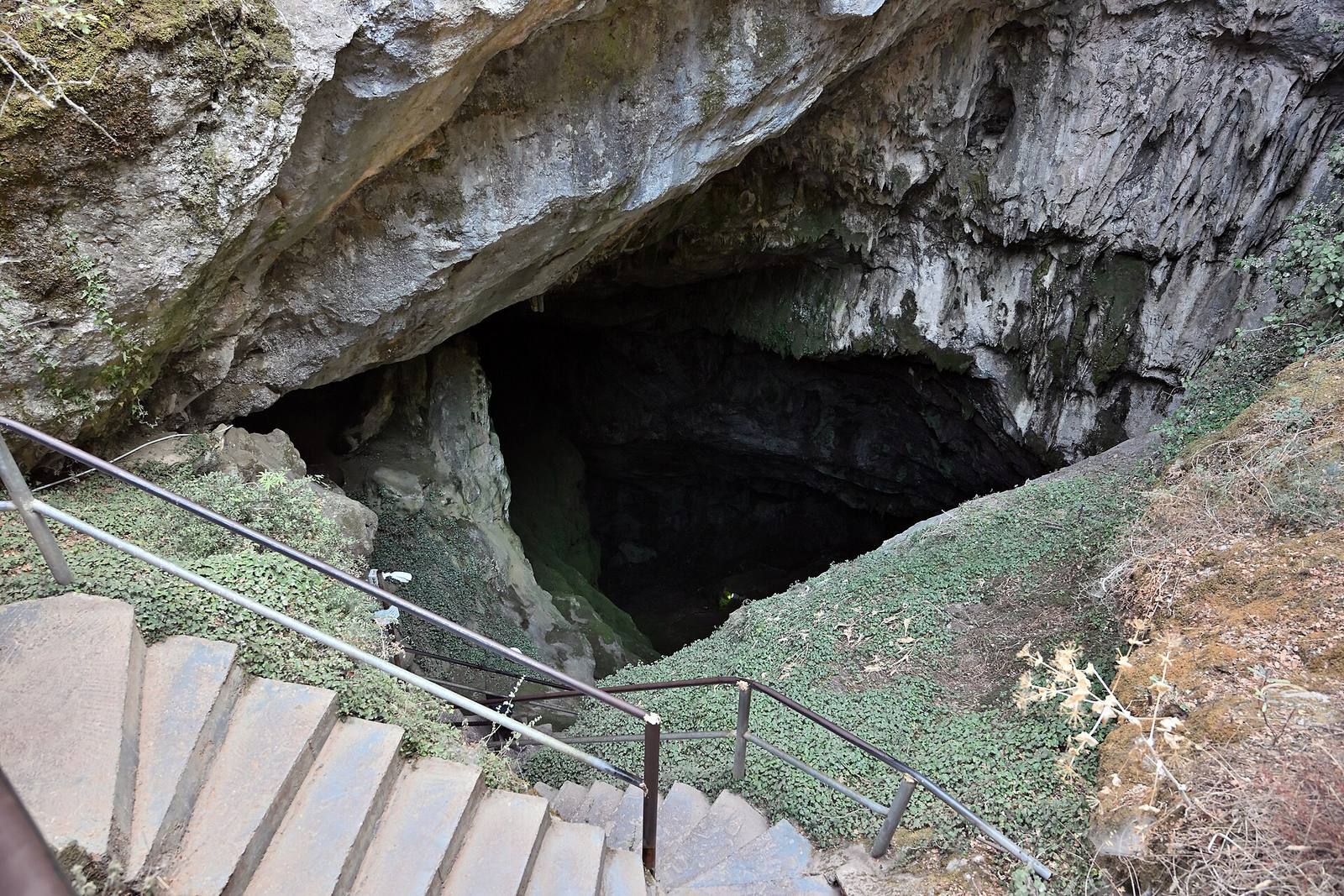
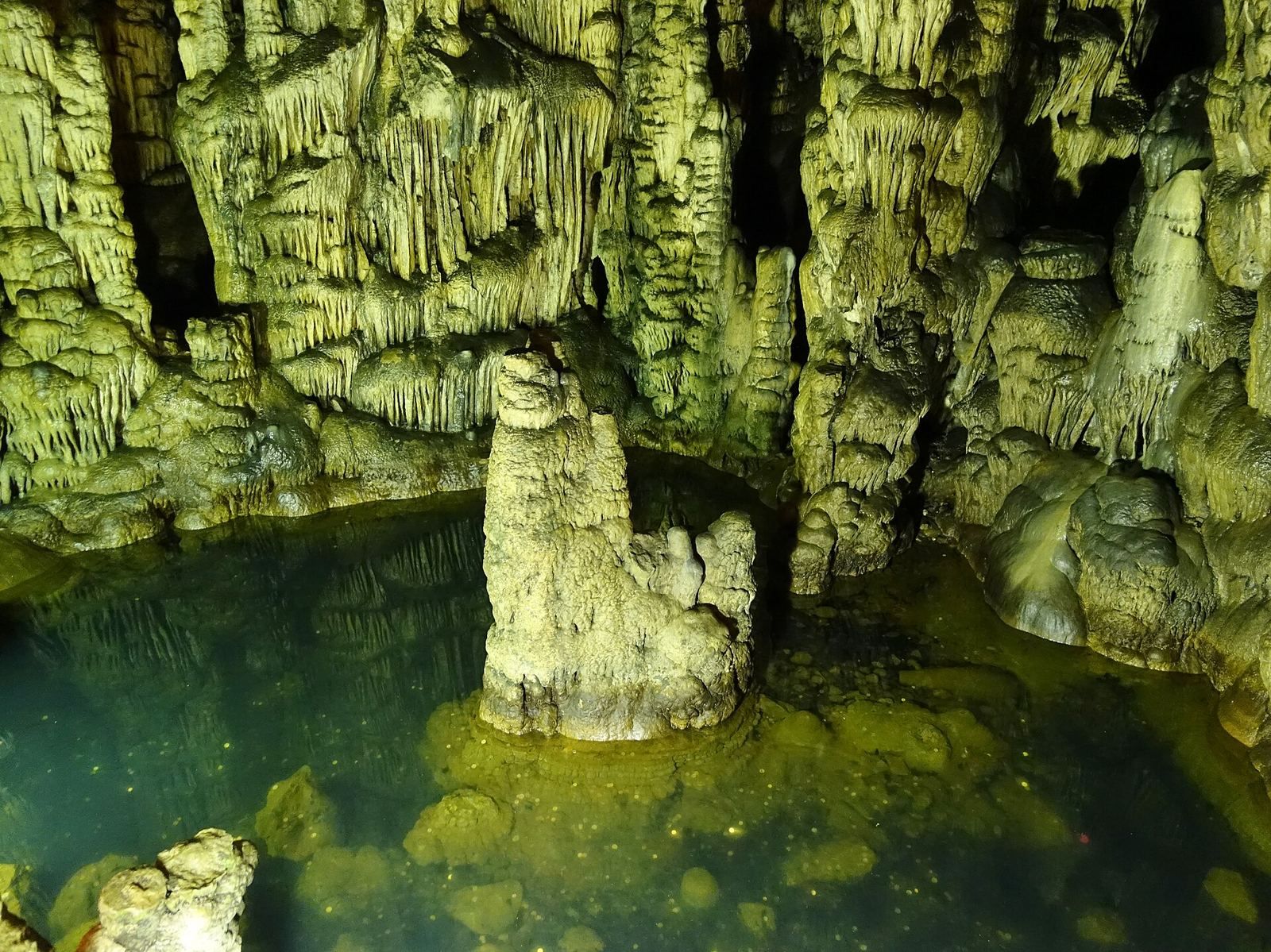
The cave lies about 1,025 metres above sea level, above the Lasithi Plateau and near the village of Psychro. Its interior extends from an entrance vestibule into a large hall, with side chambers and a steep lower grotto leading to an underground pool.
Cave interior
Entrance vestibule
The vestibule measures about 42 by 19 metres. A rectangular altar made of fieldstones, about one metre high, stands in this area. Its date is uncertain, with possible Neolithic, Early Minoan, or Middle Minoan origins. At the northern end, a lower area contains traces of an irregular stone enclosure and a roughly paved floor, probably part of a temenos, or sacred precinct.
Main hall and side chambers
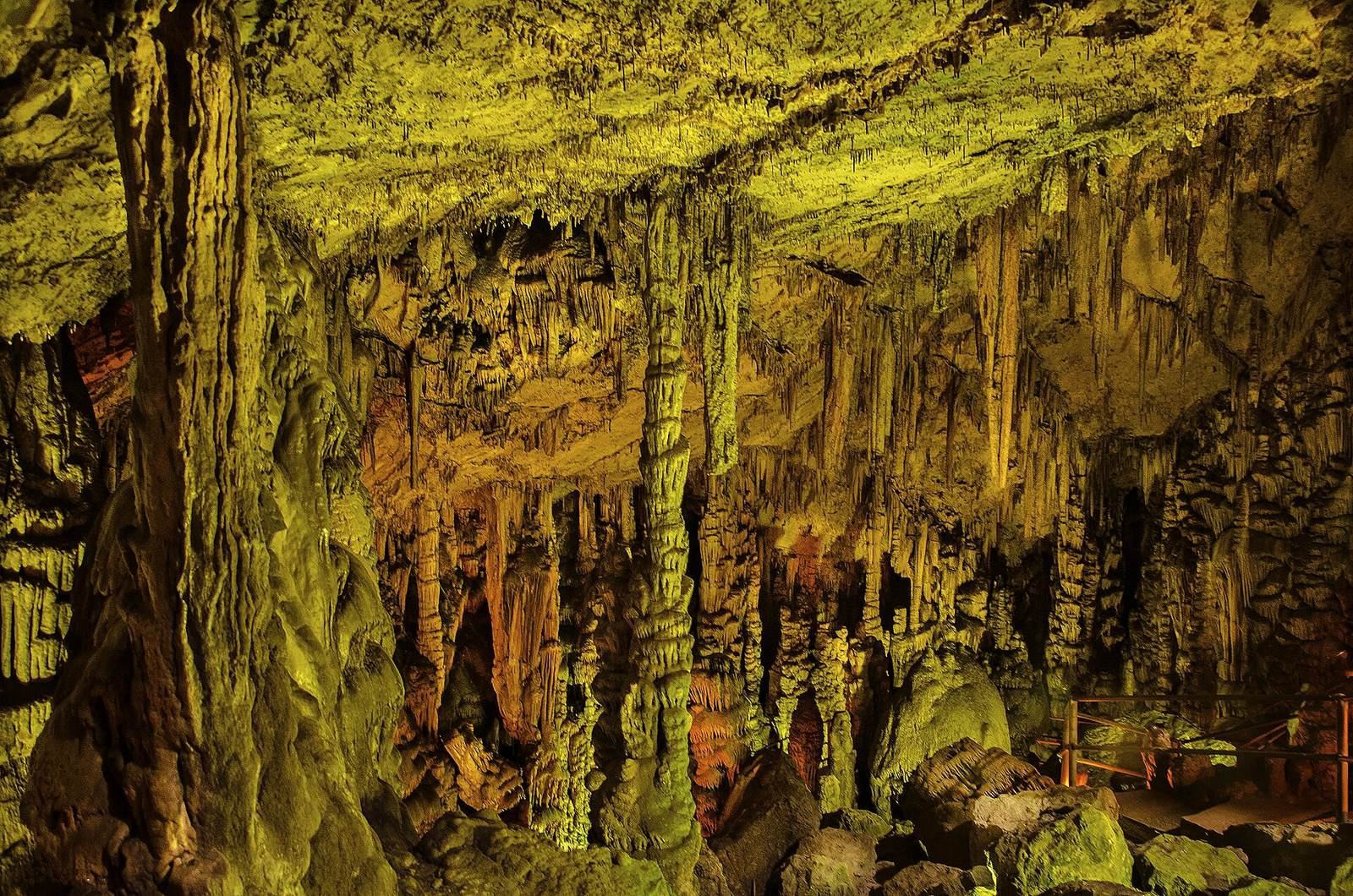
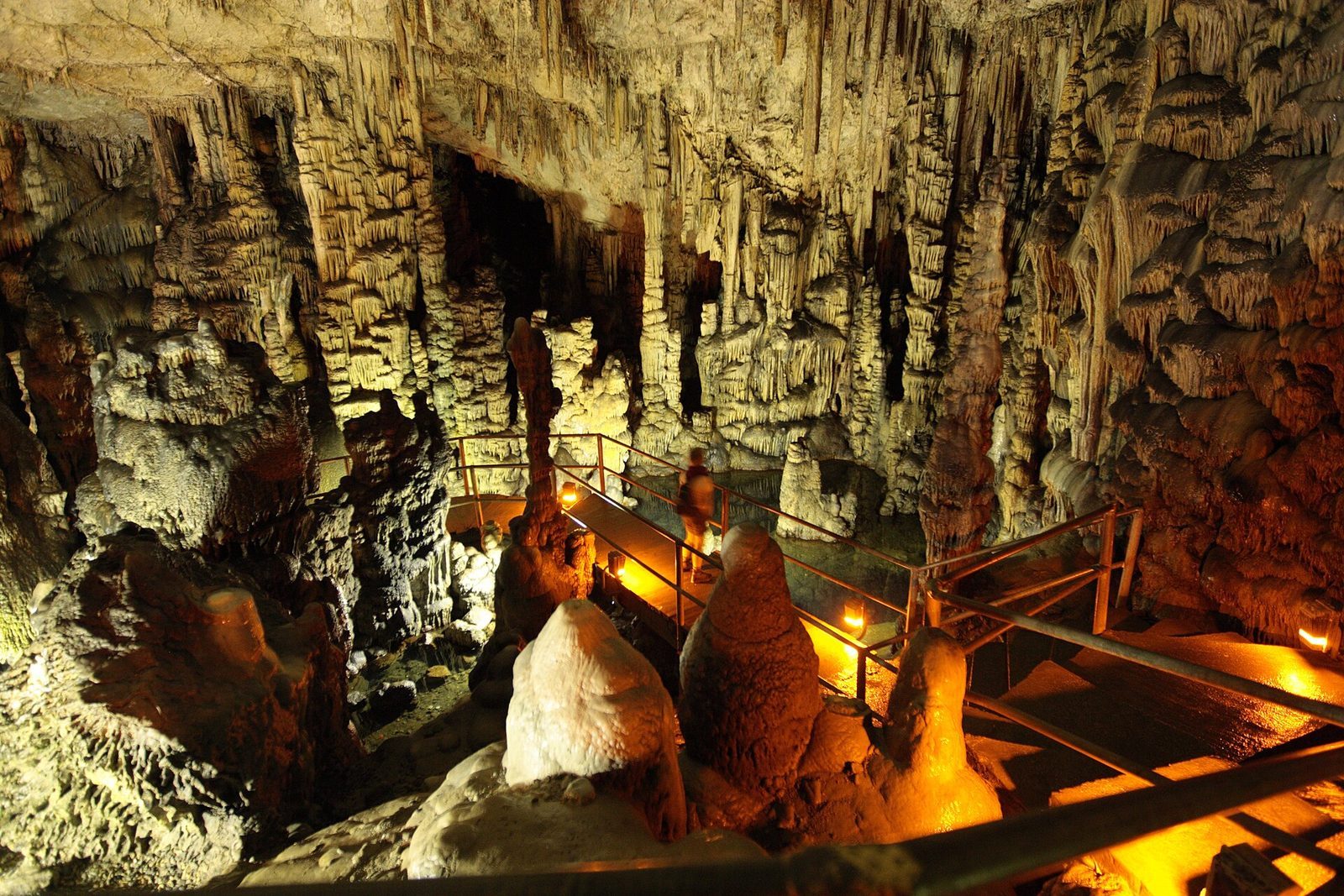
Beyond the vestibule, the main hall measures about 84 by 38 metres and has a sloping floor. A small niche leads to a smaller chamber called Zeus’s liknon. A liknon was a winnowing basket that could also serve a ritual purpose. On the hall’s right side, a larger niche, about 25 by 12 metres, is divided into two parts. One contains a small pool; the other features a stalactite formation called Zeus’s Mantle. Stalactites are mineral formations that hang from cave ceilings.
Lower grotto and pool
A steep descent leads to a lower grotto and an underground pool. Traces of a stair cut into the rock follow part of the descent. Stalactites rise from the pool, and votive objects, offerings dedicated in a religious setting, came from mud at its edge and from crevices in the lowest formations.
Ritual finds and offerings
Upper cave altar and offerings
Excavation in the upper cave revealed a plastered altar surrounded by ash, pottery, and other refuse. Nearby offerings included bronze, terracotta, iron, and bone objects, fragments from about thirty libation tables, and many conical ceramic cups used for food offerings. A libation table was used to offer liquids in a ritual. Animal bones indicate sacrifices of bulls, sheep, goats, deer, and a boar.
Objects from the lower grotto
Small bronze objects, including miniature double axes, knife blades, and needles, had been placed in vertical crevices among the stalactites. Mud beside the pool contained similar objects, as well as male and female statuettes and engraved gems.
Stone tables, figurines, and other objects
A fragment of a steatite, or soft-stone, libation table has three hollows for liquid offerings and signs in Linear A, a Bronze Age Cretan writing system that remains undeciphered. Another piece of that table, a separate steatite table with one hollow, pottery vessels, and a gold band also came from the cave. Other finds include numerous bronze figurines, daggers, arrows, and double axes, as well as stone and ceramic lamps and semi-precious stones such as carnelian, amethyst, jasper, and hematite.
Human clay figurines are known from Psychro and the sanctuary on Mount Ida, the only sacred caves identified as yielding them. Psychro also produced a bronze leg offering, the only votive body part identified from a sacred cave. Finds from the excavations are held in several museums: Evans’s finds are at the Ashmolean Museum, and Demargne’s are at the Louvre. Part of Hogarth’s collection, mainly pottery, is at the British Museum and the Fitzwilliam Museum. Most of his finds, along with those of Hatzidakis and Halbherr, are at the Heraklion Archaeological Museum; some later finds are at the Archaeological Museum of Agios Nikolaos.