Claternae: A Roman Town on the Via Emilia
Site at a Glance
- Popularity
- Medium
- Country
- Italy
- Primary era
- Classical
- Eras represented
- Classical
- Civilizations
- Celtic, Etruscan, Roman
- Site type
- City
On this page12 sections
History
Foundation and prosperity
Claternae was a Roman town near the hamlet of Maggio in Ozzano dell’Emilia, Italy, on the Via Emilia between Bononia (modern Bologna) and Forum Cornelii (modern Imola). The town was founded in the early second century BC, with 187 BC given as its official foundation date. It stood where the Via Emilia met another route, possibly the Via Flaminia Minor, which crossed the Apennines toward Arezzo. The Via Emilia may also have followed part of an older foothill trail. Claternae probably developed as a stopping place for travelers between the larger towns, roughly a day’s march apart for legionaries.
Claternae began as a village and became a municipium, a town with a degree of local self-government, in the first century BC. It served as the chief town of a territory between the Idice and Sillaro streams. The settlement prospered most in the first and second centuries AD, when it was a trading center with a population of several thousand.
Decline and ecclesiastical tradition
The town began to decline in the third century, amid economic and political troubles in the Roman Empire and the start of incursions. Its population decreased, and Claternae was abandoned sometime between the fifth and sixth centuries, not long after the Western Roman Empire fell.
Claternae may also have been the seat of a diocese, a territory overseen by a bishop. A tradition links Constantius, a bishop associated with the town, to a visit to nearby Forum Cornelii at the direction of Ambrose, the fourth-century bishop of Milan, when Forum Cornelii had no bishop. Claternae is no longer a residential bishopric, but its name remains that of a Catholic titular see, a see without a resident bishop.
Excavations and rediscovery
Ploughing brought early finds to light and led to excavations beginning in 1890. Work continued through 1933 under Edoardo Brizio, director of Bologna’s Civic Museum, and Salvatore Aurigemma, an antiquities official. Guido Achille Mansuelli directed further investigations in the 1950s and 1960s. Excavations resumed in the 1980s through cooperation between volunteers and professional archaeologists; later work was more limited, while utility and fiber-optic installations also brought finds to light. The Museum of the Roman City of Claterna, in Ozzano’s Palazzo della Cultura, officially opened on 30 March 2019.
Remains
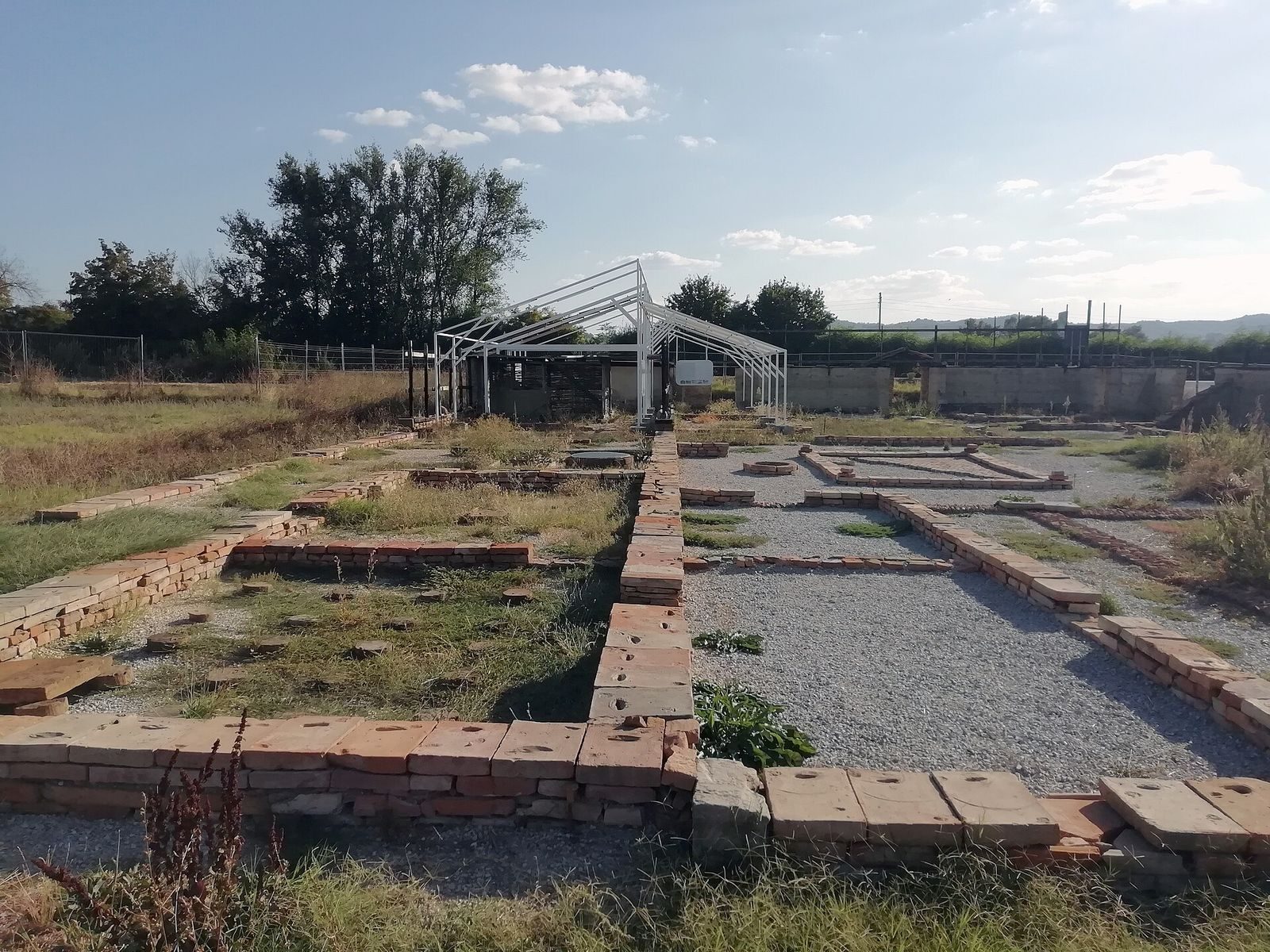
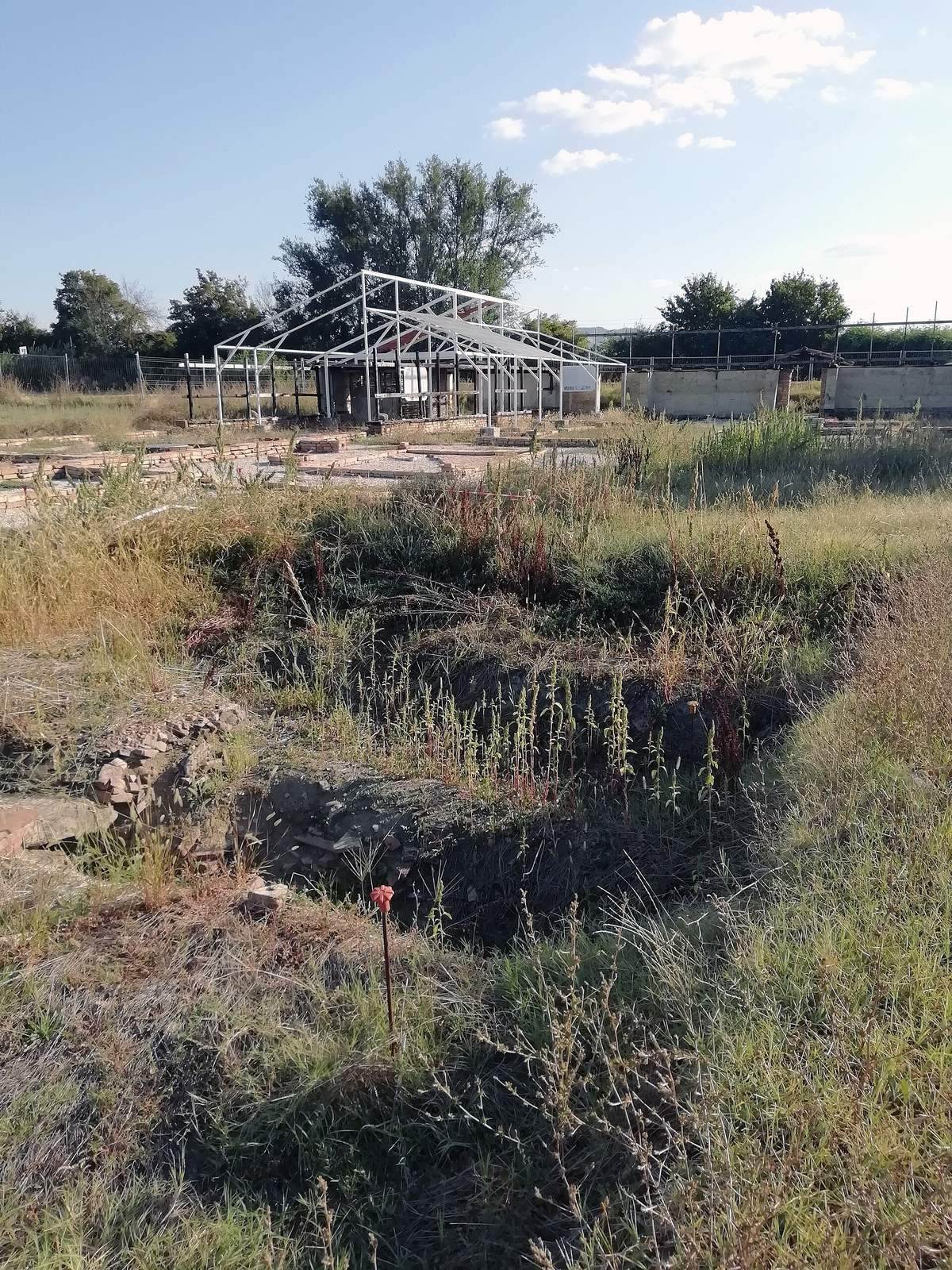
The remains lie near the Quaderna stream, which gave the town its name. Excavated areas include streets, rooms, houses, and public buildings, while much of the ancient town remains beneath fields, with remains surviving nearly intact. Finds include pottery, coins, glass vessels, and mosaics. Evidence from the area also points to settlement associated with Etruscan and Celtic peoples before or alongside Roman expansion.
Streets and houses
Streets and domestic remains
Excavations have exposed sections of streets and rooms, as well as parts of Roman private houses. Some house floors used mosaics or a mortar mixed with crushed pottery fragments.
House of the Mosaics
The House of the Mosaics occupies sector 12, south of the Via Emilia. Its floors, found during excavations in the 1930s, are now displayed at Bologna’s Civic Archaeological Museum.
Blacksmith’s House
Sector 11, north of the Via Emilia, contains the remains of an artisan’s home and workshop known as the Blacksmith’s House. It has been reconstructed using experimental archaeology.
Public and other structures
Public buildings
Claternae had temples, a theatre, baths, and a forum. Excavated remains of the theatre and forum have been covered again while awaiting their permanent arrangement.
Curved-ended structure
A partly excavated building with a curved end was investigated in 1959. Its function remains uncertain.