St Hedwig’s Church in Dębowa Łęka: A Gothic Parish Church in Poland
Site at a Glance
- Popularity
- Very Low
- Country
- Poland
- Primary era
- Medieval
- Eras represented
- Medieval, Early Modern
- Civilizations
- Kingdom of Poland, Polish–Lithuanian Commonwealth
- Site type
- Religious
- Remains
- Church
On this page9 sections
History
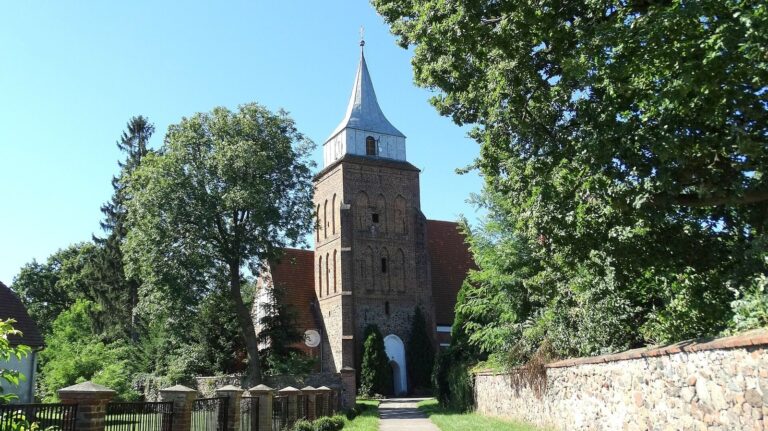
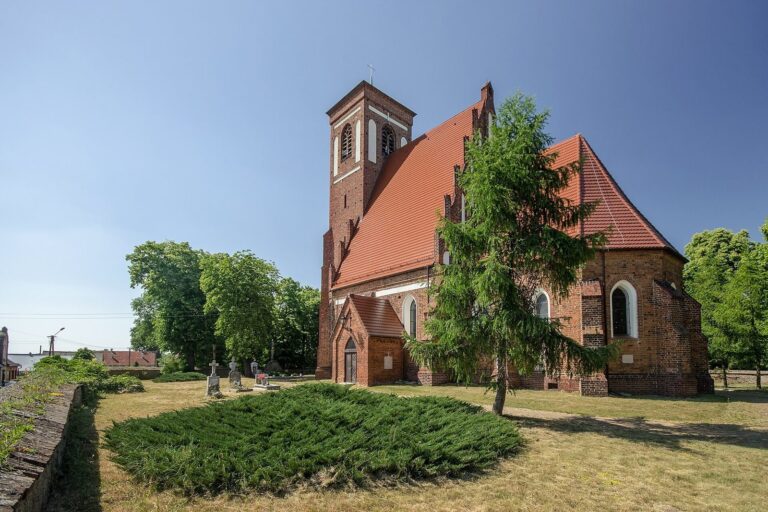
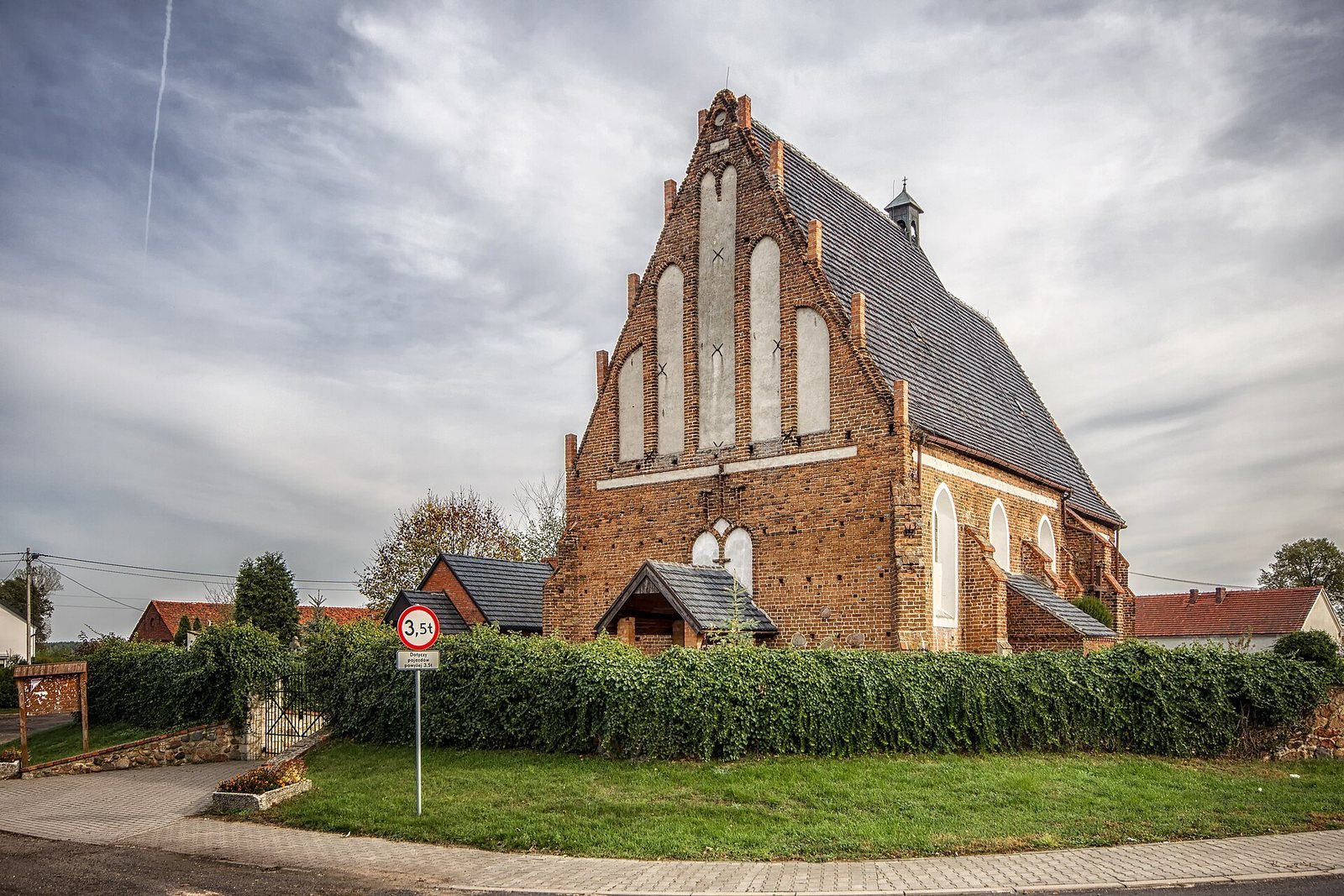
St Hedwig’s Church in Dębowa Łęka is a Roman Catholic parish church in Poland, dedicated to St Hedwig and completed in the 15th century in the Gothic tradition, a medieval European architectural style.
In the 16th century, the church was converted for Protestant worship, a form of Christianity that emerged from the Reformation. It returned to Catholic use in 1610. The church entered Poland’s official monument register on 3 April 1961.
Remains
Church architecture
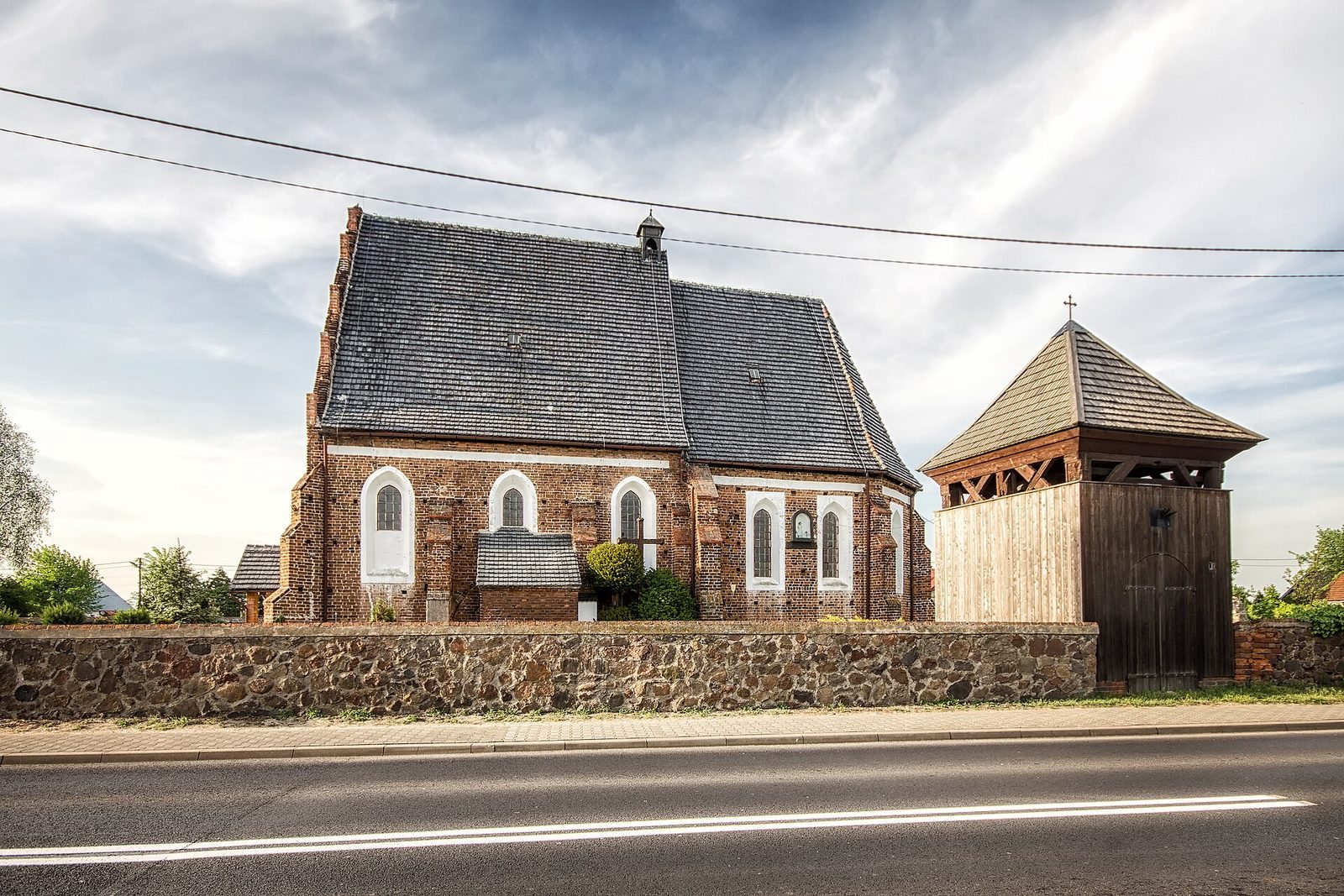
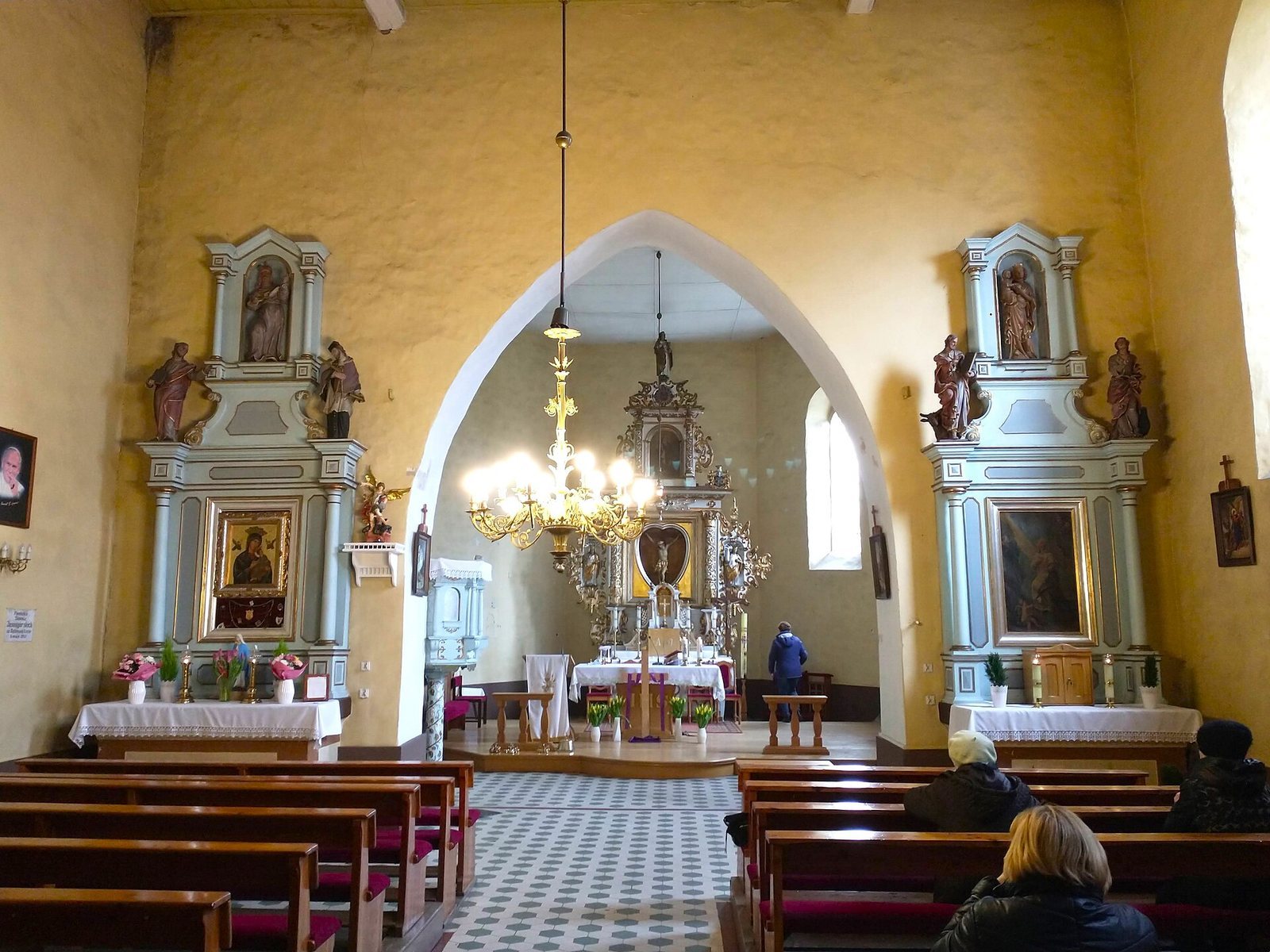
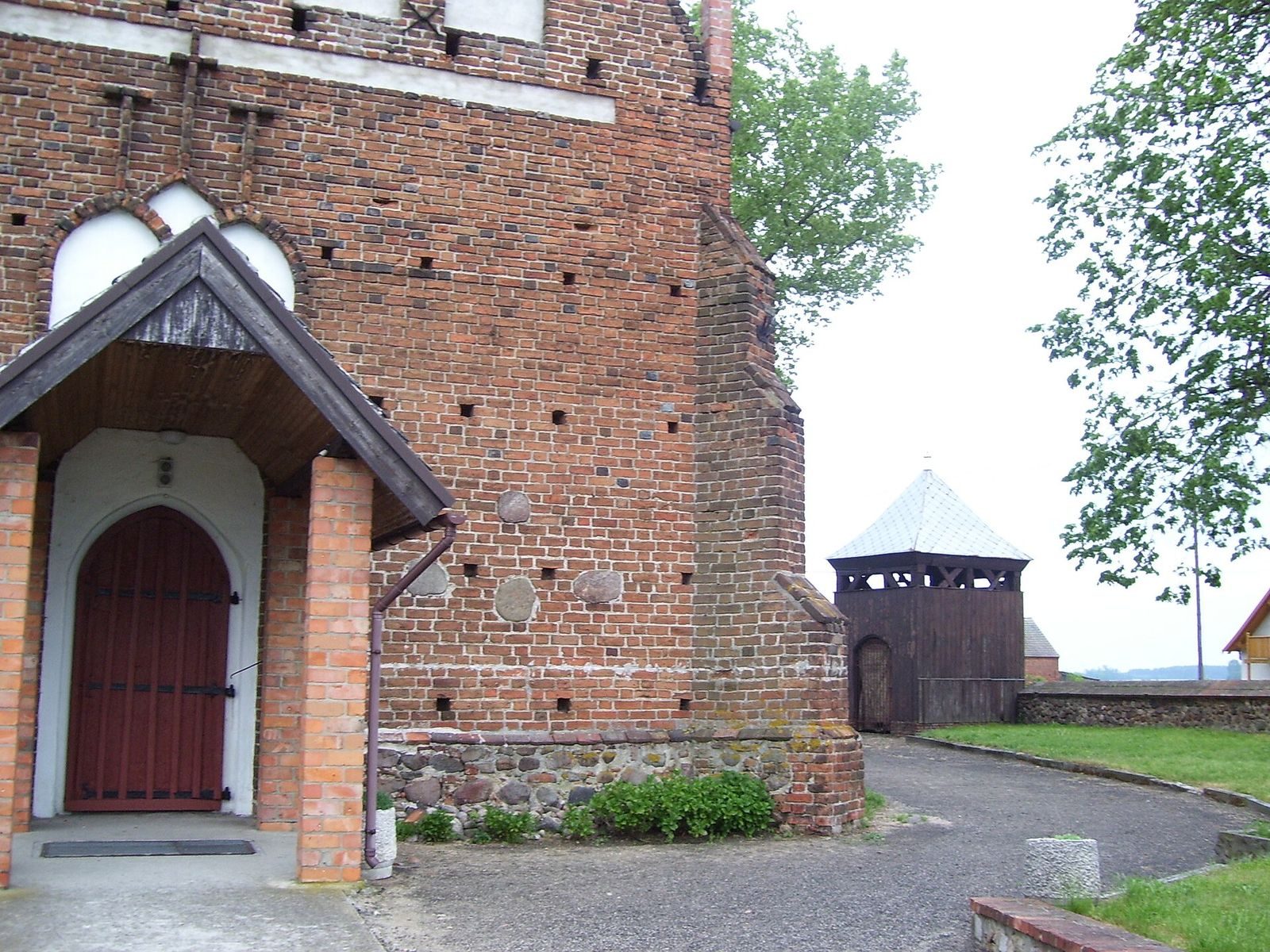
The church has a single nave and a narrower presbytery, the part containing the main altar, which ends in three sides. Its Gothic walls are built of brick laid in Polish bond, a patterned arrangement of bricks, with stone in the western wall. A small turret rises above the nave, and buttresses with two stepped offsets support the exterior.
Interior furnishings and memorials
Baroque altar
The interior decoration dates to the 17th and 18th centuries and follows the Baroque tradition, known for elaborate ornament. The richly decorated 17th-century altar features cartouches, ornamental framed panels, and coats of arms. It includes a sculpture of Christ on the cross and a painting of St Hedwig dated to the 17th or 18th century.
Gothic sculpture
A Gothic sculpture of the Virgin and Child, made in the second half of the 14th century, is set at the top of a side altar.
Renaissance tombstone
A sandstone tombstone dated 1572 is set into a wall. Its low-relief carving depicts Albert Ossowski. Renaissance art drew on classical forms.
Organ
The mechanical organ has one hand-played keyboard, a foot-operated pedal keyboard, and six stops that control sets of pipes. It had not been renovated after 1945 and required tuning.
Bell tower
A wooden bell tower beside the church dates to 1793. The single-storey structure has an openwork section beneath the eaves and a pyramidal roof. A Gothic bell dated 1460 is also preserved.