Holy Trinity Church in Stębark: A Baroque Parish Church
Site at a Glance
- Popularity
- Very Low
- Country
- Poland
- Primary era
- Early Modern
- Eras represented
- Medieval, Early Modern, Modern
- Civilizations
- Brandenburg-Prussia, German, Kingdom of Prussia, Teutonic Order
- Site type
- Religious
- Remains
- Church
On this page9 sections
History
Holy Trinity Church in Stębark, Poland, is a Baroque parish church built in 1681 by its Protestant congregation. Its history is linked to a medieval Marian chapel that became a pilgrimage destination.
The medieval Marian chapel
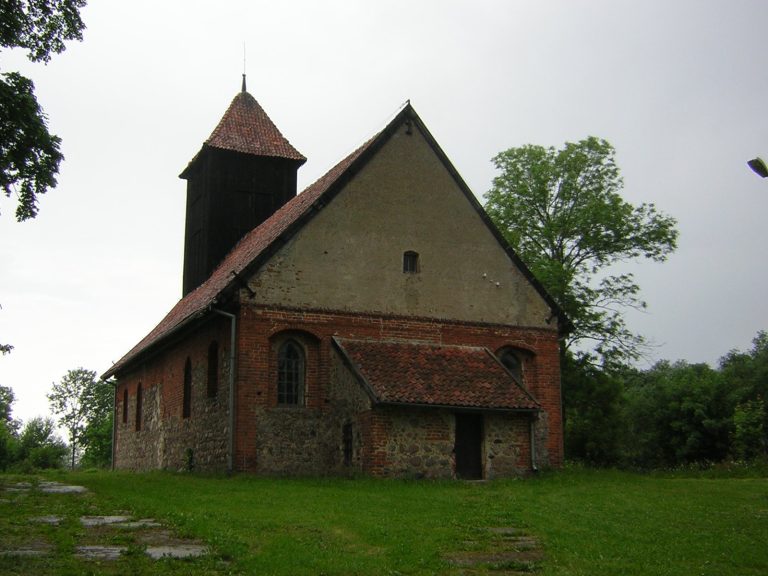
A church may have stood at Stębark before the Reformation. In 1413, the Grand Master of the Teutonic Order, a medieval religious-military order, commissioned a Marian chapel in memory of Ulrich von Jungingen, who had died at the Battle of Tannenberg in 1410. The chapel was destroyed in 1414 and rebuilt in 1416. It drew pilgrims for centuries before being destroyed again in 1656.
The Protestant congregation
In 1681, the Protestant congregation built the present church. It acquired its current appearance around 1800, was renewed in 1824, and was enlarged laterally in 1909. The congregation belonged to the Saalfeld church inspection, a regional Protestant administrative unit, and was initially assigned to the church at Mühlen.
By 1945, the Mühlen and Tannenberg congregations had united, with the parish seat at Mühlen. Their churches were within the Hohenstein superintendent’s district, an area overseen by a church official, and the Osterode church district of the Church of the Old Prussian Union, a Protestant body in Prussia. In 1925, the Tannenberg parish district had 2,126 members; the united congregations had 3,926, and the Tannenberg parish encompassed ten villages or localities. Church patronage, the rights and responsibilities held by a patron, was last exercised by the estate owner Thomasius of Frygnowo and the Kloster Berge Foundation in Magdeburg. The Tannenberg registers include baptisms from 1704 to 1944, marriages and burials from 1705 to 1944, and confirmations from 1766 to 1834. Some entries are shared with Mühlen; the registers are held at the Evangelical Central Archive in Berlin-Kreuzberg.
A Catholic parish after 1945
Before 1945, Roman Catholic residents of Tannenberg belonged to the parish at Thurau in the Diocese of Warmia. After the war, Polish settlers, almost all Catholic, arrived in Stębark; a separate parish was established and the church passed into Roman Catholic ownership. It is now a Catholic parish church in the Grunwald deanery, a subdivision of a diocese, within the Archdiocese of Warmia. The Protestant congregation in Tannenberg ended as a consequence of the war. Protestant residents now belong to the church in Olsztynek, within the Olsztyn parish and the Masurian Diocese of the Evangelical-Augsburg Church in Poland, a Lutheran Protestant church body.
Remains
Church structure and interior
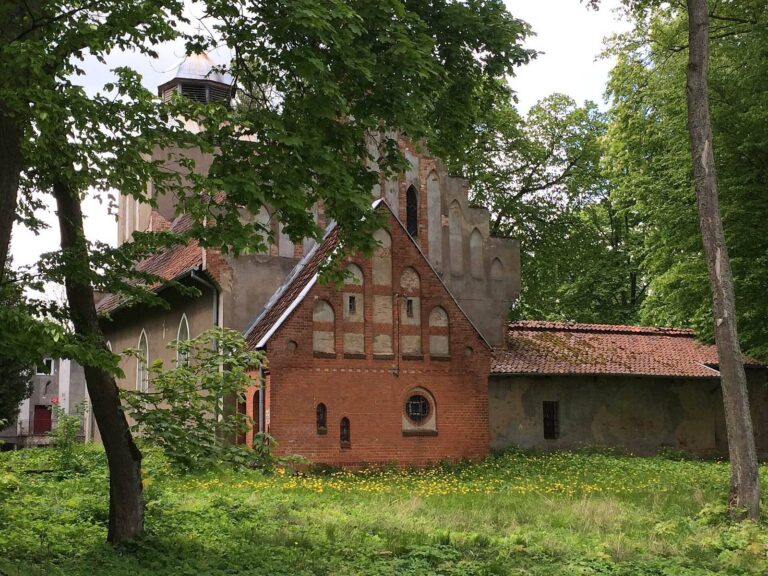
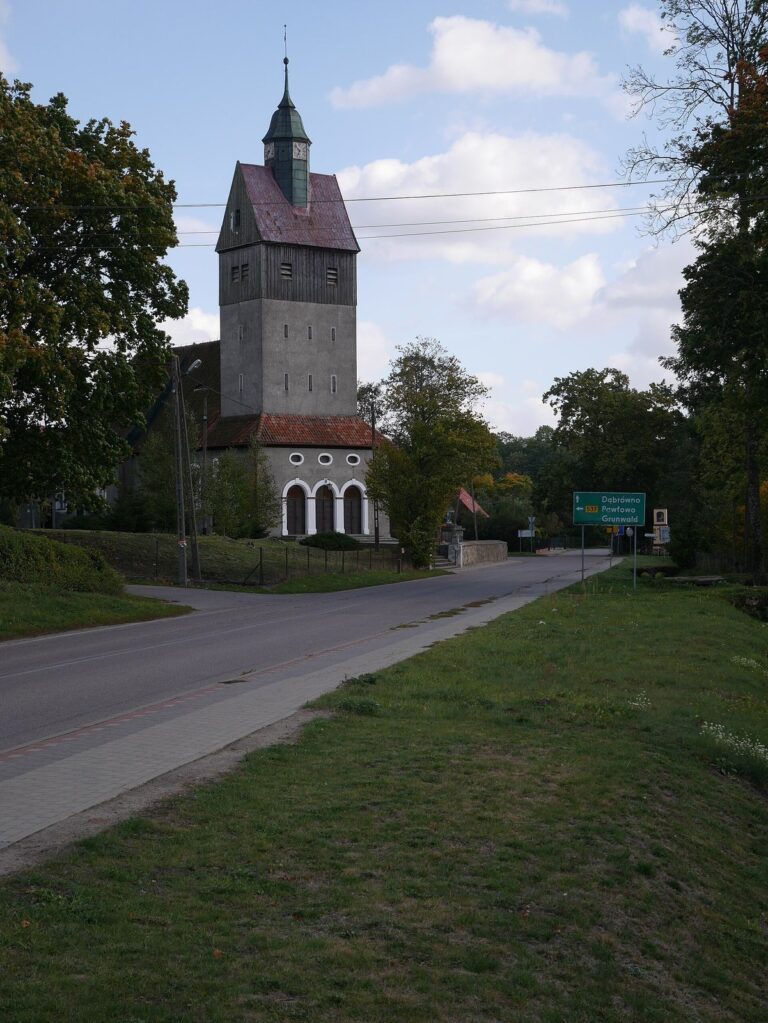
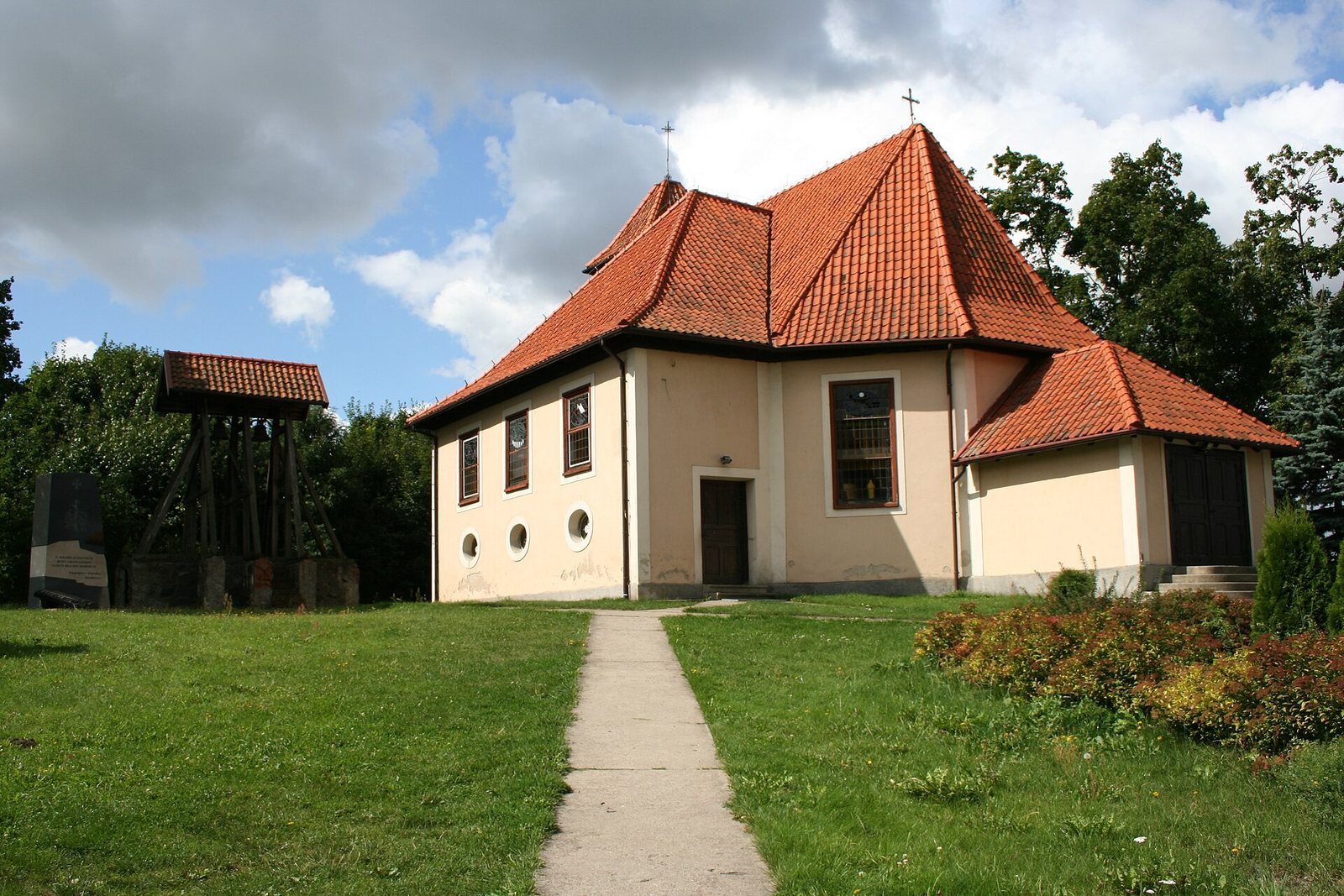
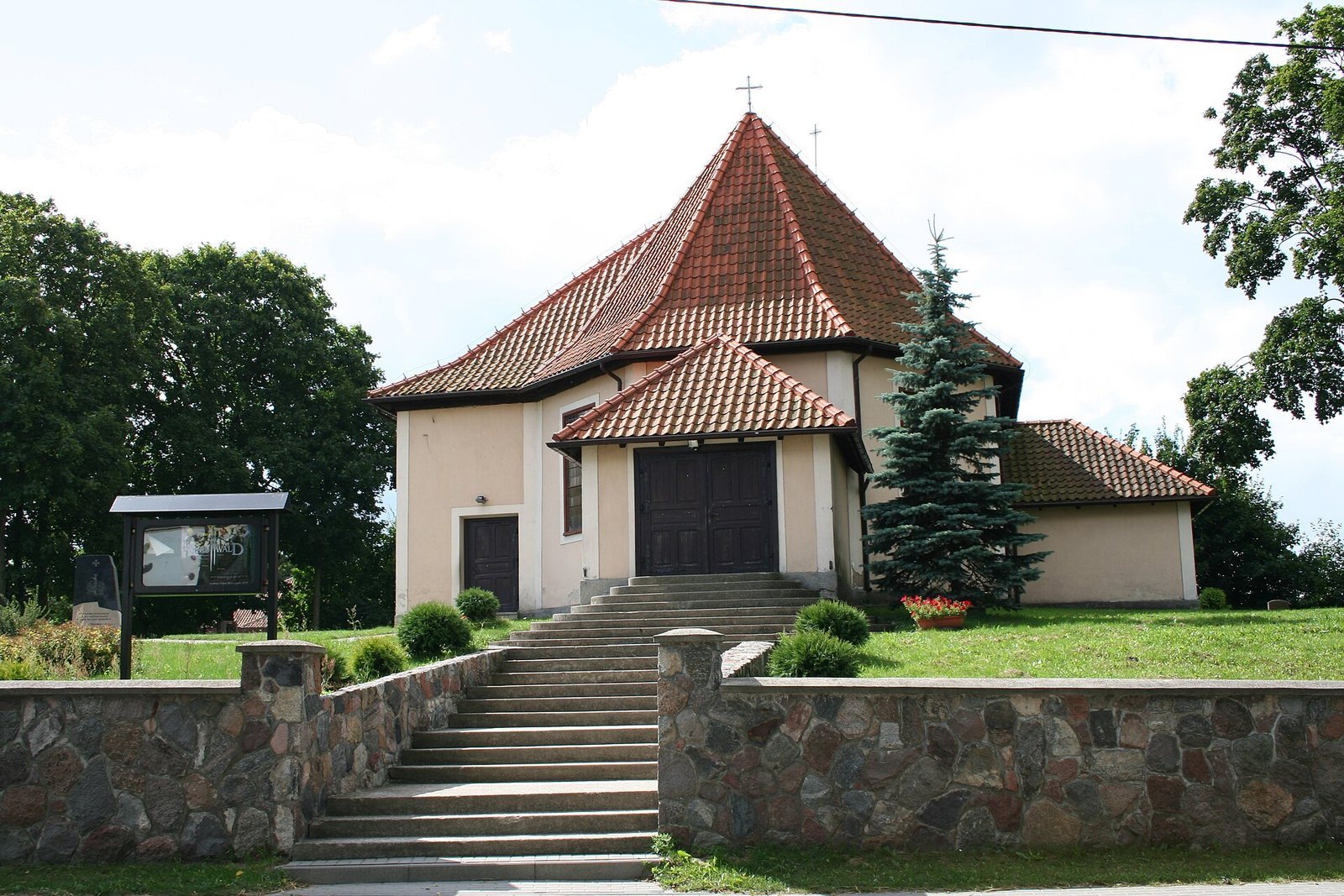
The church stands in the middle of Stębark, south of the main road toward Frygnowo. Its plastered Baroque structure has three-sided ends, a wooden roof turret at the west end, and a sacristy on the east side, a room for church furnishings and service preparation. Galleries run around the interior, while the central nave has a wooden ceiling shaped like a half-cylinder.
Furnishings and bells
The altar and pulpit were made as a pulpit-altar in 1681, combining both in one structure; they were separated in alterations after 1945. An organ was installed in 1873 and enlarged in 1909. Beside the church, a bell frame built in 1847 holds two bells cast in 1857.
Burial place and donated windows
On the church’s north side is the von Brandt family’s eighteenth-century burial place, where some graves remain. The family donated a church window, as did Prince Eitel Friedrich of Prussia, who served as head of the Order of St John.
Marian chapel ruins
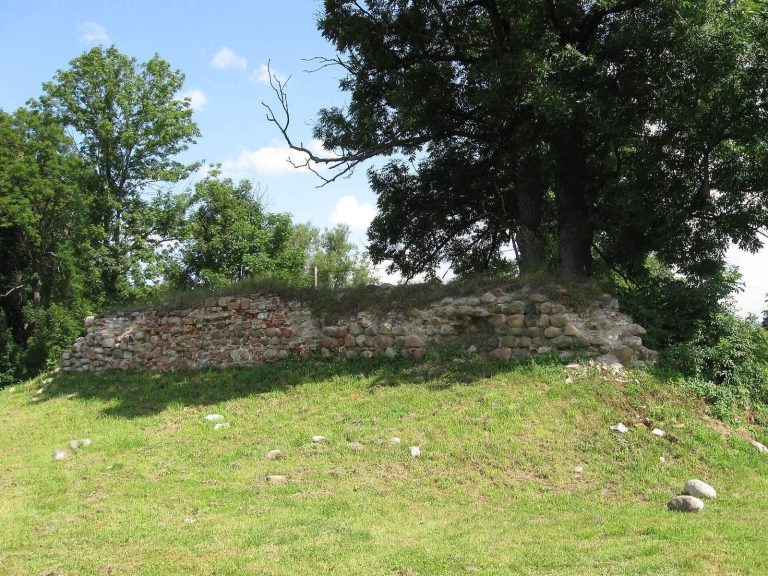
Ruins of the medieval Marian chapel survive at Stębark.