Church of Saint George of the Genoese: A Renaissance Church in Palermo
Site at a Glance
- Popularity
- Medium
- Country
- Italy
- Primary era
- Early Modern
- Eras represented
- Early Modern
- Civilizations
- Kingdom of Sicily, Spanish
- Site type
- Religious
- Remains
- Church
On this page17 sections
History
Origins and Genoese acquisition
The Church of Saint George of the Genoese is a Roman Catholic church in Palermo, Italy, built by the city’s Genoese community from 1576 to 1596 during the Renaissance, the Italian cultural movement that shaped art and architecture from the fifteenth century onward. Dedicated to Saint George, it reflects the religious life and expanding influence of Genoese residents in Palermo.
Before the church was built, Palermo’s Genoese community held services, supported religious activity, and buried its dead in a chapel within the complex of San Francesco d’Assisi. A confraternity, a lay religious association, dedicated to Saint George was also associated with San Francesco. By 1424, a Confraternity of Saint Luke was based at an earlier church of Saint Luke near La Cala.
In 1576, the Genoese community bought the small church of Saint Luke and the surrounding land. Its confraternity could not afford the restoration costs, and the agreement allowed it to retain a chapel for members’ burials. The Genoese were permitted to demolish the old church and replace it with a church dedicated to Saint George, a historic emblem of Genoa.
Construction and Genoese influence
The church was built over the following two decades. Its design was by Piedmontese architect Giorgio Di Faccio, assisted by marble worker Battista Carabbio. The project took shape as the Genoese community gained economic weight in Palermo. Genoese bankers had overtaken the Pisans in the banking sector of the Kingdom of Sicily, the historical kingdom centered on Sicily, and wealthy Genoese families helped pay for the church.
Families connected with Palermo’s Genoese banking and mercantile circles included the Bozolo, Castello, Costa, Doria, Ferrero, Lomellino, Marassi, Pallavicino, Pernice, Segno, and Spinola families. Genoese bankers and merchants also provided substantial loans during political and economic crises under Charles V, a Habsburg ruler who held the Spanish crown and was Holy Roman Emperor, and Philip II, the Spanish king who succeeded him. The church stood between a city exit and a new port quay promoted by Palermo’s senate, a setting that reflected the community’s commercial and financial prominence.
Burial and later use
The Renaissance painter Sofonisba Anguissola was buried in the church in 1625. She had been married to Fabrizio Moncada and later to the Ligurian patron Orazio Lomellini.
After a period of inactivity, the church came to be used for temporary exhibitions, while its underground rooms hosted cultural meetings. A recent restoration changed the arrangement of paintings in the church’s niches. Their present placement differs from the display in Gaspare Palermo’s 1816 guidebook and does not reflect the relationship between commissioning families and their associated burials. The church belongs to the Archdiocese of Palermo and follows the Roman Rite, the liturgical tradition of the Latin Church.
In 1963, Italian filmmaker and writer Pier Paolo Pasolini filmed an opening scene of Comizi d’amore outside the main façade. The scene shows surroundings still affected by heavy bombing about two decades earlier, which had almost entirely destroyed the San Pietro district. Some buildings in the area were later demolished.
Remains
Plan and exterior
Plan and construction
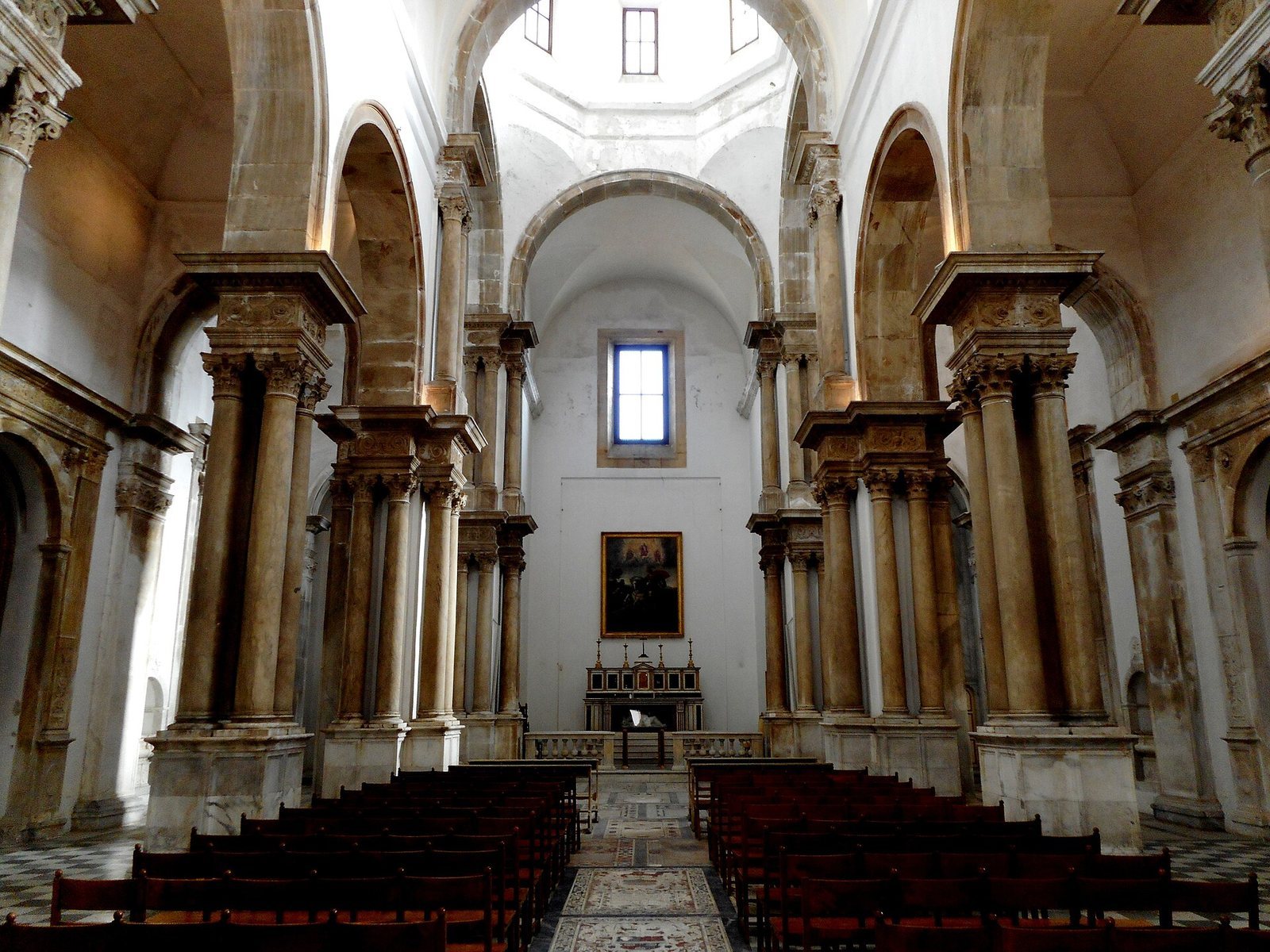
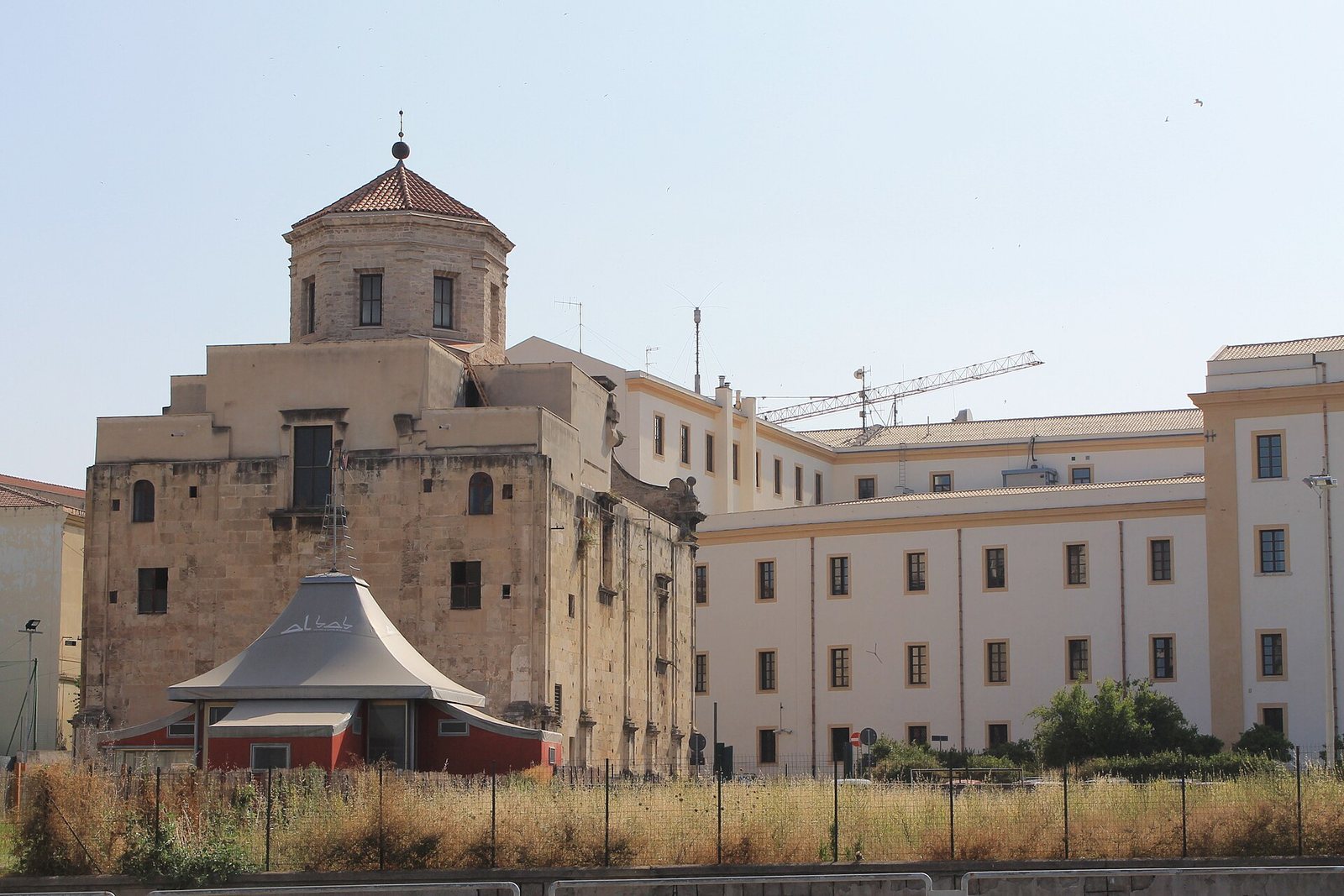
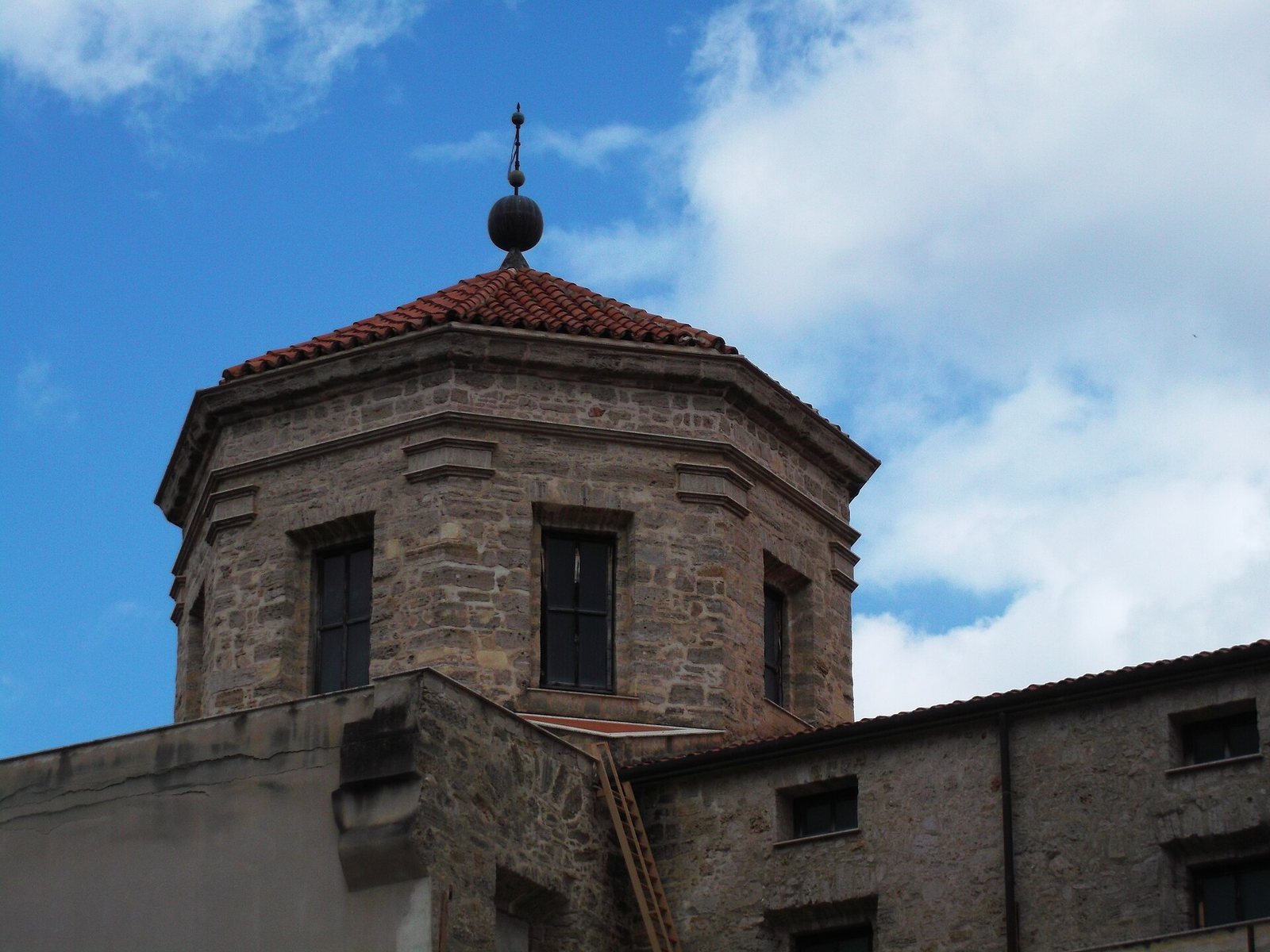
The church has a three-aisled plan shaped like a Latin cross, with a long central space crossed by a shorter arm. An eight-sided dome rises above the crossing, and the façade faces west. The exterior draws mainly on Tuscan styles, while the interior combines Byzantine influences from the Eastern Roman Empire with Norman artistic traditions. Round arches rest on pairs of white Carrara marble columns. At the dome supports, paired columns are set one above another on the side facing the altar area.
The church stands in Palermo’s historic Loggia quarter near the port of La Cala. It was built a short distance from the former civic walls and Porta San Giorgio, both now gone. Today it lies at the edge of the built-up area beside the interstate highway and Via Cavour. A worn obelisk north of the church commemorates 13 revolutionaries shot nearby by Bourbon authorities a month before Garibaldi’s liberation, the campaign that ended Bourbon rule in Sicily.
Main façade
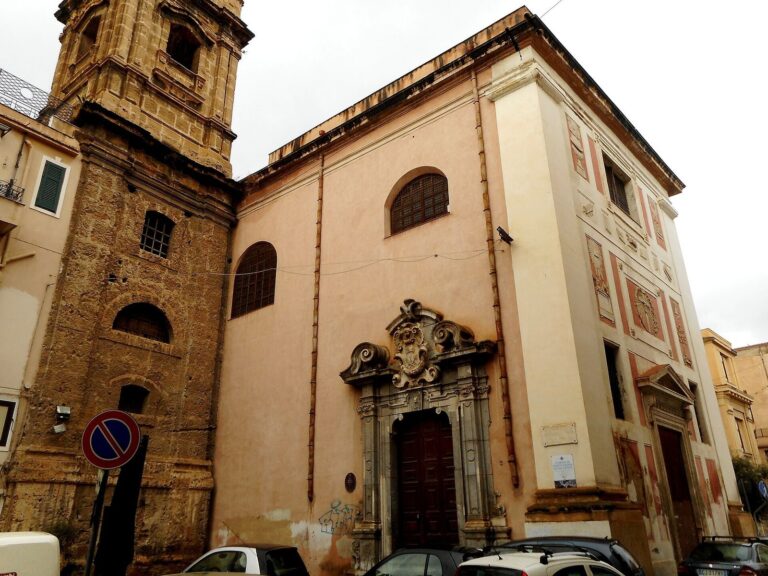
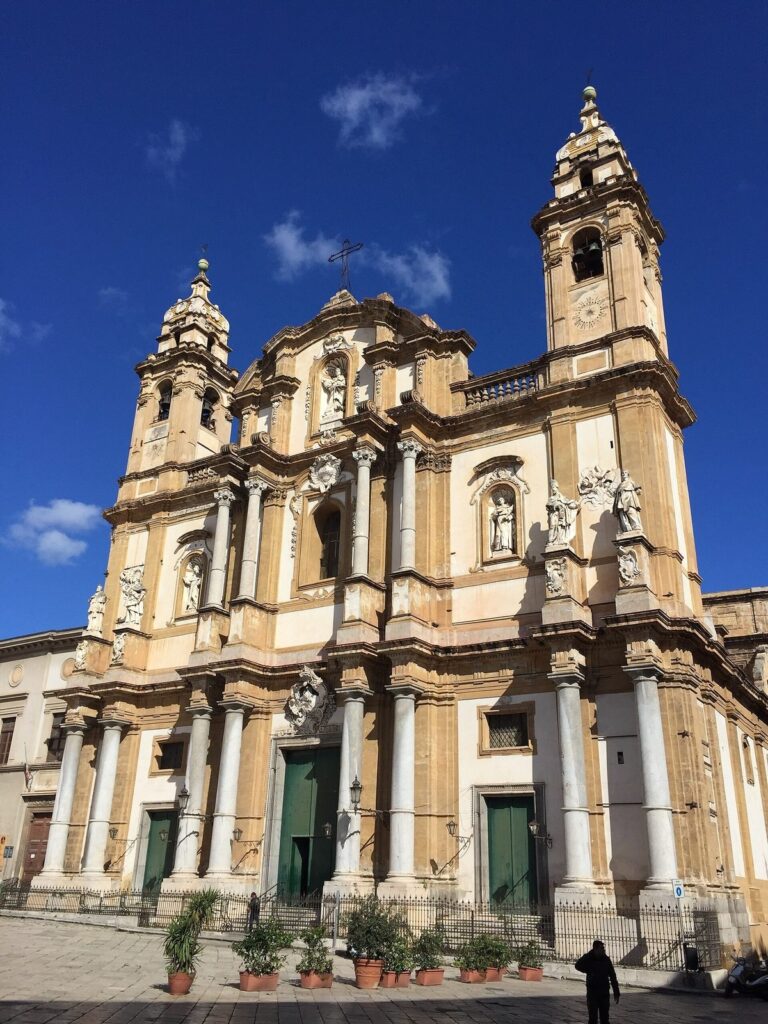
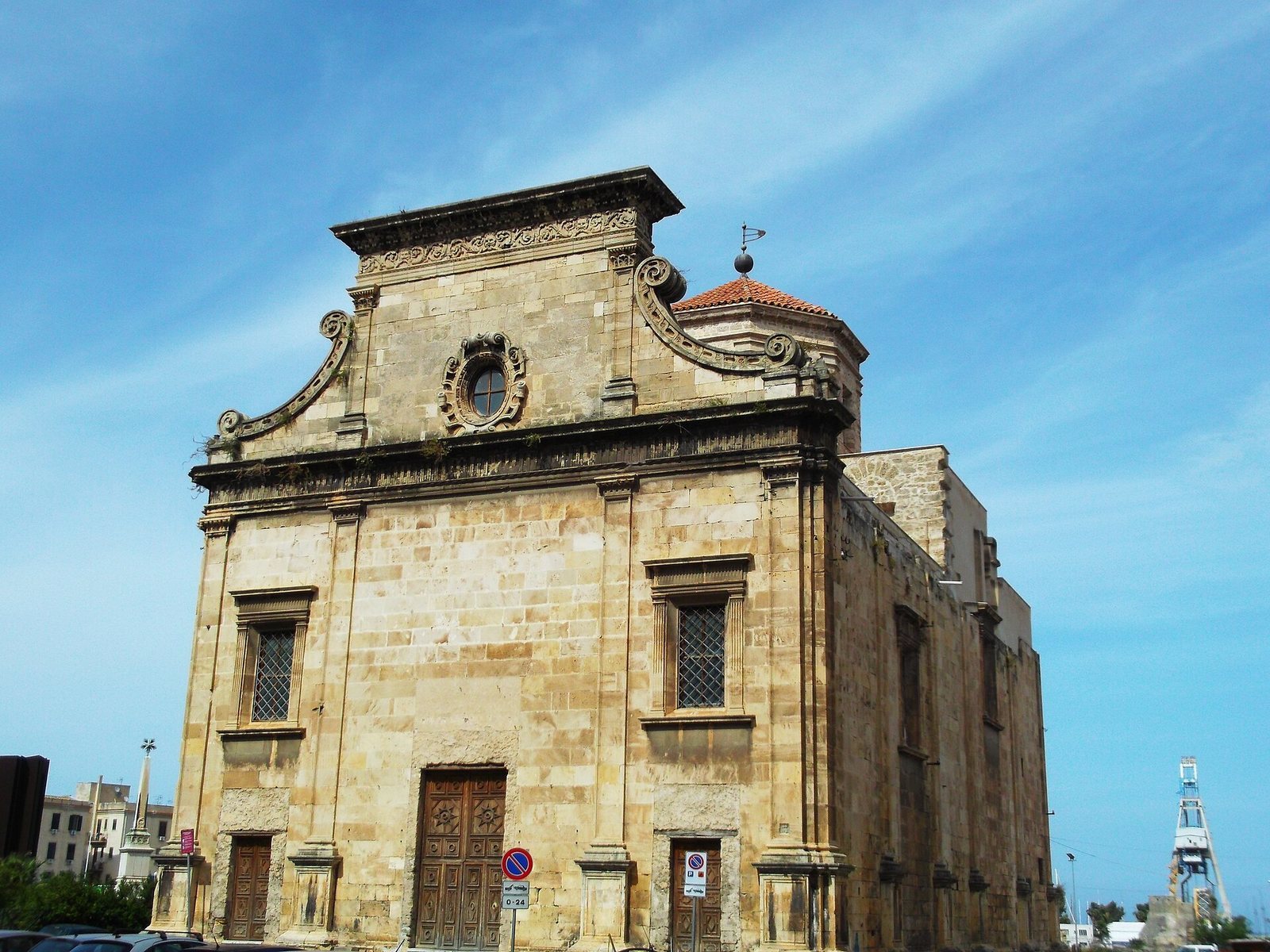
The slender Renaissance façade has two levels separated by an elaborate projecting band, with scroll-shaped forms linking the levels. Four tall, flat columns on high bases frame three entrances; barred windows stand above the two side entrances. Smaller columns frame a richly decorated oval window in the upper level, beneath a flat crowning pediment and an elaborate band of plant forms. The façade has no portico, a feature associated with the building’s exclusively religious use. It is regarded as an important example of Renaissance architecture in Palermo.
Chapels and paintings
High altar chapel
The main chapel contains a seventeenth-century painting of Saint George and the Dragon by an unknown artist. Beneath the altar table is a marble statue of Saint Rosalia by Giovanni Battista Ragusa. The church’s paintings are oil on canvas, and the side-chapel altars have restrained stone surrounds.
Apse and transept chapels
The right apse chapel, dedicated to the Virgin Mary, contains Filippo Paladini’s 1601 painting of Saint Luke painting the Virgin. It was formerly displayed on the inner face of the entrance wall. In the right transept, the chapel dedicated to Saint John the Baptist holds Jacopo Palma il Giovane’s 1604 painting of the Baptism in the Jordan.
The left apse chapel is dedicated to Saint George and contains Bernardo Castello’s 1604 painting of the saint’s martyrdom. The left transept chapel is dedicated to the Crucifix and has a wall-mounted seventeenth-century container for relics, with a wooden crucifix.
Right aisle chapels
The first bay of the right aisle contains the Chapel of the Madonna of the Rosary, with Luca Giordano’s painting Madonna of the Rosary and Saints. In the second bay, the Chapel of Saint Vincent of Saragossa holds Jacopo Chimenti da Empoli’s 1614 Martyrdom of Saint Vincent of Saragossa. The third bay contains the Chapel of Saint Stephen the Protomartyr, where Bernardo Castello’s 1581 painting depicts the stoning of Saint Stephen. This chapel was originally under the patronage of Leonardo del Bene’s family.
A sarcophagus and a wall-mounted funerary monument are also in the right aisle. At its far end, a floor tombstone of variegated marble marks Sofonisba Anguissola’s burial place.
Left aisle chapels
The first bay of the left aisle contains the Chapel of Saint Francis of Assisi, with Gerardo Astorino’s painting of the saint in ecstasy. The second bay is the Chapel of the Patroness of Genoa, which holds Domenico Fiasella’s painting of the Madonna as Genoa’s patroness. In the third bay, the Chapel of the Annunciation contains Luca Giordano’s painting of the Annunciation and a funerary sarcophagus. A wall-mounted funerary monument is also found in the left aisle.
Other paintings and memorials
Other paintings associated with the church include the Most Holy Annunciation, commissioned by Tommaso Lomellini in 1521; Jacopo Palma il Giovane’s 1594 Annunciation, commissioned by Giovanni Agostino Signio; and the 1583 Saint Vincent the Martyr, commissioned by Andrea Molocello. Numerous funerary plaques and small shrine-like marble frames inside the church reflect competition among wealthy Genoese families for prestigious memorials within their community’s place of worship.
Well and underground rooms
Miracle Well
A well known in English as the Miracle Well is associated with a tradition that Blessed Jeremiah, a formally beatified person authorized for veneration, revived a young woman there in 1455.
Underground rooms
The church’s underground rooms contain frescoes. They have also been used for cultural meetings.