Oiniadai: An Ancient Greek City-State in Acarnania
Site at a Glance
- Popularity
- Medium
- Country
- Greece
- Primary era
- Classical
- Eras represented
- Classical
- Civilizations
- Ancient Greek, Kingdom of Macedon
- Site type
- City
On this page12 sections
History
Oiniadai was an ancient Greek city-state, a political community centered on a city, in Acarnania, western Greece, on the west bank of the Achelous River near its delta. It was one of the region’s most important cities, and its name was traditionally linked to Oeneus, a mythical hero. Oiniadai is first mentioned around 455 BCE.
Fifth-century BCE conflicts
After the Third Messenian War, a revolt in Messenia against Spartan rule, Athens settled Messenians at Naupactus. Soon afterward, the Messenians captured Oiniadai and held it for a year, until the Acarnanians forced them to leave. Oiniadai was then regarded as an enemy of Athens, a circumstance given as one reason for the attack. In 454 BCE, the Athenian leader Pericles besieged the city but failed to take it.
Before the Peloponnesian War, the fifth-century BCE conflict between Athens and Sparta and their allies, Oiniadai belonged to the Peloponnesian League, a coalition led by Sparta. It sided with Sparta during the war; among Acarnanian cities, only Astacus did so as well. In 429 BCE, the Athenian commander Phormion campaigned in Acarnania to extend Athenian influence. He captured Astacus but did not attack Oiniadai during the winter. The following year, Phormion’s son Asopius sailed up the Achelous and ravaged the city’s territory. In 424 BCE, the Athenian general Demosthenes and other Acarnanians compelled Oiniadai to join their alliance.
Aetolian and Macedonian rule
In the fourth century BCE, Oiniadai belonged to the Second Athenian League, an alliance headed by Athens. During the time of Alexander the Great, the Aetolians, an ancient Greek people from western Greece, expanded west of the Achelous, captured the city, and expelled its inhabitants. Alexander threatened them with retaliation. Oiniadai remained under Aetolian control until 219 BCE, when Philip V of Macedon seized it and strengthened its citadel, a fortified stronghold within a settlement.
Roman control and later record
Oiniadai remained important amid the conflicts between Macedon and Rome. In 211 BCE, Roman forces commanded by Marcus Valerius Laevinus captured it along with nearby Nesus, also known as Nasus, and handed both places to their Aetolian allies. Under the terms of the peace between Rome and the Aetolians in 189 BCE, Oiniadai returned to Acarnanian control.
After 189 BCE, the city largely disappears from the historical record, although the Greek geographer and historian Strabo refers to it as still existing. In the nineteenth century, scholars disputed its location, with some identifying it as the place now recognized as Pleuron. Excavations at Oiniadai took place in 1900–1901.
Remains
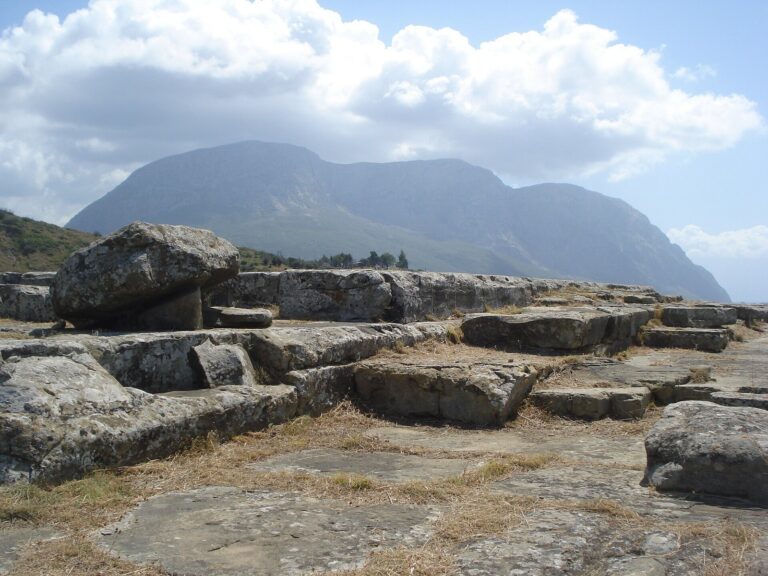
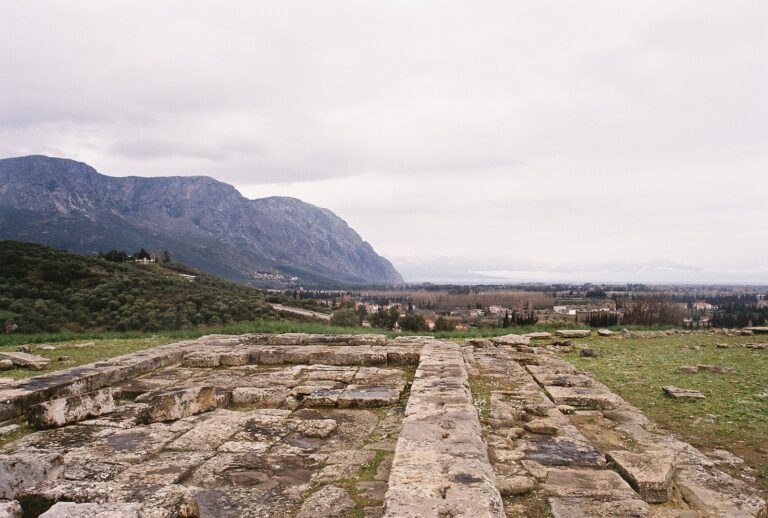
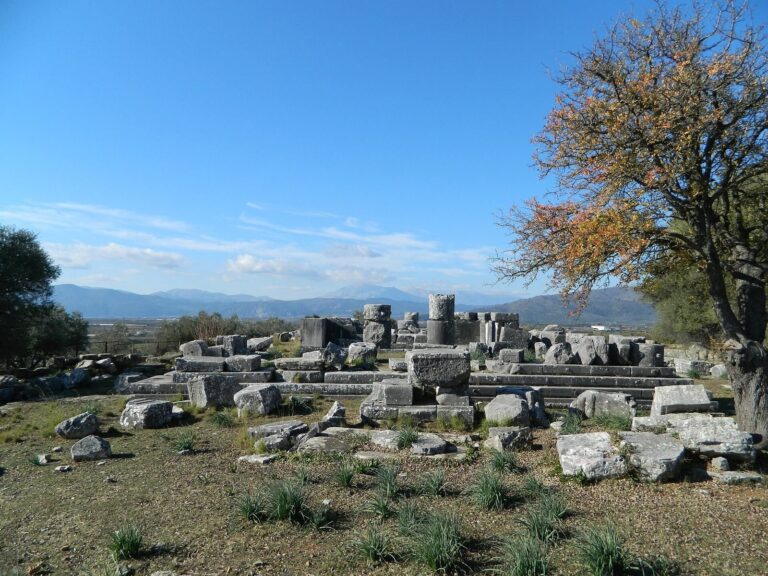
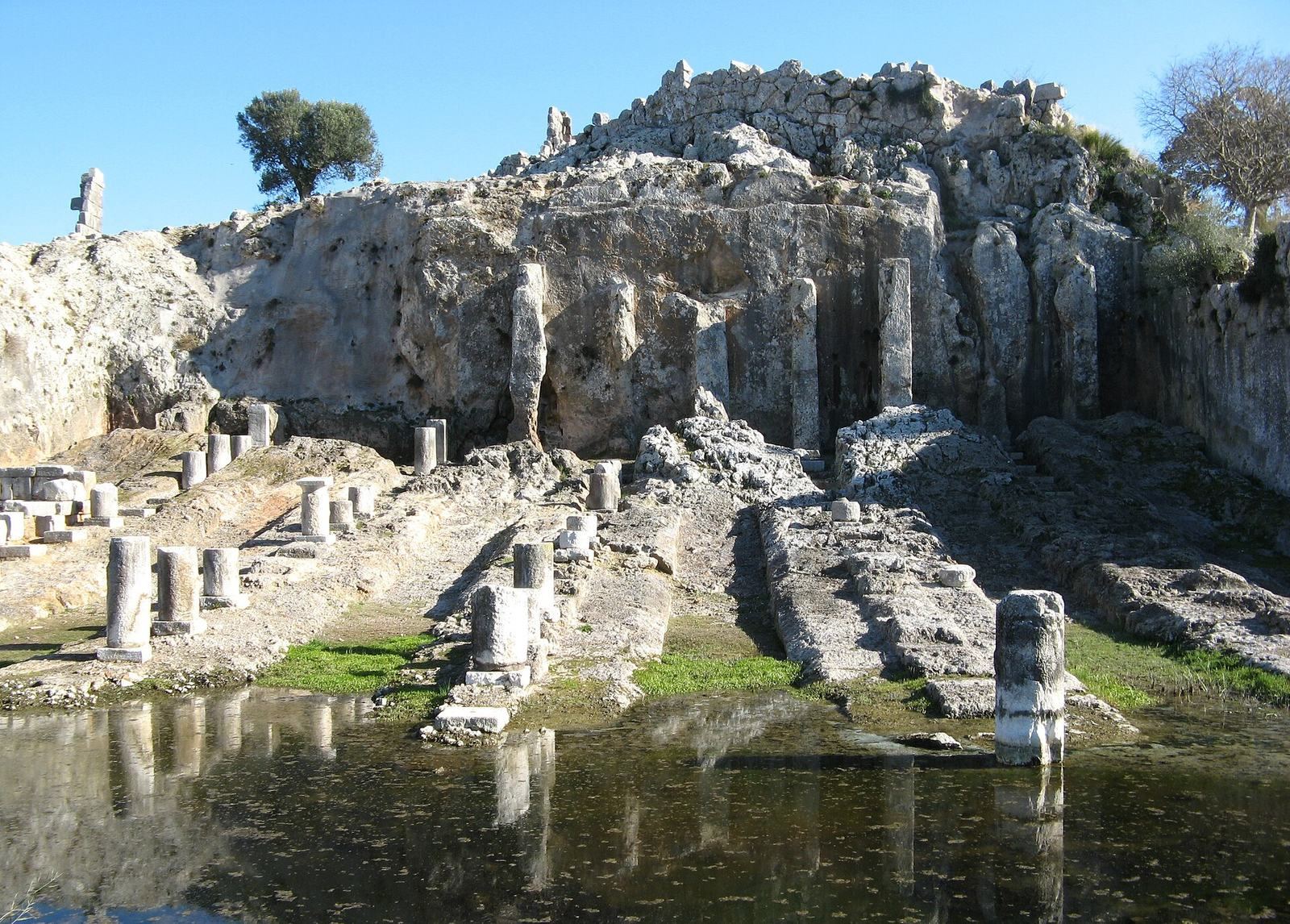
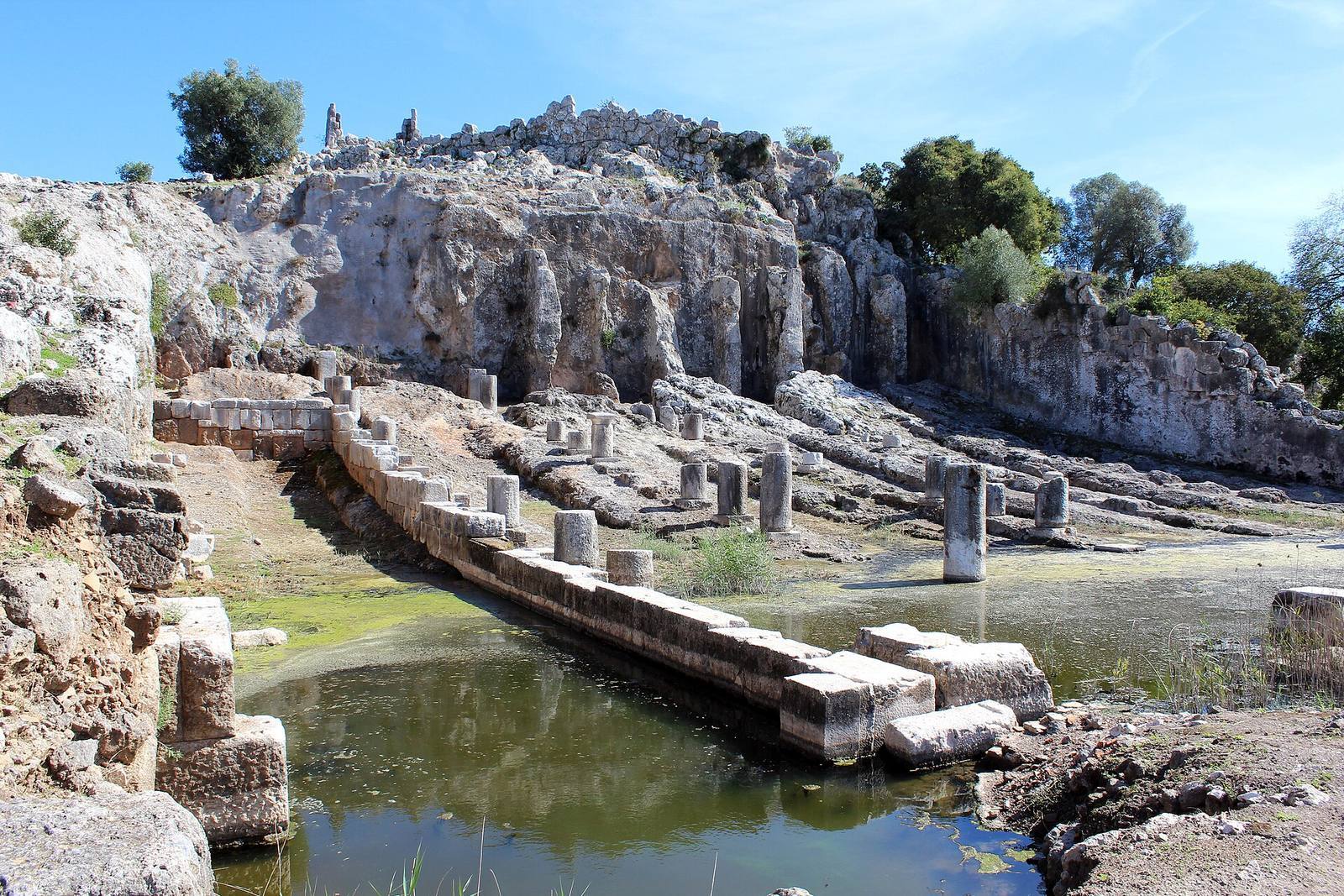
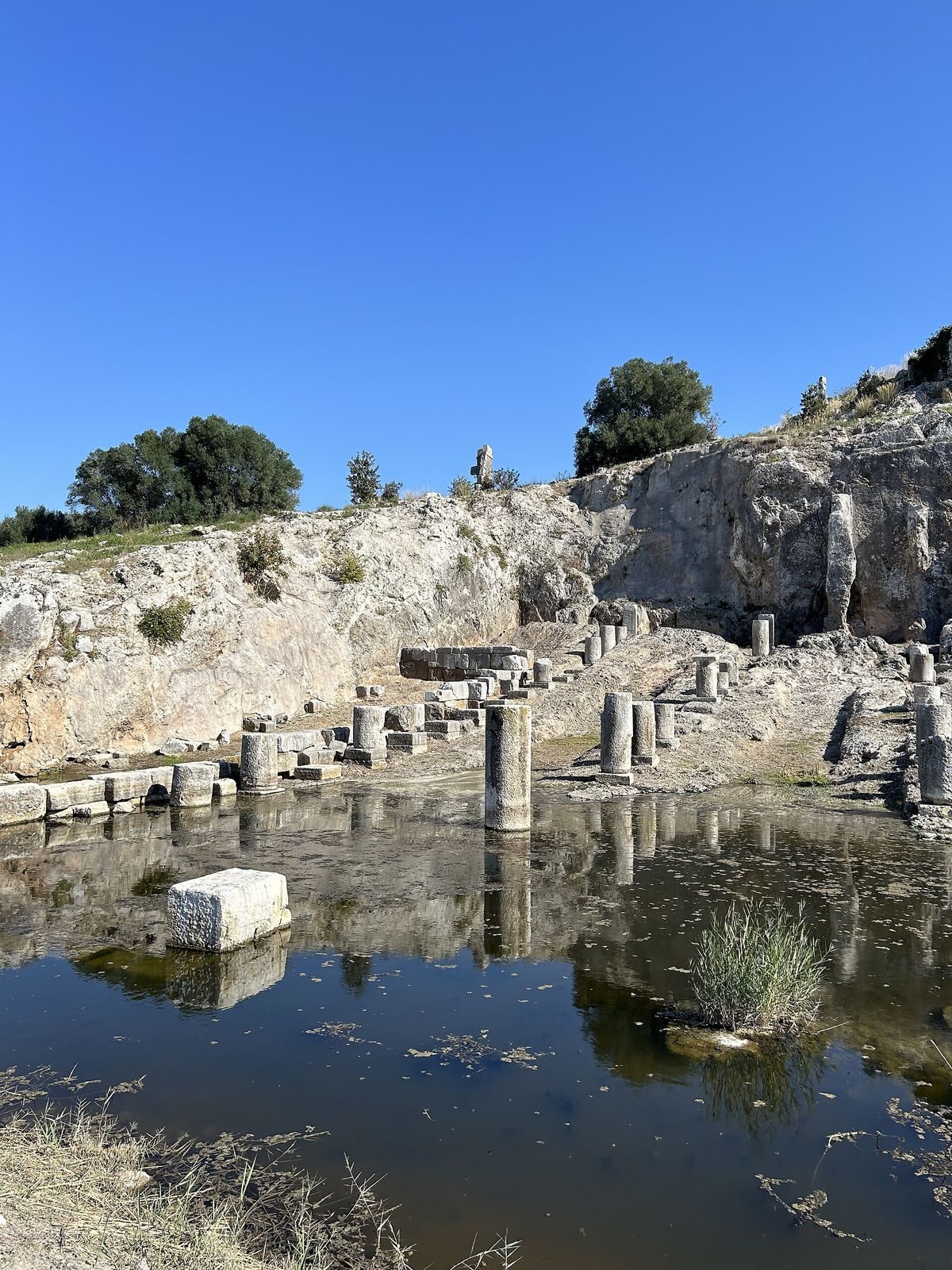
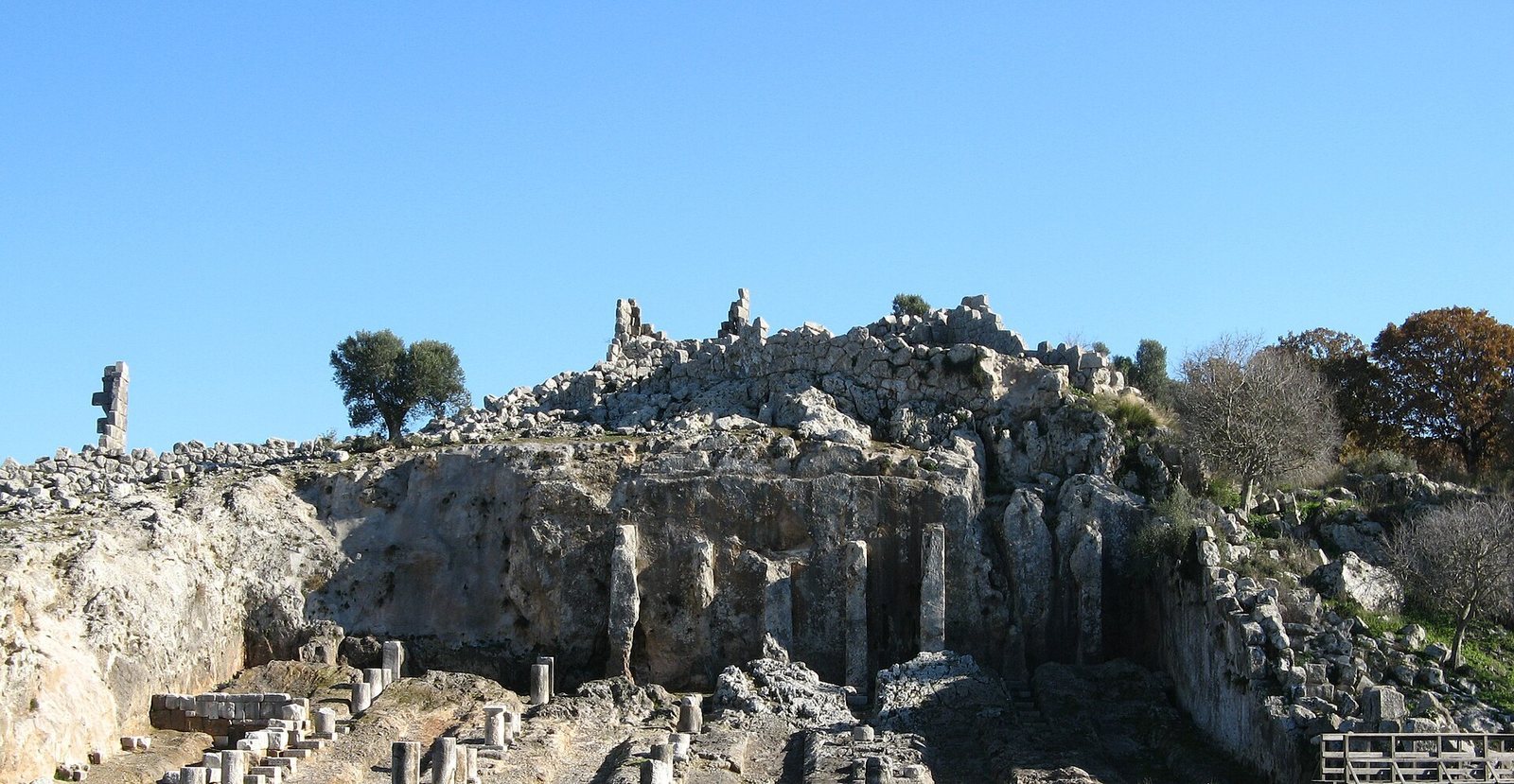
The remains, also known as Trikardokastron, or Castle of Trikardos, lie near modern Trikardo, about 5 km west of Katochi. The upper town occupied a hill surrounded by a plain. Its surviving layout includes an extensive defensive wall system, a citadel, a harbor complex, and public buildings. Deep, extensive marshes around the city provided a natural defense and made winter approaches difficult.
Defenses and harbor
City walls
The city walls extended for about 6.5 km. Built in the second half of the fifth century BCE and renewed during the Hellenistic period, the era after Alexander’s death when Greek kingdoms and culture spread across the eastern Mediterranean, the walls and some gates remain relatively well preserved. In places, surviving sections rise more than 3 m.
Citadel
The citadel formed part of the fortified complex. Philip V strengthened it after taking Oiniadai in 219 BCE, and construction began on walls linking it with the harbor and arsenal, a storehouse for military equipment.
Harbor installations
The harbor area included ship sheds, other buildings serving the navy, and a small temple. Together with the arsenal and citadel, these installations formed the city’s fortified complex.
Public buildings
Theater
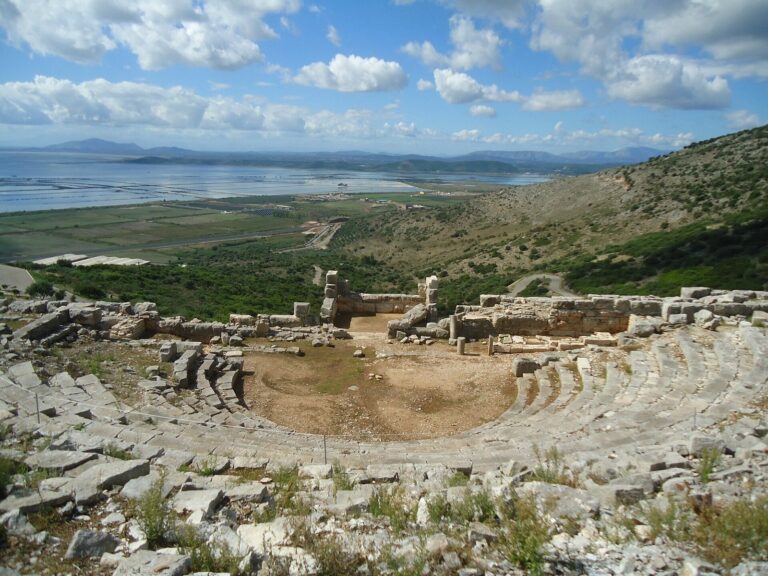
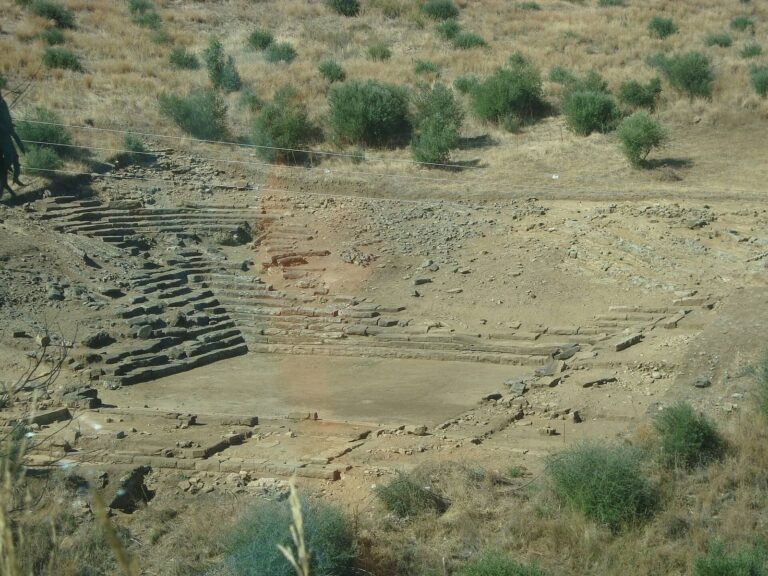
The theater stood midway up the hill. Built in the fourth century BCE, it was renovated in the second half of the third century BCE and again during the Roman period, when Roman political power dominated Greece. Its ruins survive.
Greek bath
Excavations uncovered a Greek bath built in the second half of the third century BCE. It consisted of two rooms with pools and several other rooms.