Sant’Antonio Abate: A Roman Catholic Parish Church in Barcellona Pozzo di Gotto
Site at a Glance
- Popularity
- Very Low
- Country
- Italy
- Primary era
- Early Modern
- Eras represented
- Early Modern, Modern
- Civilizations
- Habsburg, Italian, Kingdom of Sicily, Spanish
- Site type
- Religious
- Remains
- Church
On this page9 sections
History
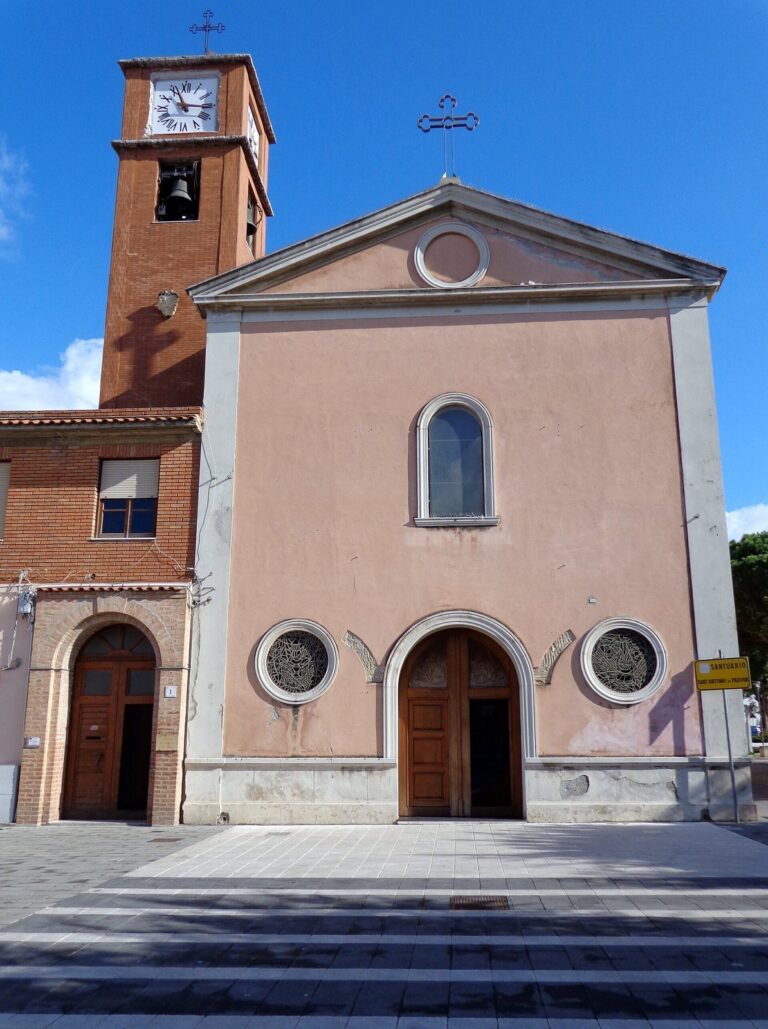
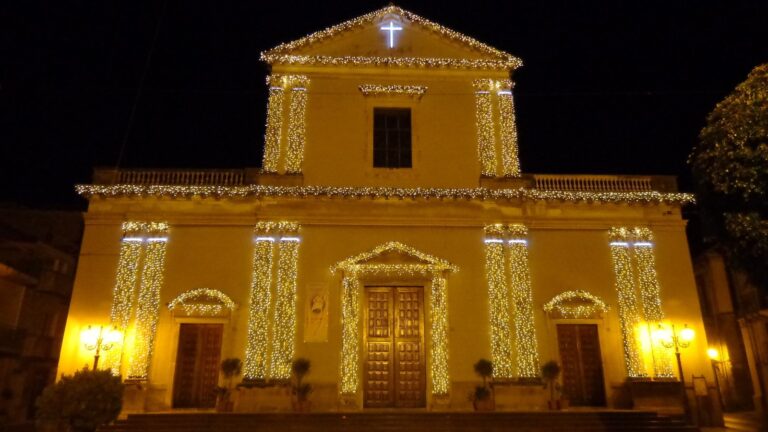
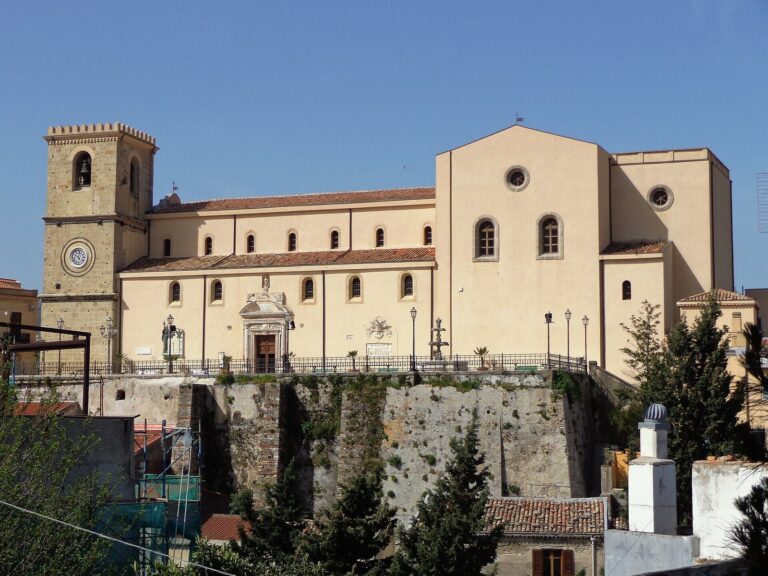
Sant’Antonio Abate is a Roman Catholic parish church on a hill in the western outskirts of Barcellona Pozzo di Gotto, Italy. Neoclassical in style, it traces its origins to around 1590. The church is dedicated to Saint Anthony the Abbot, an early Christian ascetic associated with the beginnings of Christian monasticism. The settlement took its name from this small church.
Origins and rebuilding
The first church stood in an area known as Garrisi di Sant’Antonio, where livestock grazed. Castroreale’s jurors assigned grazing-levy income from the area to the construction of the Cathedral of Santa Maria Assunta and the upkeep of the Church of Santissimo Salvatore. Rebuilding began in the first half of the seventeenth century. A 1637 inscription on the church’s holy-water font names Bernardus Benedictus and Casalaina as those who had it made.
Hermits and church jurisdiction
In 1731, Sant’Antonio Abate remained under the jurisdiction of Santa Maria della Visitazione in Centineo, a church of the Greek rite, a distinct Catholic liturgical tradition. Both churches belonged to the archpriesthood led by the Mother Church of Castroreale, the town’s principal church. Archpriest Giovanni Cutropia assigned a hermit to guard the building. The hermit built a new church using alms, and a later hermit enlarged and embellished the rural church with income and donations.
Parish status and modern restoration
When Barcellona Pozzo di Gotto became a municipality in 1821, the church came under the archpriesthood of San Sebastiano. It was consecrated around 1936. Archbishop of Messina Angelo Paino made it an autonomous parish by a bull dated 21 February 1943, and it received legal recognition on 6 September 1946. Today it serves as the parish church of Sant’Antonio Abate within the Roman Rite, the Catholic Church’s principal Latin liturgical tradition. It belongs to the Archdiocese of Messina-Lipari-Santa Lucia del Mela and to the Vicariate and archpriesthood of Barcellona Pozzo di Gotto; the vicariate is under the patronage of Saint Sebastian.
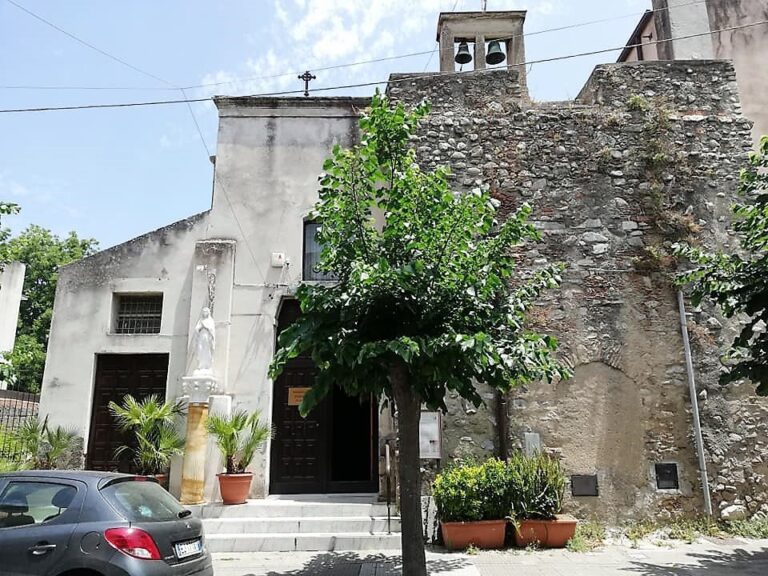
Restoration work intended to strengthen the building around 1960 instead compromised its stability and substantially changed its exterior. The church was restored again after damage from the Gulf of Patti earthquake on 16 April 1978. Work on the roof structures and perimeter walls followed in the late 1990s.
Remains
Setting and exterior
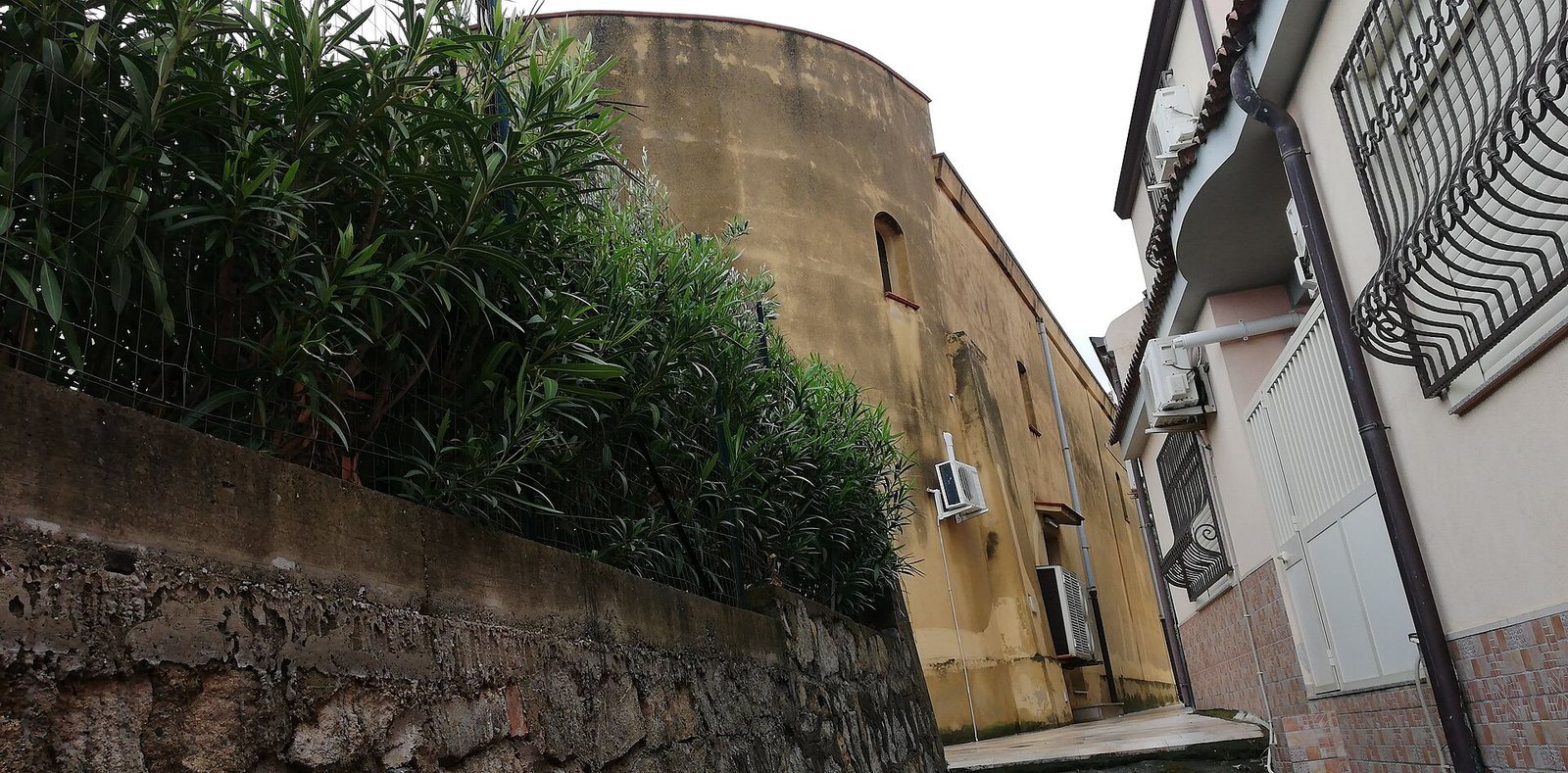
The church stands on a hill in the district that bears its name. Its Neoclassical design draws on forms associated with ancient Greek and Roman architecture. In 1905, the façade and bell tower were brought into alignment, when the churchyard was much larger than it is today. Extending the front of the building reduced the adjacent square. Around 1960, workers removed the west-side buttresses, exterior supports for the walls, to widen the access road to the churchyard. A concrete frame was added to reinforce the perimeter walls and support a modern roof in place of the original wooden one.
Interior
Nave and devotional imagery
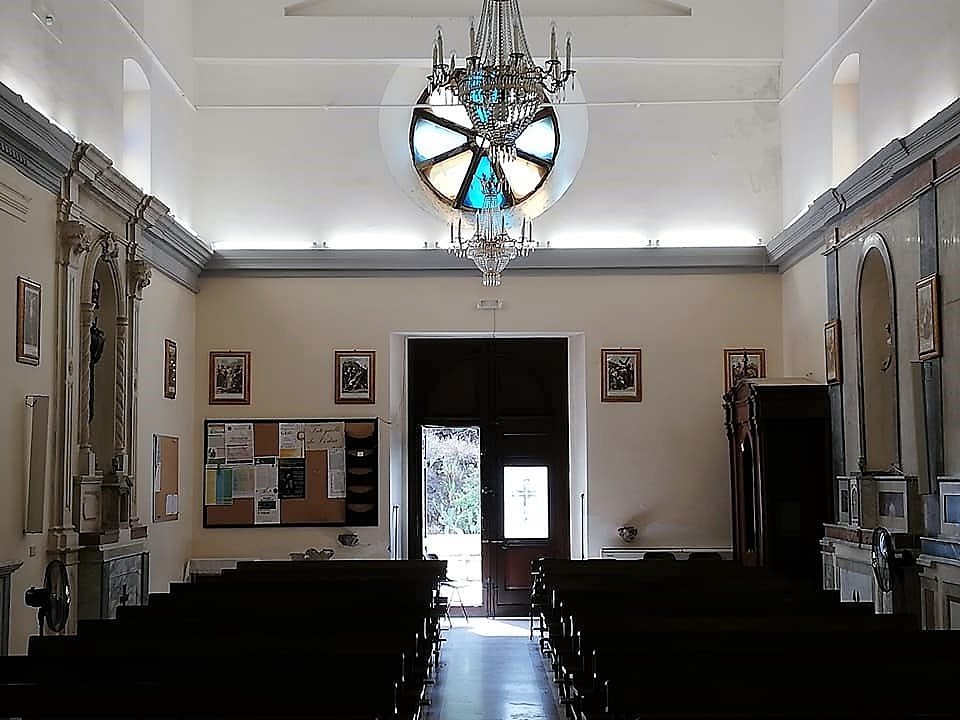
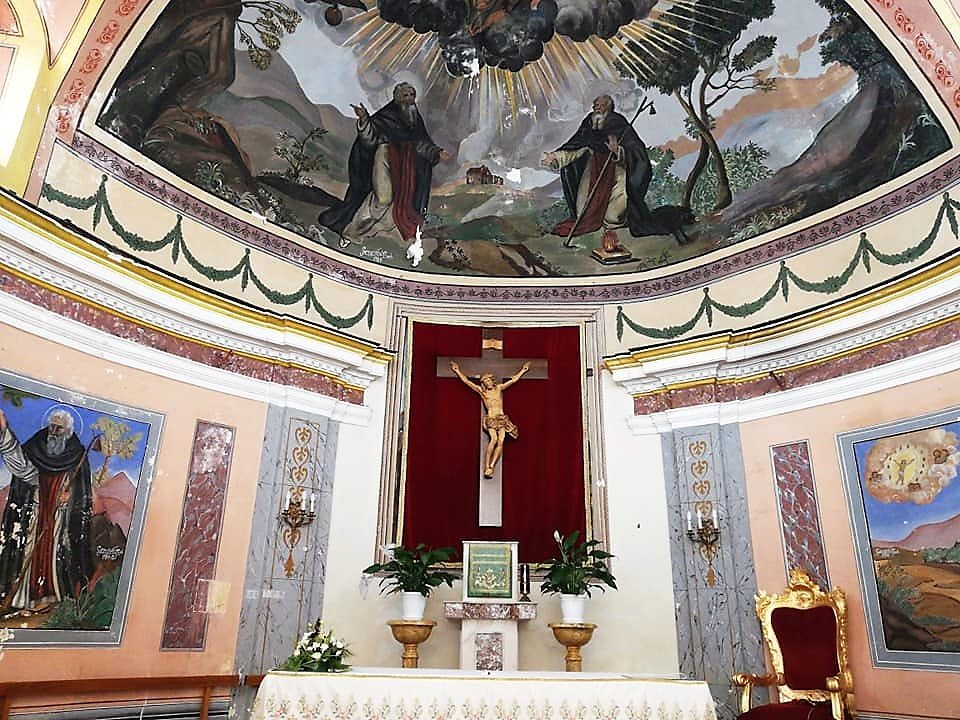
The interior has a single nave, the main body of the church, with altars against both side walls and devotional images in niches. On the right, the first bay contains an altar, the second an altar to Saint Joseph and the Child Jesus, and the third an altar to the Immaculate Conception, the Catholic belief that Mary was conceived without original sin. The third bay also holds a sculpture of the Immaculate Conception by Matteo Trovato. On the left, the altars are dedicated in order to Mary Help of Christians, a devotional title for Mary, Saint Rita, also known as Rita of Cascia, and the Pietà, an image of Mary mourning Christ. A fresco of Saint Anthony the Abbot and the Holy Trinity, the Christian belief in one God as Father, Son, and Holy Spirit, fills the apse’s semi-dome.
Font, chapels, and oratory
The holy-water font, which holds water blessed for devotional use, has a pedestal bearing the 1637 inscription naming Bernardus Benedictus and Casalaina. Three chapels in the rural church were dedicated to Saint Anthony the Abbot, the Holy Crucifix, and the Virgin of the Rosary; the first contained a painting. The church also has the Father Mariano Maio Oratory, a small place for worship or prayer.