Roman Villa of Miroiço: A Rural Estate in Portugal
Site at a Glance
- Popularity
- Low
- Country
- Portugal
- Primary era
- Classical
- Eras represented
- Classical, Medieval
- Civilizations
- Roman
- Site type
- Domestic
- Remains
- Villa
On this page8 sections
History
Occupation and the Roman Villa
The Roman Villa of Miroiço is a Roman rural villa, or country estate, near Manique de Baixo in São Domingos de Rana, Cascais, Portugal. It was initially used privately and is the largest Roman villa in the municipality of Cascais. Evidence indicates human activity at the site from the Palaeolithic to the Middle Ages, while excavations revealed occupation from the late Iron Age through the medieval period.
Early Investigations
In the late nineteenth century, geologist Francisco de Paula Oliveira made the earliest recorded probes on a platform above the Manique stream valley. He observed ruins, worked stones, and numerous tile and brick fragments. Local people told him that an ancient community had lived there, though they could not identify its members or explain what became of them. The site was not investigated further at the time, as the surface finds were considered adequate evidence.
Guilherme Cardoso, a Portuguese archaeologist, began investigating Miroiço in the 1970s after finding many objects on the surface. In 1984, ploughing brought burial remains to light.
Excavation and Protection
The first excavations began in 1999 during an assessment of the site’s suitability for real-estate development. Archaeologists from the Cascais Cultural Association worked with secondary-school and university students. Later campaigns added to understanding of the site’s occupation from the late Iron Age through the Middle Ages.
Cascais municipality classified the site in 1989. It was regarded as a Property of Public Interest in 1992 and formally declared a Property of Public Interest by a decree dated 19 February 2002.
Remains
Layout and Pottery Kiln
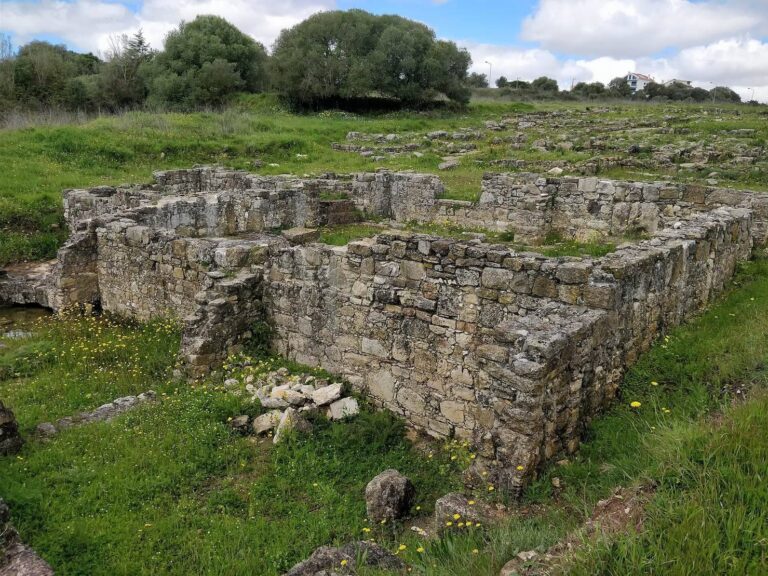
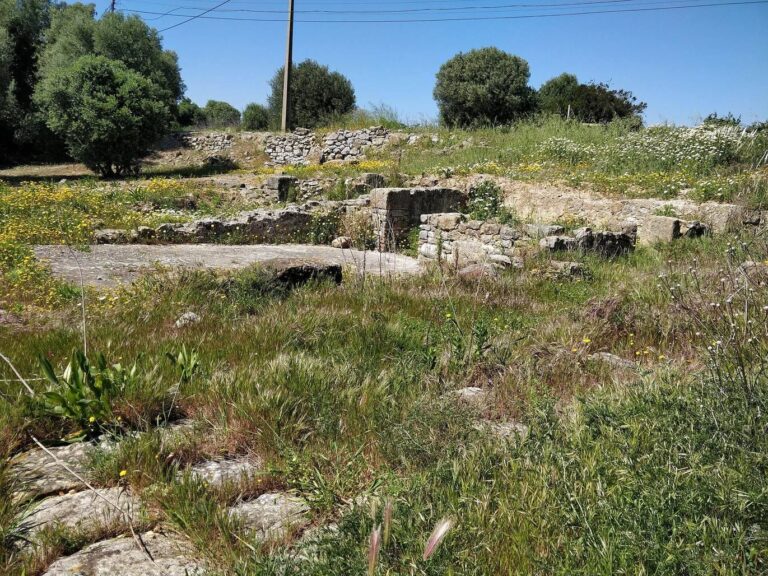
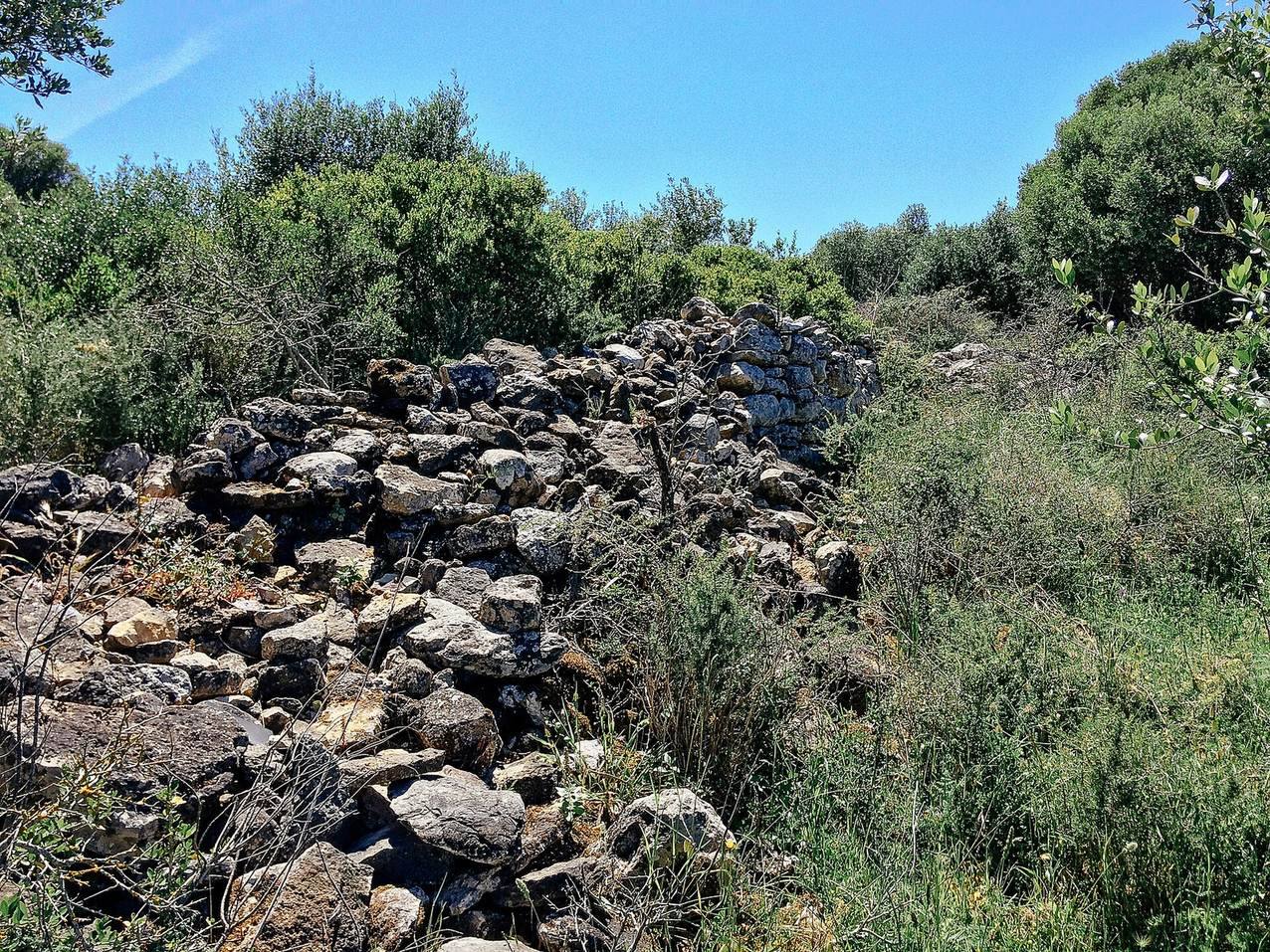
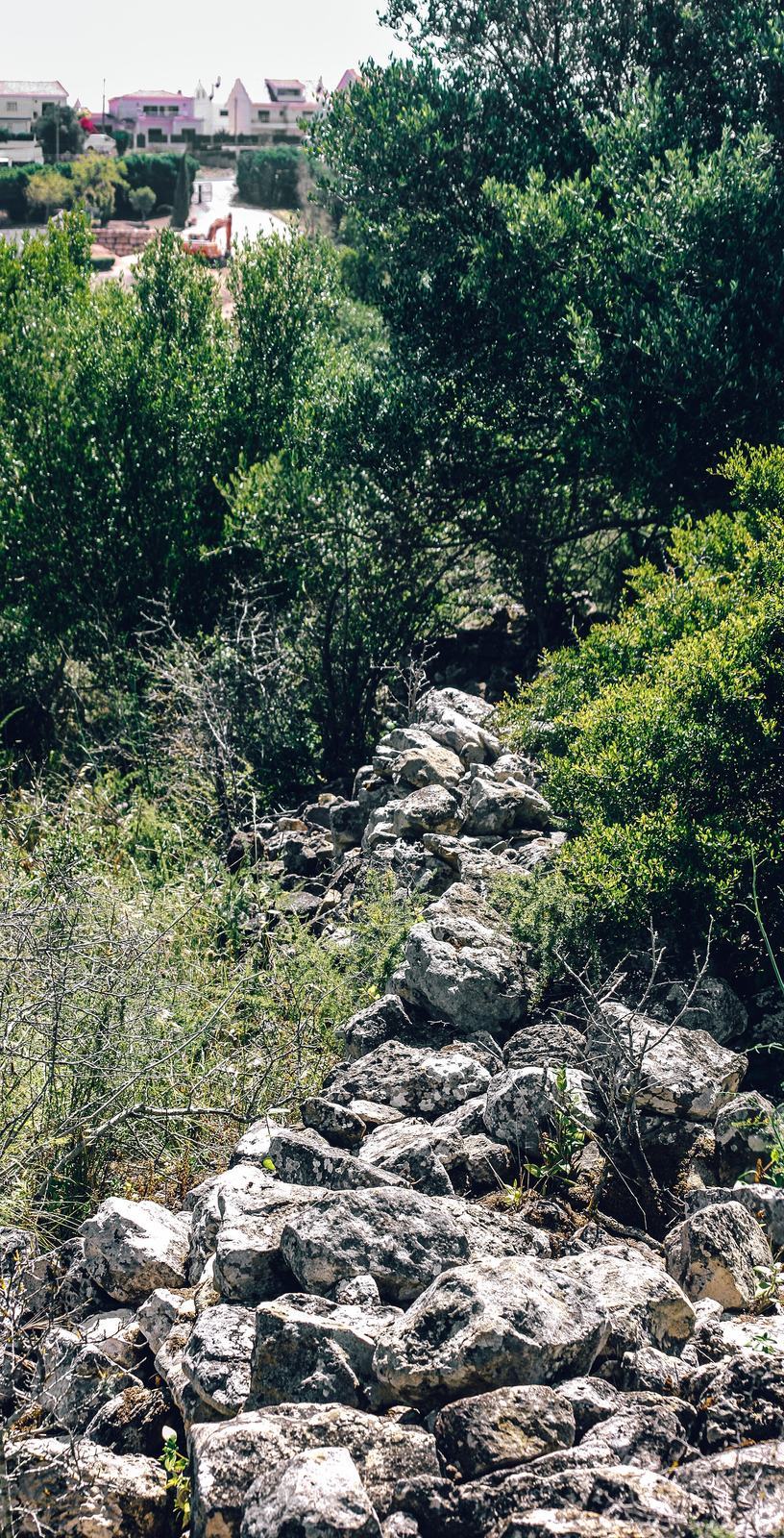
The remains lie on a platform above the Manique stream valley, near Manique de Baixo. Surface finds extend across an area of about two hectares. Stone walls survive at ground level, and remains have been attributed to the Roman and medieval periods, alongside evidence dating to the Neolithic.
A circular Roman pottery kiln was identified at the site. Holes in its structure held posts that supported a stack of wood during firing, arranged in a manner compared with the piling of wood for charcoal production.
Burials
Excavations uncovered 33 graves. One was attributed to the Roman period and the others to the early Christian period, referring to the earliest Christian communities. The dead were generally laid on their backs, with arms beside their bodies, legs extended, and faces upward. Their bodies were oriented toward the east.
Surface Finds
Finds from the site include roof tiles, loom weights, metal objects, polished stone axes, worked pebbles, scrapers, and cores. Fragments of opus signinum, a Roman finish made from crushed pottery and mortar, and numerous pieces of terra sigillata, fine Roman pottery with a smooth red surface, were also found. Amphora fragments and coarse everyday pottery form part of an assemblage spanning the Neolithic to the Middle Ages.