Church of St Christopher in Lubawka-Ulanowice: A Baroque Pilgrimage Church
Site at a Glance
- Popularity
- Low
- Country
- Poland
- Primary era
- Early Modern
- Eras represented
- Early Modern, Modern
- Civilizations
- German, Habsburg, Holy Roman Empire, Kingdom of Bohemia, Kingdom of Prussia
- Site type
- Religious
- Remains
- Church
On this page8 sections
History
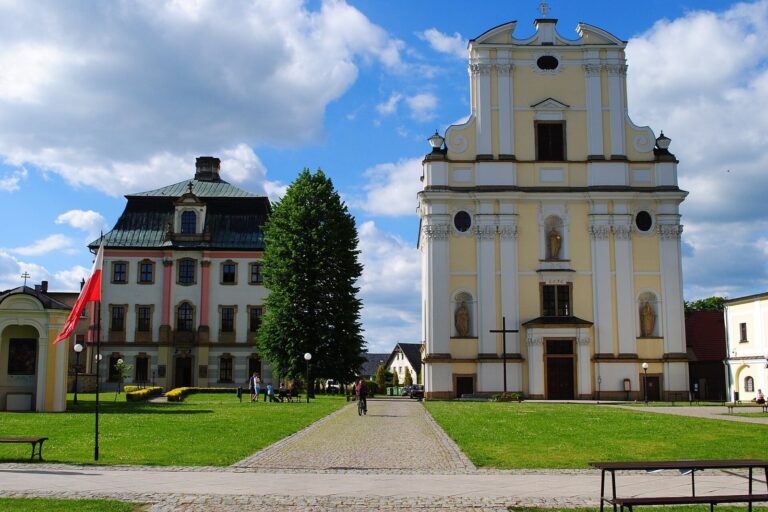
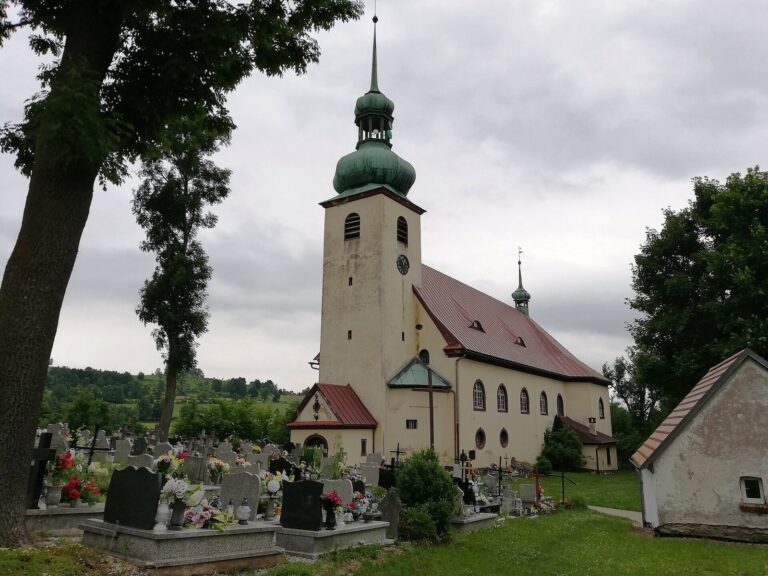
The Church of St Christopher in Lubawka-Ulanowice, Poland, is a Roman Catholic branch church dedicated to St Christopher and belonging to the parish of the Assumption of the Blessed Virgin Mary in Lubawka. It began as a pilgrimage sanctuary associated with the Fourteen Holy Helpers, a group of saints invoked collectively in Catholic devotion. The present building was completed in 1723 in the Baroque style, a European artistic and architectural style prominent in the seventeenth and eighteenth centuries.
Pilgrimage and construction
Abbot Bernhard Rosa, head of the Cistercian monastery at Krzeszów, commissioned the first church. The Cistercians were a Catholic monastic order. Marcin Urban built the church between 1685 and 1687. As the sanctuary grew in popularity, Abbot Dominicus Geyer commissioned a larger masonry church, a project carried out by architect Michael Jentsch.
Later additions
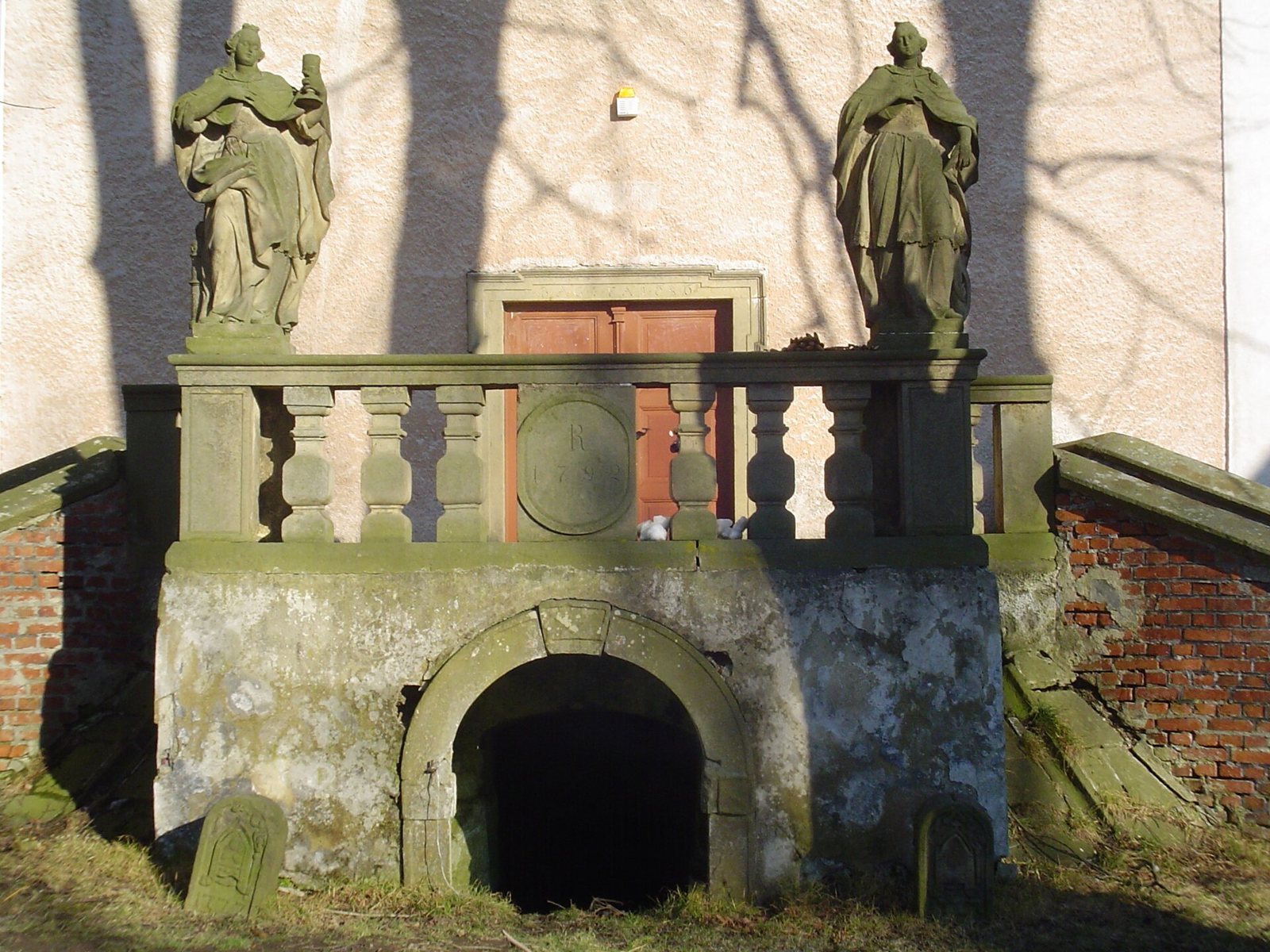
A terrace was added between 1790 and 1792. In the late nineteenth century, further paintings were commissioned to complete the church’s cycle of the Fourteen Holy Helpers.
Remains
Building, terrace, and approach
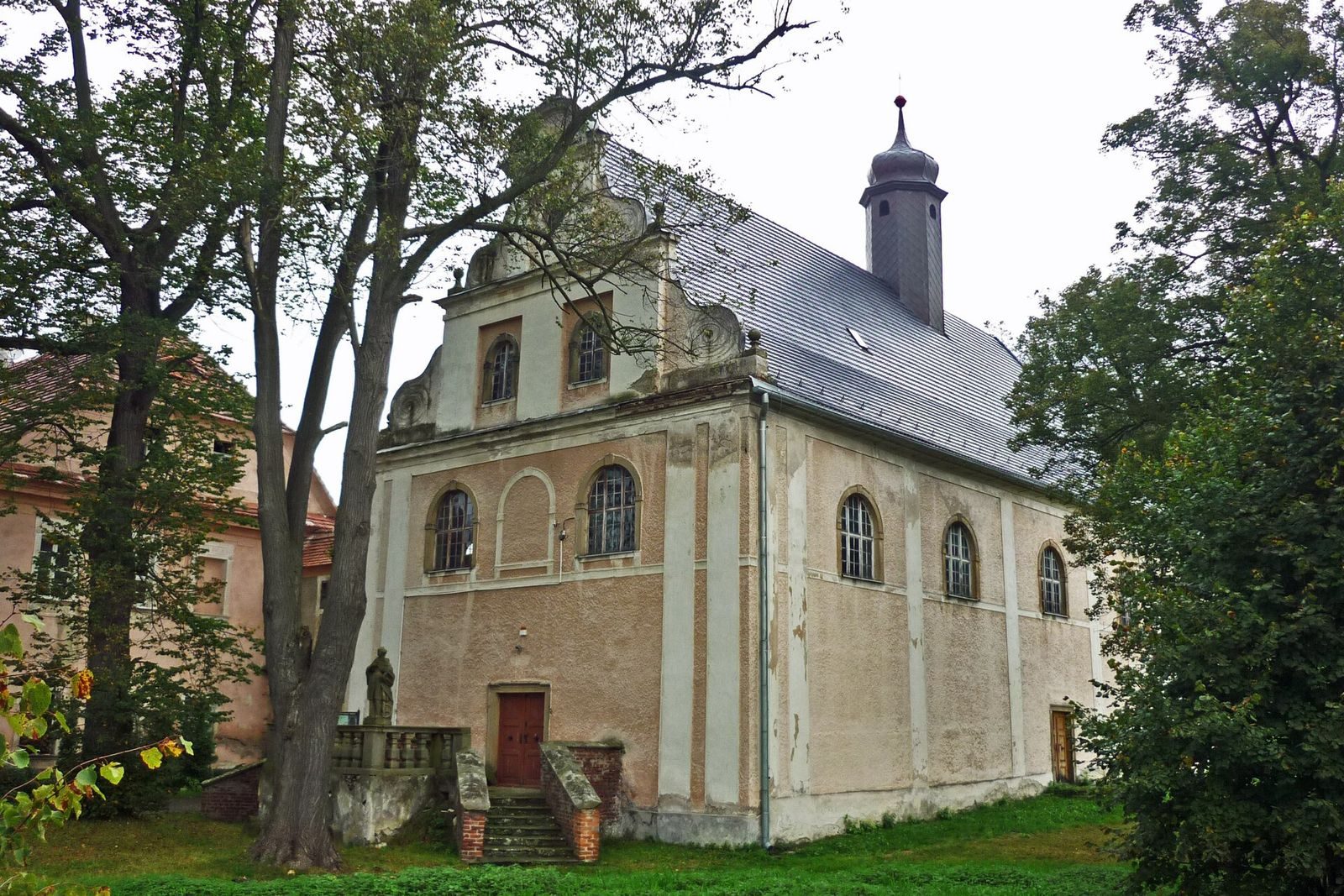
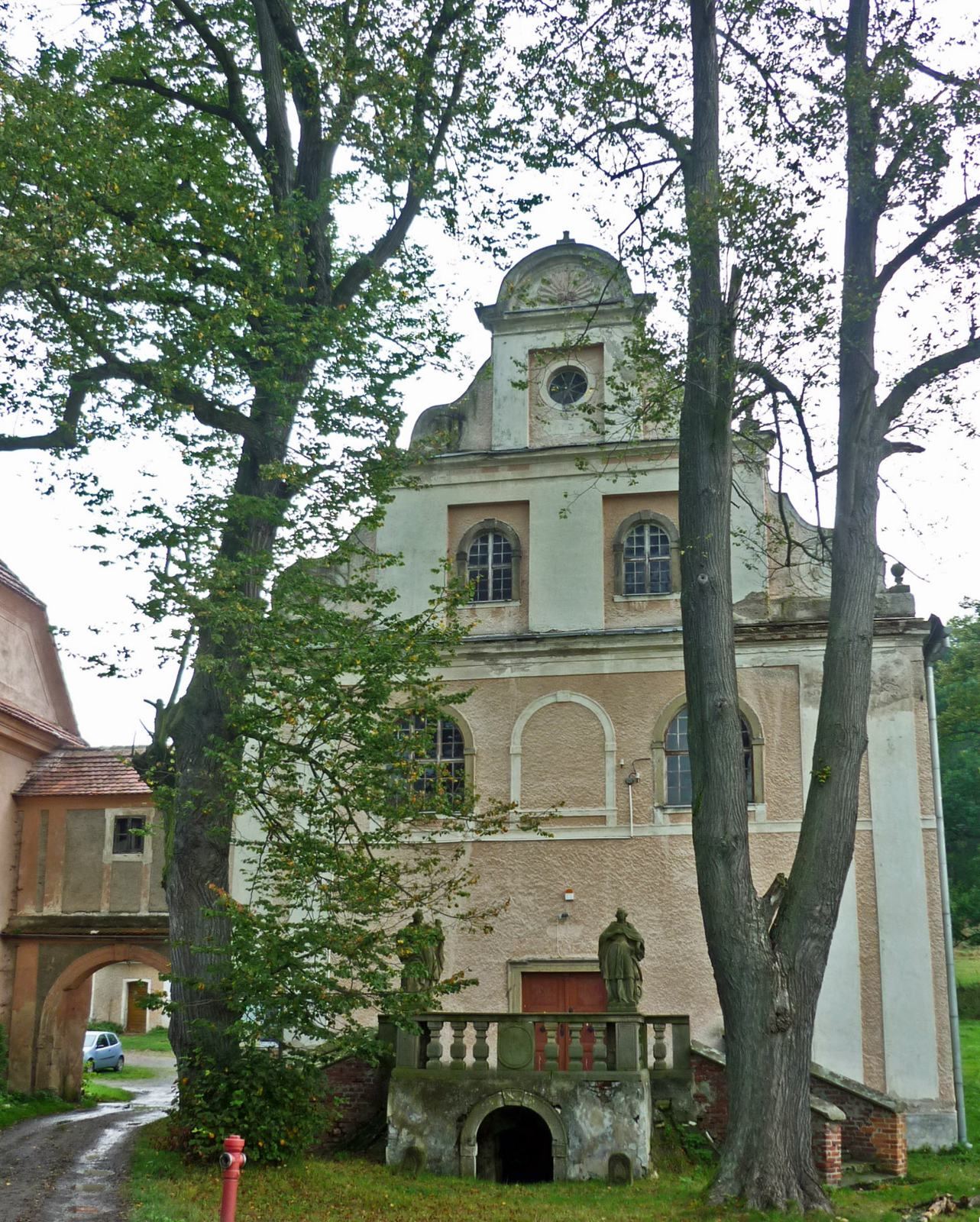
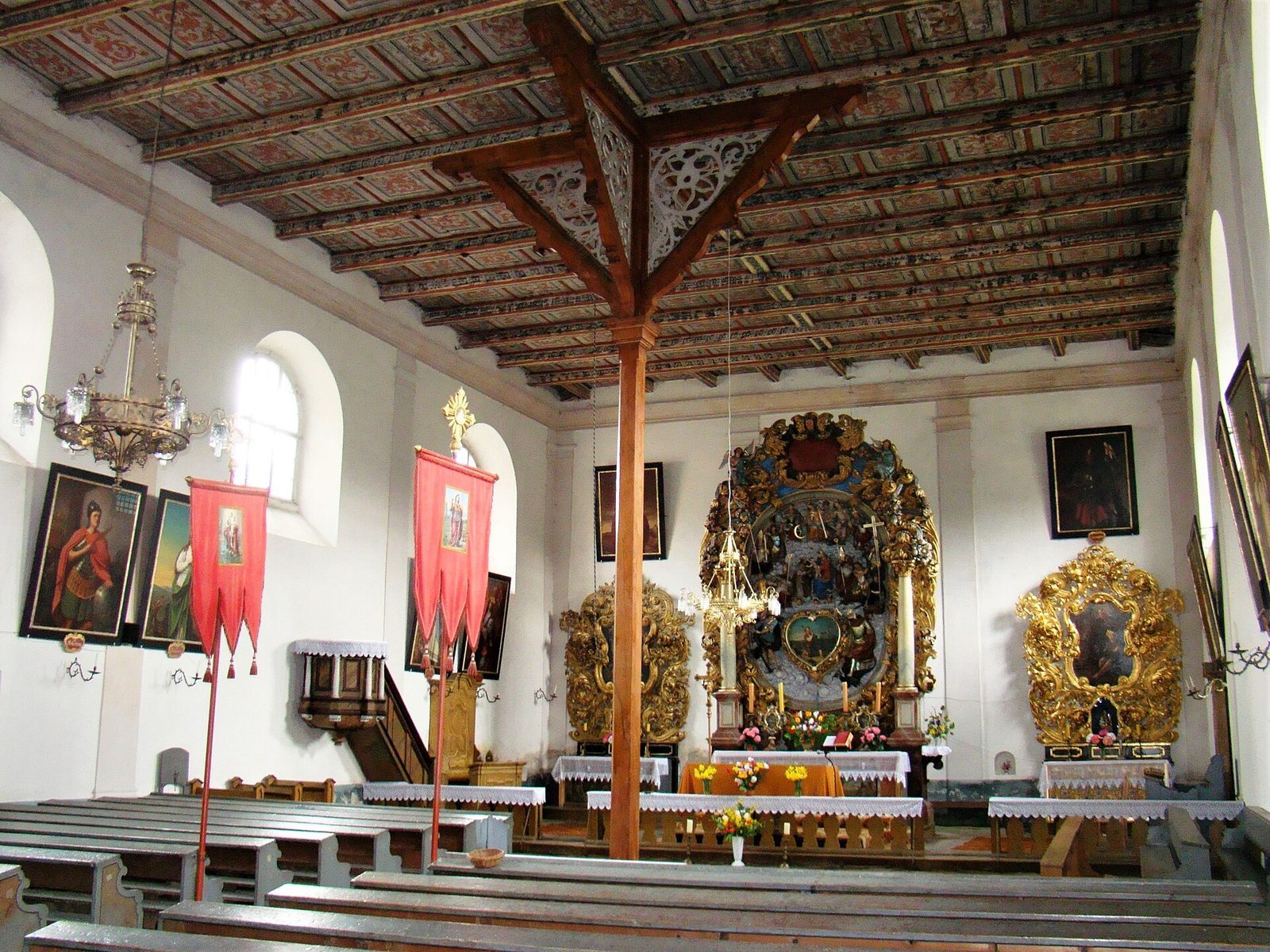
The Baroque church is a rectangular masonry building with a hall-like interior. A small sacristy stands on its east side, and a hipped roof carries a bell turret along its ridge. The terrace has a stone balustrade, with a crypt beneath its stairs containing a life-size sculpture of St Alexis. Two stone statues, of St Barbara and St Catherine, were placed on the balustrade in 1792. Fourteen columns bearing statues of saints once marked the approach to the church; three remain.
Altars and devotional sculpture
The furnishings are mostly Baroque. The main altar was made in 1690 by Georg Schrötter’s workshop at Krzeszów. It first served as a side altar in the abbey church there and was transferred to Podlesie in 1728. Its images bring together the church’s patron saints and the Holy Family, Jesus, Mary, and Joseph, as the “Created Trinity,” an earthly triad distinct from the divine Trinity. Anton Hoffman made the two side altars in 1714. A statue of the Madonna and Child, dated to 1668–1669 and probably made by Legnica sculptor Matthäus Knote, stands in a niche in the north wall.
Ceiling, votive paintings, and sacristy sculpture
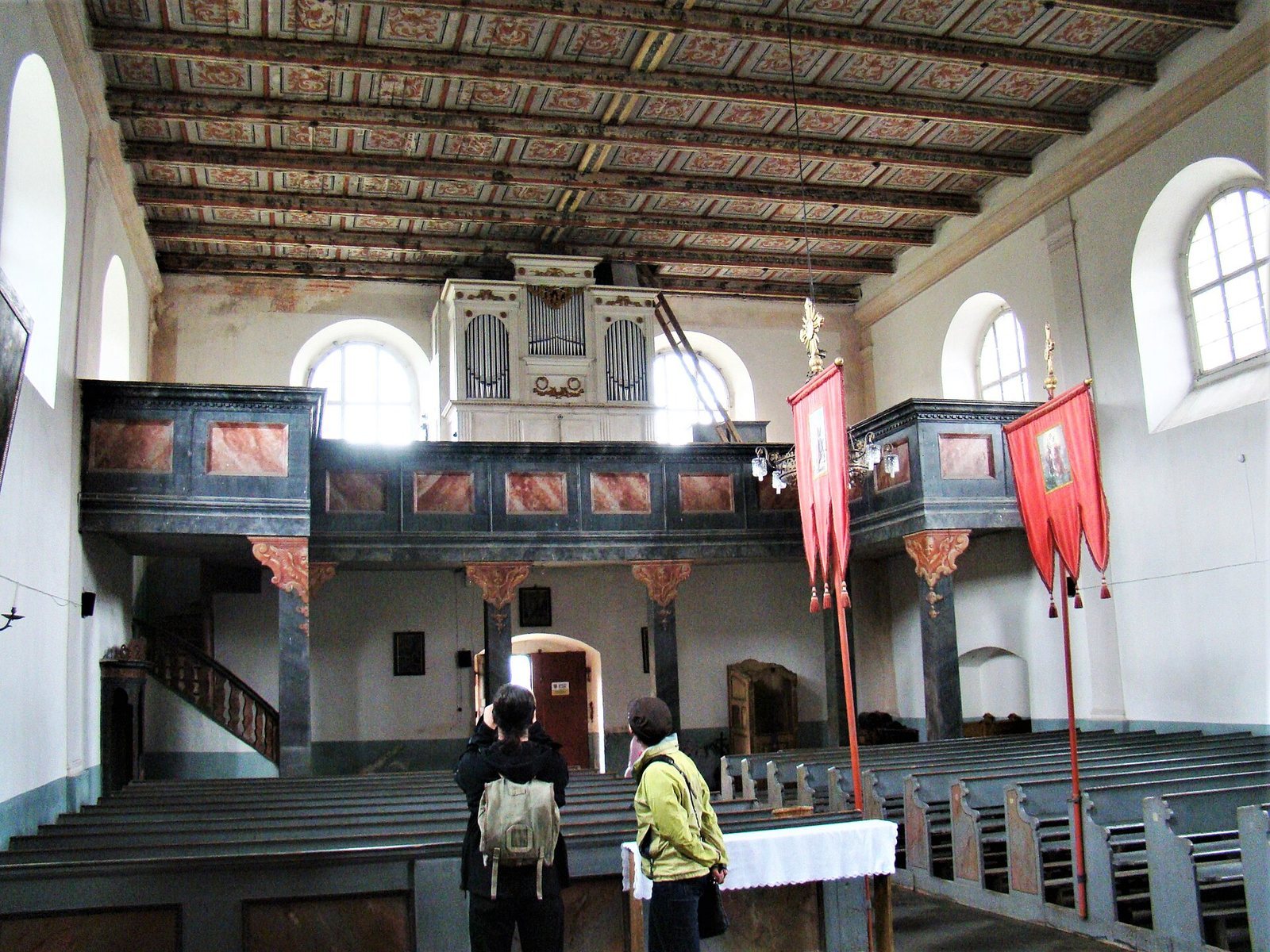
The wooden ceiling, made in 1723, is decorated with floral designs. Three small votive paintings from the second half of the eighteenth century hang above the main entrance. In the sacristy, sculptures of Bernard of Clairvaux, a medieval Cistercian abbot and theologian, and Benedict of Nursia, an influential Western monastic teacher, stand on a cupboard.
Paintings of the Fourteen Holy Helpers
The cycle of paintings dates to the first quarter of the eighteenth century. Seven original works survive, depicting St Barbara, St Giles, St Pantaleon, St Eustace, St Dionysius, St Catherine of Alexandria, and St Blaise. Hieronymus Richter of Kłodzko painted St Christopher, St Cyriacus, and St Acacius for the cycle in 1884. Paul Assmann of Opava painted St Vitus and St Margaret, and may also have painted St Erasmus and St George. All fourteen works now hang on the church walls. They show the saints from the knees upward in varied poses, with individual attributes and settings that relate to their lives or martyrdoms. A nineteenth-century painting at the center of the main altar depicts a shepherd’s vision of the Holy Helpers at Langheim in the fifteenth century. The scene presents the vision, said to have taken place on Cistercian land, as the beginning of devotion to the group.