San Nicola da Tolentino: A Confraternity Church in Ivrea
Site at a Glance
- Popularity
- Low
- Country
- Italy
- Primary era
- Early Modern
- Eras represented
- Early Modern
- Civilizations
- Duchy of Savoy
- Site type
- Religious
- Remains
- Church
On this page11 sections
History
San Nicola da Tolentino is a Roman Catholic church in Ivrea, Piedmont, Italy, built as an oratory, or small place of worship, for a lay confraternity, a religious association. It remains active and belongs to the Diocese of Ivrea, the territory overseen by its bishop. Construction began in 1605, and its interior is distinguished by Baroque decoration, an early-modern style known for elaborate ornament and illusionistic effects. The church’s decoration also reflects the spread of Baroque art in Canavese, the historical region around Ivrea.
The confraternity’s beginnings
The confraternity was founded by friar Giacobino of Cremona, who arrived in Ivrea in 1275. Its earliest meetings took place in a chapel near Ivrea Cathedral, on the ground later occupied by the Episcopal Seminary palace. Members formed a penitential brotherhood, wearing hooded robes and carrying scourges as part of their religious practice.
At first, the confraternity honored the Holy Trinity, the Christian belief in one God as Father, Son, and Holy Spirit, as well as Mary, the mother of Jesus, and the apostle James. By the fifteenth century, it had also adopted Saint Nicholas of Tolentino and Saint John the Baptist under the title of his Beheading, a reference to his execution by decapitation. The brotherhood retained its devotion to the Trinity. The precise timing is uncertain, but its devotion to Nicholas may have begun around or before his canonization in 1446.
Building the church
The church was begun in 1605 after an earlier confraternity oratory had been renovated. The new building was intended as the confraternity’s place of worship, and its construction marked the 300th anniversary of Saint Nicholas of Tolentino’s death. The confraternity paid for the work with contributions from the local aristocratic families De Solario and Scaglia. The choir was added in 1627, when the presbytery, the part around the altar reserved for clergy, completed the building. The bell tower was built later.
The confraternity continued to commission decorative work during the seventeenth century. Much of the church’s architectural and artistic decoration dates from the seventeenth and eighteenth centuries. Its members included people from Ivrea’s aristocracy and bourgeoisie.
Charitable work and the 1704 event
From the seventeenth century, the confraternity’s work included helping prisoners held in the nearby castle and arranging burials for people executed there, either in the church or its cemetery. In 1645, Christina of France, Duchess of Savoy and regent of the duchy, granted the confraternity the right to save one condemned person each year.
During the 1704 war between French and Piedmontese forces, a bomb pierced the church ceiling but did not explode. The event was regarded as miraculous, and the church became known locally as the Church of the Bomb.
Remains
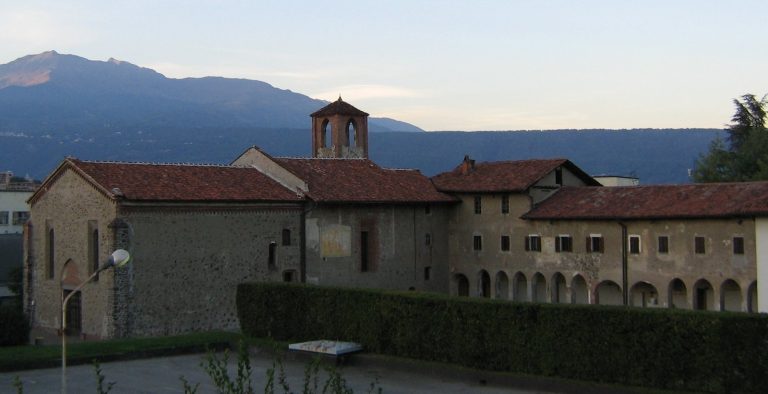
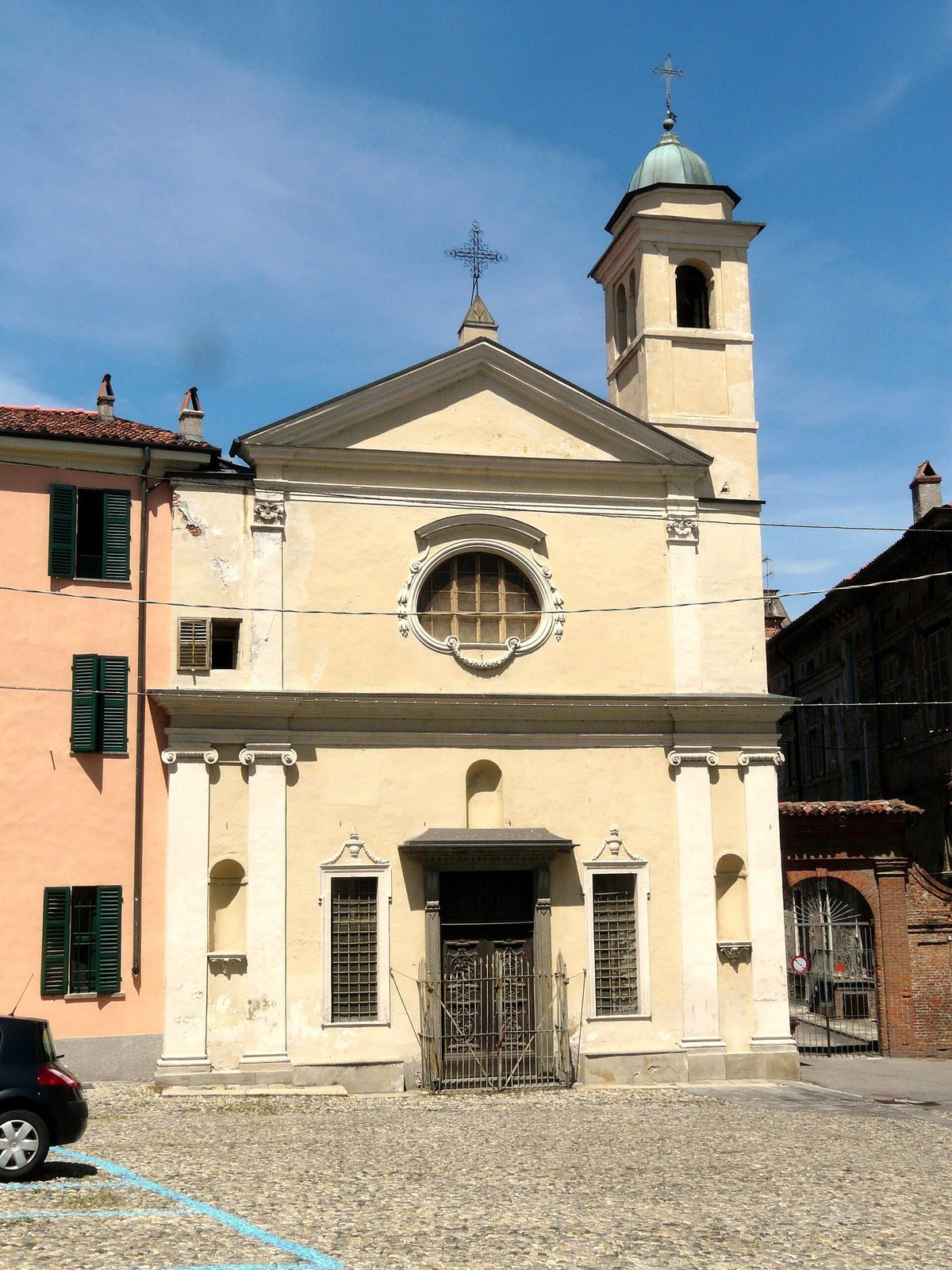
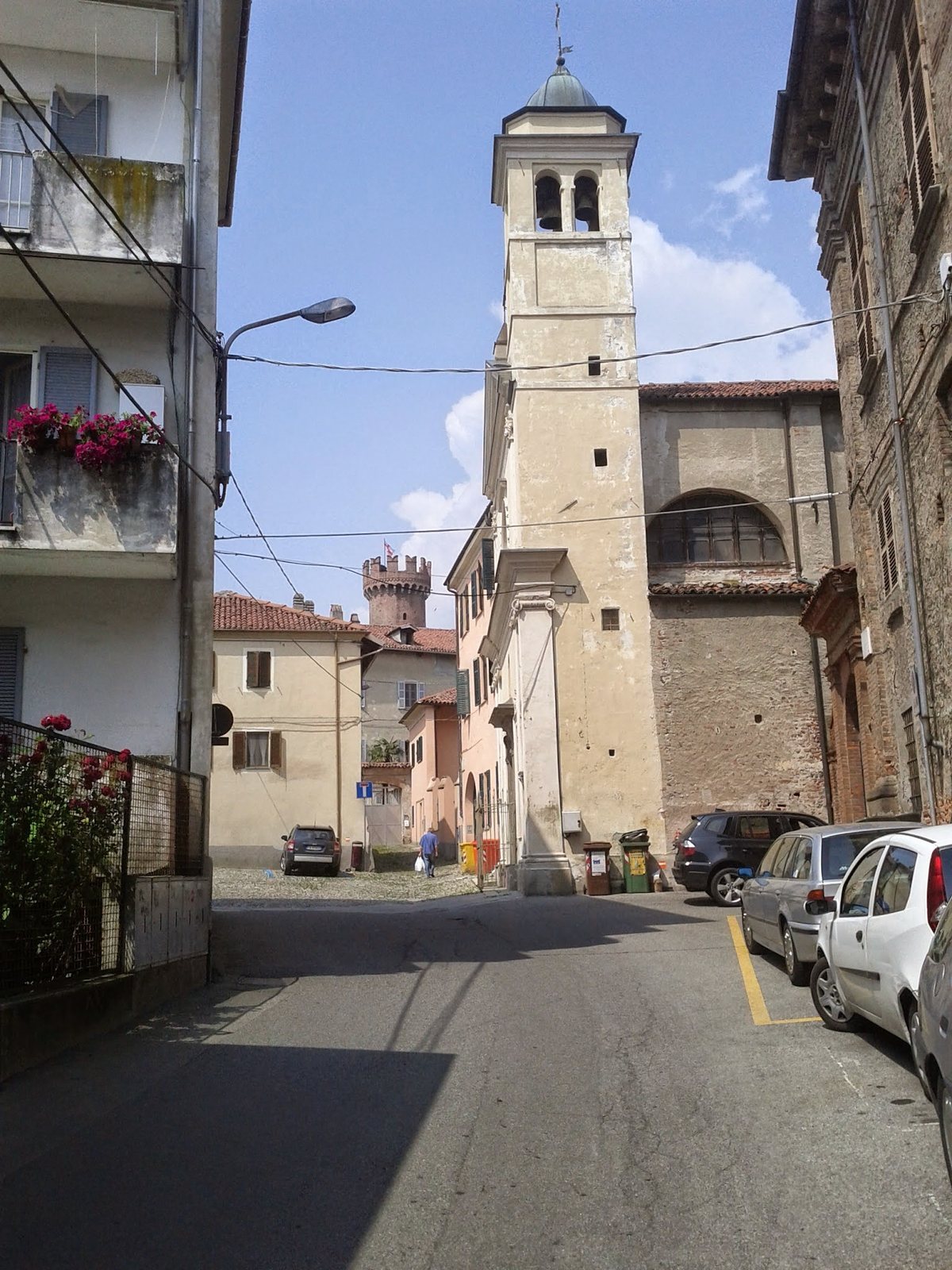
The church’s plain exterior façade contrasts with its richly ornamented Baroque interior. It stands near Ivrea Cathedral. For many years, the bomb was kept inside as a reminder of the event and remained on display until recently.
Exterior and entrance
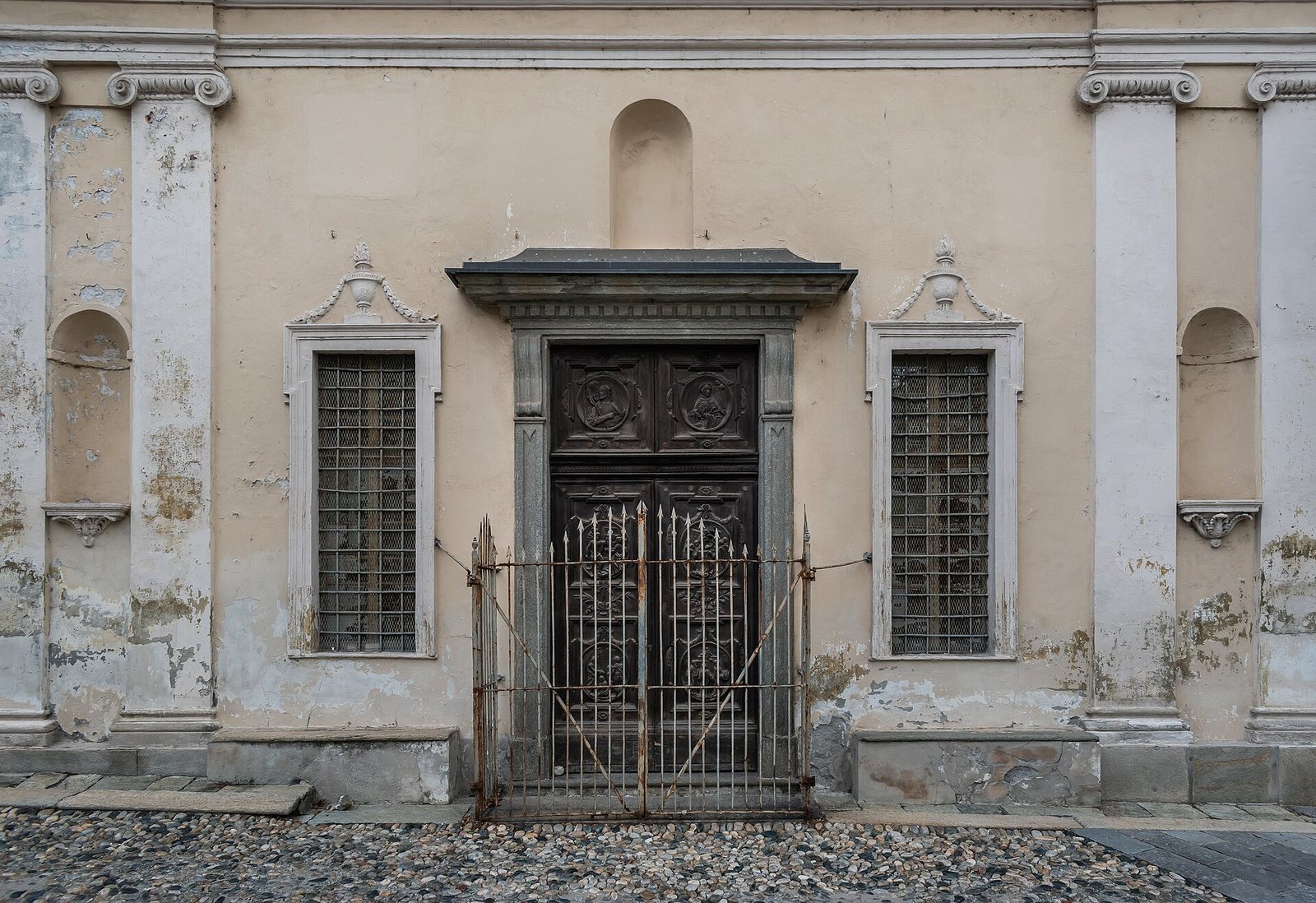
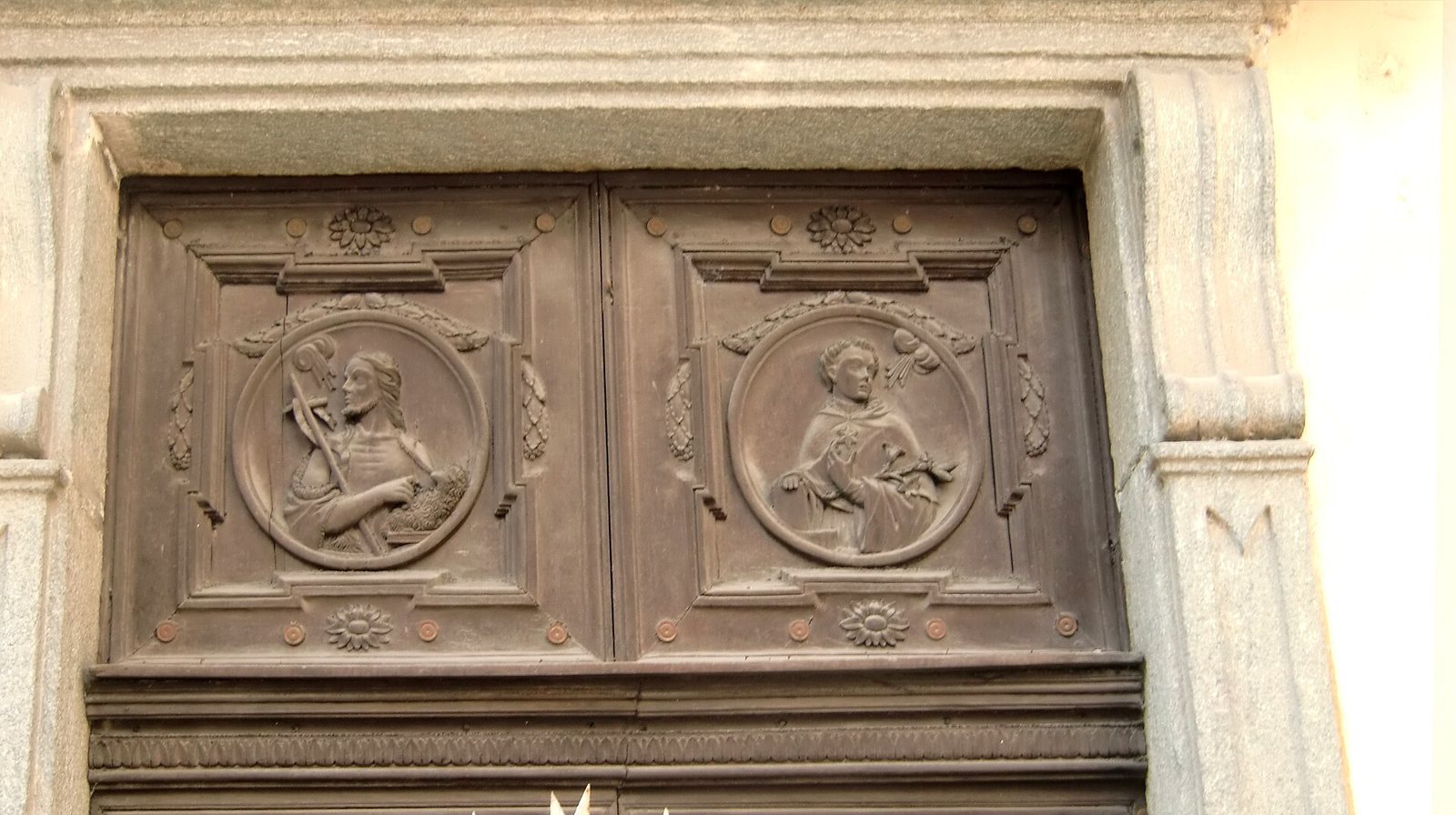
A small grille protects the entrance portal. Carved wooden reliefs there refer to the church’s two patron saints, Nicholas of Tolentino and John the Baptist under the title of his Beheading. The reliefs date to about 1684 and may have been made by the same craftsperson as the choir stalls.
Interior decoration
Wall paintings
Between 1683 and 1694, painter Cesare Chiala decorated the interior walls with scenes from the life of Saint Nicholas of Tolentino. Painted architectural settings, imitation marble, and molded plaster ornament combine to create an illusion of greater interior space. The painted features imitate built architecture, extending the visual effect of the church’s interior.
Choir stalls
Woodcarver Francesco Mabrito made the choir stalls in 1684. Their armrests take the form of dragons, and 33 carved panels depict episodes from the saint’s life and miracles. The imagery was probably inspired by illustrations in Ambrogio Frigerio’s 1578 devotional biography of Nicholas. The stalls are a notable example of local seventeenth-century woodcarving.
Former high altar
A Baroque wooden altar structure, once part of the high altar and now in the choir, combines carved figures with a panel painting. At its lower center, an angel holds the Baptist’s head on a platter in the position of a tabernacle, the container for the consecrated host. William, Duke of Aquitaine, stands to one side, with Saint Simplician, a bishop, on the other. Above them, the panel shows the Virgin and Child crowned by two angels, accompanied by a bishop, possibly Saint Nicholas of Bari, Saint Nicholas of Tolentino, and John the Baptist as an infant. The panel was once attributed to Defendente Ferrari and is now attributed to Giuseppe Giovenone the Younger (1524–1608), son of painter Girolamo Giovenone.
The upper part of the altar structure includes sculptural groups of the Virgin and the Trinity, framed by decorative surrounds and gilded rays. A group depicting the Coronation of the Virgin, Mary crowned in heaven, came from the chapel that preceded the church.
Amedeo IX canvas
A canvas dated 1619 and signed Scaglia depicts Amedeo IX of Savoy, a fifteenth-century duke venerated as blessed in the Catholic Church, giving alms to poor people. A panorama of Ivrea appears in the background.