Church of the Transfiguration: A Byzantine Orthodox Church in Athens
Site at a Glance
- Popularity
- Medium
- Country
- Greece
- Primary era
- Medieval
- Eras represented
- Medieval, Early Modern, Modern
- Civilizations
- Byzantine, Greek, Ottoman
- Site type
- Religious
- Remains
- Church
On this page6 sections
History
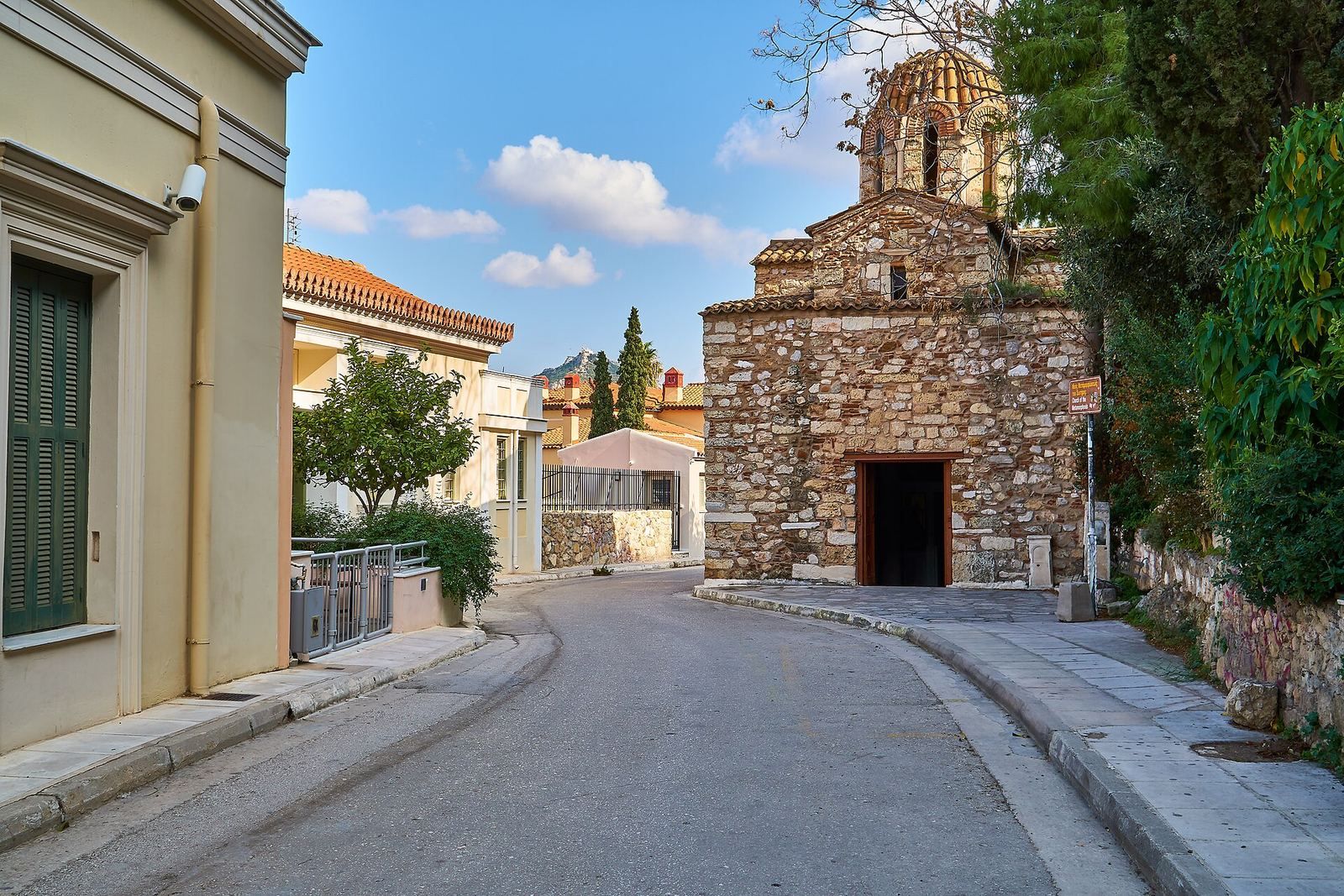
The Church of the Transfiguration is a Byzantine Orthodox church on the northern slope of the Acropolis in the Pláka district of Athens, Greece. Byzantine builders probably erected it in the second half of the 11th century, during the era of the eastern Roman Empire centered on Constantinople. Dedicated to the Transfiguration of Christ, it commemorates the revelation of Christ’s divine glory. The church is also known as Sotirákis and the Little Savior; its small size gave rise to the name Sotirákis.
The church stood near Rizókastro, the medieval enclosure around the Acropolis. It was later enlarged toward the east and west, probably during Ottoman rule or the early years of the Greek state. Further renovation took place in the post-Byzantine period, after the Byzantine Empire had ended.
Ottoman period and later use
Ottoman rule in Greece lasted from 1456 to 1833. Popular tradition holds that Odysseas Androutsos, a Greek military leader prominent in the Greek War of Independence, was secretly buried in the church courtyard after his execution on 4 June 1825. Restoration work in the 1960s uncovered graves south of the church. It now serves as a chapel of the Church of Panagía Chrysokastriotíssa, less than 100 metres to the northeast. Panagia is an Orthodox title for the Virgin Mary.
Remains
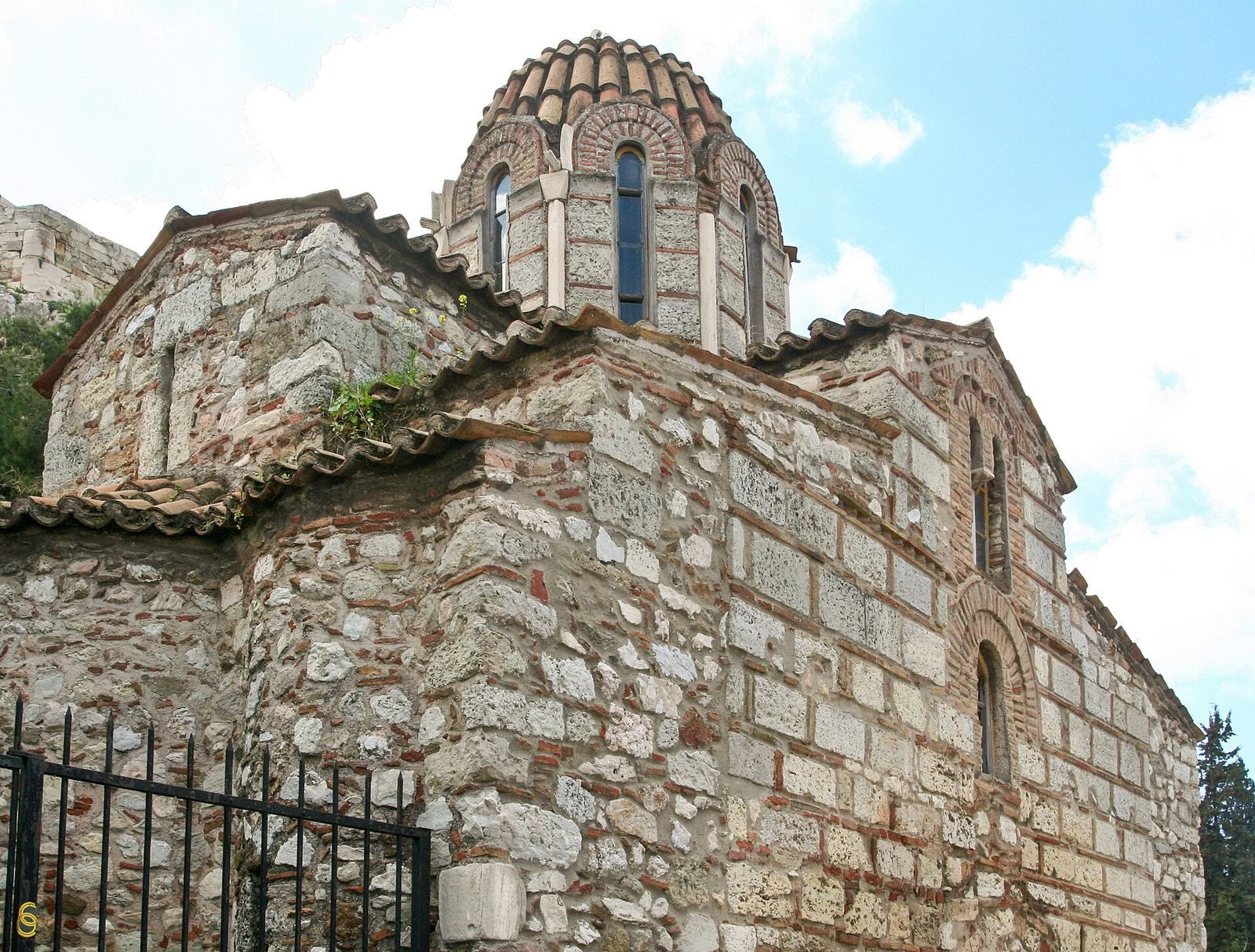
The church has a domed, inscribed-cross plan, in which a cross-shaped arrangement is enclosed within a nearly square building. Four columns support the dome, and the church has no narthex, or entrance vestibule. Its original northern and southern sides and dome survive, while the eastern and western ends were rebuilt during later enlargement.
Masonry and northern façade
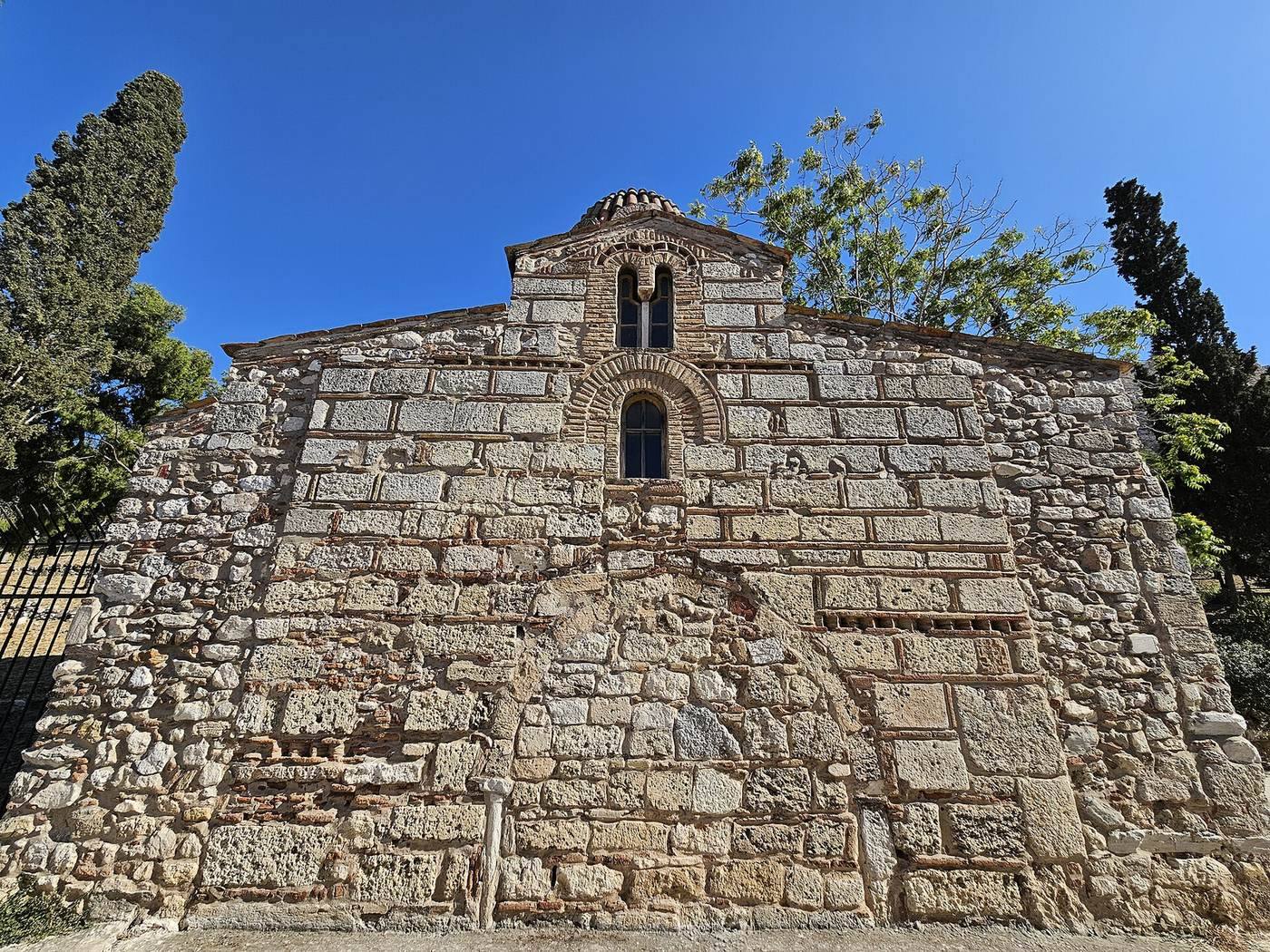
The original masonry combines porous stone with brick framing or interspersed through the stonework. On the northern wall, rectangular stones are set with thin red bricks. Later additions use more varied materials and substantial mortar, incorporating stones from demolished buildings and fragments of sculpture. The northern façade also retains pseudo-Kufic motifs, decorative patterns resembling Kufic script but not necessarily forming readable writing, as well as traces of a serrated ceramic band. The former main doorway is blocked by a pointed brick arch.
Dome and interior
The octagonal dome has eight windows, with slender marble columns between its outer faces and marble arches framing the windows. Inside, the dome rests on four columns whose capitals, or sculpted tops, probably came from Roman-period buildings. Sculptural decoration is sparse, while fragments of frescoes from the 14th or 15th century remain in the dome and above the blocked northern doorway.
Chapel of Saint Paraskeva
A small chapel dedicated to Saint Paraskeva of Rome, an early Christian martyr venerated in Orthodox Christianity, stands on the church’s southern side. It is partly cut into the Acropolis hillside and may originally have served as a crypt, a chamber used for burial in connection with a church.