San Francesco: A Romanesque Church in Trani, Italy
Site at a Glance
- Popularity
- Low
- Country
- Italy
- Primary era
- Medieval
- Eras represented
- Medieval, Early Modern
- Civilizations
- Kingdom of Naples, Kingdom of Sicily, Spanish
- Site type
- Religious
- Remains
- Church
On this page13 sections
History
Benedictine foundation and urban expansion
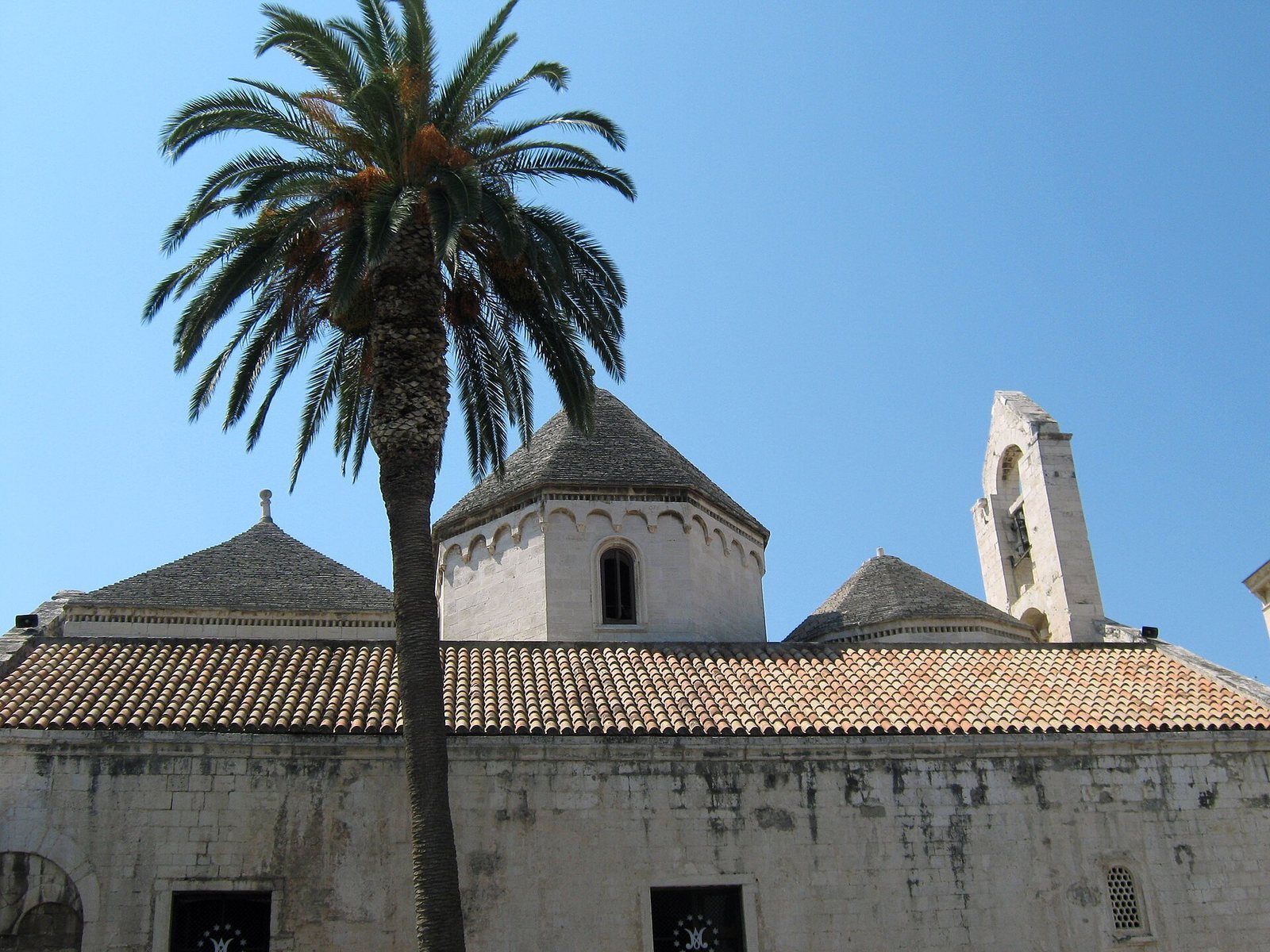
San Francesco is a Romanesque church in Trani, Italy, built by a Benedictine community between 1176 and 1184. It is one of the few well-preserved Romanesque churches in Apulia with three domes. The church’s presence is recorded in 1121, while its foundation appears to date to 1176 under Abbot Domenico Benincasa, the leader of the Benedictine community at Cava de’ Tirreni. First dedicated to the Most Holy Trinity, it was consecrated in 1184 by Archbishop Bertrando II.
The church and adjoining monastery originally stood outside Trani’s Lombard walls, beside a stream that flowed into the harbor and near the meeting of two roads. One led toward nearby settlements along the route now called Via Mario Pagano; the other followed the route toward the old city gate, now Via Ognissanti. Settlement beyond the walls helped prompt Emperor Frederick II to extend Trani’s defenses in the thirteenth century. The enlarged walls enclosed the church near the city’s eastern entrance and the new Bisceglie Gate. The crossroads square is now Piazza Libertà, where a Tree of Liberty was erected before 1799.
Franciscan church
In 1537, the Benedictines transferred the church and monastery to the Conventual Franciscans, a branch of the Franciscan order. The Franciscans received papal permission to move inside the walls after their former convent of San Pietro, near the castle, was destroyed in the early-sixteenth-century wars between France and Spain. The church then took the name San Francesco.
Suppression and later use
A royal decree suppressed the Franciscan convent in 1809, and its property passed first to the state treasury and then to the municipality. On 25 October of that year, the mayor placed the church in the care of the prior of the Confraternity of the Immaculate Conception, a religious association devoted to the Catholic belief that Mary was conceived without original sin. The confraternity had been present at the church since 1715, and the arrangement became permanent in 1813.
The parish of San Francesco was established on 1 January 1909, bringing the church under its management. Before the adjoining monastery became the municipal library, it housed technical schools and an elementary school. San Francesco is a Roman Catholic parish within the Archdiocese of Trani-Barletta-Bisceglie.
Remains
The Romanesque church combines a decorated exterior with a broad, divided interior. Its surviving fabric also preserves traces of former porticoes and later changes to the sanctuary end.
Exterior and porticoes
Facade and roof
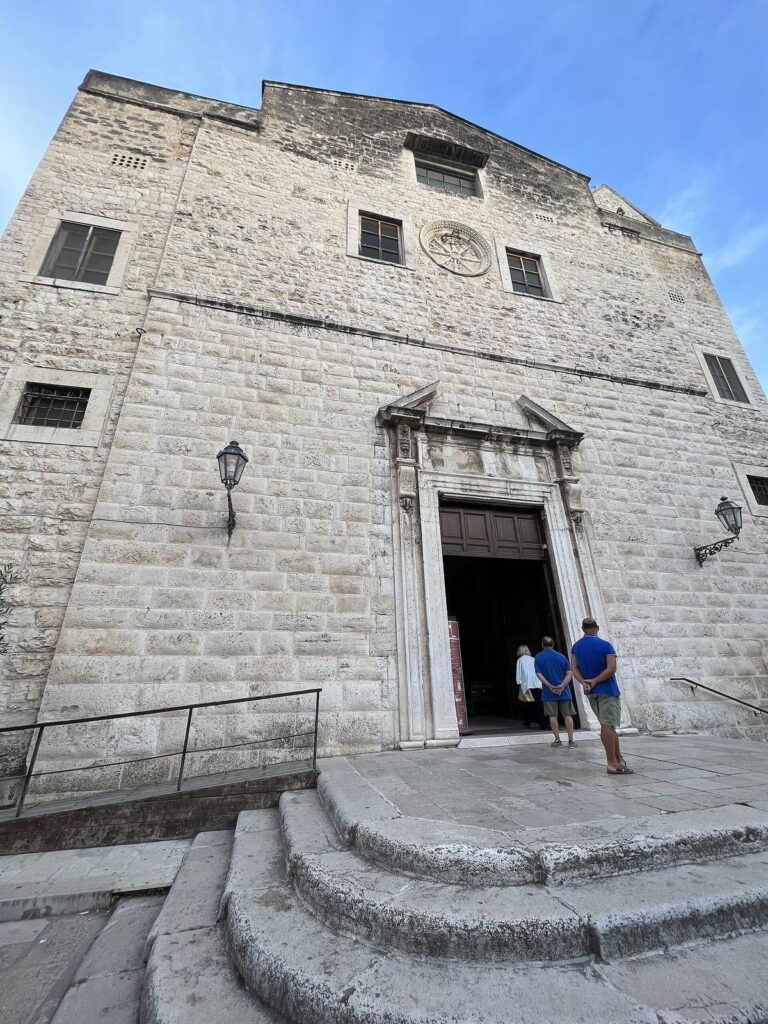
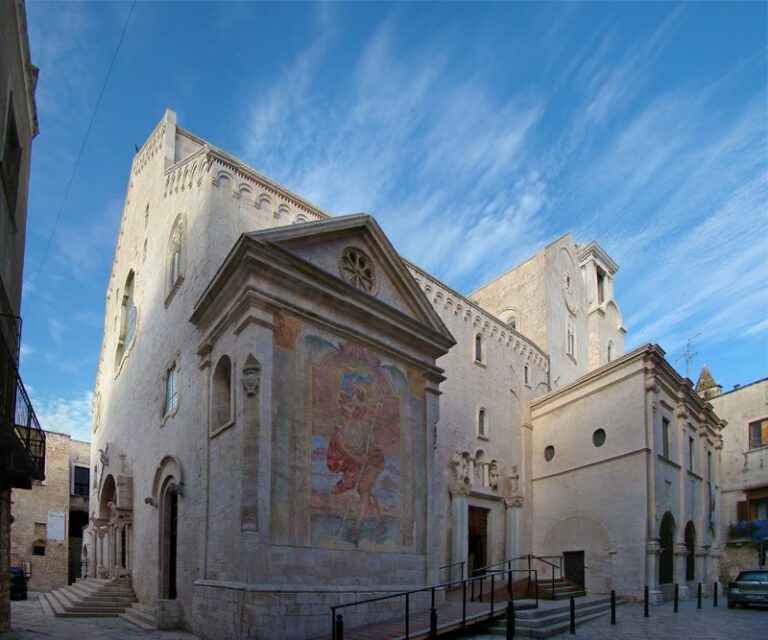
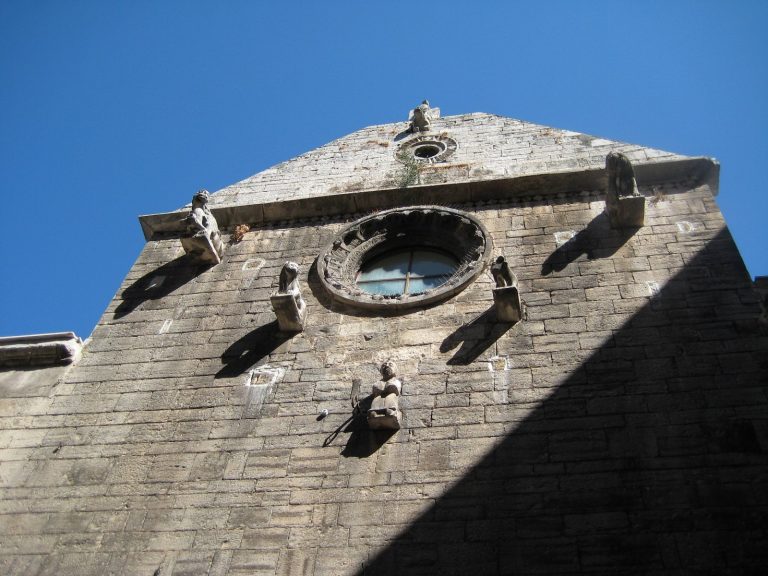
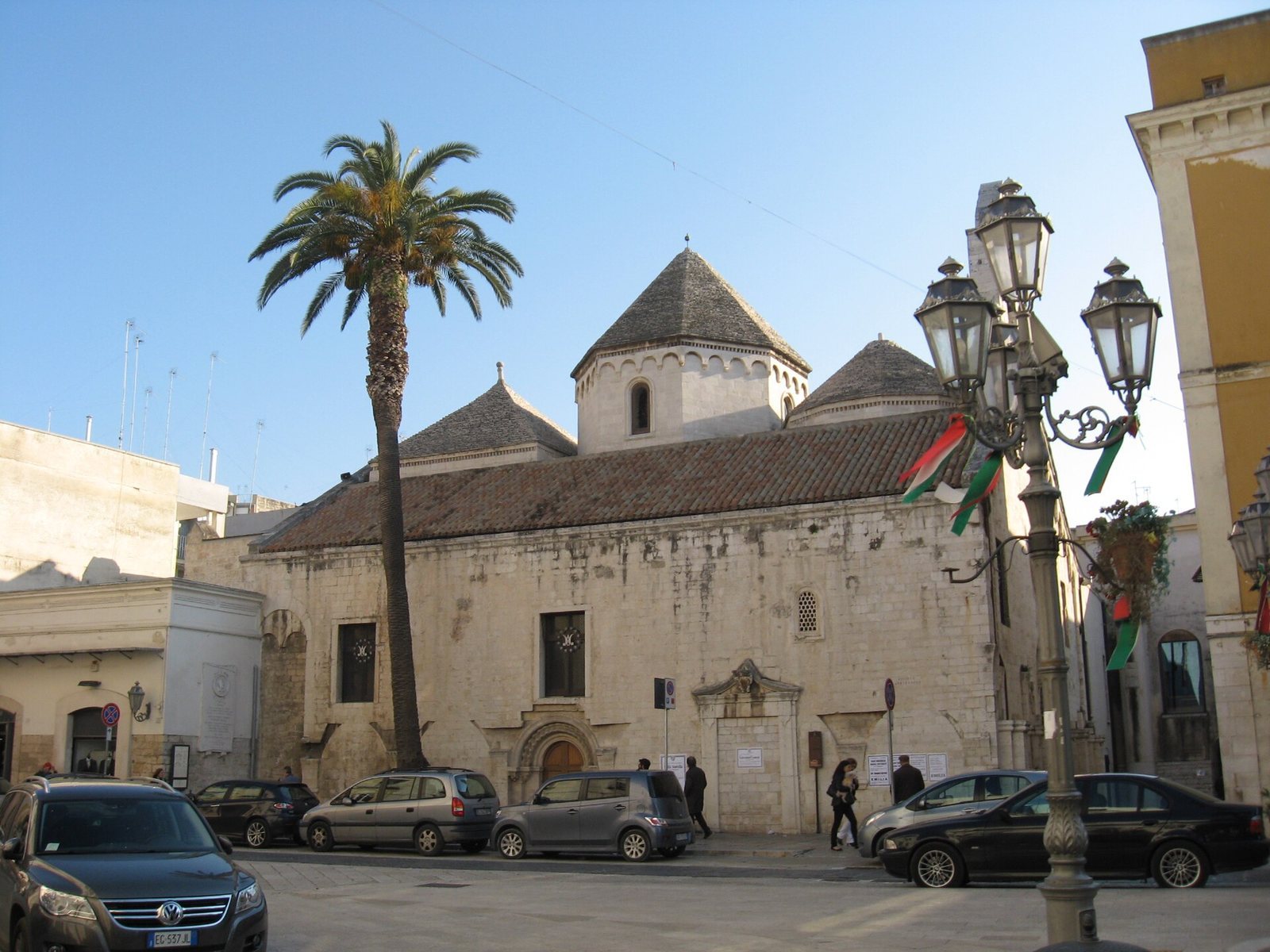
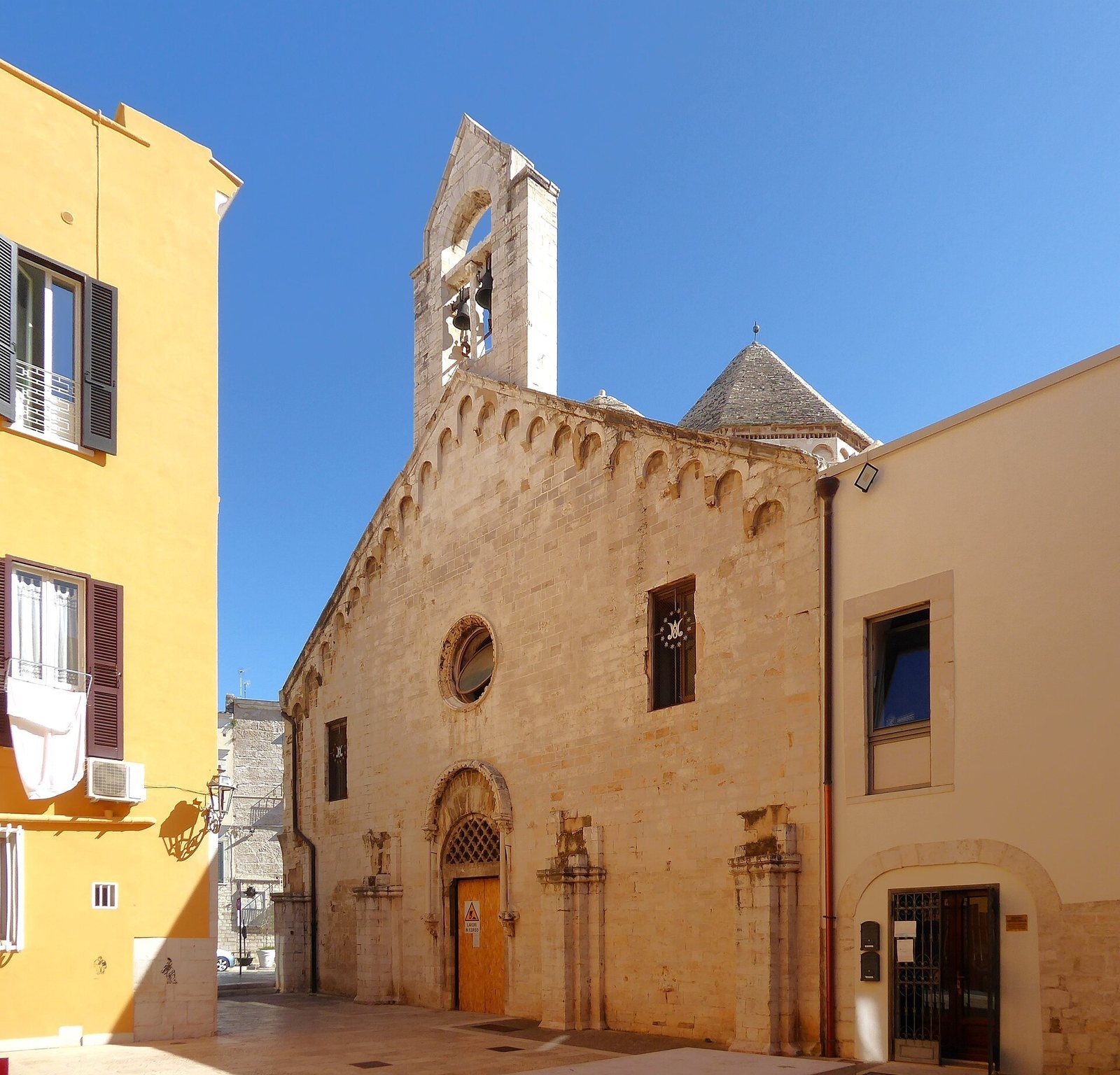
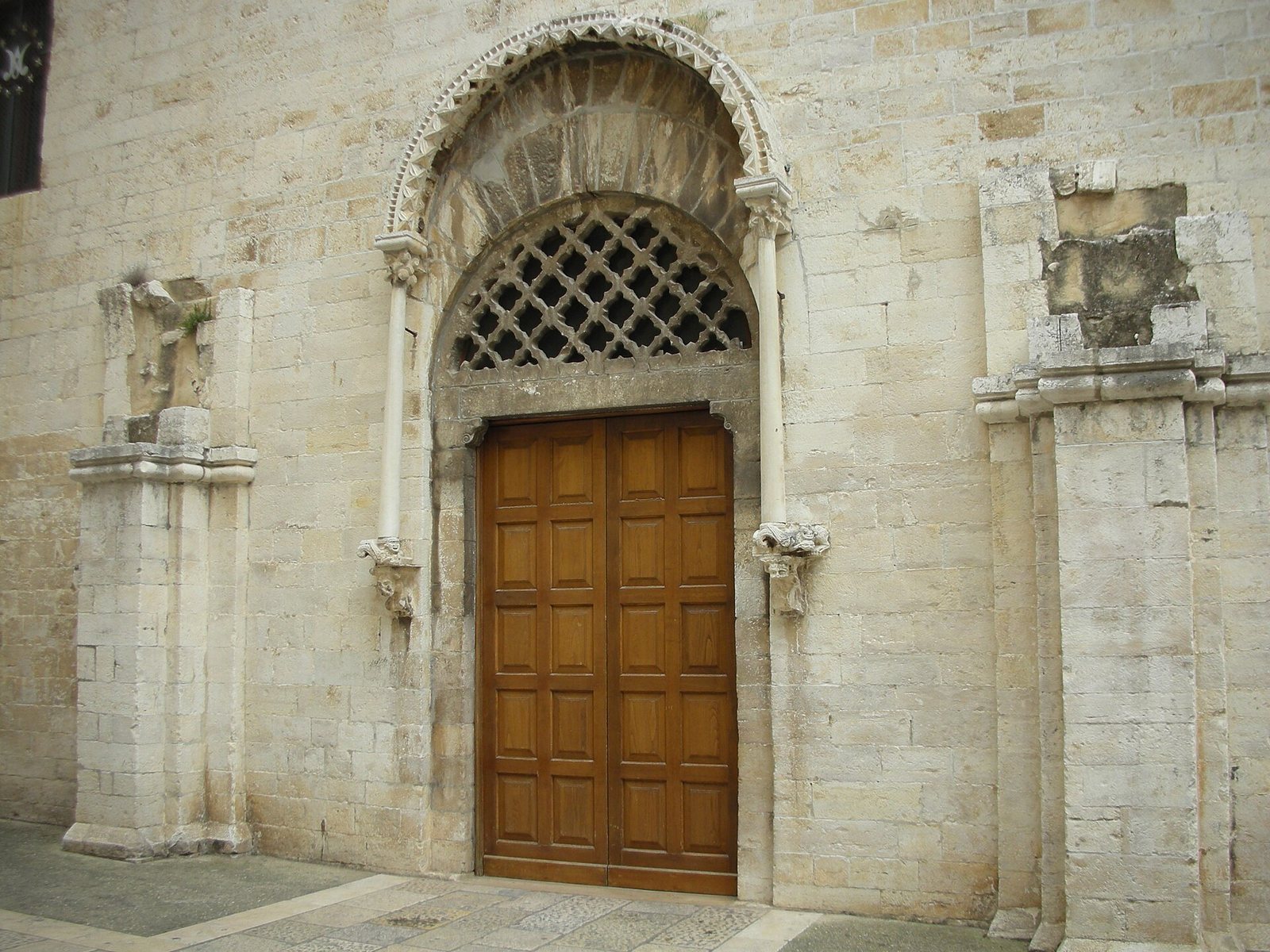
The main facade has a decorated triangular upper section, small arches, and a gable carrying a bell. Small slabs of local stone cover the roof and all three domes.
Former porticoes
Covered porticoes once ran along the front and side facades. On the church walls, traces remain where the portico arches began.
Interior and furnishings
Aisles and domes
The original interior is a large rectangular hall divided into three aisles by cross-shaped supports. A sequence of three domes covers the central aisle.
Sanctuary alterations
The sanctuary end was altered in later periods. A square chapel was added, along with other changes during the seventeenth and eighteenth centuries.
Burial slabs
Grave slabs within the church bear marks associated with the Sifola, Petagna, and Macchia families.
Altarpieces
An altarpiece installed on 29 June 2017, painted by Apulian artist Giovanni Gasparro, depicts Francis of Assisi, founder of the Franciscan movement, meeting Pope Innocent III, who approved the Franciscan rule. A second altarpiece by Gasparro, installed on 4 May 2018, portrays Nicholas the Pilgrim, an eleventh-century Christian preacher venerated as a saint and patron of Trani and its archdiocese, on a mission to evangelize young people.