Dormition Cathedral in Veliky Ustyug: A Russian Orthodox Cathedral
Site at a Glance
- Popularity
- Medium
- Country
- Russia
- Primary era
- Early Modern
- Eras represented
- Early Modern, Modern
- Civilizations
- Russian
- Site type
- Religious
- Remains
- Cathedral
On this page8 sections
History
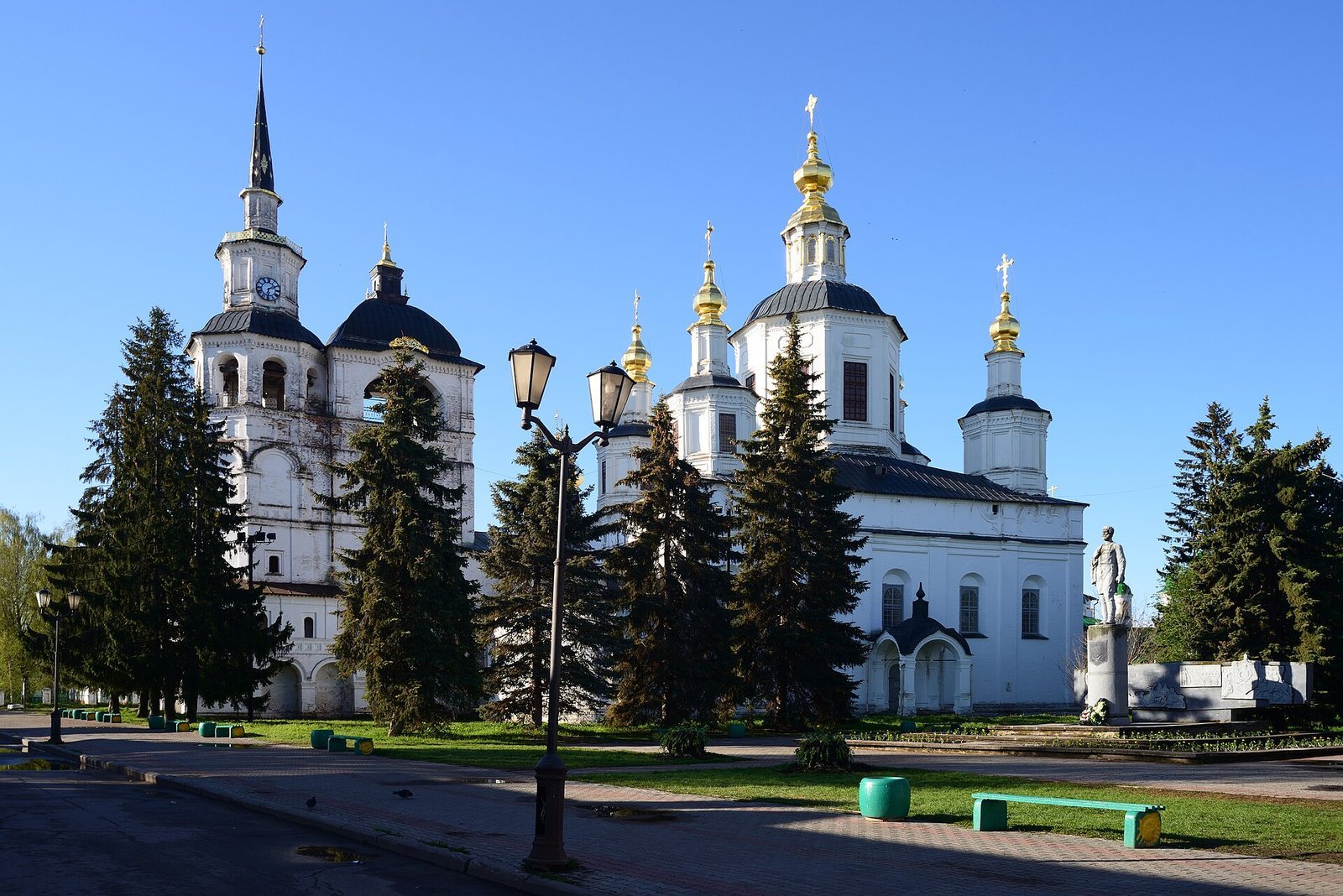
The Dormition Cathedral is a Russian Orthodox cathedral in Veliky Ustyug, Russia, dedicated to the Dormition, the Eastern Christian feast commemorating the death of Mary, the mother of Jesus. The present building was constructed between 1639 and 1658 in a style described as Russian Baroque, although later rebuilding added features from several architectural periods. Its predecessors stood here from 1290, and an earlier stone cathedral made Veliky Ustyug the site of the first stone building in the city and the first urban stone cathedral in the Russian North.
Wooden predecessors
The first wooden parish cathedral was built in 1290, during the lifetime of Procopius of Ustyug, a Russian Orthodox saint venerated as a wonderworker. Tarazjusz, bishop of Rostov, consecrated the church. Procopius lived in ascetic devotion on its porch, and the cathedral became associated with a tradition that myrrh flowed from an Annunciation icon.
After standing for about a century, the church was destroyed by fire. A successor on the same site was later destroyed in an attack on Ustyug by Novgorod forces. In 1399, Novgorod’s archbishop paid for another rebuilding and sent craftsmen from Novgorod. That church survived until a fire near the end of the fifteenth century. A further wooden church, built by the Rostov craftsman Aleksej Wołogżanin, also burned.
Stone cathedral and diocesan use
A stone cathedral was erected between 1619 and 1622, modeled on the Dormition Cathedral in the Moscow Kremlin. It burned in 1631 and was then dismantled. The present cathedral followed, built from 1639 to 1658 and consecrated during the seventeenth century. It underwent several subsequent rebuildings.
From 1682 to 1788, the cathedral served as the seat of the Diocese of Veliky Ustyug and Totma, a church territory governed by a bishop. It was also a burial place for bishops. In the nineteenth century, an Annunciation church was attached to the cathedral and became associated with veneration of the Annunciation of Ustyug icon. The icon originated at Yuriev Monastery near Novgorod, rather than at the cathedral itself.
Soviet closure and later use
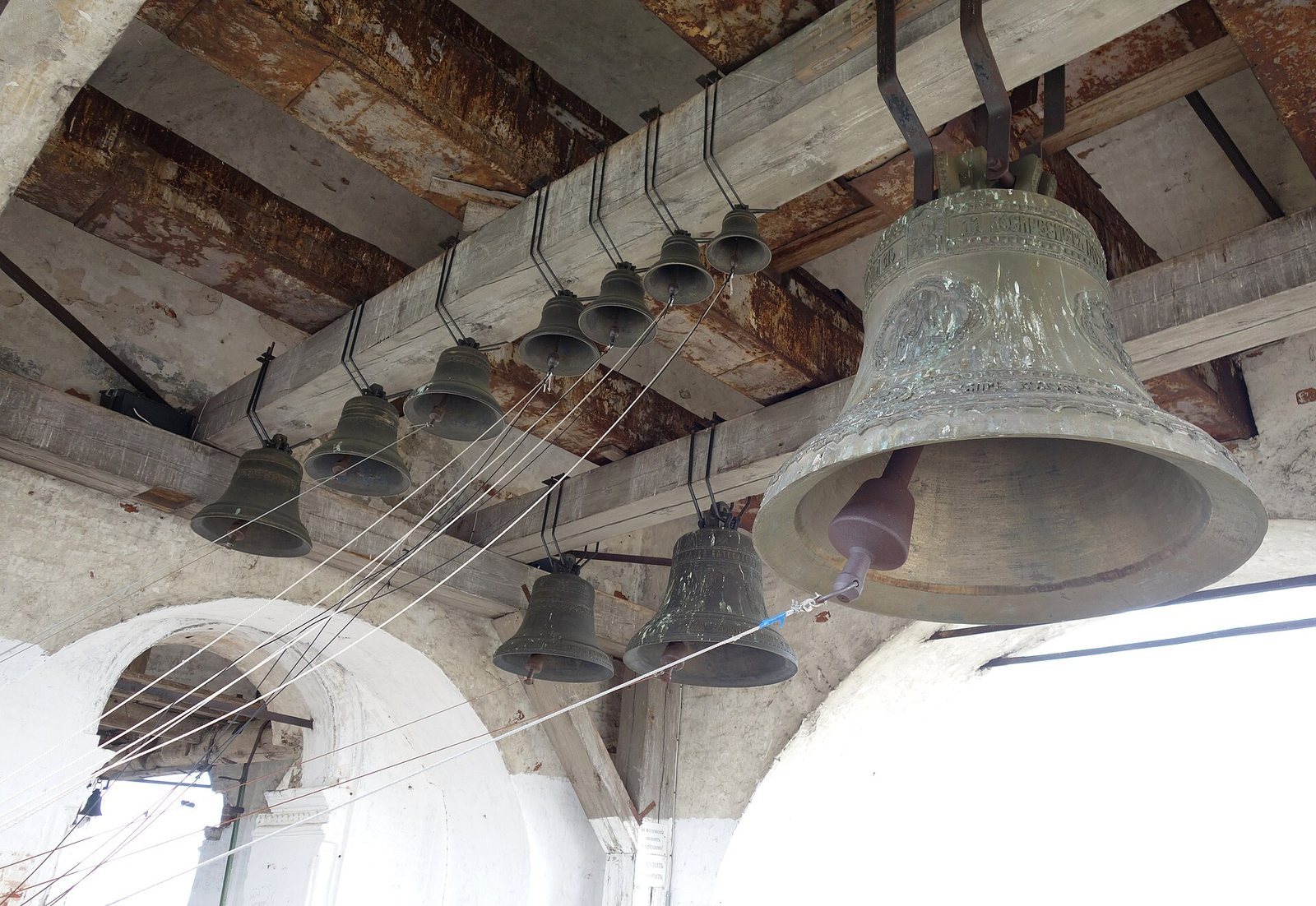
Soviet authorities looted the cathedral in 1922 and arrested its rector, an archpriest, on a charge of anti-Soviet agitation. They closed the building in December 1929, confiscated its property, and removed its bells. An attempt to break up the icon-bearing screen between the sanctuary and the main worship area, called an iconostasis, to recover its gold was halted after strong protests from the local museum.
On January 5, 1930, the largest bell was thrown from the bell tower. It was broken up for melting by repeatedly heating it and exposing it to snow, a process that continued through the end of January. In March, the cathedral was used as a transit camp for people deprived of civil rights; it later served as a warehouse until 1976. It has not returned to worship. The neighboring Cathedral of St. Procopius now serves as the diocesan cathedral.
The Veliky Ustyug Museum-Reserve began restoration work in the 1980s, and conservation continued into the early twenty-first century. The cathedral received state protection in 1960 as a monument of Union significance and is now a federal-level cultural heritage site.
Remains
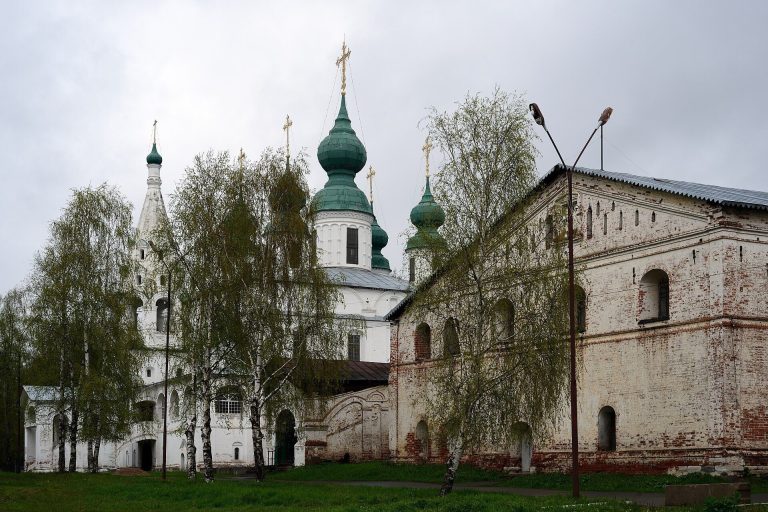
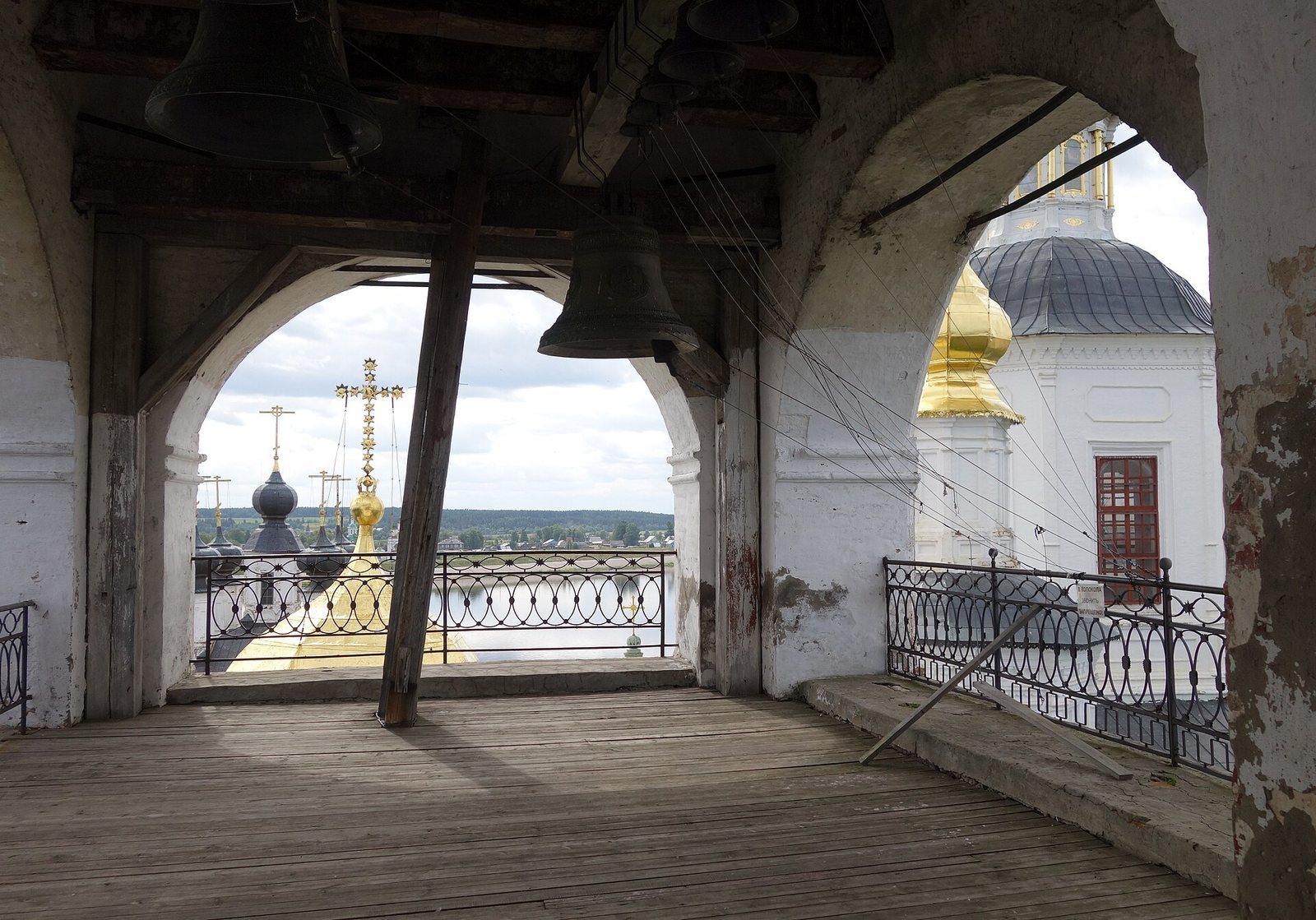
The cathedral stands on Cathedral Courtyard in the historic part of Veliky Ustyug, on the high left bank of the Sukhona River, in the Dymkomski district. It forms part of a religious complex. Built of brick, the church is described as Russian Baroque, though alterations over time gave it features of several styles.
Main building
The cathedral’s main body has a cube-like form, with an octagonal structure above it and five cupolas overall. Porches topped by cupolas extend from three sides. Four pillars originally supported the interior; two were removed during an eighteenth-century rebuilding. The building has a single altar. Its original appearance remains uncertain.
Interior and devotional furnishings
The interior decoration dates to the eighteenth century and combines floral and architectural designs with angel heads on the walls. The Baroque iconostasis features rosettes, Corinthian columns, and floral garlands. It survived the attempted destruction of 1929. The cathedral’s archpriest Wasilij Aleniew painted its icons and a gallery of portraits of local bishops; some portraits remain on the walls. A Hodegetria icon, an image of Mary understood as a guide, received special veneration, while the cathedral’s patronal icon depicted the Dormition.
Bell tower and adjoining buildings
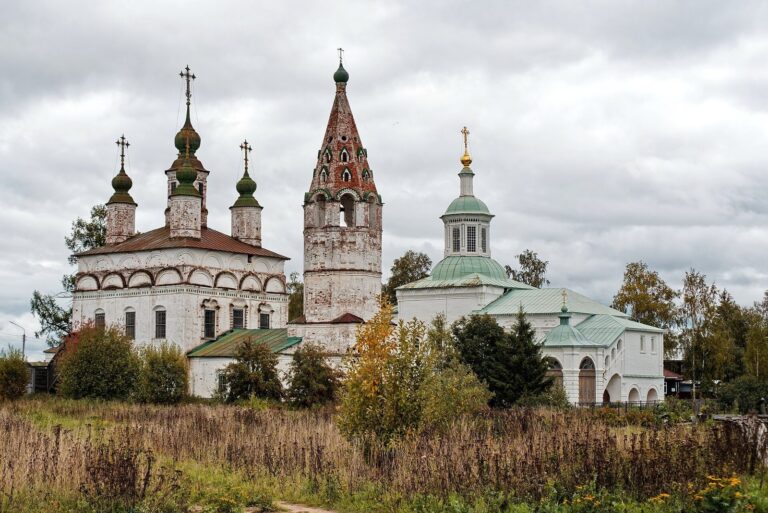
A two-part bell tower stands east of the cathedral. One of its towers ends in a spire and the other in a cupola. The nineteenth-century Annunciation church is attached on the south side and served as a winter church and refectory church. The wider complex also includes the seventeenth-century Cathedral of St. Procopius and the nineteenth-century Church of St. John.