Mikhailo-Arkhangelsky Monastery: A Historic Orthodox Monastic Ensemble in Veliky Ustyug
Site at a Glance
- Rating
- 4.6
- Popularity
- Very Low
- Country
- Russia
- Primary era
- Early Modern
- External website
- Open
- Eras represented
- Early Modern
- Civilizations
- Russian
- Site type
- Religious
- Remains
- Monastery
On this page13 sections
History
Mikhailo-Arkhangelsky Monastery is a historic Russian Orthodox monastery in Veliky Ustyug, Russia, traditionally founded in 1212 by the monk Cyprian during the rule of Constantine Vsevolodovich, Prince of Rostov. Church legends describe it as the oldest monastery in the Russian North, a historic region of northern Russia.
Traditional foundation and early privileges
Great Ustyug chronicles from the eighteenth and nineteenth centuries relate that local residents asked Cyprian to establish a monastery near the city. He is said to have chosen a site “by the lakes beyond the fortified embankment” and founded a community with wooden churches dedicated to the Presentation of the Virgin Mary and the Archangel Michael. The Presentation commemorates Mary’s presentation at the Temple, while the Archangel Michael was a major figure in Orthodox dedication names.
The monastery is securely documented by 1521, when Grand Prince Vasily Ivanovich granted it a charter exempting it from ordinary judicial jurisdiction. This privilege placed the community within the protected institutional framework of the medieval Russian state.
Stone rebuilding and monastic expansion
A major fire destroyed the wooden buildings in 1651. Stone construction followed, including the Mikhailo-Arkhangelsky Cathedral and the Church of the Presentation with its refectory, a communal dining hall, built in 1653–1656. The Vladimir Gate Church was added in 1682, incorporating the monastery entrance into the religious ensemble.
In 1710, a small stone Church of the Mid-Pentecost replaced a chapel built over Cyprian’s grave. Mid-Pentecost is an Orthodox feast observed midway between Easter and Pentecost. The monastery’s residential buildings followed in the eighteenth century: the two-storey abbot’s quarters were completed in 1734–1735, and the brotherhood cells, the monks’ living quarters, in 1736–1737.
Affiliations, closure, and later status
The Trinity-Gleden Monastery became affiliated with Mikhailo-Arkhangelsky Monastery in 1842, followed by the Mikhailo-Arkhangelsky Monastery of Lalsk in 1860. The monastery itself was closed in 1919 by the executive committee of the Great Ustyug Soviet of Workers’, Soldiers’, and Peasants’ Deputies, and its buildings were assigned for use as a concentration camp.
By 1924, the Mikhailo-Arkhangelsky Cathedral and the Vladimir Gate Church had been transferred to the Great Ustyug Museum. During the Second World War, the grounds housed a military infantry school. From September 1945, the civil buildings were occupied by an automobile-transport technical school.
The ensemble received state protection as a cultural heritage site of Union-level significance on 30 August 1960 and is now recognized as a cultural heritage object of federal significance. In 2011, it was listed within the Vologda Eparchy, an administrative diocese of an Orthodox church, as inactive. On 16 July 2014, Bishop Ignatius issued a decree establishing the Orthodox religious organization of the episcopal metochion, a dependent religious establishment administered under a bishop, named Mikhailo-Arkhangelsky Monastery.
Remains
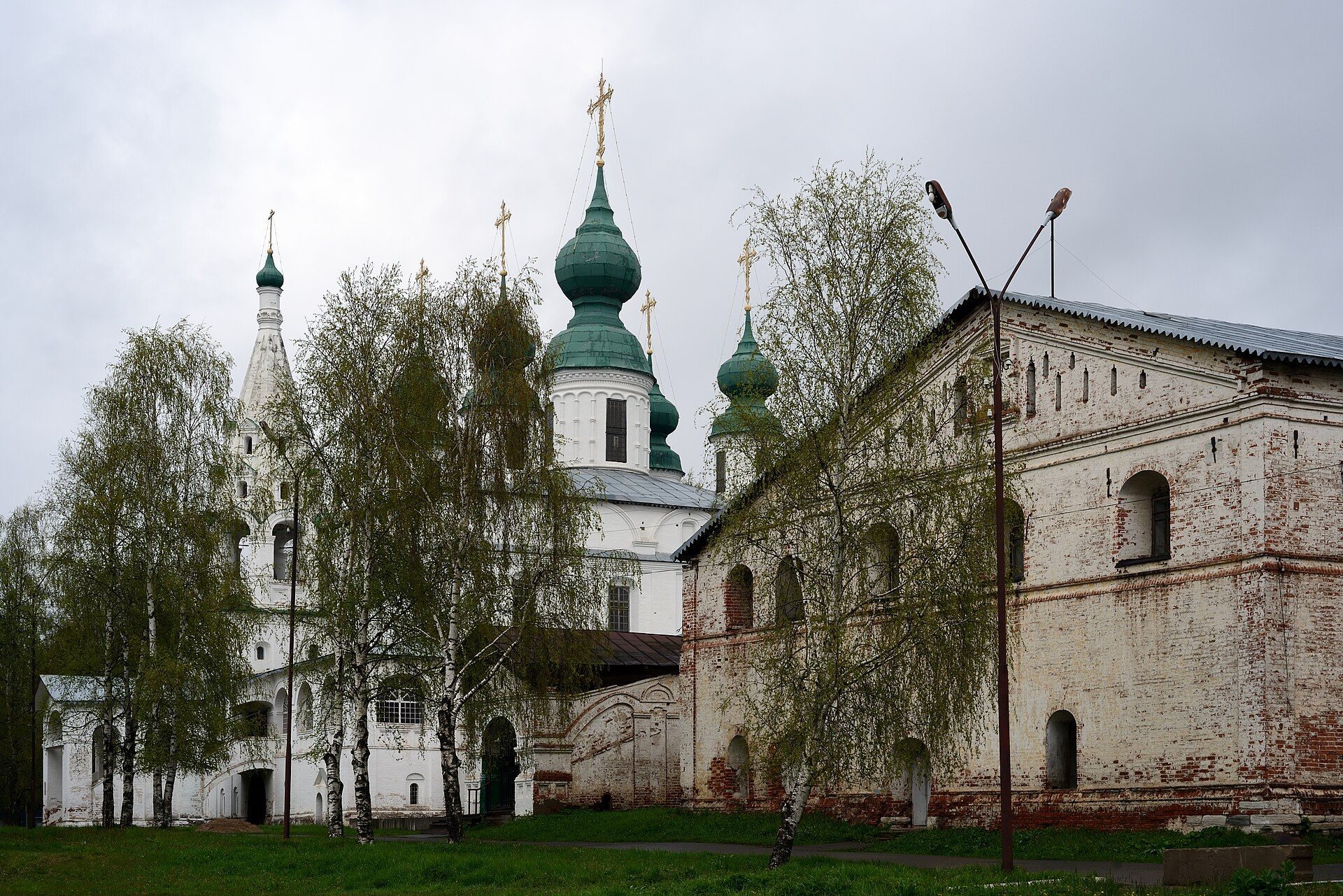
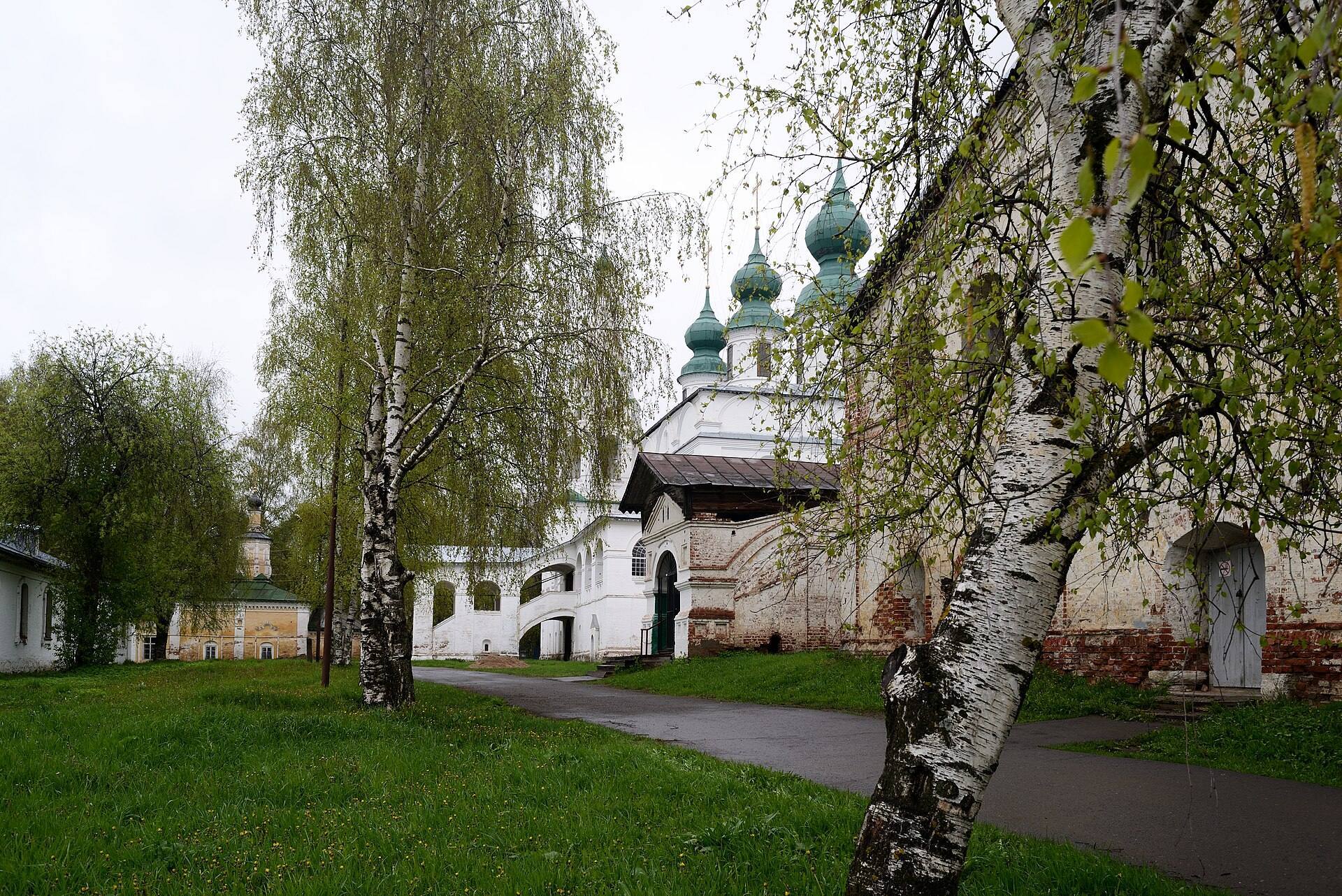
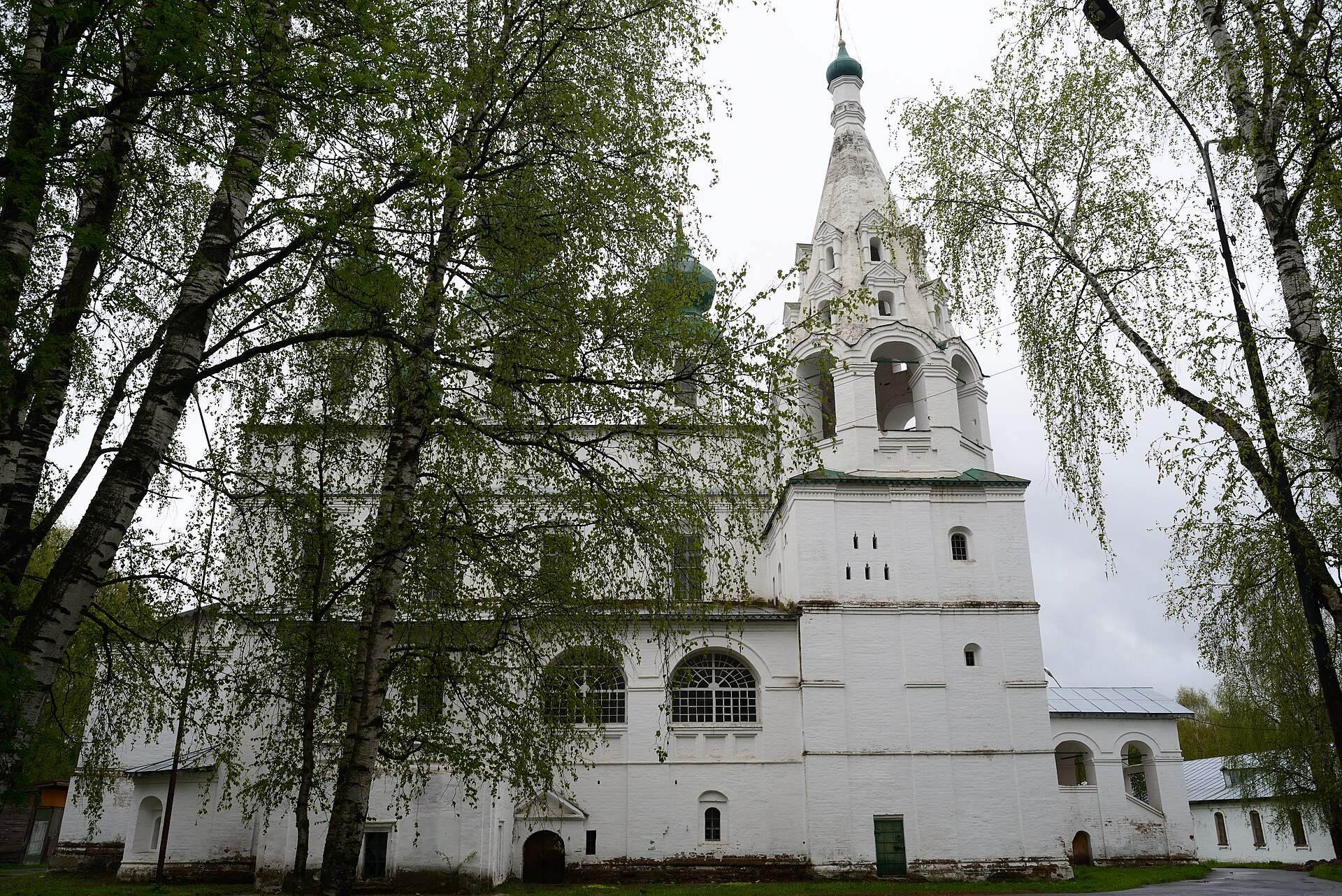
Mikhailo-Arkhangelsky Monastery is described as the most completely preserved monastic ensemble in Great Ustyug. Its surviving buildings form a group of stone churches, an entrance church, and residential structures dating mainly from the seventeenth and eighteenth centuries.
Churches and entrance structures
Mikhailo-Arkhangelsky Cathedral
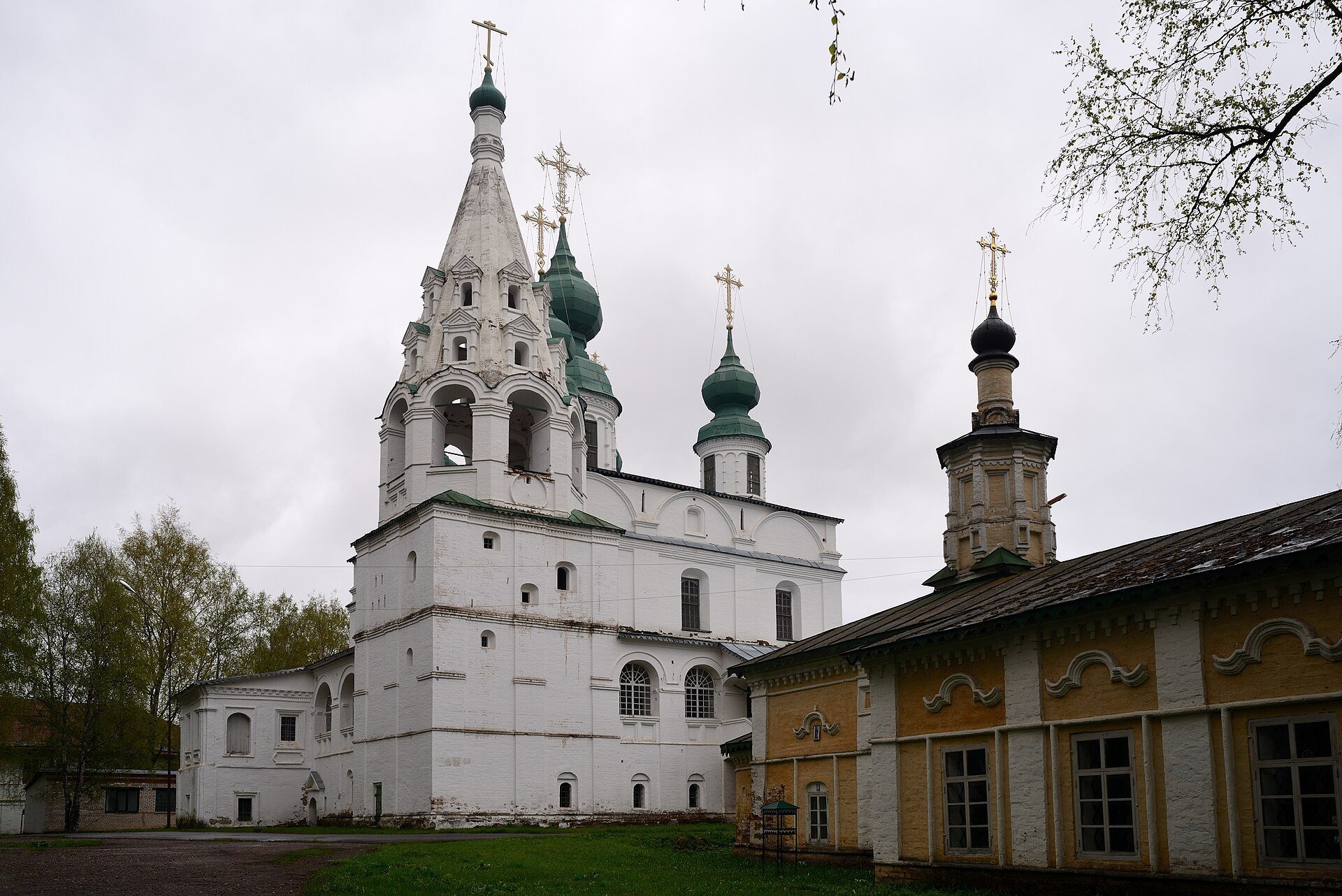
The five-domed Mikhailo-Arkhangelsky Cathedral was built in 1653–1656 after the fire that destroyed the earlier wooden monastery. Its stone construction and five-domed form make it the principal church of the ensemble. A tent-roofed bell tower belongs to the cathedral complex.
Church of the Presentation and refectory
Built in 1653–1656, the Church of the Presentation stands with its refectory, the monastery’s communal dining hall. Together, the church and dining building form one of the principal seventeenth-century architectural groups within the ensemble.
Vladimir Gate Church
The Vladimir Gate Church was built in 1682 and forms the gate component of the monastery. As a gate church, it is incorporated into the entrance structure rather than standing solely as an independent building.
Church of the Mid-Pentecost
The small stone Church of the Mid-Pentecost was built in 1710 on the site of a chapel erected over Cyprian’s grave. Its position marks the burial place traditionally associated with the monastery’s founder.
Residential buildings
Abbot’s quarters
The two-storey abbot’s quarters date from 1734–1735. They formed the residence associated with the monastery’s abbot within the eighteenth-century building group.
Brotherhood cells
The brotherhood cells were built in 1736–1737. These buildings provided living quarters for the resident monks and complete the principal surviving residential elements of the ensemble.