Saint Stanislaus Church in Solec nad Wisłą: An Early Baroque Monastic Church
Site at a Glance
- Popularity
- Very Low
- Country
- Poland
- Primary era
- Early Modern
- Eras represented
- Early Modern
- Civilizations
- Polish–Lithuanian Commonwealth
- Site type
- Religious
- Remains
- Church
On this page11 sections
History
Foundation and Franciscan service
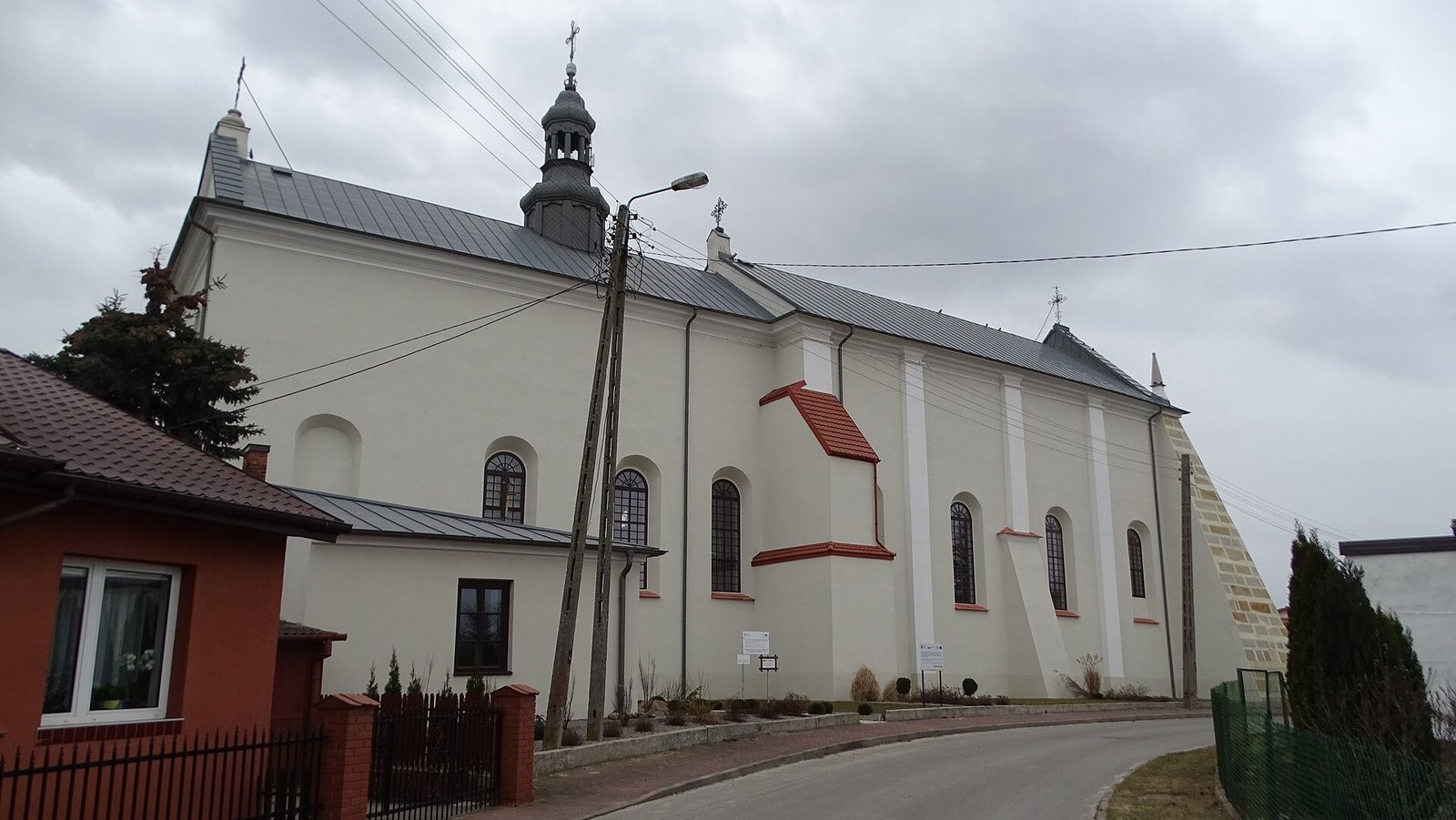
Saint Stanislaus Church in Solec nad Wisłą is a Roman Catholic early Baroque church in Poland, founded and completed in 1626 by Prince Krzysztof Zbaraski as a monastic church. The Baroque was a European artistic and architectural style that developed from the late sixteenth century. Reformed Franciscan friars, a branch of the Franciscan Order, served the church and monastery.
Suppression and later history
When the Reformed Franciscan order was suppressed in 1864, responsibility for the church passed to the parish. Part of the monastery, its garden, and some of its land were transferred to a school that later became a teacher-training seminary, an institution that prepared teachers. Bonawentura Czerniawski, guardian of the local monastery, meaning the head of its friary, was executed by Russian authorities for supporting the January Uprising, a Polish insurrection against Russian rule in 1863–1864.
Repairs and conservation were carried out in 1995–1996 by a team from the Academy of Fine Arts in Kraków, through the efforts of former parish priest Tadeusz Gębka. Bishop Stefan Siczek dedicated the church on November 3, 1996. The church now serves as a subsidiary, or filial, church of the parish of the Assumption of the Blessed Virgin Mary in Solec nad Wisłą. It belongs to the Lipsko deanery, a local grouping of parishes, within the Diocese of Radom, a territory overseen by a bishop.
Remains
Structure and plan
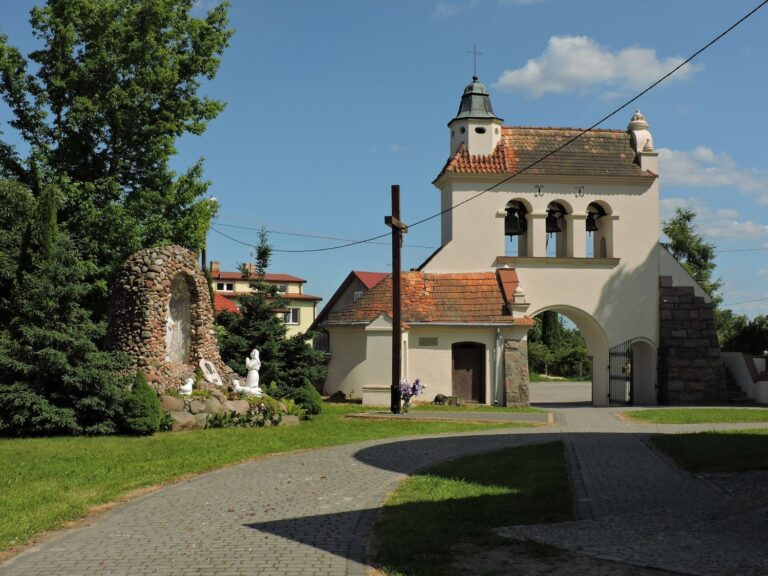
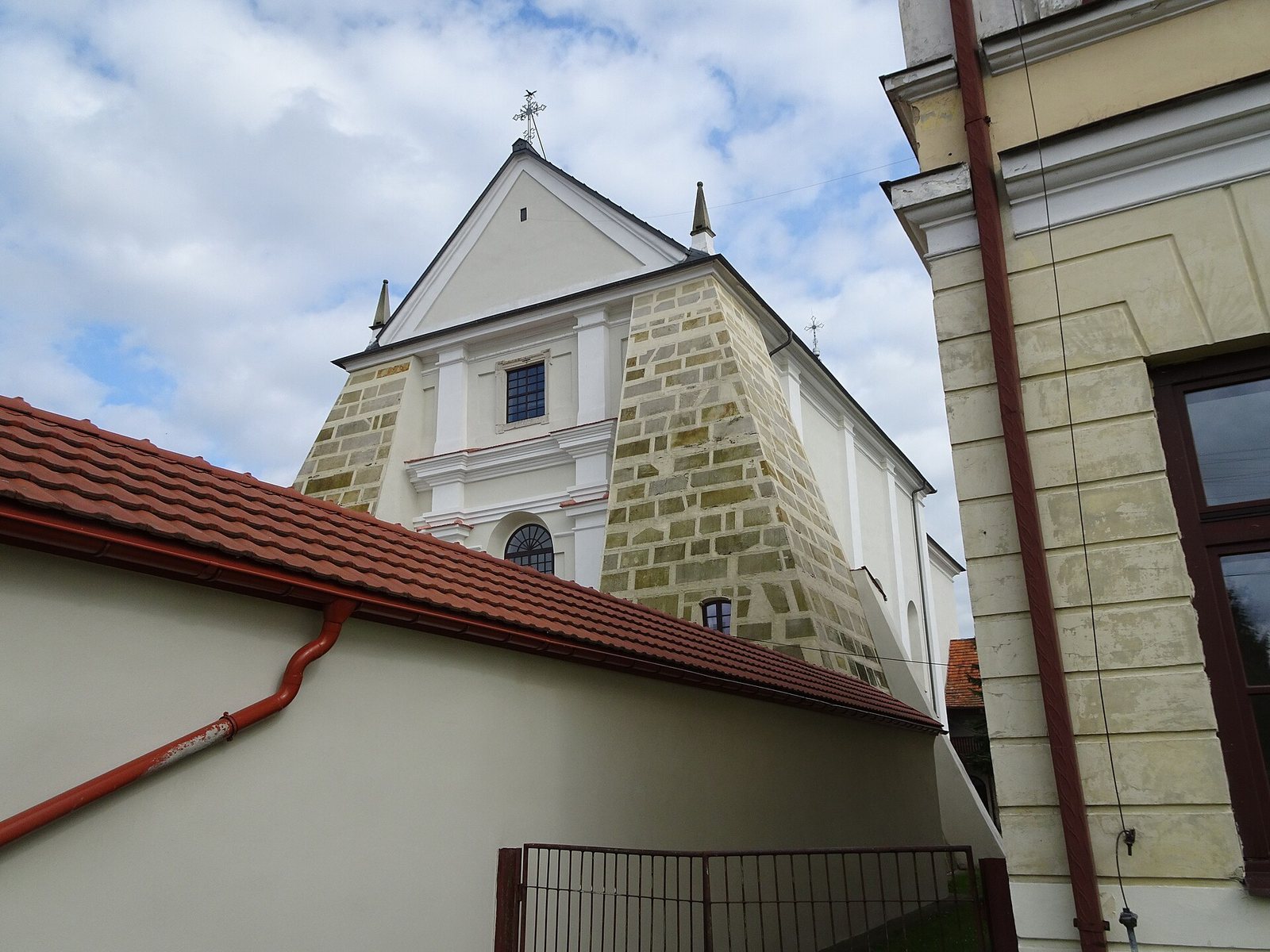
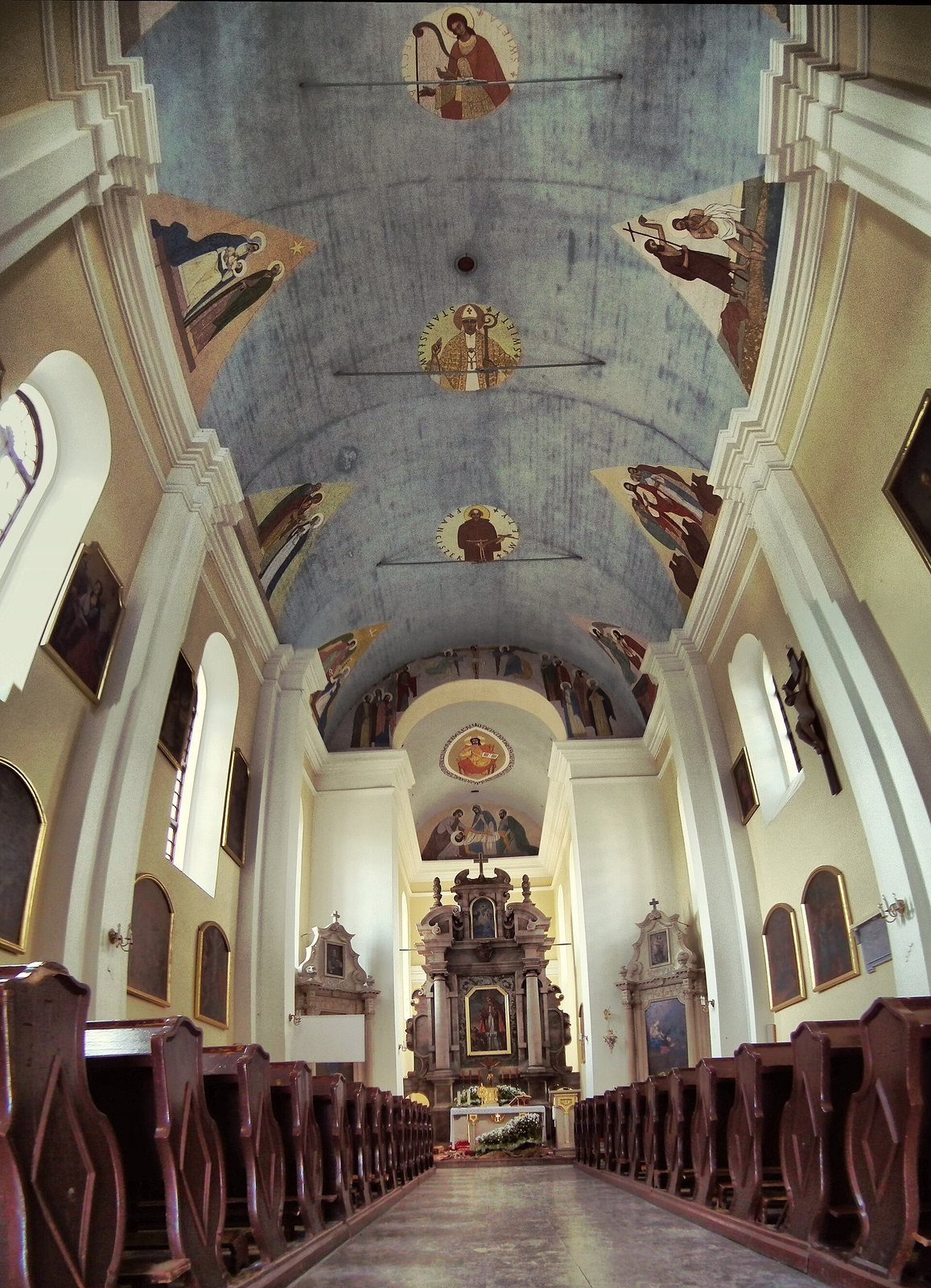
The oriented, single-nave church is built of dressed stone blocks and has one tower. Its front facade is supported by pyramidal walls. Alongside the nave are a chancel, the area around the altar, a sacristy where clergy prepare for services and liturgical objects are kept, and a small treasury room. A ground-floor plan dated 1663 is credited to Father Chryzostom of Iłża, a Catholic priest.
Altars and interior furnishings
Main altar
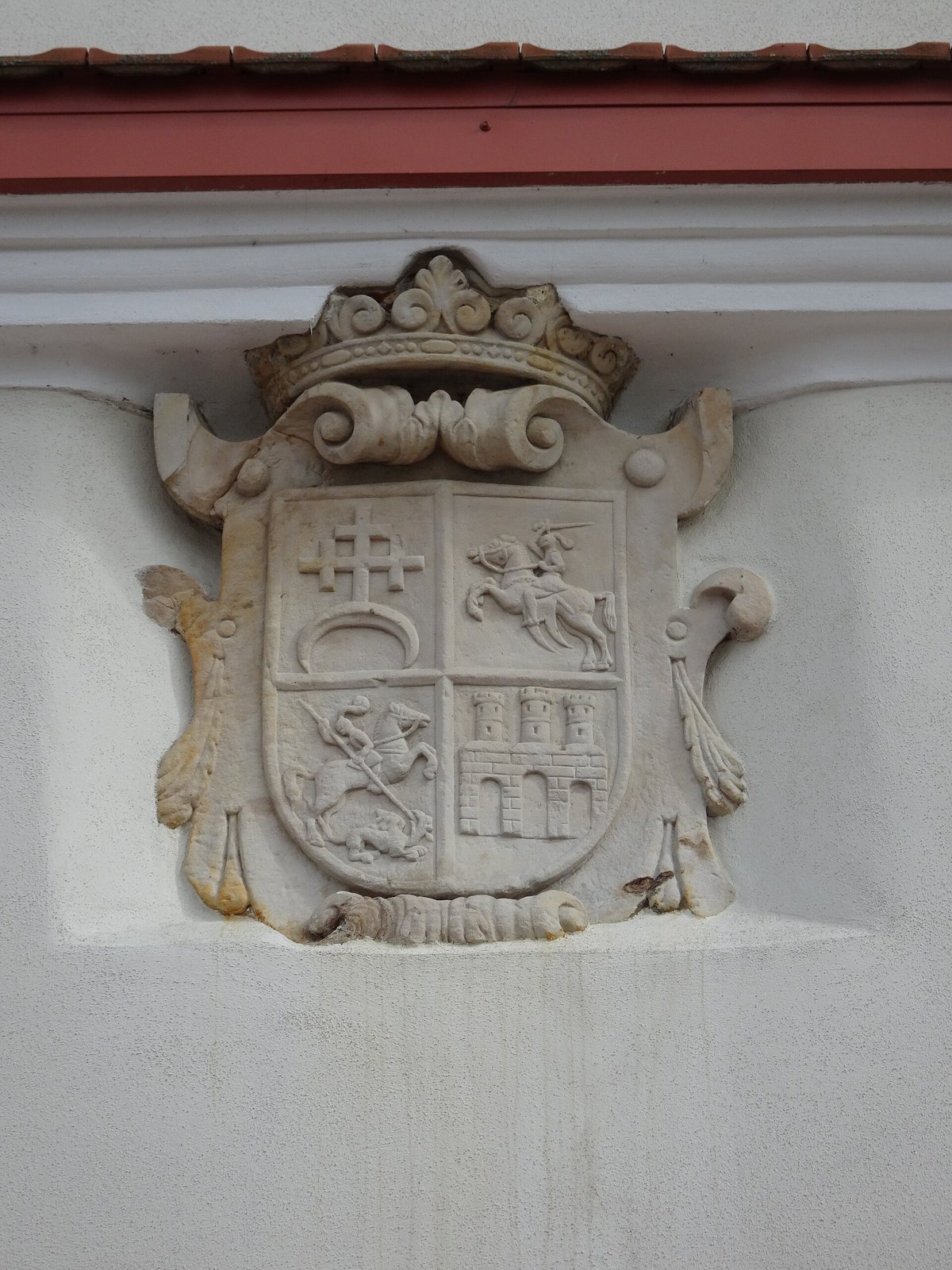
The Baroque main altar, carved from sandstone in 1630, has a central image of Saint Stanislaus, an eleventh-century bishop of Kraków, martyr, and patron saint of Poland. Above it is an image of the Transfiguration, the Gospel episode in which Jesus revealed his divine glory to his disciples. The altar also bears the Zbaraski coat of arms. An entrance to the tombs is positioned in front of it.
Left side altar
The left side altar is dedicated to the Immaculate Conception of the Blessed Virgin Mary, the Catholic teaching that Mary was conceived without original sin. Above it, an image of the Holy Trinity represents the Christian belief in one God in three persons. It is flanked by symbols named the Tower of David, the House of Gold, and the Mirror of Justice, titles used for Mary in Catholic devotion, and the Ark of the Covenant, the sacred chest associated with ancient Israel. Saint Lawrence, an early Christian deacon and martyr, appears at the top.
Right side altar
The right side altar is dedicated to Saint Anthony and includes an image dating to the eighteenth century. Above it is Saint Joseph with the Child; Christian tradition identifies Joseph as Mary’s husband and Jesus’s earthly father. An image of the Adoration of the Virgin Mary is placed below. The altar also contains a tabernacle, which holds the consecrated Eucharist, and a perpetual lamp kept burning as a sign of its presence.
Sacristy and devotional paintings
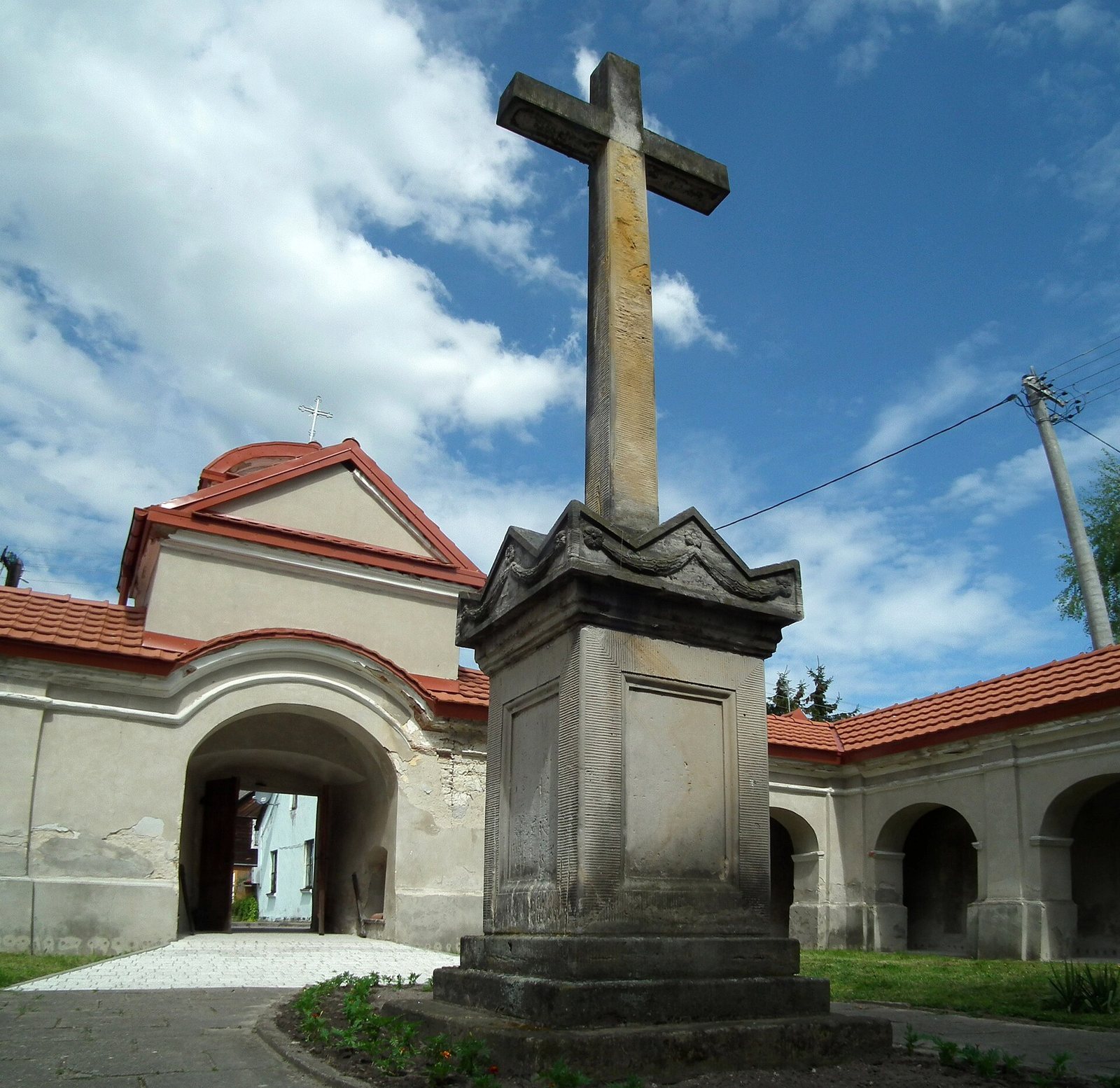
Behind the main altar is the sacristy, which contains a cabinet with a superstructure dating to the seventeenth century. A room beyond the sacristy holds eighteenth-century Stations of the Cross paintings, devotional images of episodes from Jesus’s Passion. They were moved there from the cloisters, the covered walkways around a monastery courtyard.
Organ
The church organ is more than 150 years old.