Church of the Blessed Virgin of Paradise: A Marian Church in Clusone, Italy
Site at a Glance
- Popularity
- Low
- Country
- Italy
- Primary era
- Medieval
- Eras represented
- Medieval, Early Modern, Modern
- Civilizations
- Italian, Venetian
- Site type
- Religious
- Remains
- Church
On this page21 sections
History
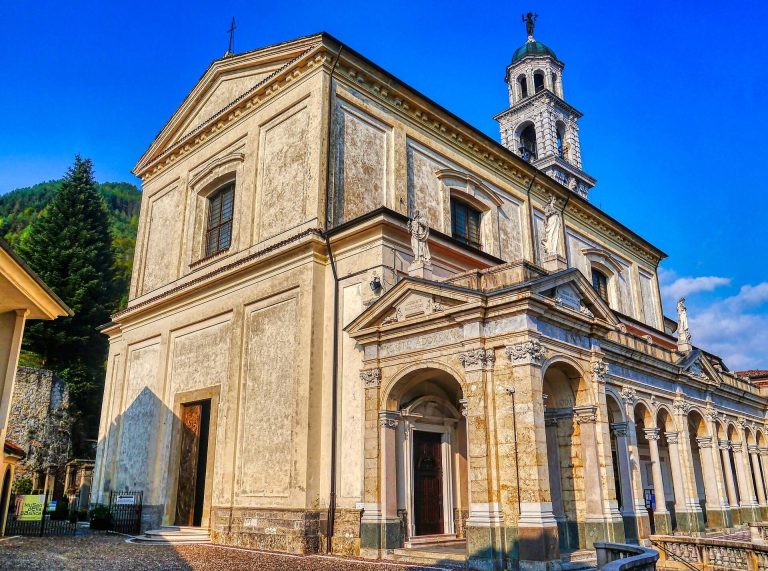
The Church of the Blessed Virgin of Paradise is a Roman Catholic church dedicated to Mary on Piazza del Paradiso in Clusone, Italy. Dated to the fourteenth century and described as Baroque, an ornate European style prominent from the late sixteenth through the eighteenth centuries, it belongs to the Diocese of Bergamo. Its development is closely connected with a Marian chapel and the care of pilgrims.
Marian chapel and pilgrims’ hospice
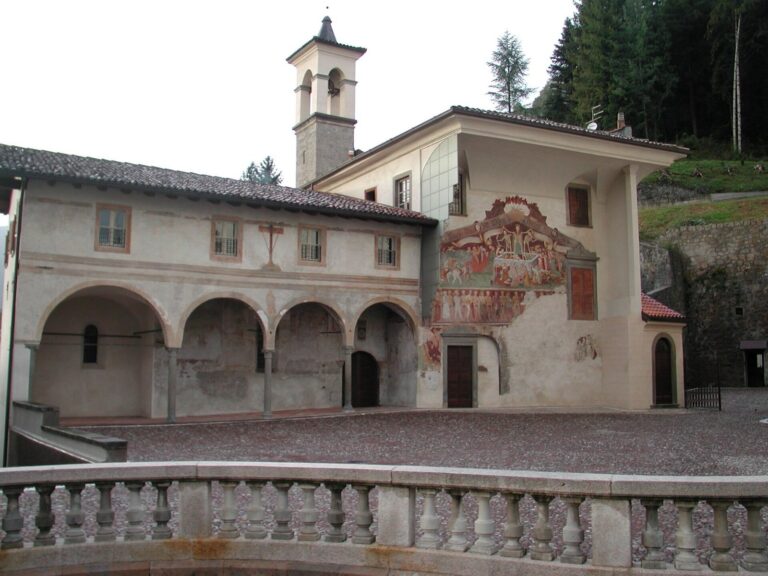
In 1486, the community of Clusone gave land and buildings at Canèpa to three local Servite friars, Benedetto, Mariano, and Francesco. The Servites were a Catholic religious order devoted to Mary. The property was intended to provide lodging and hospitality for pilgrims, whose numbers rose during outbreaks of plague and famine. The friars also received the ancient Church of Sant’Alessandro, south of the hospice, for worship. During a pastoral visit in autumn 1575, Milan’s archbishop, Charles Borromeo, described Sant’Alessandro as ancient.
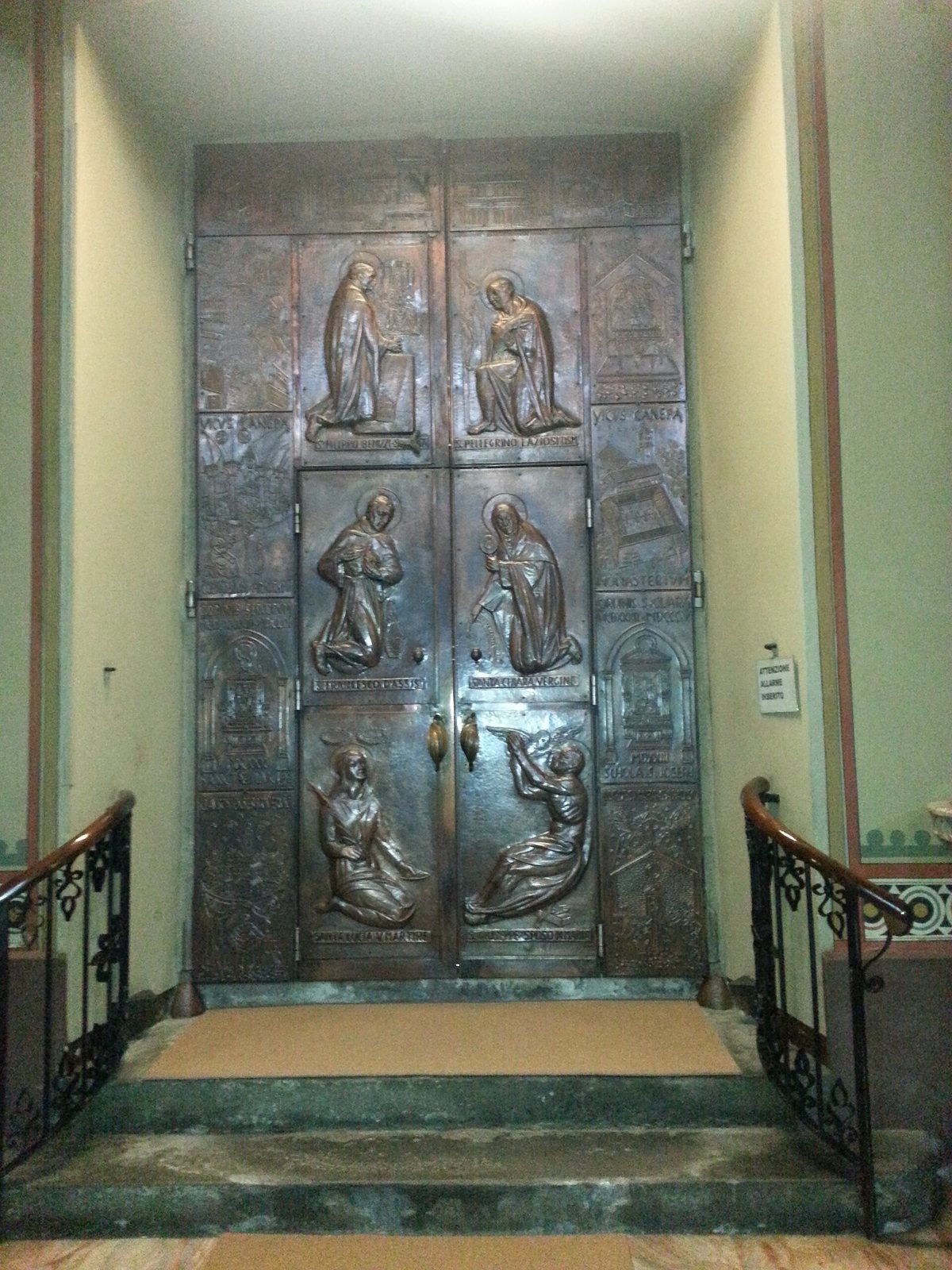
The friars built a small chapel for worship, with a Pietà, an image of Mary mourning Christ, beside a cross, and images of the Servite saints Philip Benizi and Peregrine Laziosi. The chapel and convent were called Santa Maria del Paradiso. A tradition links a surge in devotion to the Marian image with a larger church being needed. It tells that a soldier slashed the image with a sword and drops of blood appeared, an event associated with 23 September 1495, a date that is not established.
Women associated with the Servite third order, known as Mantellate, were present by the end of the fifteenth century. The site thus served both a religious community and the pilgrims who received hospitality there.
Religious and civic use
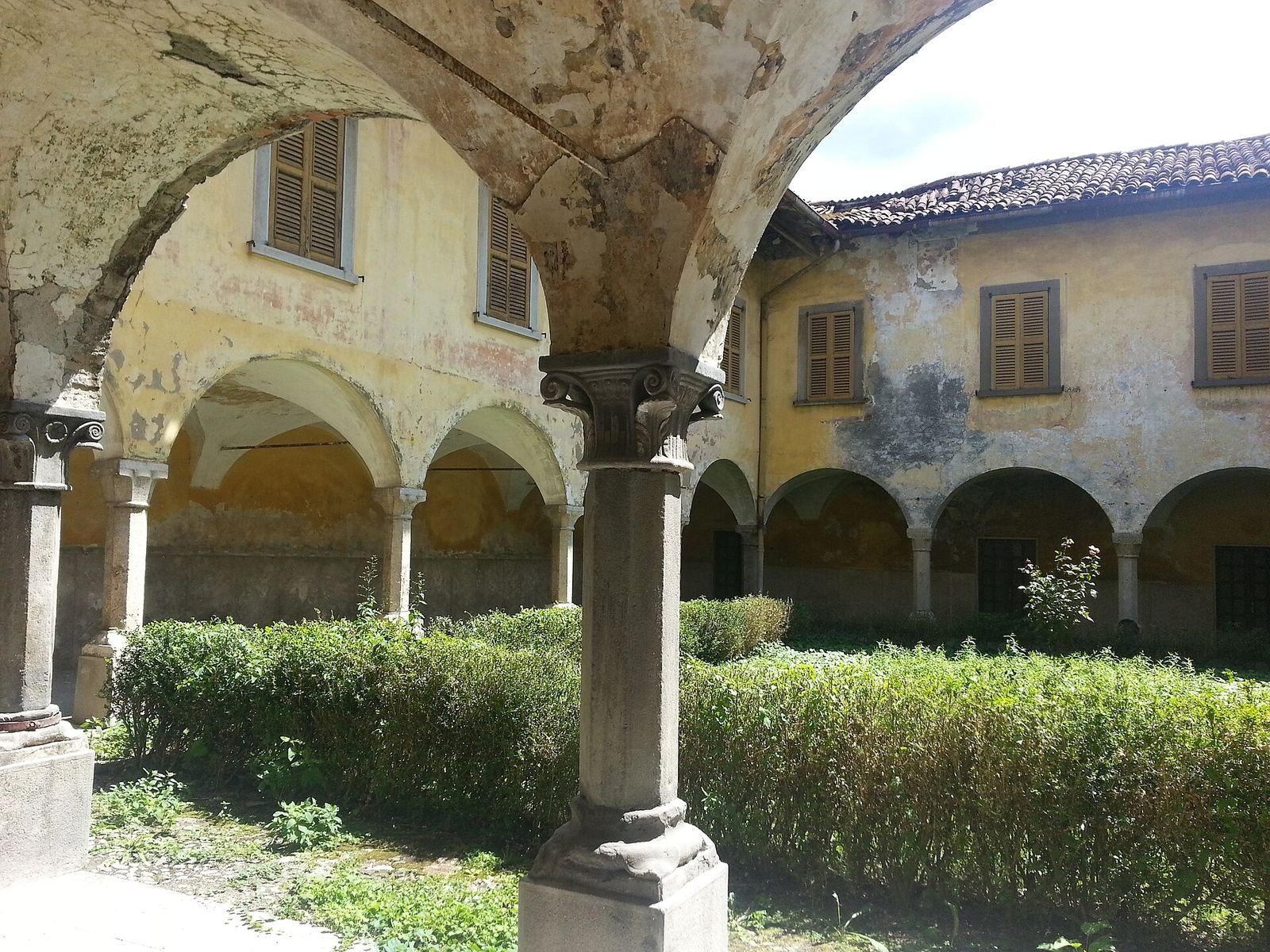
The Servite friars left the adjacent convent in 1659, and the Poor Clares, a Franciscan religious order for women, left in 1810. To prevent the church from falling into neglect after the religious communities departed, it became a subsidiary church of the parish of Santa Maria Assunta.
In 1808, the convent became a municipal secondary school under Don Antonio Riccardi. The school was named for Cardinal Angelo Mai in 1886 and closed in 1924. The nearby Church of Sant’Alessandro was destroyed in 1836. A display case containing a fresco of the saint was destroyed in 1909.
Restoration and repair
Restoration campaigns between 1734 and 1902 did not succeed in preserving the church’s original character. A major project in 1882, funded by a bequest from Ignazio Trussardi, resulted in workers being killed and injured and left the building out of keeping with its earlier lines. After existing wall ties were removed, new cracks appeared in the perimeter walls; the church closed for safety in 1885.
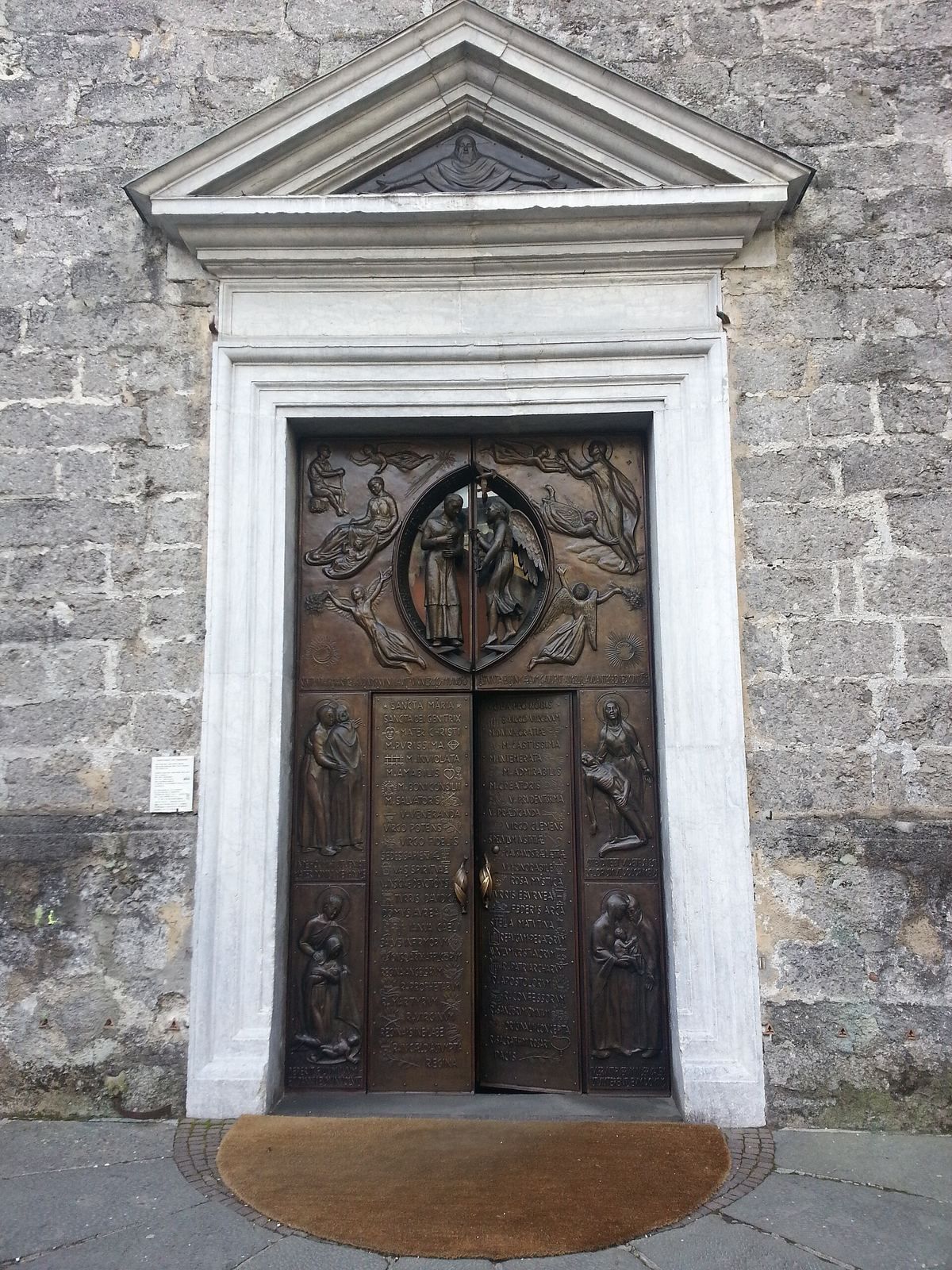
Twentieth-century restoration work brought the structure closer to its earlier form and renewed its decoration. Later physical changes included a new floor in 1962 and bronze entrance doors in 1993.
Remains
Exterior and plan
Façade and forecourt
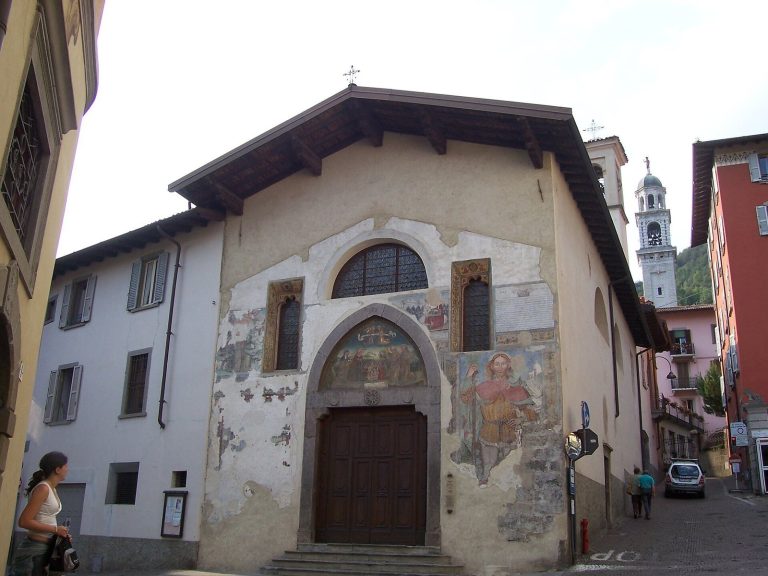
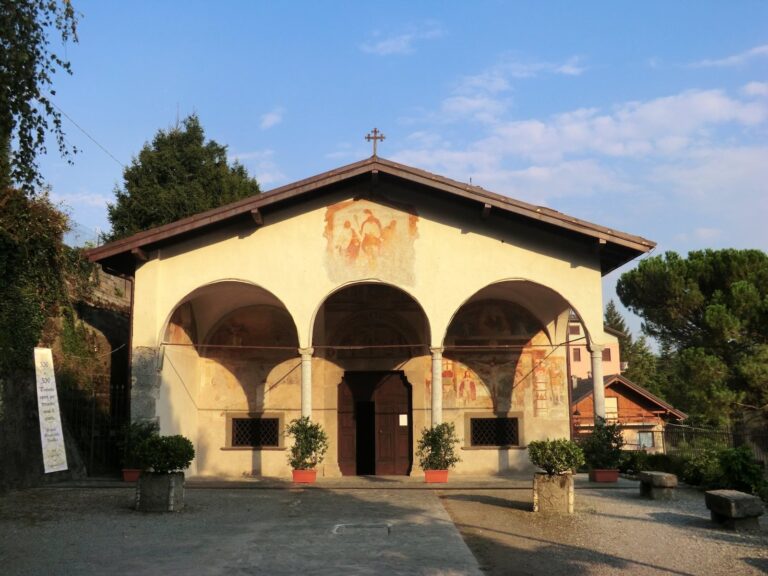
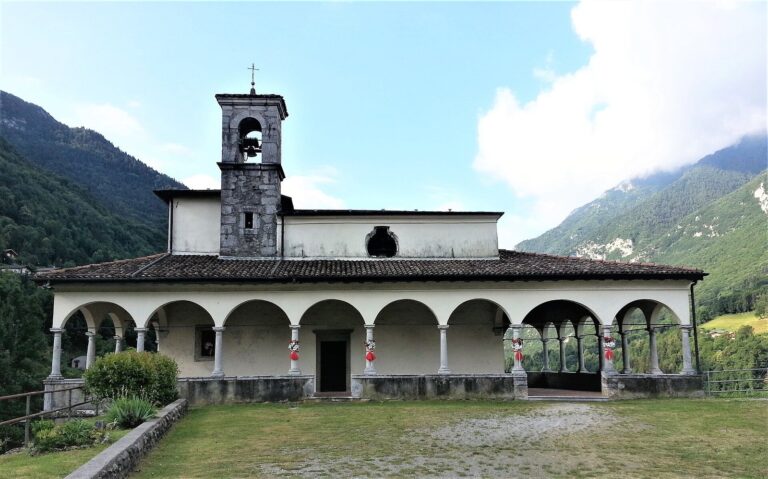
The church stands in the Seriana Valley. Its austere façade faces west and is built of local stone. Abbot Antonio Uccelli, a philosopher and scholar, proposed that the stones came from small fortified shelters once used by the Guelphs and Ghibellines, rival political factions in medieval Italy. A small arch to the left of the façade bears the date 1565. The forecourt is paved with porphyry cubes and edged by low granite pillars.
Nave and side chapels
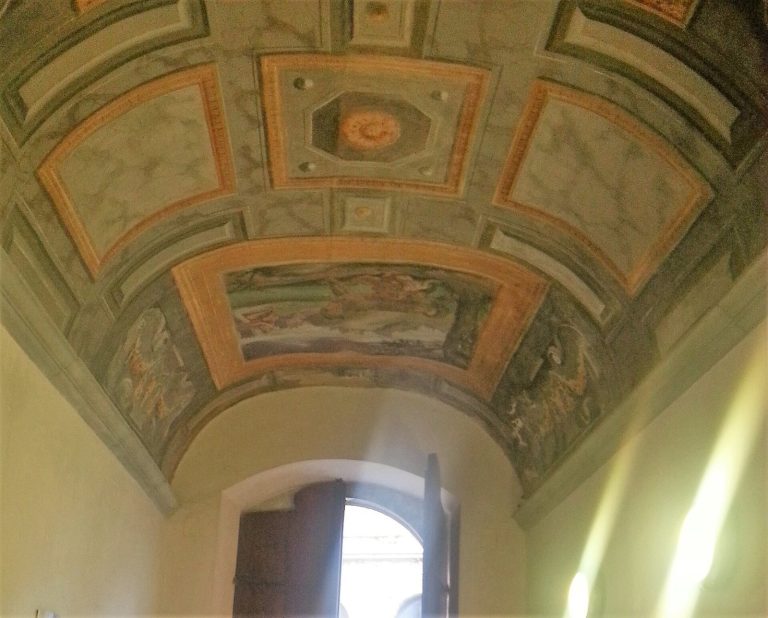
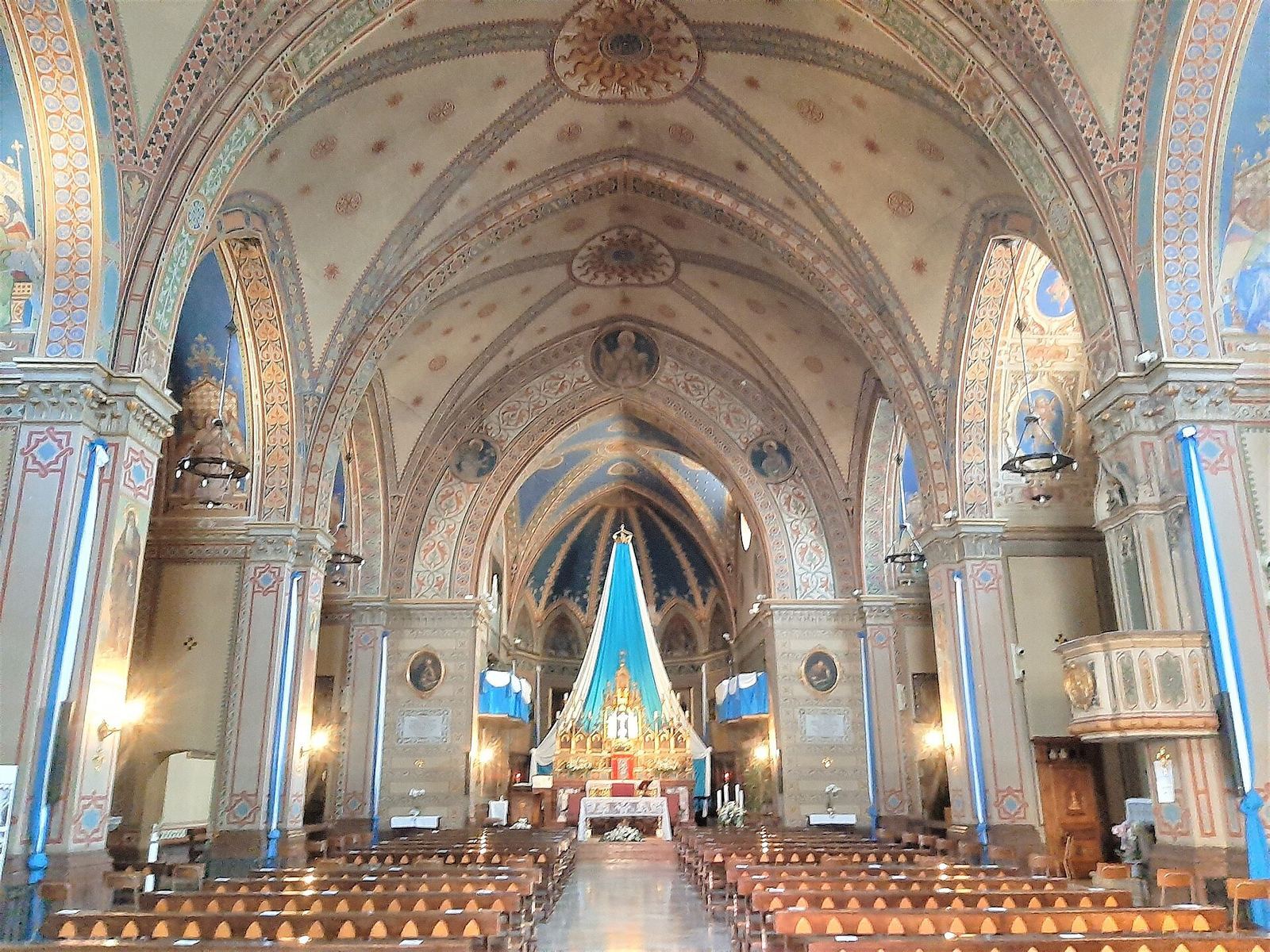
The entrance stands above the church floor and is reached by seven semicircular steps. Inside, a single main hall is divided into four sections by pilasters, or flat wall supports, and pointed arches. Chapels line its sides. A rose window in the façade and additional rose windows in the side walls bring light into the interior, whose dense decoration includes geometric patterns and paintings of the Doctors of the Church, saints recognized for the authority of their theological teaching.
Presbytery and furnishings
Main altar
The main altar occupies the centre of the presbytery, the area around the principal altar used for worship. Architect Virginio Muzio designed the altar in 1900. Its carved wooden front, made by Grazioso Fantoni and showing the Visitation at its centre, was reused in the design. Above it, a ceramic section supports six oil paintings by Giovanni Trussardi Volpi, depicting the Virgin among prophets.
Paintings by Antonio Cifrondi
Canvases by Antonio Cifrondi decorate the presbytery’s side walls. Paintings of Saints Peter and Paul have been in the church since 1975, after they were recovered from a deteriorating old church and donated by a Clusone resident. Two canvases of allegorical figures with symbols of the Passion were installed in 1983, and a large Last Supper was placed to the left of the altar in 1991. A sixth Cifrondi canvas, depicting Saint Francis Xavier, hangs in the apse.
Canvases by Domenico Carpinoni
Three canvases by Domenico Carpinoni hang on the presbytery’s left wall: a signed Magdalene, a Nativity of the Virgin, and a painting of Saint Lucio. The last is an ex-voto, an offering made in fulfillment of a vow or in gratitude for a favor, and came from the church dedicated to that saint. An inscription on the painting identifies its purpose.
Bench and reading stand
A bench along the right wall incorporates nine niches with inlays by Alessandro Gritti, dated 1941. Gritti also made the ambo, a stand from which readings are given during worship, in the same year.
Side altars and devotional works
Altar of Our Lady of Sorrows
The Fantoni family of Rovetta made the enclosed altar of Our Lady of Sorrows in 1730. Its upper altarpiece contains an inset fresco of the Virgin of Sorrows, probably painted around 1488 by a Servite friar. It shows the seated Madonna at the edge of a tomb, with a cross bearing symbols of the Passion behind her. Painted-paper flowers decorate a wooden drapery, held open by angels, that frames the fresco. Andrea Fantoni carved three wooden figures representing Faith, Hope, and Charity, the traditional Christian virtues.
Crucifix altar
Erected in 1575, the Crucifix altar has a stuccoed, faux-marble surface. A fifteenth-century crucifix stands between figures of the Sorrowful Virgin and Saint John, attributed to the late Fantoni school. Giuseppe Siccardi’s plaster angels, made in the late nineteenth century, appear on the pediments and at the top of the altarpiece. Fourteen paintings of the Stations of the Cross, scenes from Jesus’s Passion, hang at the altar. They were once attributed to Carpinoni, but a 1980 study assigned them to an unknown artist.
Altar of Saint Lucy
The Saint Lucy altar bears the date 1648 in Roman numerals and the arms of the Viti-Bonicelli family, who commissioned it. Its material and the simple lines of its wooden work have led to its attribution to Grazioso Fantoni. The altarpiece holds Marco Richiedei’s painting of Saint Lucy’s martyrdom. The painting predates the altar; Richiedei died in 1627, and the work is described as his only painting in the Bergamo area.
Altar of Saint Joseph
An unknown maker built the Saint Joseph altar between the late seventeenth and early eighteenth centuries. Bartolomeo Litterini’s painting is set in an Alpine Gothic-style altarpiece with two sculpted female figures serving as supports. Litterini painted the Death of Saint Joseph in 1707; he was a friend of Andrea Fantoni. An earlier shrine at the altar contains Domenico Carpinoni’s painting of Christ as a prisoner of love, transferred from a previous altar.
Altar of the Conception
The Rossi workshop made the eighteenth-century Altar of the Conception at the request of the Poor Clares in the adjacent convent. It replaced an earlier altar dedicated to Saint Roch. The carved wooden altarpiece has two sculpted figures serving as supports and an emblem of crossed arms associated with Franciscan churches.
Plague fresco
A triangular fresco by Giovan Battista Brighenti depicts the plague of 1630, and an associated oil painting is by his son Antonio. The fresco was moved from the Church of the New Dead and installed here in 1963. It depicts the burial of Capuchin friar Father Giacomo Albrici, a funeral procession, Clusone as it may have looked in the seventeenth century, and a local plague hospital.
Bronze portals
Claudio Nanni made the two bronze portals in 1993 to replace badly deteriorated wooden doors. The west-facing main portal, titled The Virgin Mary in the Mystery of Christ, has seven panels showing episodes from Mary’s life. An almond-shaped opening around its central Annunciation lets light into the church. The side portal depicts the church’s history.