Sant’Anna in Clusone: A Gothic Franciscan Church in Italy
Site at a Glance
- Rating
- 4.4
- Popularity
- Very Low
- Country
- Italy
- Primary era
- Medieval
- External website
- Open
- Eras represented
- Medieval, Early Modern, Modern
- Civilizations
- Duchy of Milan, Holy Roman Empire, Venetian
- Site type
- Religious
- Remains
- Church
On this page12 sections
History
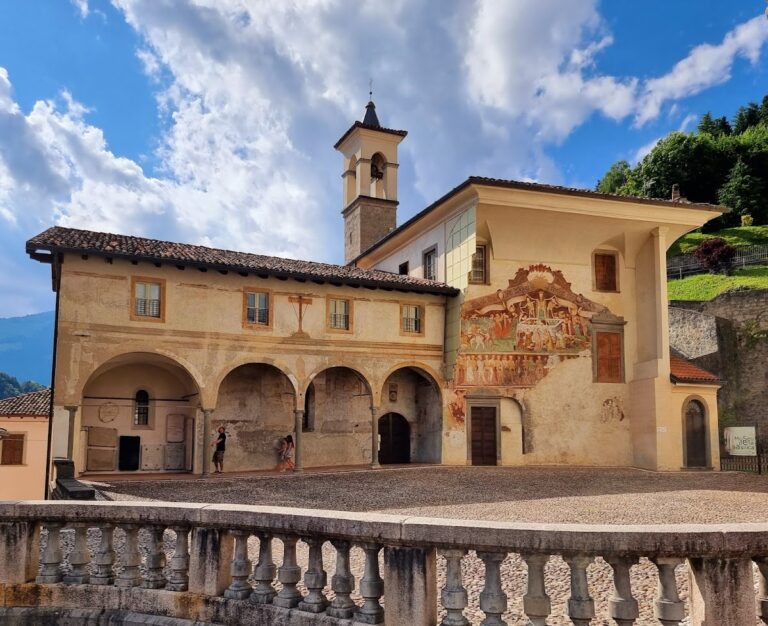
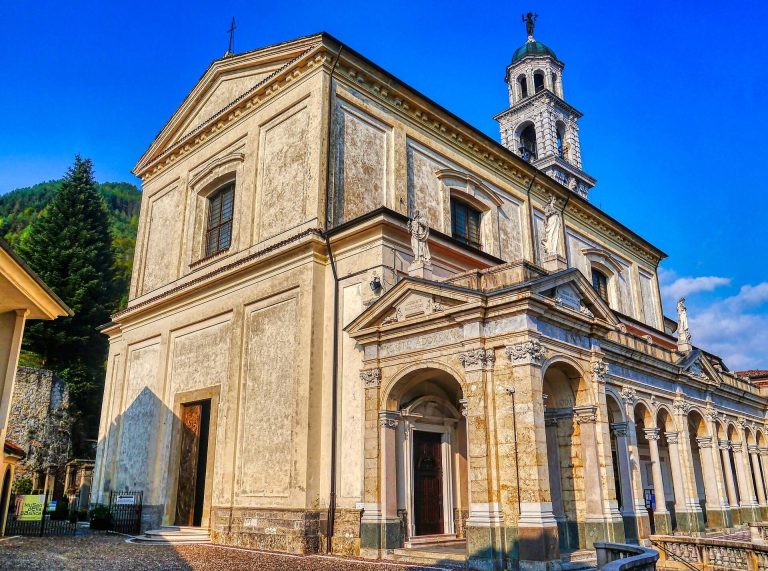
Sant’Anna is a Roman Catholic church in Clusone, Italy, whose origins reach back to the fourteenth century and whose Gothic building was completed in the fifteenth century. Located in the town’s historic center, it formed part of a complex that included a convent and cloister for Franciscan Third Order nuns.
Foundation and Franciscan Use
A smaller church was open for worship by 1414, and its enlargement is associated with the date 1487. The convent was connected with Franciscan religious life at Clusone. Some documents place Poor Clare nuns there in 1432, while San Bernardino of Siena, a fifteenth-century Franciscan preacher and reformer, is also recorded as staying at the convent that year. Saint Francis of Assisi founded the Franciscan movement, and Saint Clare co-founded the Poor Clare order within that tradition.
A passage discovered beneath the bell tower in the late twentieth century leads directly from the church interior to the nuns’ residential quarters. This arrangement allowed the nuns to attend services without crossing the square, in keeping with the requirements of enclosure.
Plague, Reopening, and Later Changes
During the plague of 1630, the church and convent were converted into a lazaretto, a facility for isolating people during epidemics. At the initiative of the nuns and the archpriest Gio Battista Bottaini, the church was reblessed and reopened for worship on 26 July 1652.
Toward the end of the seventeenth century, Count Vittorio Maria Fogaccia acquired the complex and sold it to Franciscan nuns based at the church of Beata Vergine del Paradiso. The church was used for burials by the nuns and prominent families of Clusone until burial there was prohibited by law.
The convent was suppressed on 11 May 1810, and the church closed again. It reopened on 11 February 1814. The former convent buildings were then assigned to a charitable institution, which used them as a hospice for elderly and poor people and for elementary schools. Part of the complex was also occupied by the Austrian gendarmerie stationed at Clusone, including a small Croatian contingent that remained there until Italian unification.
Restoration and Conservation
By 1856 the facade was in serious disrepair. Carlo Rota responded by adding frescoes and a new perspectival decoration. From 1860, the former convent became the seat of Clusone’s civil hospital, the first hospital in the valley.
Extensive conservation took place at the end of the twentieth century. The interior frescoes were treated in 1983, and the facade was restored in 1991. Rota’s paintings were removed, the round-headed windows were reopened, and sixteenth-century frescoes were recovered.
Remains
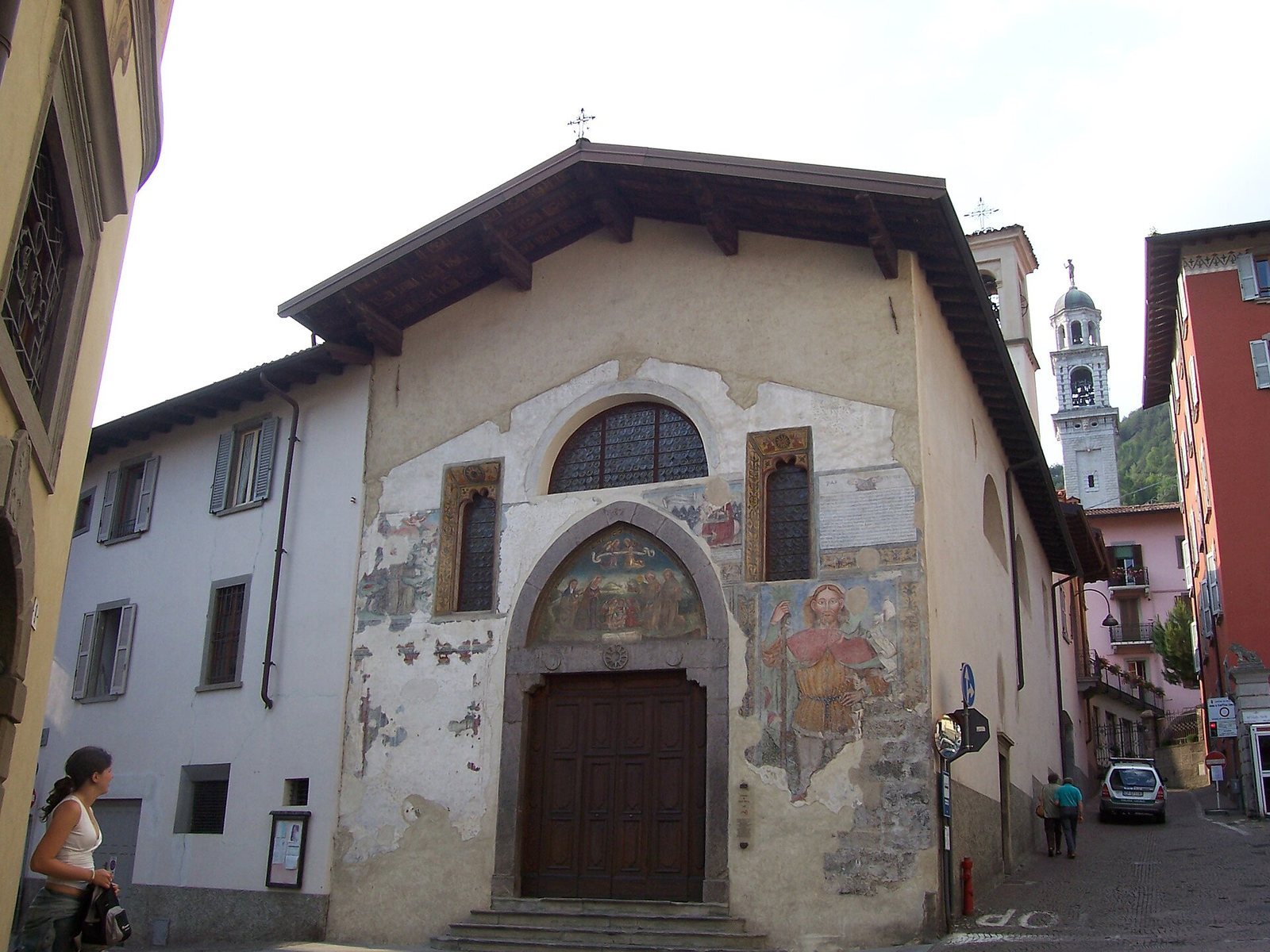
The church is a relatively small Gothic building on Piazza Sant’Anna. Its floor was raised above street level by paving work in 1809, so steps now lead to the entrance portal. The facade preserves a stone entrance, painted decoration, two pointed-arch windows, and a strongly projecting double roof slope that protects the front of the building.
Facade and Entrance
Portal and Nativity
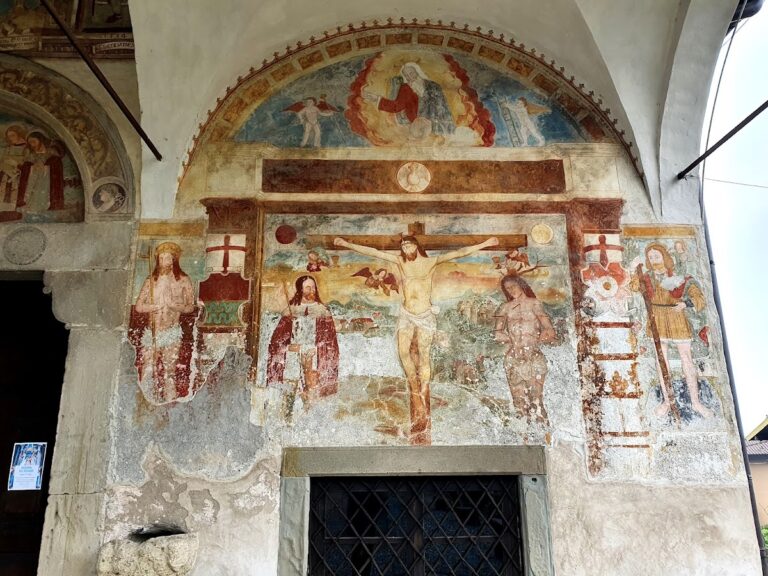
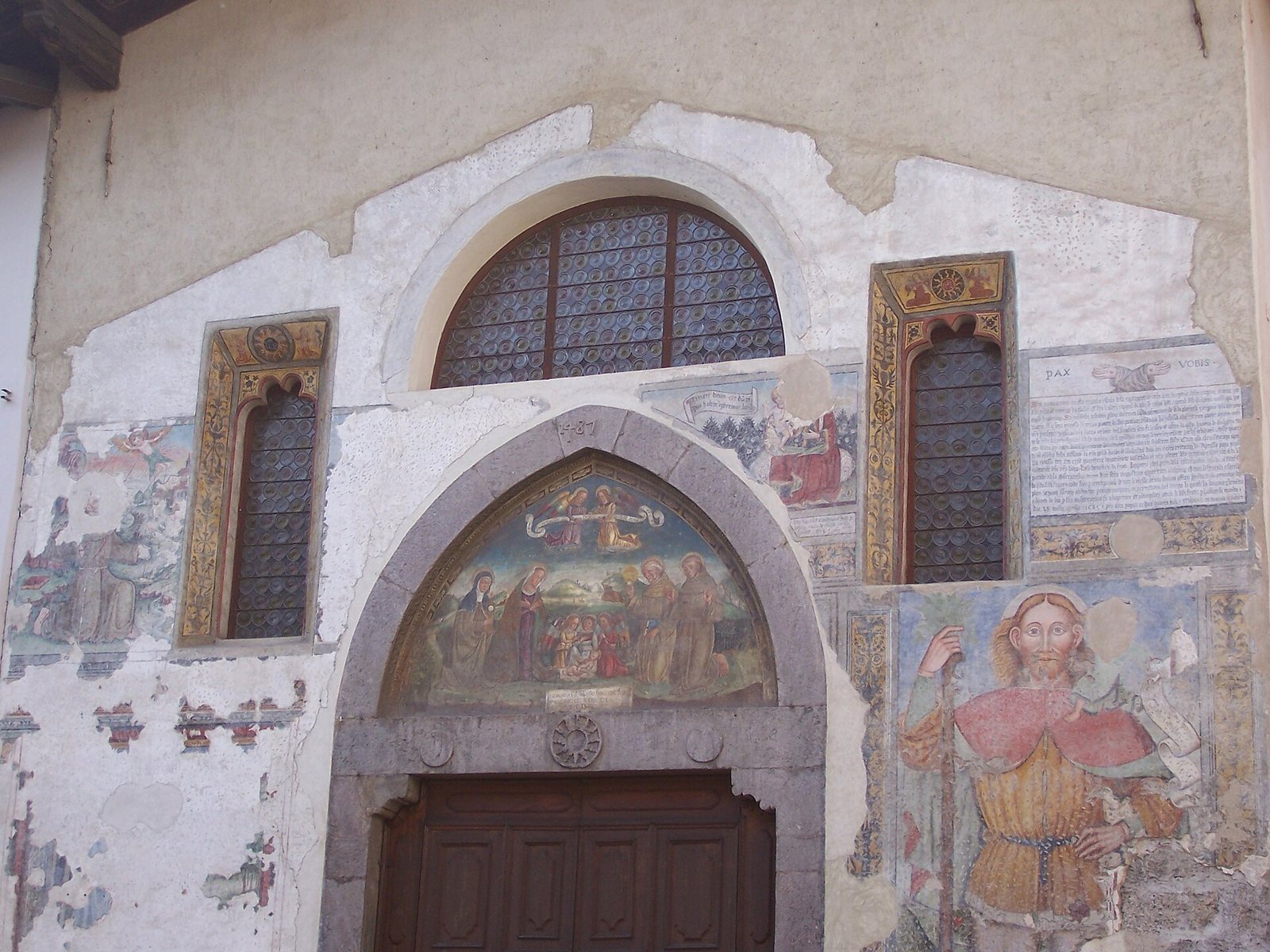
The stone portal has an architrave, the horizontal member above the doorway, bearing a bas-relief trigram of San Bernardino of Siena. Above it, the pointed-arch lunette, or arched panel, contains a Nativity fresco. The infant Jesus is adored by three angels, while Saint Bernardino and Saint Francis of Assisi appear on the right and the Virgin Mary and Saint Clare on the left. Angels in the upper facade hold a cartouche with the date 1502. The Nativity was commissioned by Alojsio Bembo, the podesta, or local civic magistrate, of the Seriana Valley.
Saint Christopher Fresco
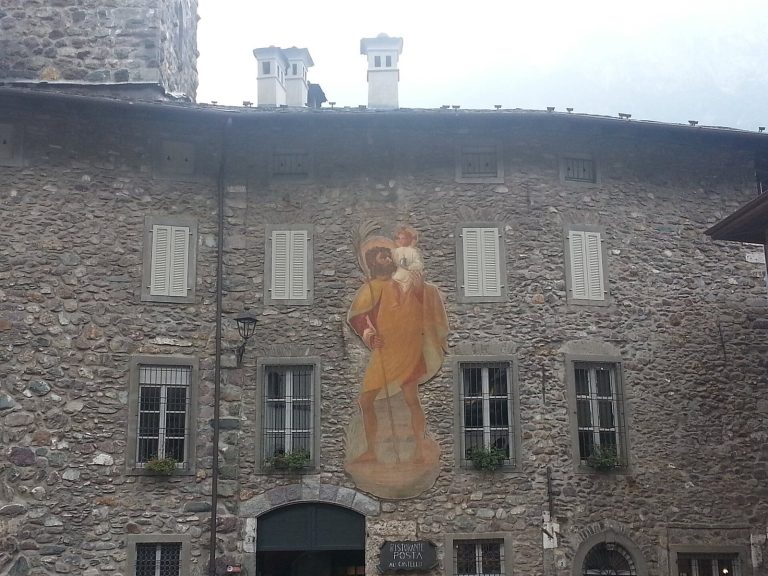
To the right of the portal is a large fresco of Saint Christopher, the patron of travelers. Its position is associated with the convent’s welcome to pilgrims. A cartouche above the image, dated 1525, refers to an indulgence, a Catholic grant connected with remission of temporal punishment for sin under specified conditions. It also carries a saying attributed to Saint Augustine: “Human ingratitude dries up the source of God’s mercy.” Other fragments of fresco remain on the facade.
Interior and Religious Art
Painted Interior and Choir
The interior is covered with votive images dating from the late fifteenth century. A choir crosses part of the painted decoration, dividing some figures so that their feet appear below it and their busts above it. Saint Augustine, Saint Bernardino, and the enthroned Virgin Mary can be recognized among these images.
Altar and Canvases
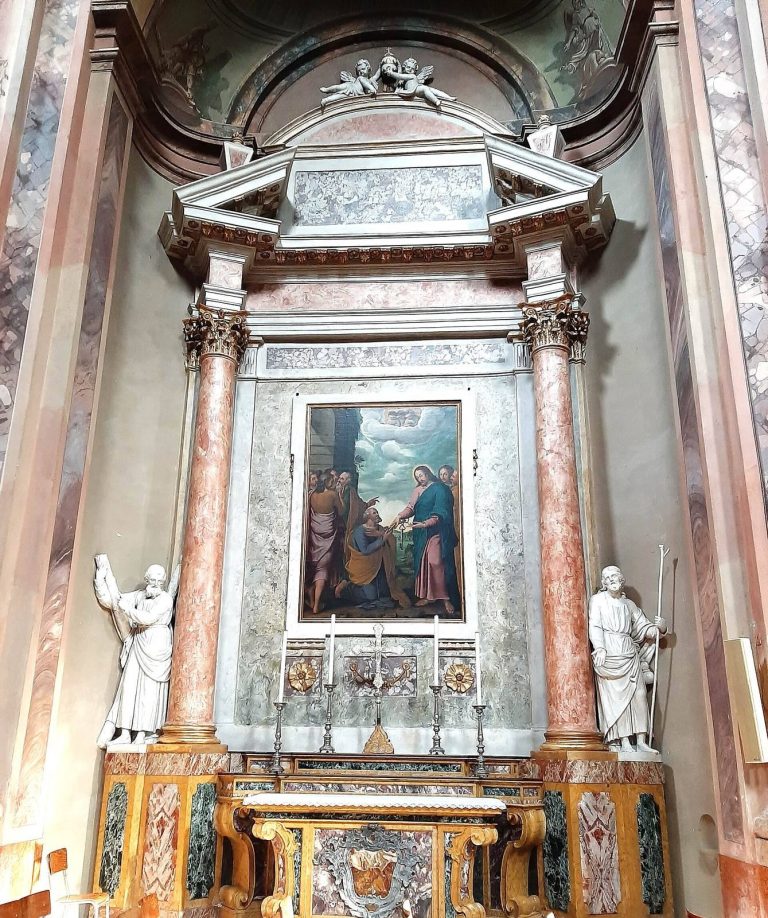
The altar has a Baroque frame associated with the Fantoni school, the artistic tradition linked to the Fantoni family of sculptors and woodworkers in the Bergamo area. Its canvas is attributed to Domenico Carpinoni and dates from the late sixteenth century. It shows Mary presenting her son Jesus to Saint Anne. Two additional canvases depict the Supper at Emmaus and Saint Anne with the Virgin Mary. The first is traditionally attributed to Maria Giacomina Nazari, while the author of the second is unknown.
Devotional Frescoes
The devotional paintings are arranged in groups associated with the monastery area and the church. Among the church frescoes are Saints Cosmas and Damian, Christian physician-martyrs traditionally linked with charitable medical care; Saint Agatha, shown with bound hands and severed breasts, the symbols of her martyrdom; and Blessed Alberto of Villa d’Ogna, represented in penitential clothing and as a traveler.
Another image presents a penitential king, possibly Saint Sigismund, a subject also found in domestic settings. This group of paintings bears the date 1509 and may have been an ex voto, a devotional offering made in fulfillment of a vow or in thanks for a hoped-for or received favor, by a mother seeking more milk for her infant. Beside the presbytery, the area around the main altar, is a well-executed fresco of Our Lady of Good Counsel, which is strongly venerated by the inhabitants of Clusone.