San Pietro: A Renaissance-Style Catholic Church in Ardesio, Italy
Site at a Glance
- Popularity
- Very Low
- Country
- Italy
- Primary era
- Medieval
- Eras represented
- Medieval, Early Modern
- Civilizations
- Holy Roman Empire, Venetian
- Site type
- Religious
- Remains
- Church
On this page12 sections
History
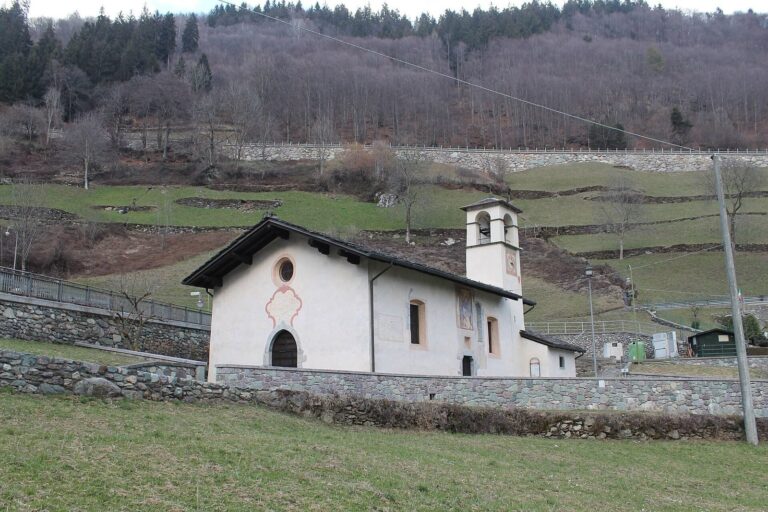
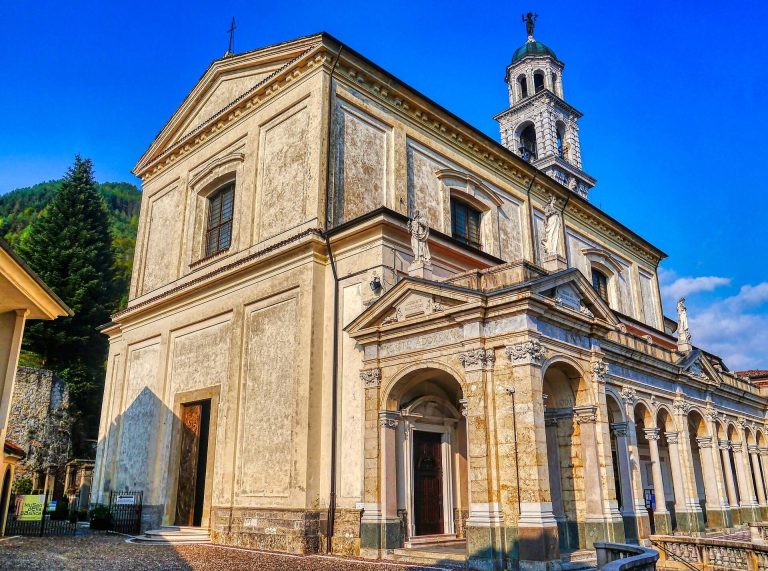
San Pietro is a Roman Catholic church of the Roman rite in Ardesio, Italy, dedicated to the Apostle Peter and part of the Diocese of Bergamo, the territorial church district overseen by a bishop. Its origins lie in the 14th-century enlargement of a small 12th-century Romanesque shrine, a style associated with medieval European architecture. The church is described as Renaissance in style, drawing on forms and principles of classical antiquity.
Medieval origins and parish history
The building was altered again in the 15th century. In 1455, Bishop of Bergamo Giovanni Barozzi is said to have authorized Ardesio’s church officials to build a church dedicated to Saint George to replace the old parish church of San Pietro.
On 10 September 1535, a pastoral visit, an official episcopal inspection of church life, by Bishop Pietro Lippomano listed San Pietro among six religious buildings in the valleys around Ardesio.
Venetian rule and ecclesiastical oversight
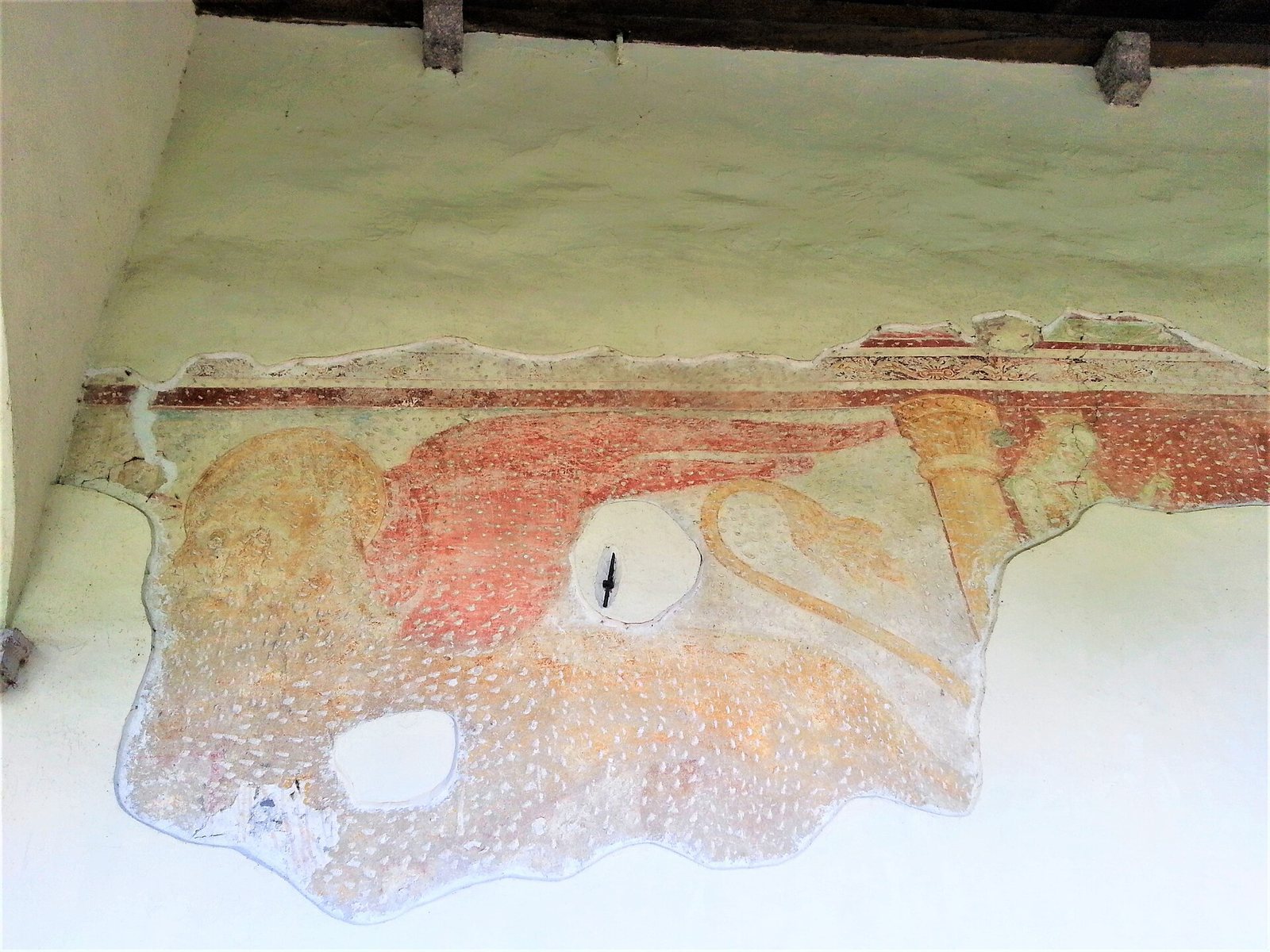
Bergamo and its surrounding territory came under Venetian rule in 1428. During this period, Venetian bishops served at Bergamo. The church’s south-side emblem of a winged lion reflected Venetian authority, as described below.
Later use and restoration
After Saint Charles Borromeo, a 16th-century cardinal and archbishop of Milan associated with Catholic reform, visited in 1575, he directed that a wall be built around the cemetery. A portico around the church followed in the 17th century. By the 20th century, the church had been out of religious use for some time and served for several years as the headquarters of the town’s musical association. Restoration work in 1991 included a study of the fresco, while restoration and maintenance in the 21st century aimed to return the small oratory to an earlier condition.
Remains
Setting and exterior
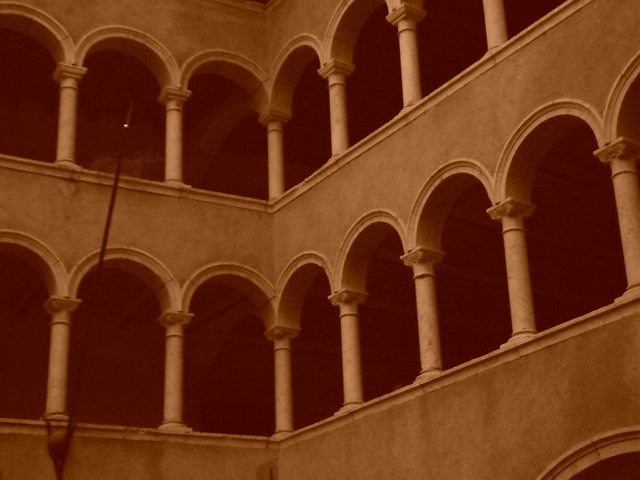
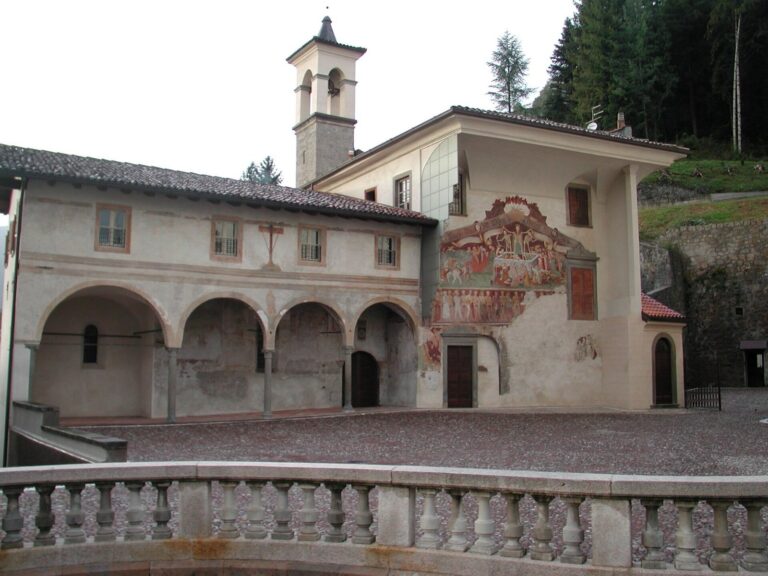
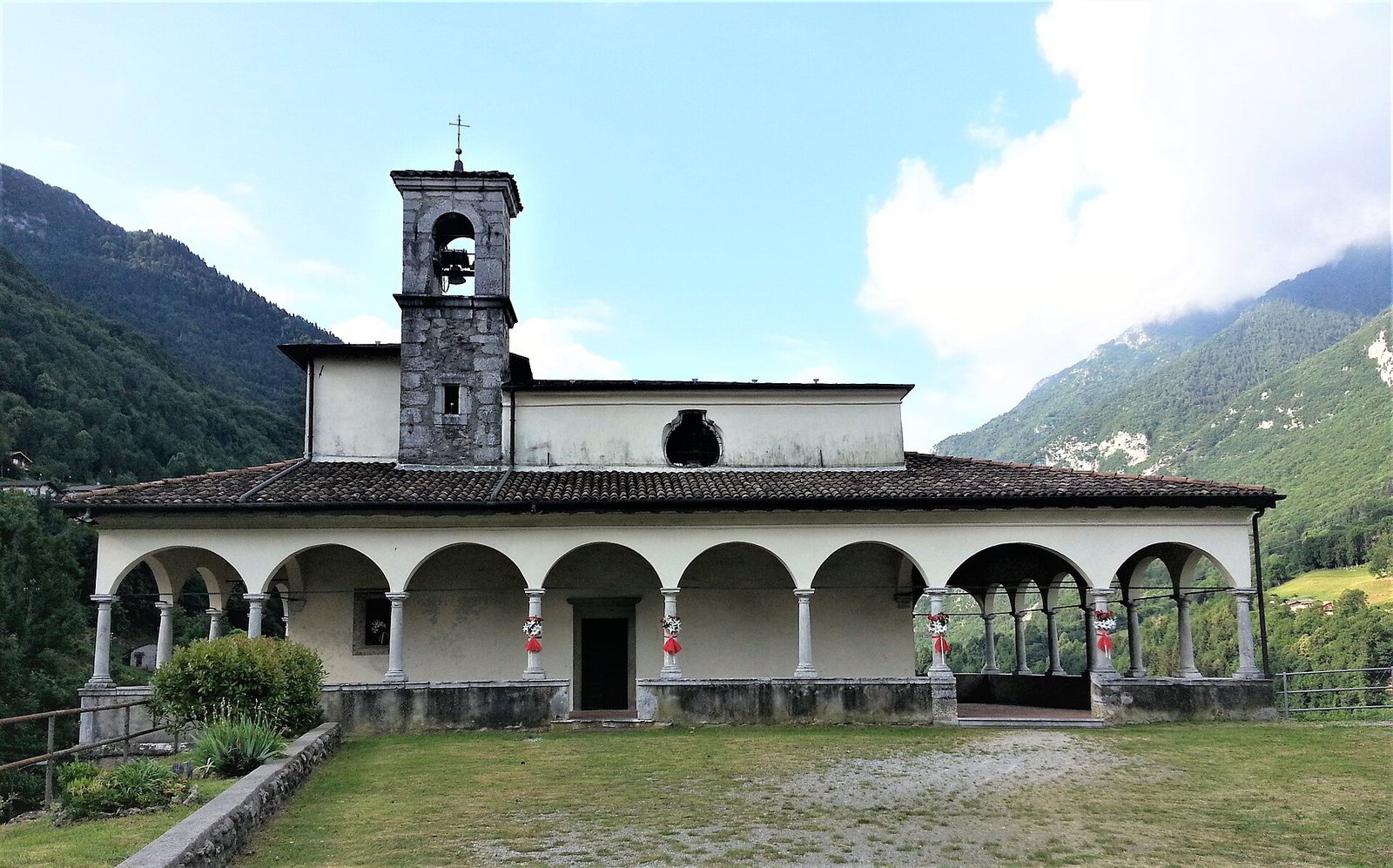
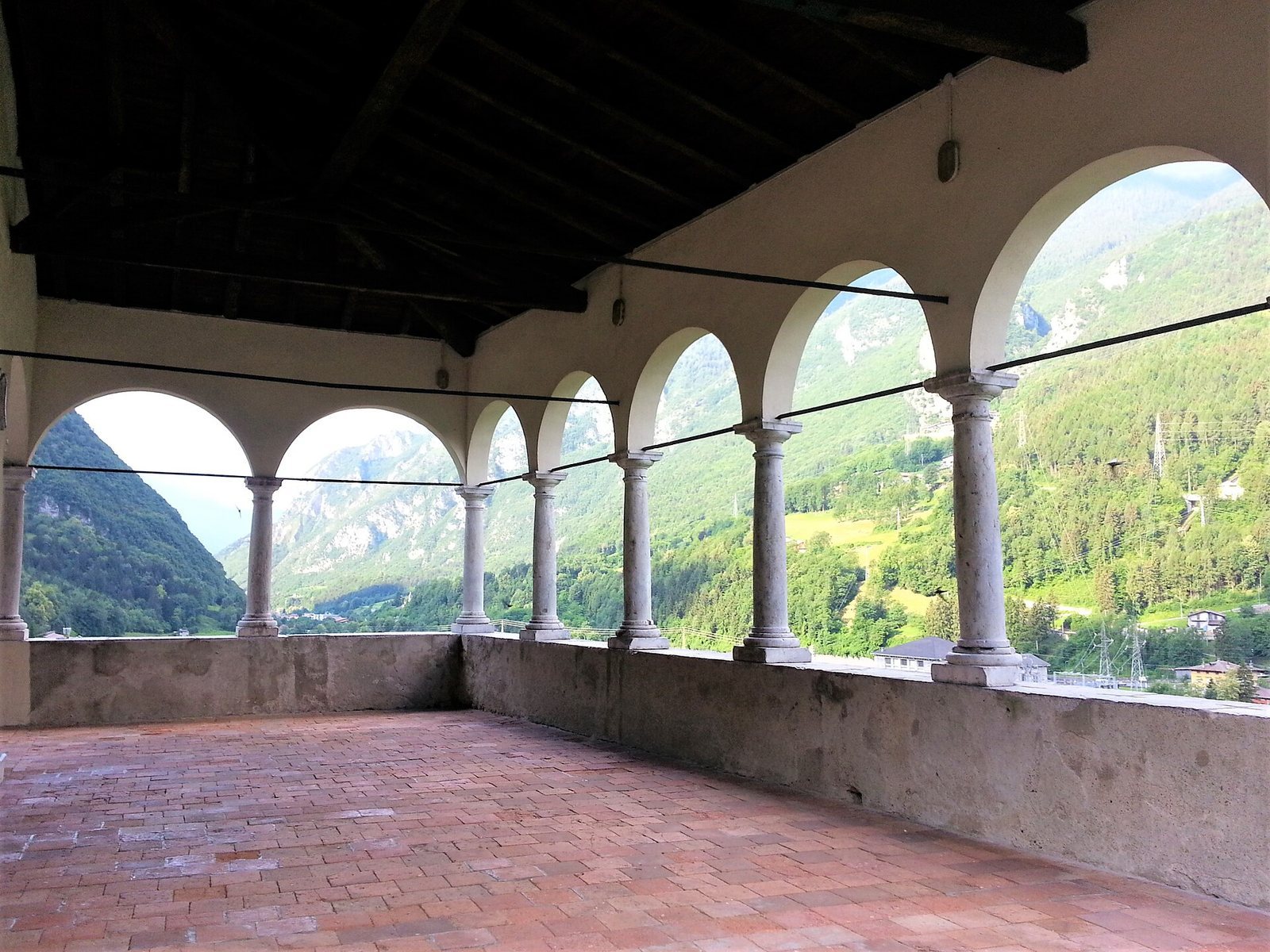
The church stands on an elevated river terrace, slightly apart from Ardesio’s urban center. A broad cobbled stairway approaches from the south, and a dirt road leads from the north. Its Renaissance exterior includes a covered walkway, or portico, that runs around the building and widens on the west side. The walkway has a terracotta-tiled floor and stone columns with shaped tops and bases, set on a low protective wall. At the west entrance, two small windows with shaped stone frames flank the doorway. Above them are a broken pediment, an ornament with a gap in its upper outline, and a cartouche, or framed decorative panel. A step below the windows serves as a kneeler.
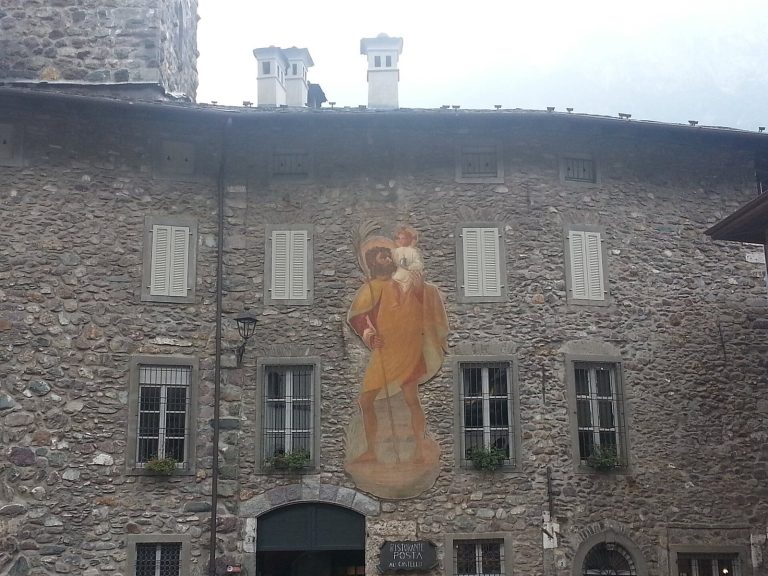
A large winged lion is painted on the south side. It represents Venetian rule and faces the side that served as the town’s main entrance, where it acted as a welcoming sign to the Venetian ruler. It was probably painted for an important event or an episcopal visit.
Interior and sanctuary
Nave
The nave, the main area for the congregation, is a single rectangular space with four arches along each side. Two 18th-century windows are set into the north and south walls. Shallow wall-attached supports, called pilasters, have shaped capitals and carry a horizontal stucco band, or entablature, and a projecting cornice. These elements connect the walls with the vaulted ceilings.
Presbytery and adjoining rooms
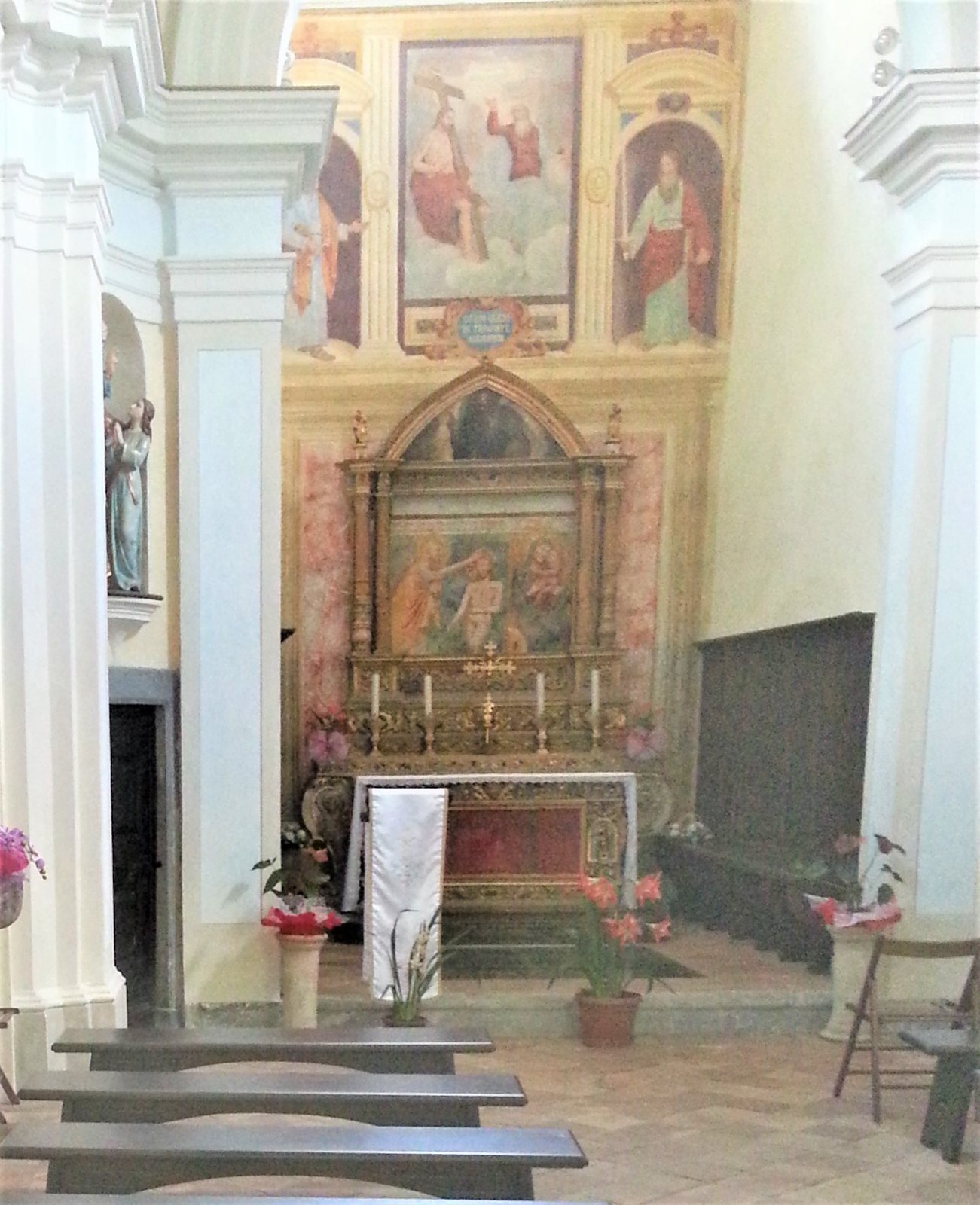
The presbytery, the sanctuary around the altar, lies at the east end, set back from the nave and framed by a triumphal arch that marks the transition into the sanctuary. Its ceiling is an umbrella vault, formed from curved sections spreading from a central point. The presbytery’s unusually undulating walls contrast with the smoother sides of the nave, and this area is considered the oldest part of the oratory. Two nearby doors lead to the sacristy, a room for preparing services and keeping liturgical objects, and to the bell tower.
Painted works
Fresco fragments
Small surviving fresco fragments, or wall paintings made on plaster, are difficult to interpret. A stylistic assessment attributed the work to a local artist using 13th-century features and placed it before the end of the 14th century. The lack of outlines around Christ’s eyes was taken to indicate a Neo-Romanesque style, a later revival of Romanesque forms.
Altarpiece
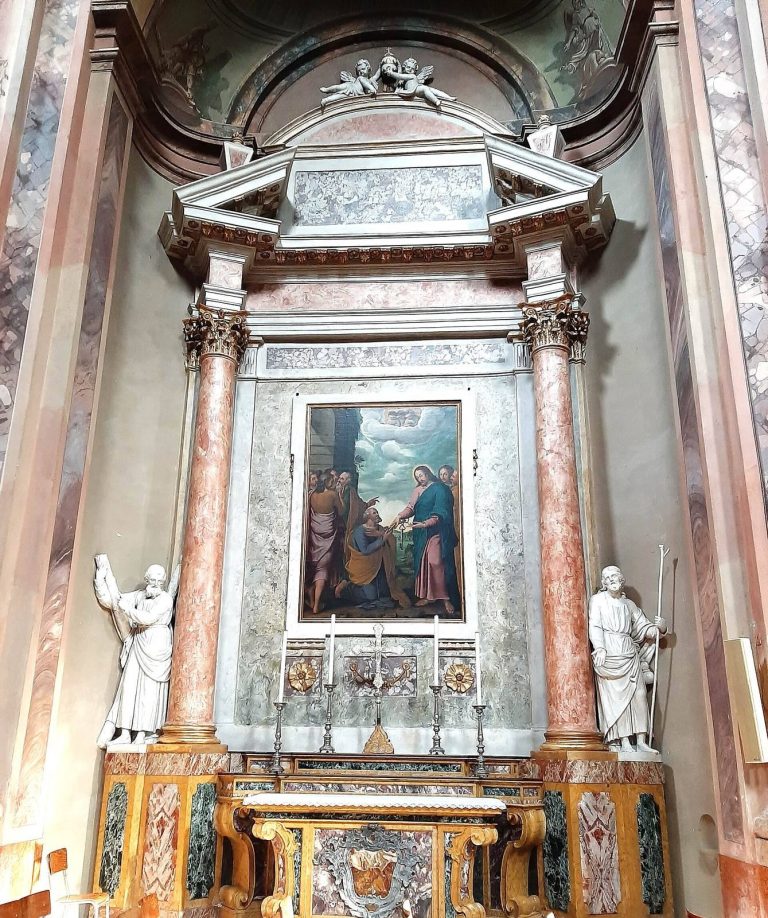
The altarpiece, an artwork associated with an altar, depicts the Baptism of Christ and the Madonna, Mary, enthroned with the Child. It is tentatively attributed to the 15th-century painter Alessandro de Ardese, possibly Bonvicino.