Schaaken Church: A Medieval Parish Church in Russia’s Kaliningrad Region
Site at a Glance
- Popularity
- Very Low
- Country
- Russia
- Primary era
- Medieval
- Eras represented
- Medieval
- Civilizations
- Teutonic Order
- Site type
- Religious
- Remains
- Church
On this page11 sections
History
Schaaken Church is a medieval parish church in Schemtschuschnoje, in Russia’s Kaliningrad region. It served a settlement established around 1280, and construction of the church began in the second half of the fourteenth century.
The medieval parish
The parish included Liska-Schaaken, where the Schaaken estate had been incorporated, and Schemtschuschnoje, where the church stood. It covered more than 100 square kilometres and nearly 50 settlements, extending from the Curonian Lagoon coast near Schaaksvitte in the north to Konradshorst in the south, and from Sprittlauken in the west to Neuendorf in the east.
Before the Reformation, Schaaken was a church-centered village. Lutheranism, a Protestant tradition that emerged during the Reformation, took hold there early.
Church administration
Until 1894, Schaaken had its own ecclesiastical inspection, a supervisory church unit. It then belonged to the Königsberg-Land II church district, north of the Pregel River, within the East Prussian church province of the Evangelical Church of the Old Prussian Union. This Protestant church body brought together Lutheran and Reformed traditions in Prussia. Schaaken remained within this church organization until 1945.
War and postwar decline
The church escaped destruction during the Second World War but fell into disrepair afterward. The flight and expulsion of the local population, together with the Soviet Union’s restrictive religious policies, brought church life at Schaaken to a halt into the 1990s.
New Evangelical Lutheran congregations later formed in the Kaliningrad region. The nearest to the former Schaaken parish is at Marschalskoje, a dependent congregation linked to the Resurrection Church in Kaliningrad. It belongs to the Kaliningrad provostship, a regional unit of the Evangelical Lutheran Church of European Russia.
Remains
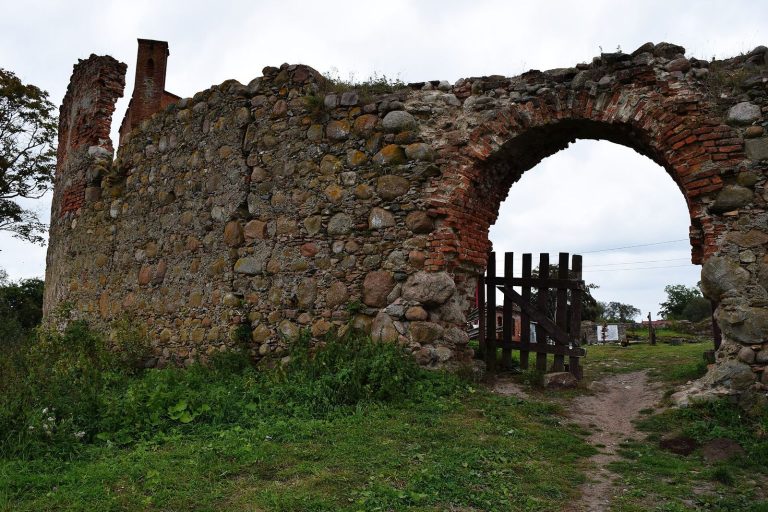
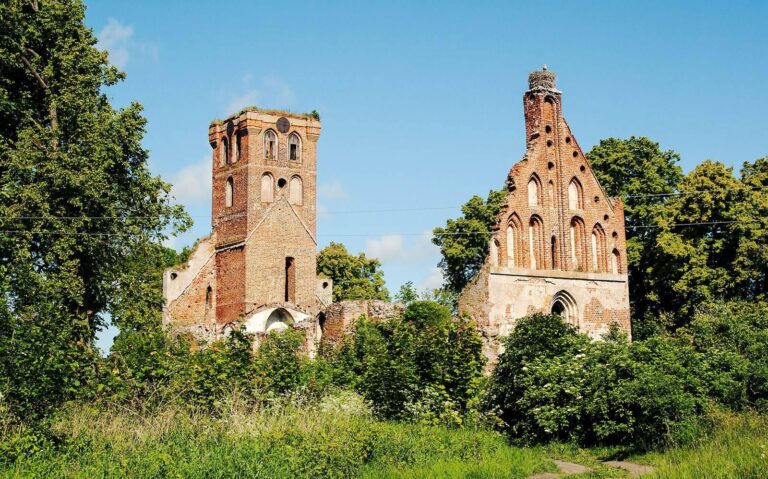
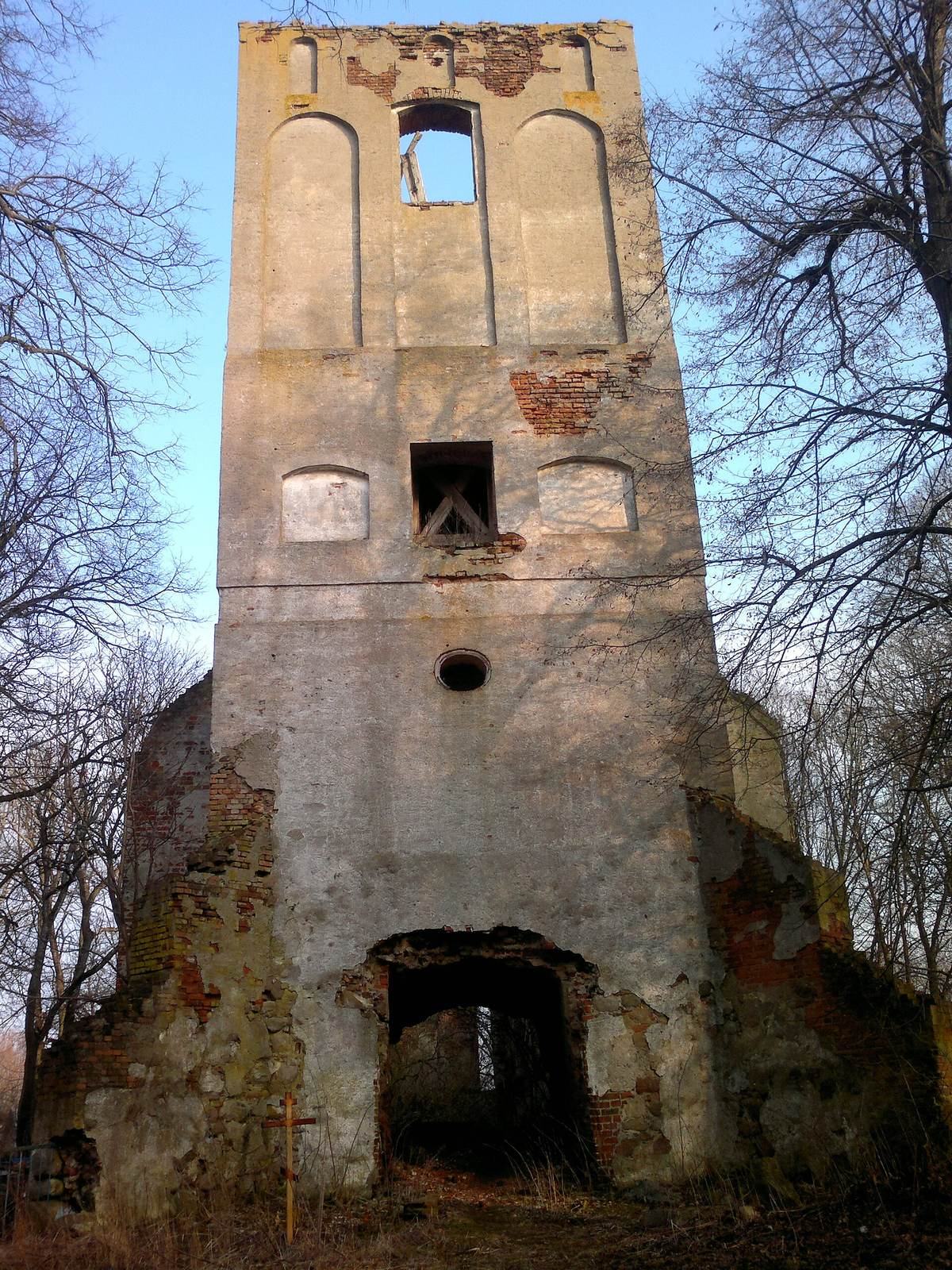
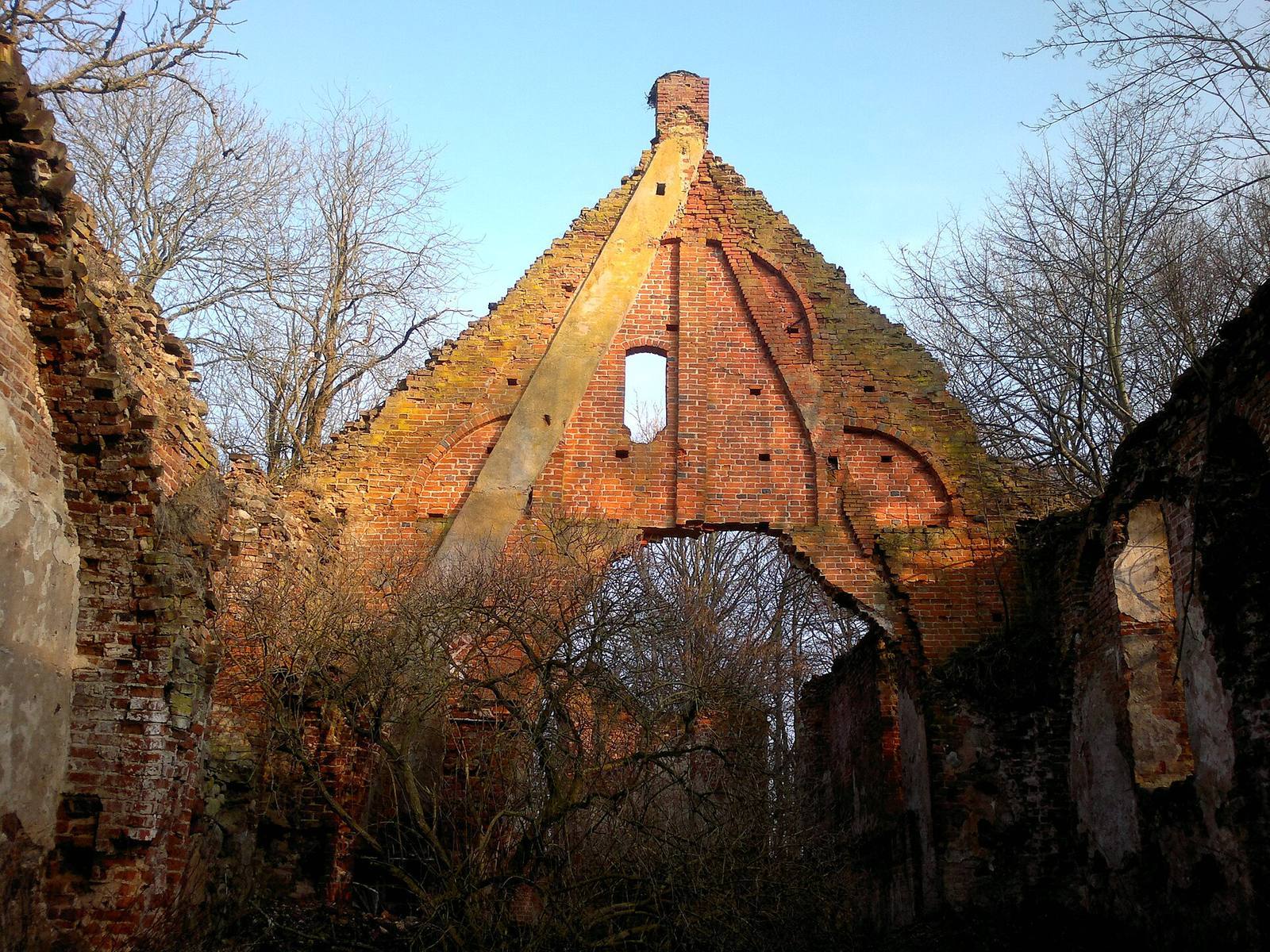
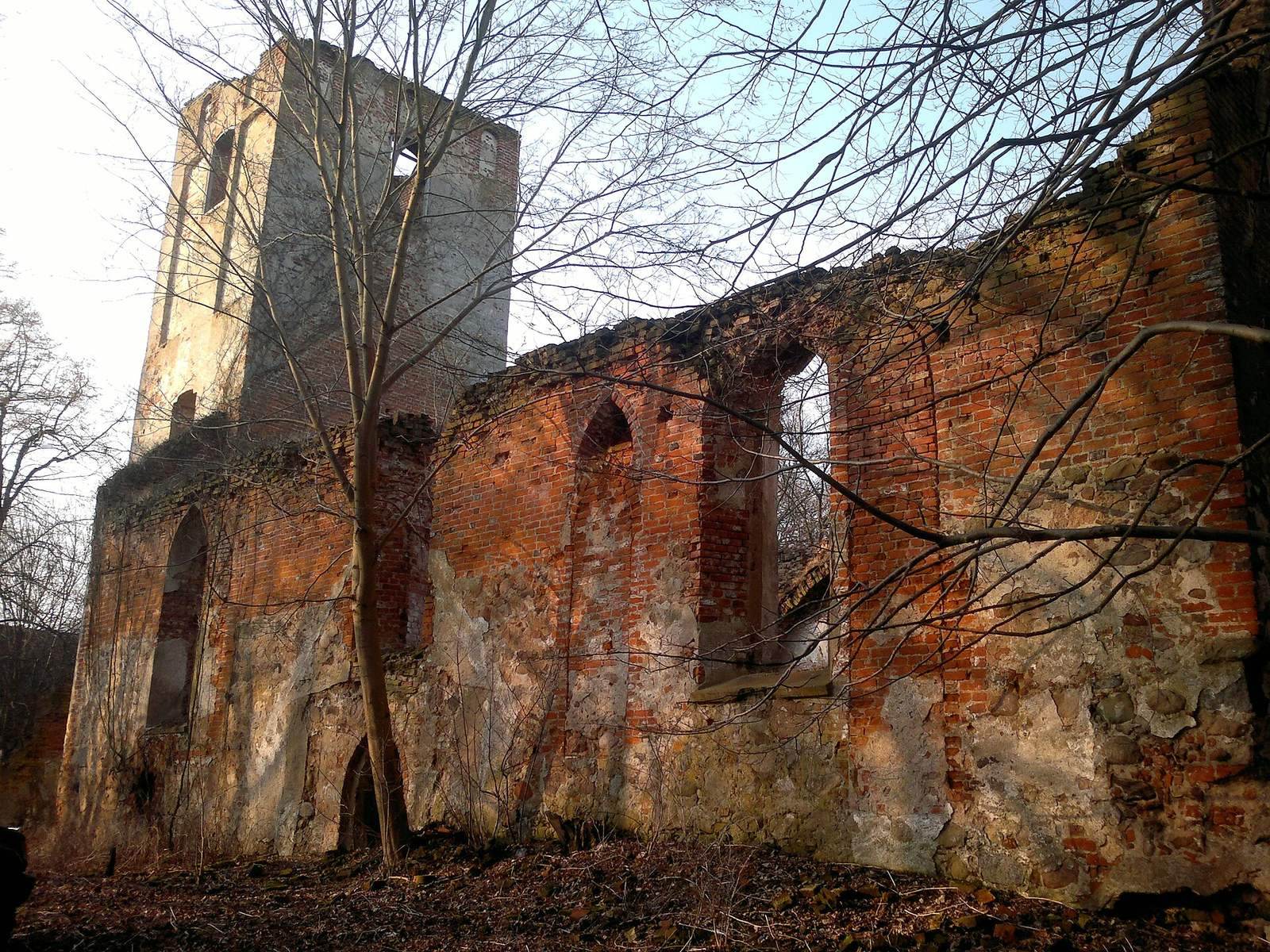
The ruin stands in the eastern center of Schemtschuschnoje, beside the road to Kaliningrad. Its plastered fieldstone-and-brick construction is characteristic of Samland, a historic region of East Prussia on the southeastern Baltic coast. The exterior walls and tower remain.
Building form and fabric
Tower
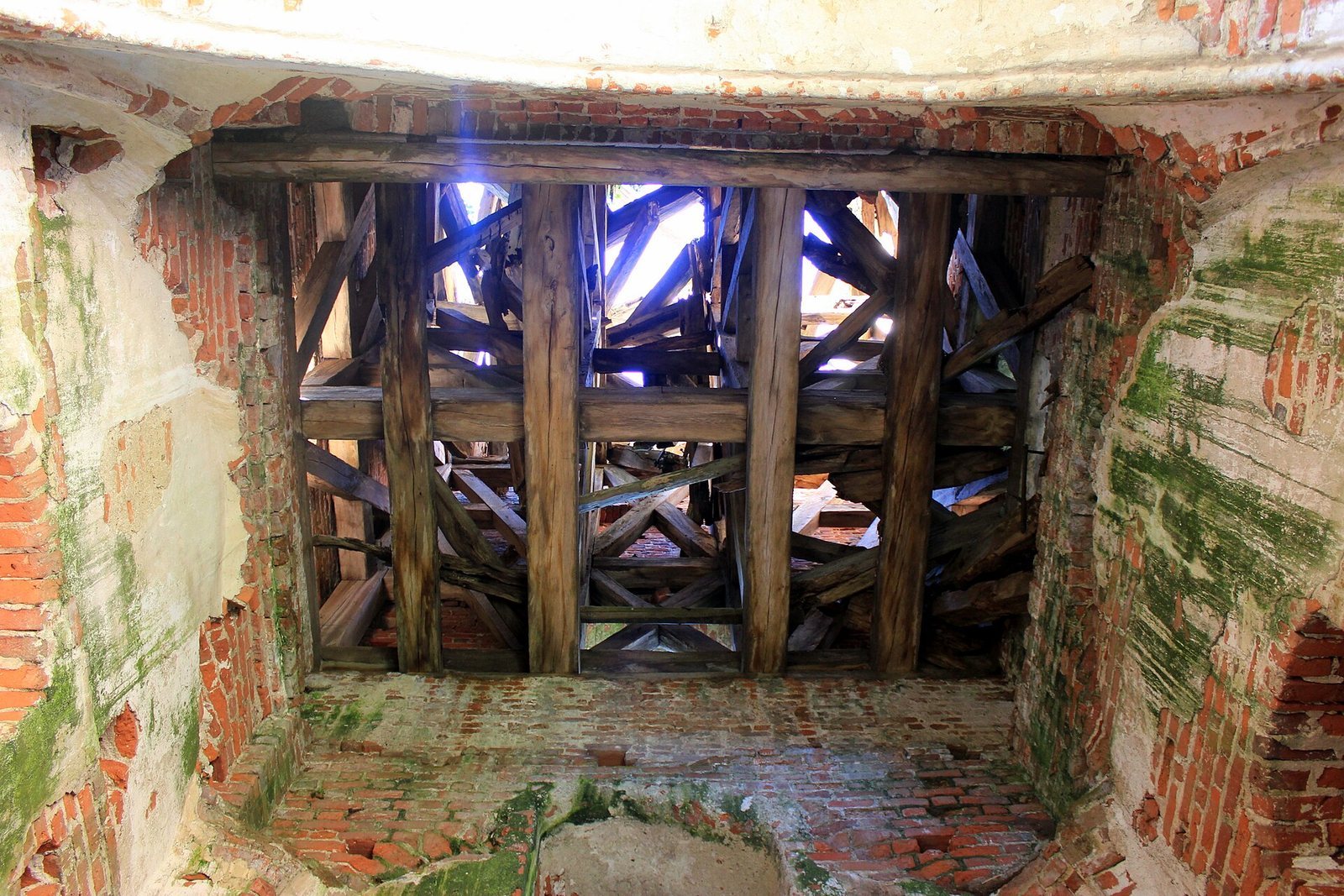
The tower dates from the beginning of the fourteenth century. After it was damaged, a new spire was added in 1862. The spire was removed in 1966, and a roof covered with asbestos sheets lasted until the 1980s.
Main worship spaces
An arch between the nave, or main body of the church, and the choir, the area containing the altar, survives. Star vaults, ribbed ceilings whose ribs form star patterns, were added to the nave in the fifteenth century, while the choir retained a flat ceiling. The interior and its vaulted ceiling were renovated in 1877, and fragments of older wall paintings remain.
Interior features and furnishings
Galleries, altar, and pulpit
The galleries were painted in the seventeenth century. A retable, a decorated structure placed behind an altar, stood on a Gothic altar table. Its main image showed the Crucifixion between columns, rendered in simple carved work. The pulpit also dated from the seventeenth century.
Organ and bells
The church’s organ came from the workshop of the eighteenth-century organ builder Adam Gottlob Casparini in Königsberg, Prussia. Organ builder Terletzki of Elbing substantially renovated it in the twentieth century. The church had three bells, dated 1736, 1815, and 1869.