Torre dei Bolognesi: A Medieval Defensive Tower in Nonantola
Site at a Glance
- Popularity
- Very Low
- Country
- Italy
- Primary era
- Medieval
- Eras represented
- Medieval, Early Modern, Modern
- Civilizations
- Holy Roman Empire, Italian
- Site type
- Military
- Remains
- Tower
On this page11 sections
History
Foundation under Bolognese rule
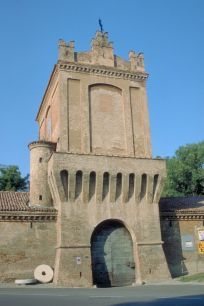
The Torre dei Bolognesi is a medieval defensive tower in Nonantola, Italy, built in 1307 when the settlement came under the rule of Bologna’s commune, a self-governing urban community. It formed part of the defenses established by the Bolognese and controlled one of Nonantola’s entrances.
From the twelfth to the fourteenth century, Nonantola passed between Guelf and Ghibelline factions, rival political groups broadly associated with papal and imperial causes. Its strategic position and the wealth connected with the monastery of San Silvestro helped make it an important center. A Bolognese garrison used the tower to control the settlement. It was also known as the New Tower, distinguishing it from the older Torre dei Modenesi.
Later uses and conservation
After its military use ended, the tower became a municipal prison in the sixteenth century. During the eighteenth and nineteenth centuries it was used to store timber and house pigeons. From the 1950s through the 1970s, it served as an elevated water reservoir.
At the beginning of the twenty-first century, the settlement’s fortifications were demolished. In 2004, conservation work restored the old wooden floors, which had been destroyed when the reservoir and stairs to the upper levels were installed. The work aimed to recover the tower’s defensive character. That year, archaeological excavations inside and outside the tower also helped reconstruct the surrounding defensive system.
The tower as a local museum
Since 2007, the tower has housed the Museo di Nonantola. Its displays use archaeological, documentary, and photographic material to trace local history from prehistory to the present, including changes in the agricultural landscape, the development of the settlement, and the growth of its community. The medieval presentation explores the monastery’s beginnings, the construction of fortifications, funerary archaeology, the establishment of the commune, and the origins of the Partecipanza Agraria, a system of collective agricultural landholding.
A ground-floor exhibition recounts how 73 Jewish refugee children were sheltered at Villa Emma, outside Nonantola, from July 1942 to April 1943. With help from parish priest Don Arrigo Beccari, physician Giuseppe Moreali, and local residents, the children hid and later escaped to Switzerland.
Remains
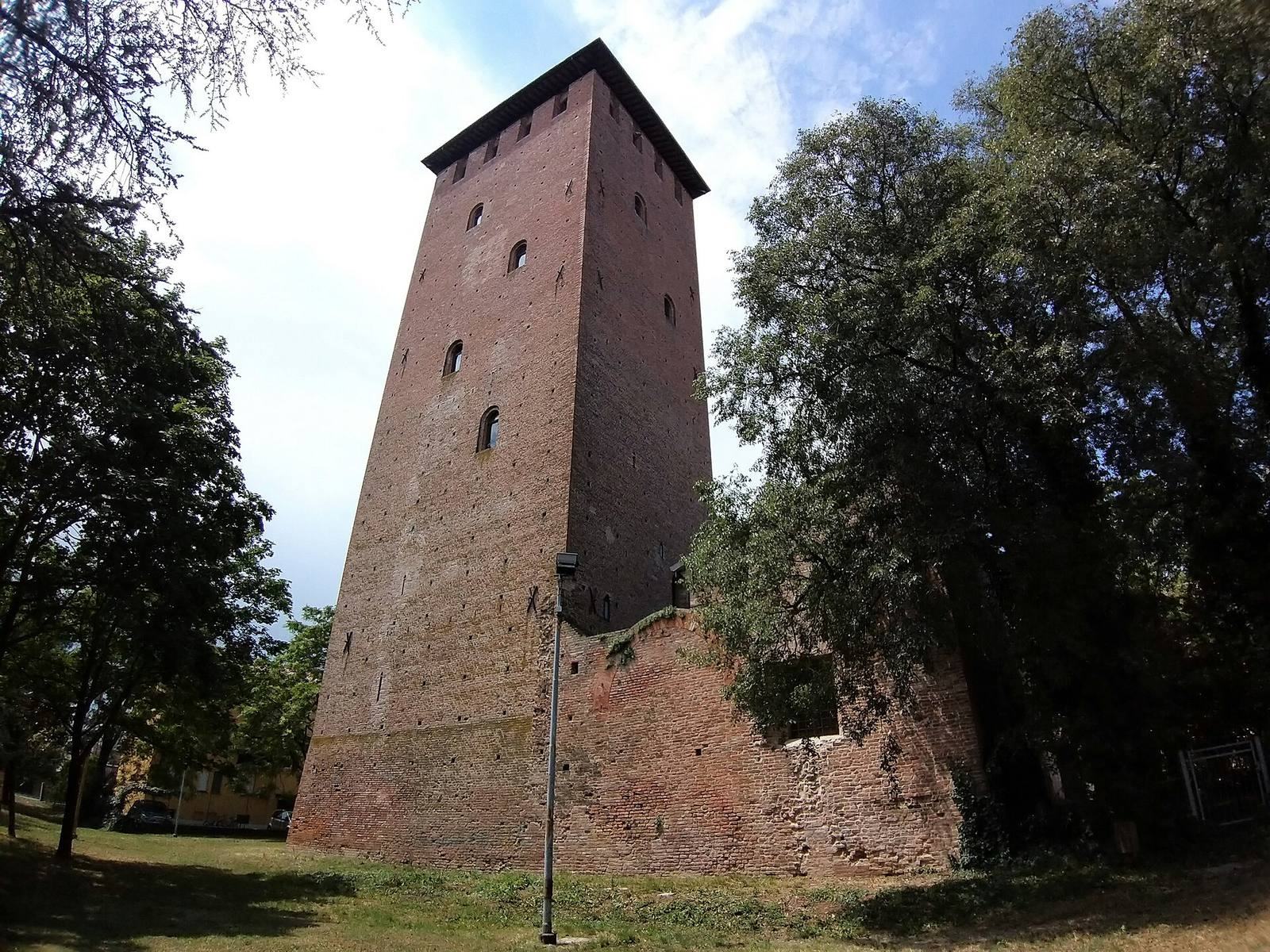
The surviving medieval defenses include the Torre dei Bolognesi and fragments of the enclosure that once protected the settlement. The tower is a nearly square brick structure within the former defensive boundary.
The tower and defensive enclosure
Tower and entrances
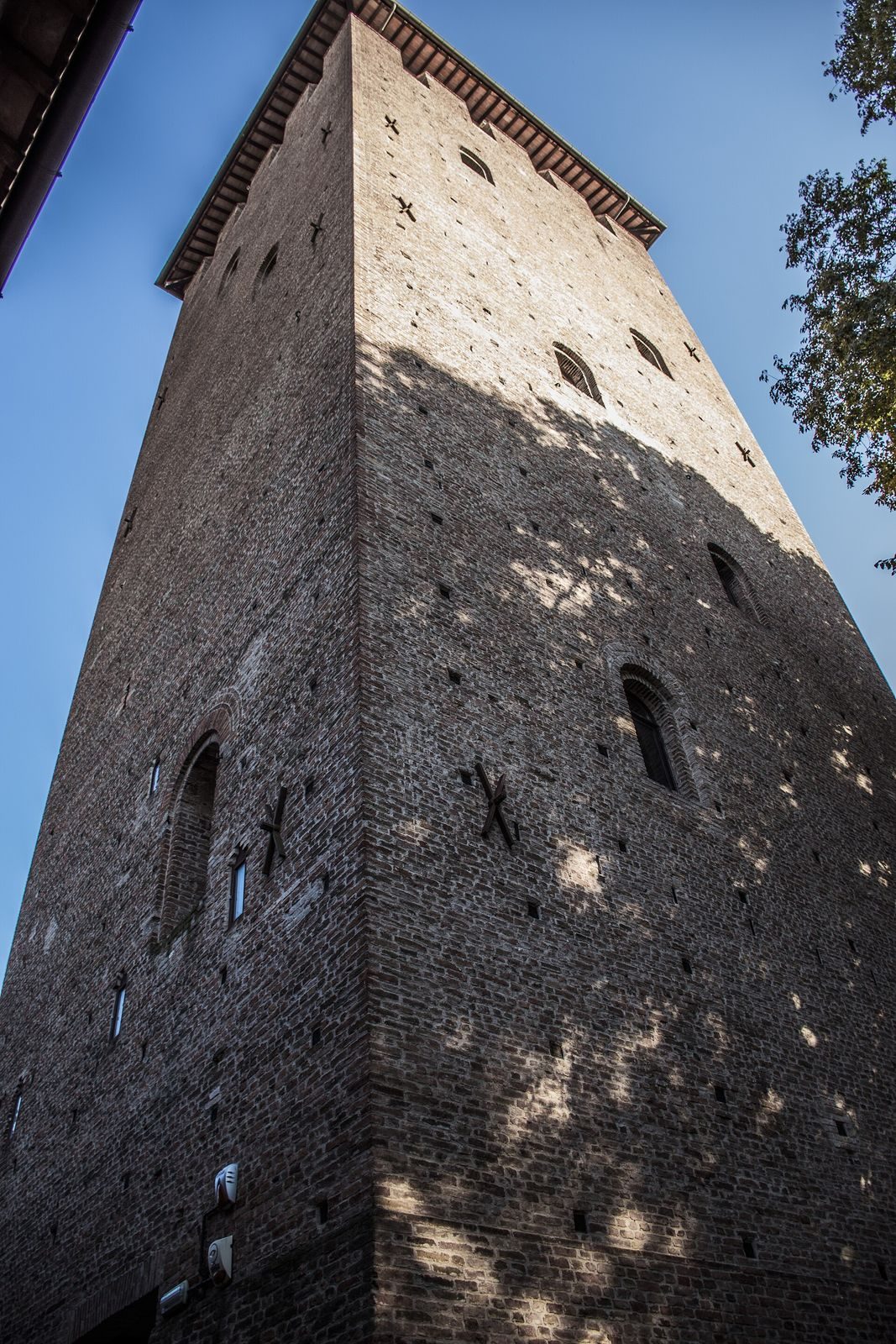
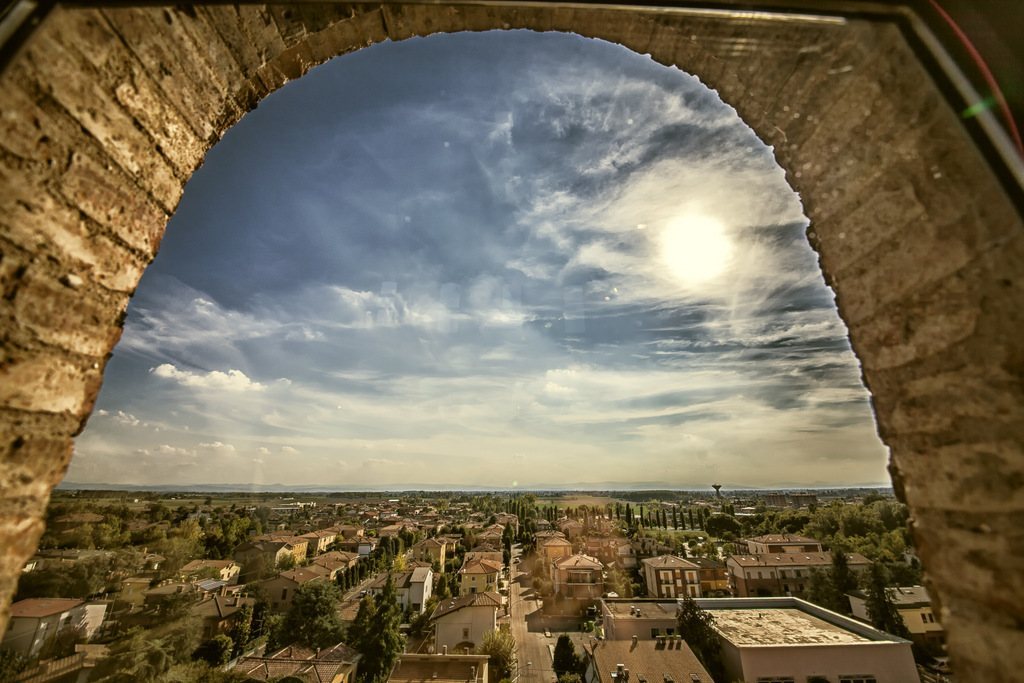
The tower measures 11.7 by 12.76 metres and stands 38.13 metres high. It survives almost intact, a rare example of a medieval defensive structure in the region. Its Guelph-style battlements, a crenellated form associated with the Guelf tradition, were covered by a timber roof supported by a frame. The roof is known to have existed by 1500 and was renewed in the 1970s. At the base, the blocked former San Adriano Gate remains visible. The original entrance stood several metres above ground and was accessible from the wall’s walkway. It now appears as a window above the present entrance, created in a seventeenth-century alteration. A balcony at the original entrance level allowed the garrison to watch traffic on the brick-paved road and operate the drawbridge mechanisms. A viewing platform is installed at a height of 38 metres.
Enclosure defenses and surviving features
The tower occupied the southeast corner of an enclosure around the monastery of San Silvestro, the civic palace, and the settlement’s houses. Brick walls, ditches, towers, and outer defensive works protected the fortified area. Excavations revealed two ravelins, outer works placed to protect an approach, each with a gate, as well as two lines of ditches crossed by drawbridges. The Torre dei Bolognesi and Torre dei Modenesi are the two surviving towers of the original seven, and stretches of the defensive walls also remain. A marble plaque commemorating the Bolognese conquest of Nonantola, formerly set into the tower’s north side, is now displayed on the museum’s ground floor.
Museum displays and finds
Collections across the tower
The museum occupies the tower’s four levels. Its collections include remains from the Roman period, the Iron Age, and the Bronze Age, with material from these periods displayed on the fourth floor.
Bronze Age disk
Among the objects on display is a gold disk from Redù, decorated with circular designs raised from the reverse and marks made with shaped tools. It dates to the Bronze Age and may relate to cult practices that used solar symbolism.