Saint James Church in Wielkie Radowiska: A Gothic Parish Church
Site at a Glance
- Popularity
- Very Low
- Country
- Poland
- Primary era
- Medieval
- Eras represented
- Medieval, Early Modern, Modern
- Civilizations
- German, Kingdom of Prussia, Polish–Lithuanian Commonwealth
- Site type
- Religious
- Remains
- Church
On this page12 sections
History
Foundation and parish
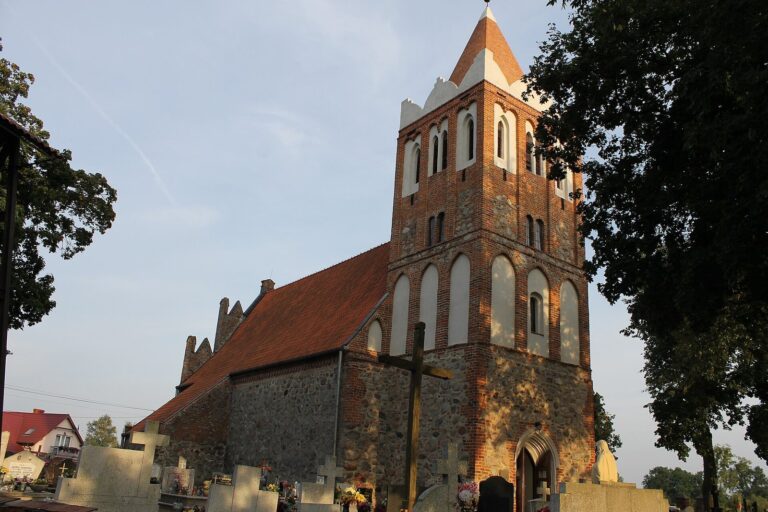
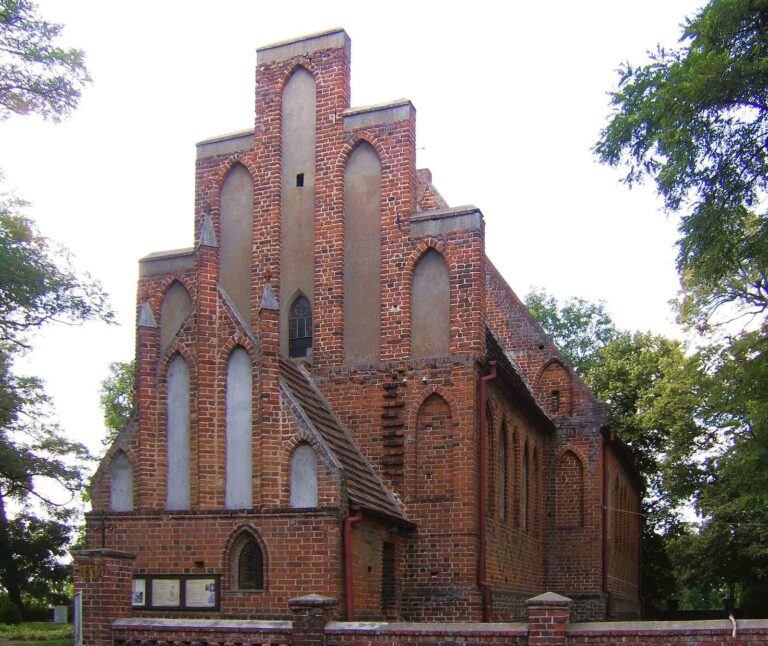
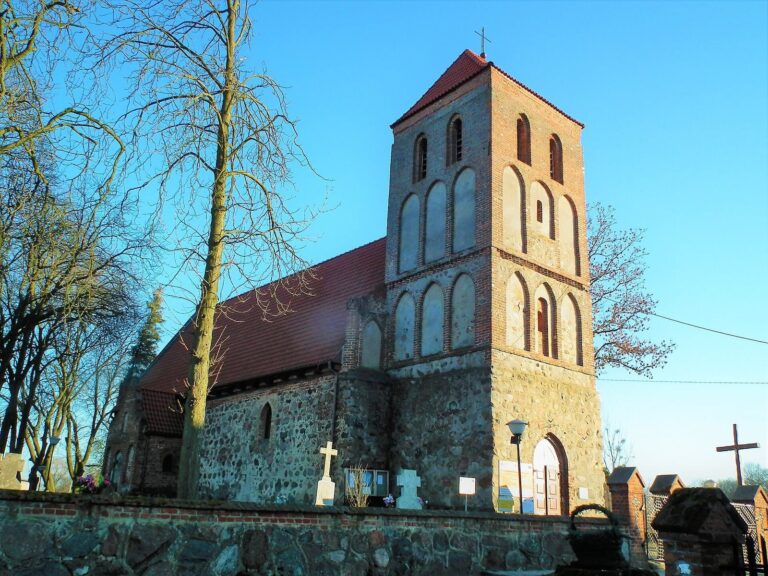
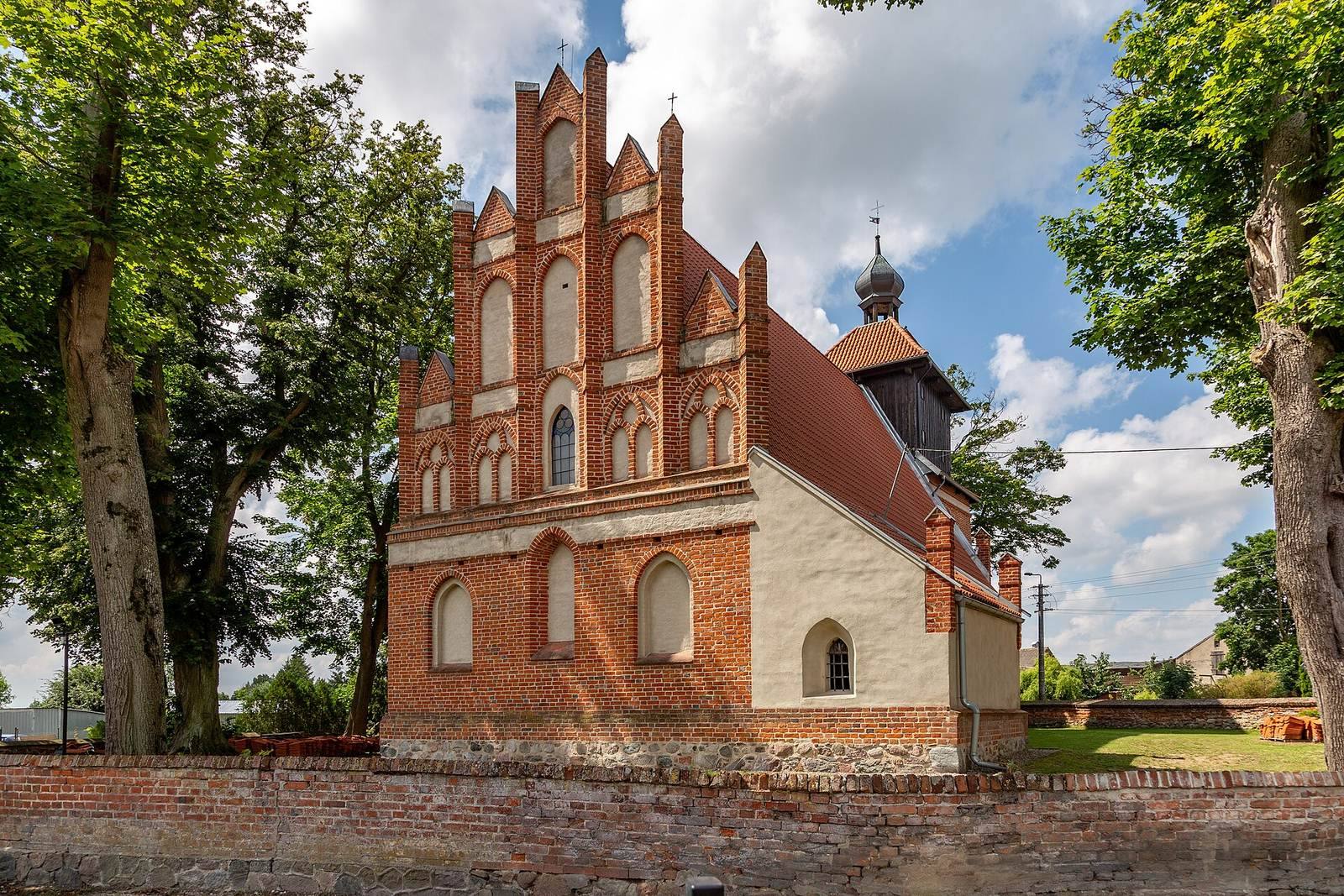
Saint James church in Wielkie Radowiska is a Gothic Roman Catholic parish church in Poland, built in the first half of the fourteenth century. It is dedicated to Saint James the Apostle and belongs to the parish of the same dedication. The parish is part of the Golub deanery, an administrative district within the Diocese of Toruń. The liturgical commemoration of the church’s patron is July 25.
The building was remodeled around the turn of the fourteenth and fifteenth centuries. It was renovated in 1925.
Remains
Church fabric
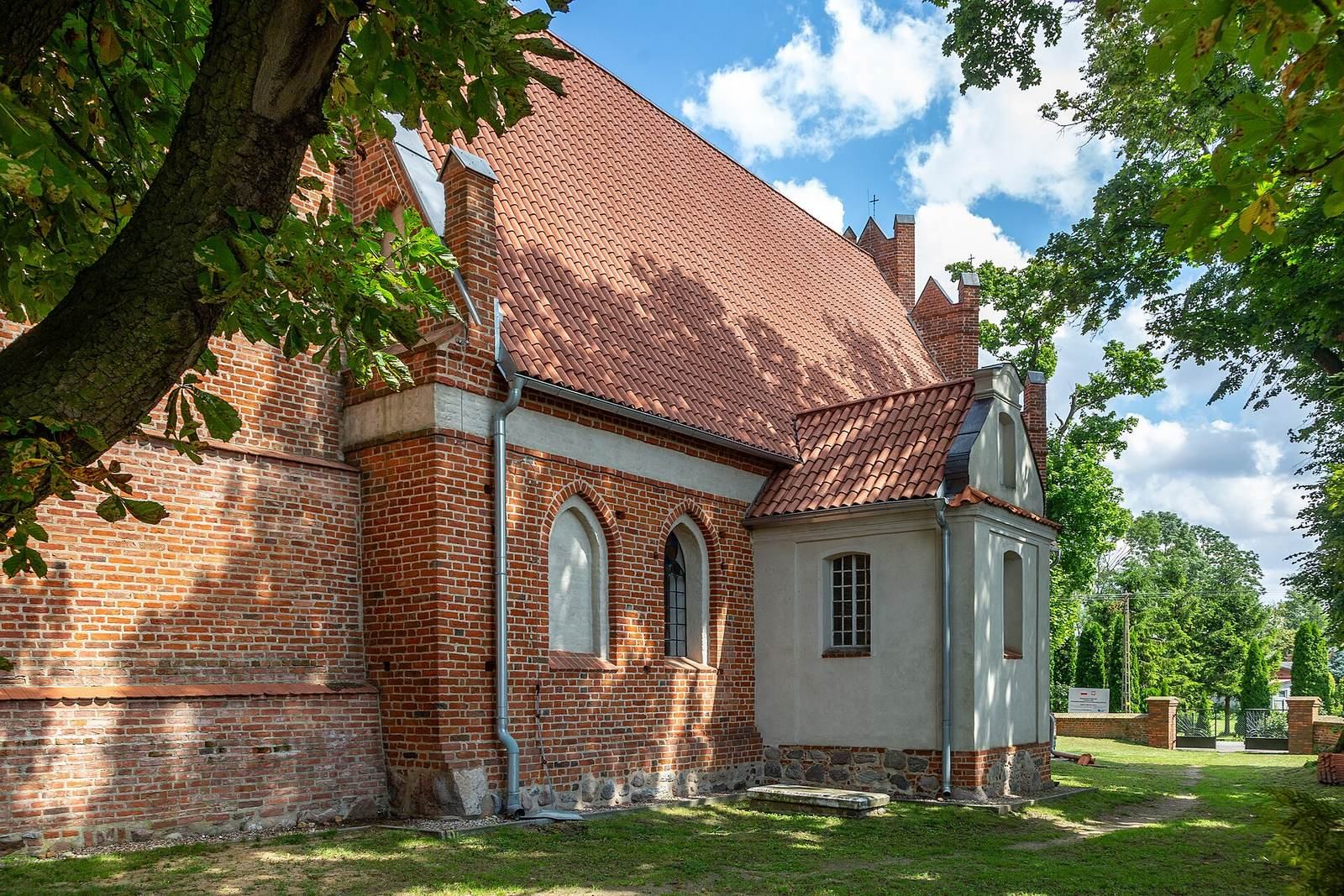
The church is a brick Gothic building with a single nave and one tower. The tower’s lower section is masonry and was probably added in 1580; its upper section is timber and dates to 1805.
Altars and sculpture
Main altar
The late Baroque main altar was made in the first half of the eighteenth century. Its sculptures represent Saints Peter, Paul, Stanislaus, whose identification is uncertain, and Adalbert of Prague, a tenth-century bishop and missionary venerated as a martyr. The altar includes a Baroque painting of Saint James the Greater, one of the Twelve Apostles, and a late-fourteenth-century Madonna and Child sculpture. A painting of Saint John of Nepomuk, a fourteenth-century Bohemian priest venerated as a martyr, occupies the upper section.
Side altars and chapel altar
Two side altars made around 1730 follow the Regency style, an early-eighteenth-century decorative style between Baroque and Rococo. Their altar tables have relief carving and forms resembling sarcophagi. The chapel’s altar dates to the first half of the nineteenth century and follows Baroque traditions.
Other sculptures
Other surviving works include a Madonna and Child from the late fifteenth century and a crucifix from the first half of the sixteenth century. A statue of the Immaculate Conception, made around the turn of the eighteenth and nineteenth centuries, and a processional crucifix from the first half of the nineteenth century are in a folk-influenced Baroque style.
Interior furnishings and fittings
Fonts, seating, and organ
A granite holy-water stoup, a basin for devotional water, is probably medieval. The late Baroque baptismal font, used for baptisms, dates to the first half of the eighteenth century. The benches and confessional were made around the turn of the seventeenth and eighteenth centuries. The music gallery is Rococo, as are the frames of two portable devotional images carried in processions, made around the turn of the eighteenth and nineteenth centuries. The organ case was produced around 1900 by Schlag et Söhne of Świdnica.
Wall cupboards and sacristy door
A cupboard in the church’s east wall has a wrought-iron openwork grille and probably dates to the sixteenth century. In the sacristy, another wall cupboard retains doors with Gothic hardware and an old lock. The plank door at the sacristy entrance may date to the first half of the nineteenth century.
Vessels, candlesticks, and bell
Three altar candlesticks date respectively to 1737, the second half of the nineteenth century, and the first quarter of the twentieth century. The 1737 example bears a possible "SA" signature. An eighteenth-century ciborium, a container for consecrated hosts, is marked "MD". The monstrance, used to display the consecrated host, dates to around the middle of the nineteenth century, while the chalice is from the late nineteenth century.
The bell was cast in 1560. A later inscription on it states that the tower was built with funding from Krzysztof Kostka, a Polish nobleman.