San Filippo Neri: An Oratorian Church in Chieri, Italy
Site at a Glance
- Popularity
- Low
- Country
- Italy
- Primary era
- Early Modern
- Eras represented
- Early Modern
- Civilizations
- Duchy of Savoy
- Site type
- Religious
- Remains
- Church
On this page11 sections
History
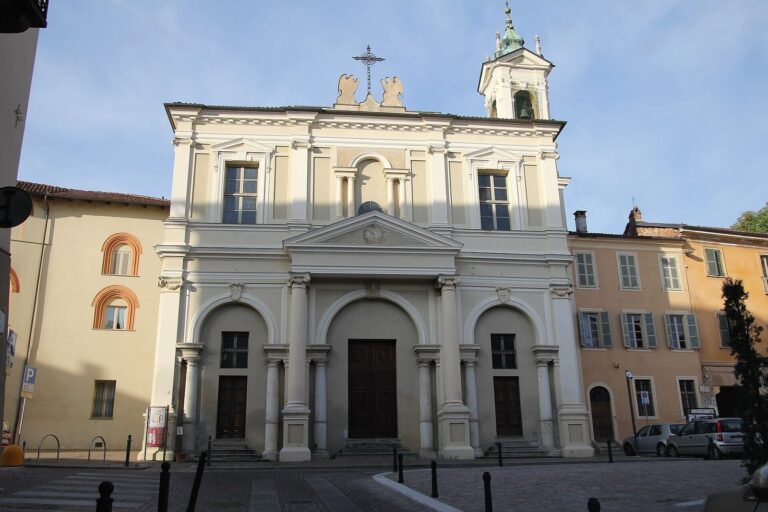
San Filippo Neri is a Roman Catholic church in central Chieri, Italy, built for the Oratorians, a Catholic community founded by St Philip Neri. It is dedicated to the Immaculate Conception, the belief that Mary was preserved from original sin from the moment of her conception, and to St Philip. The Broglia family, a noble family of Chieri, sponsored the church on land occupied by their buildings.
Construction and rebuilding
Work began in 1664, and the church was completed during the seventeenth century. Antonio Bettino designed it. Its dome collapsed in 1714, after which the Italian architect Filippo Juvarra reconstructed the church. The facade was completed in the eighteenth century; its traditional attribution to Mario Ludovico Quarini is not confirmed by archival evidence.
The adjoining convent-seminary
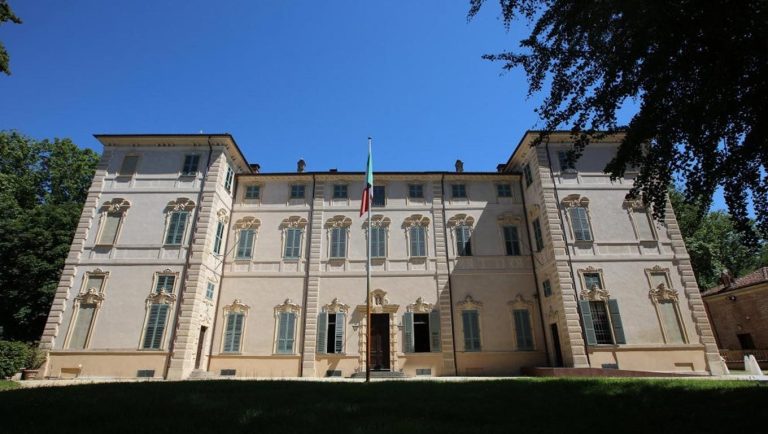
Construction of the adjoining convent-seminary for the Oratorians also began in the seventeenth century. Pietro Angelo Galletti was its architect. In the early nineteenth century the building became Chieri’s city hall, then housed the Turin seminary from 1821 to 1949. Giovanni Bosco, the Italian priest and educator known as Don Bosco, studied there from 1835 to 1841. Later uses included a Salvatorian religious community, a middle school, associations, a Don Bosco visitor center, and a private school. It now houses the Centro Visite Don Bosco museum. The church remains in active use.
Remains
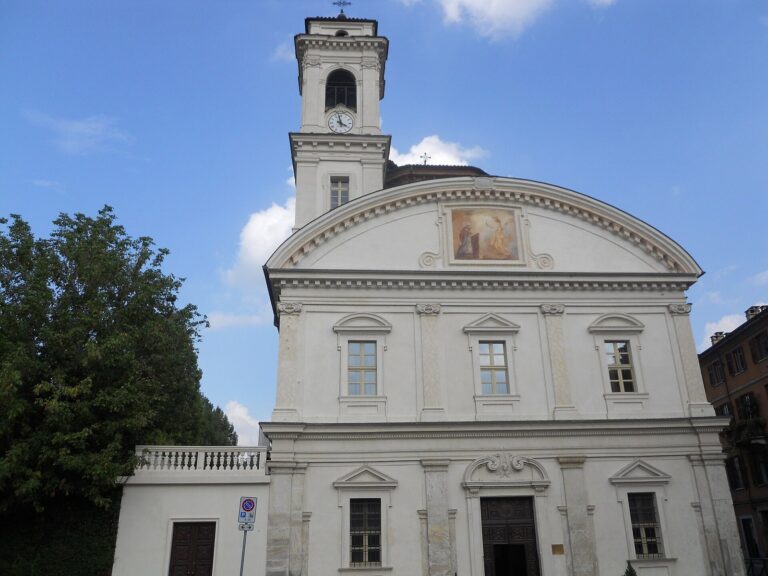
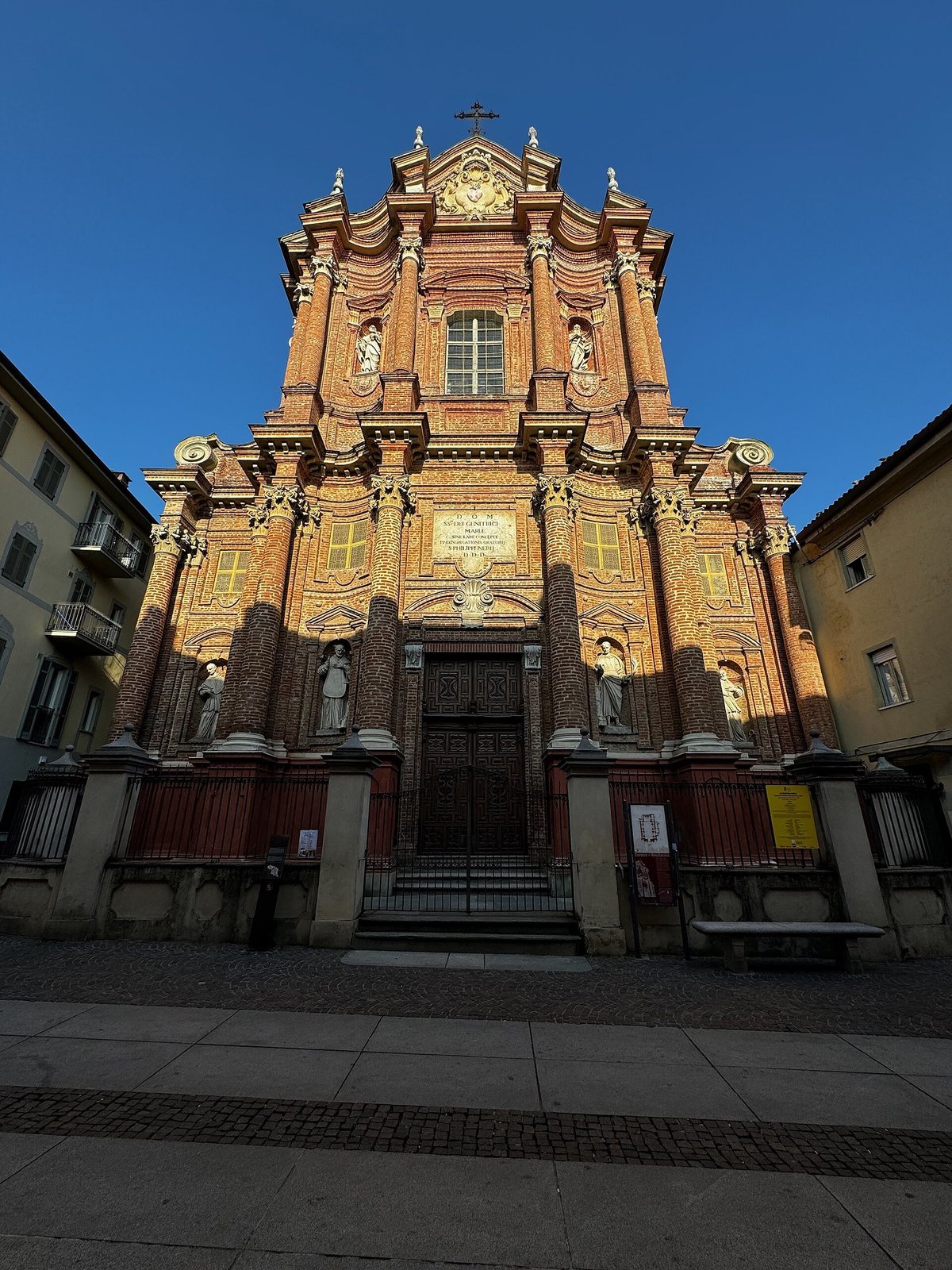
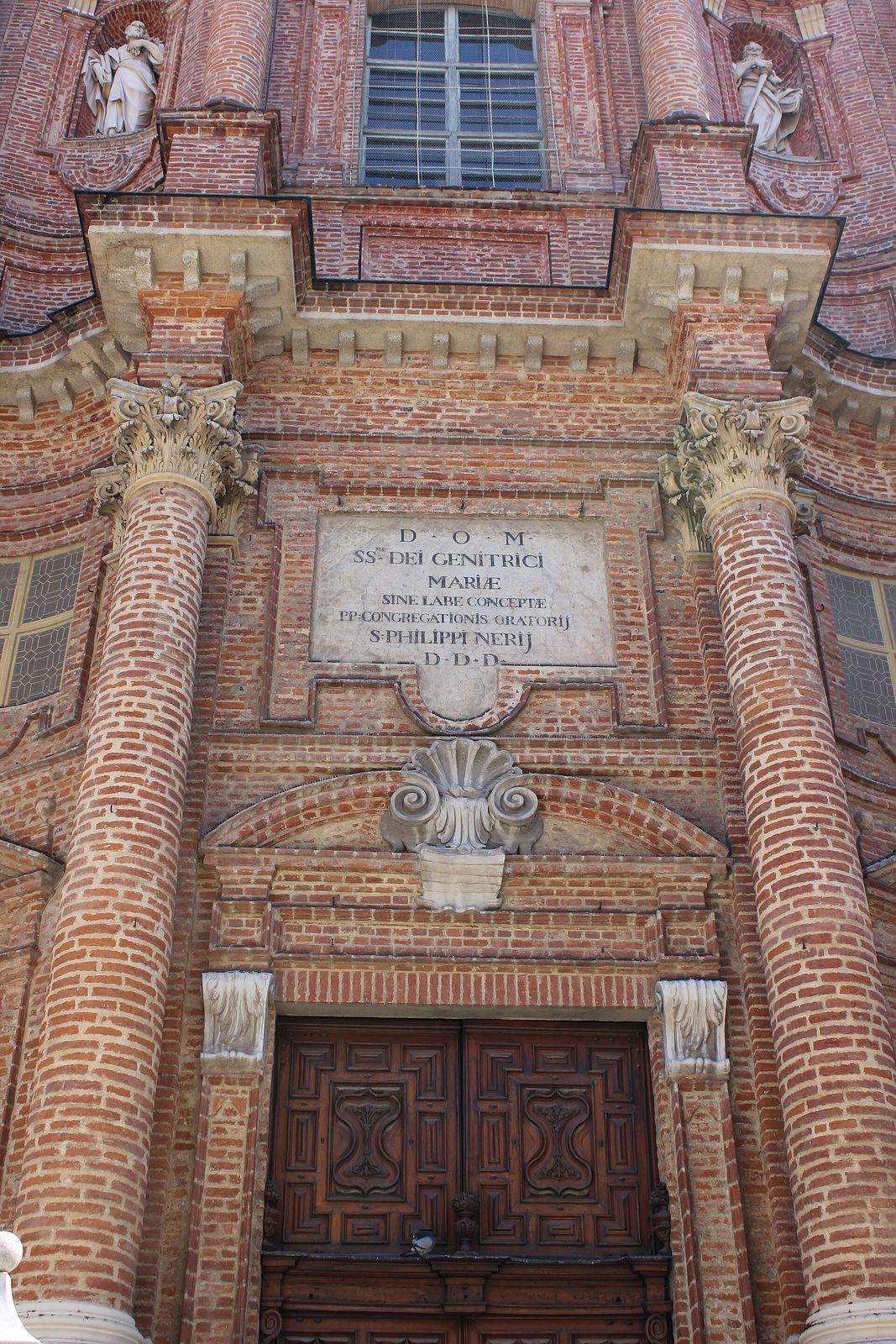
The church adjoins the former convent-seminary and has a single nave with side chapels. Its exposed-brick facade stands slightly behind the line of the surrounding houses. A short forecourt is enclosed by an elegant wrought-iron gate.
Facade
The facade rises in two levels beneath a broken pediment, a pediment whose upper outline is interrupted, and has a strongly vertical composition. Six columns on the lower level and four on the narrower upper level have Corinthian capitals, the ornate tops of the columns. Six niches contain plaster statues by Francesco Mambrini: Charles Borromeo, the sixteenth-century reforming cardinal; Philip Neri, founder of the Oratorians; Valentine, venerated as an early Christian martyr; and Francis de Sales, a seventeenth-century bishop and spiritual writer, appear below, with Peter and Paul above. A large window sits over the central doorway, noted for its Piedmontese woodwork.
Nave and side chapels
Nave
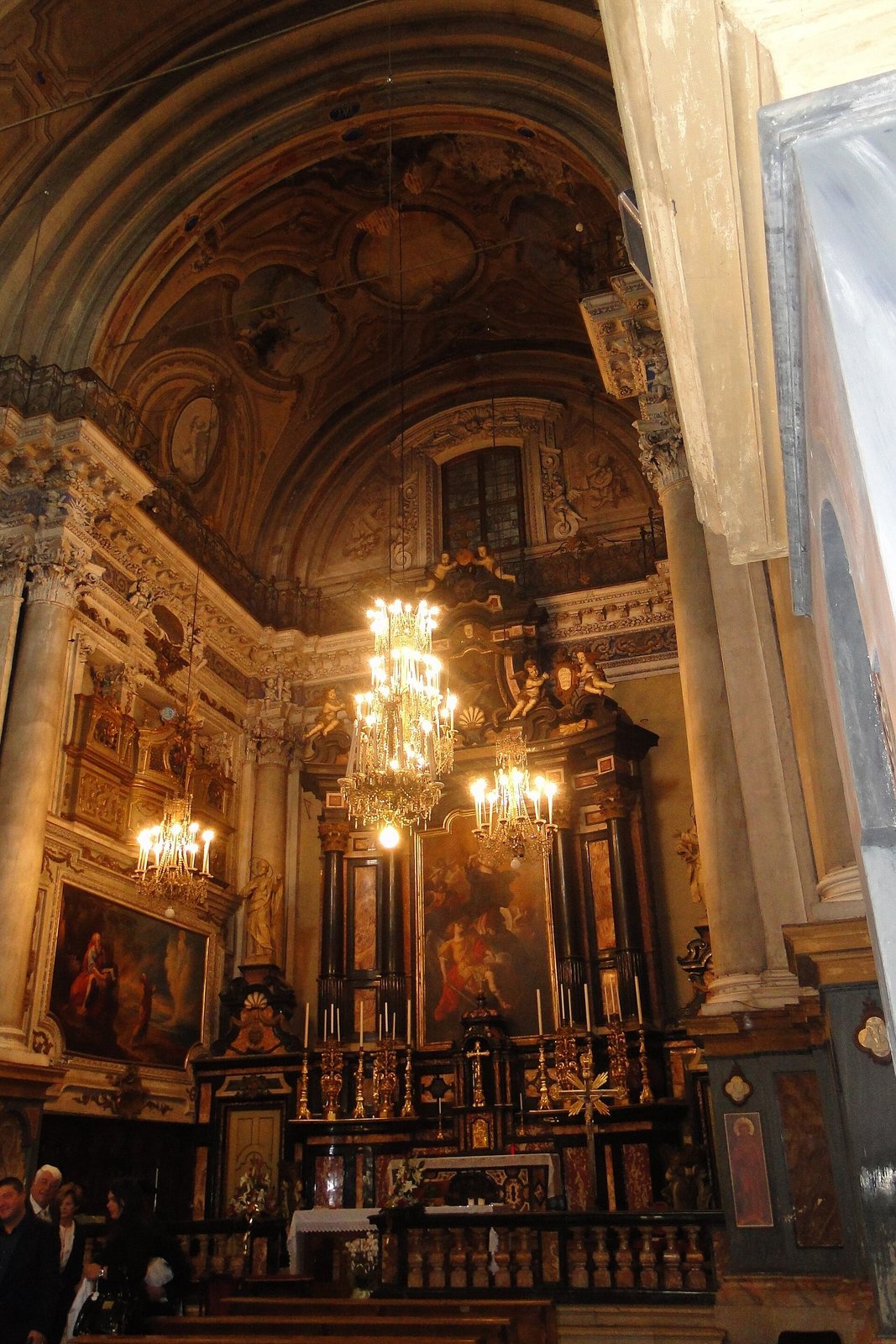
The church has no choir. Its nave, the main central space, is covered by a barrel vault, a long, curved ceiling. Eight columns with Corinthian capitals, four along each side, divide the space beside the side chapels.
Side chapels
The chapels are dedicated to Our Lady of Lourdes; Peter and Paul; Charles Borromeo and the Guardian Angels; Philip Neri; and Francis de Sales. The Peter and Paul chapel regained that dedication after an earlier dedication to John Bosco; the second chapel on the right is also identified as the Chapel of the Sacred Heart. Behind the altar in the first chapel on the right is an urn containing relics of St Valentine, and the church also holds a wooden sculpture of the martyr. In the Charles Borromeo chapel, Francesco Fabbrica’s painting shows the saint’s death and his soul being led to Paradise; it may date to 1710–1712. Philip Neri’s chapel contains Stefano Maria Legnani’s Ecstasy of St Philip Neri and elaborate marble work by artists from Lugano. In the Francis de Sales chapel, a painting of the Madonna and Child with the saint is attributed to Claudio Francesco Beaumont and dates to about 1757. Giovanni Battista Parodi’s The Apostles Peter and Paul, dated 1711, is in the second chapel on the right.
Presbytery and furnishings
Main altar and presbytery
The main altar is dedicated to the Immaculate Conception. Its altarpiece by Daniel Seyter, dated 1793–1794, depicts Mary with the Archangel Michael and God the Father. Giovanni Antonio Mari’s paintings on either side of the presbytery show visions of Elijah, an Israelite prophet, and John the Evangelist, traditionally identified as an apostle and author of the Gospel of John. The presbytery, the area around the main altar, also contains the tomb of Giovanni Comollo, a close friend of Giovanni Bosco. A wooden statue of the Immaculate Conception, transferred from the destroyed church of San Francesco d’Assisi, is also preserved in the church.
Organ and sacristy
The organ came from the church of the Annunziata in 1681. Count Gabaleone paid for its transfer and had acquired patronage rights to the chapel of St Francis de Sales. The church’s altars are made of multicolored marble, and its seventeenth-century stucco, a fine plaster used for decoration, was made by Pietro Somasso. Canvases by Mattia Franceschini are also in the church. The sacristy contains eighteenth-century furnishings that may incorporate decorative elements from the Broglia family’s sixteenth-century house, along with a canvas by Caraccioli showing St Philip Neri refusing appointment as superior general of his order.