San Guglielmo: A Roman Catholic Church in Chieri, Italy
Site at a Glance
- Popularity
- Very Low
- Country
- Italy
- Primary era
- Medieval
- Eras represented
- Medieval, Early Modern, Modern
- Civilizations
- Duchy of Savoy, Kingdom of Sardinia
- Site type
- Religious
- Remains
- Church
On this page12 sections
History
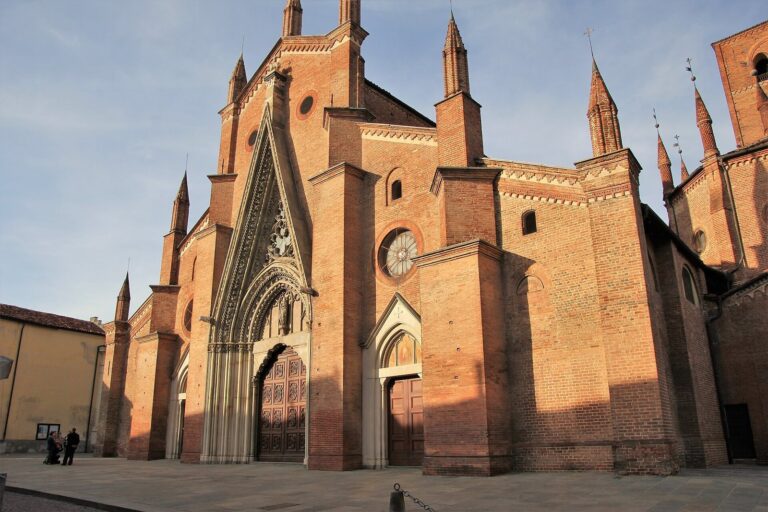
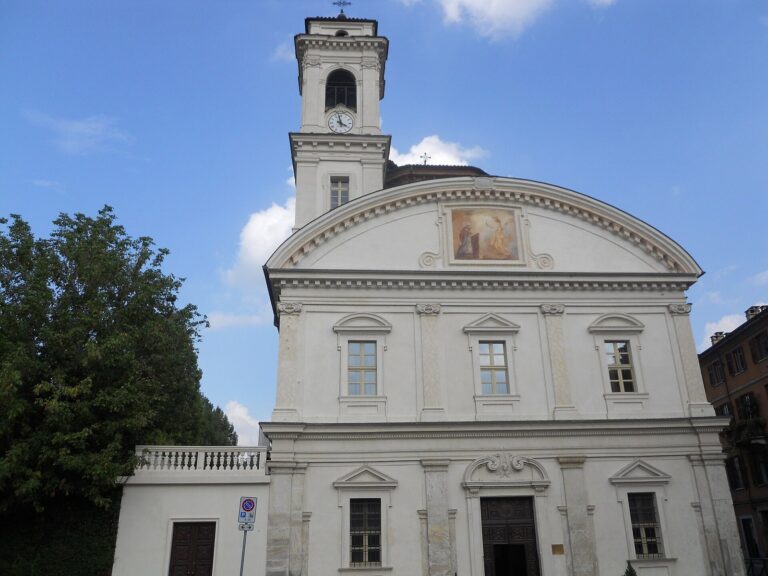
San Guglielmo is a Roman Catholic church in central Chieri, Italy, dedicated to Saint William of Vercelli and served by the Oratorians, a Catholic congregation founded by Philip Neri. Among the town’s oldest churches, it remains in use. Its fabric combines Gothic, a medieval style, and Baroque, an early-modern style.
Medieval church and civic use
A church at this location is recorded from the thirteenth century, when Chieri’s medieval municipal council met there. The present church was built in the fifteenth century. In 1484 it passed to the Dodoli family, who probably rebuilt it in the Gothic style associated with the Po Valley. The builder is unknown.
The confraternity and later changes
In 1576 the church passed to the Confraternity of the Holy Spirit, a religious association combining worship and charitable work. Its activities included distributing bread to the poor and seeking to convert Jews from the nearby ghetto, a district where Jewish residents were restricted or concentrated.
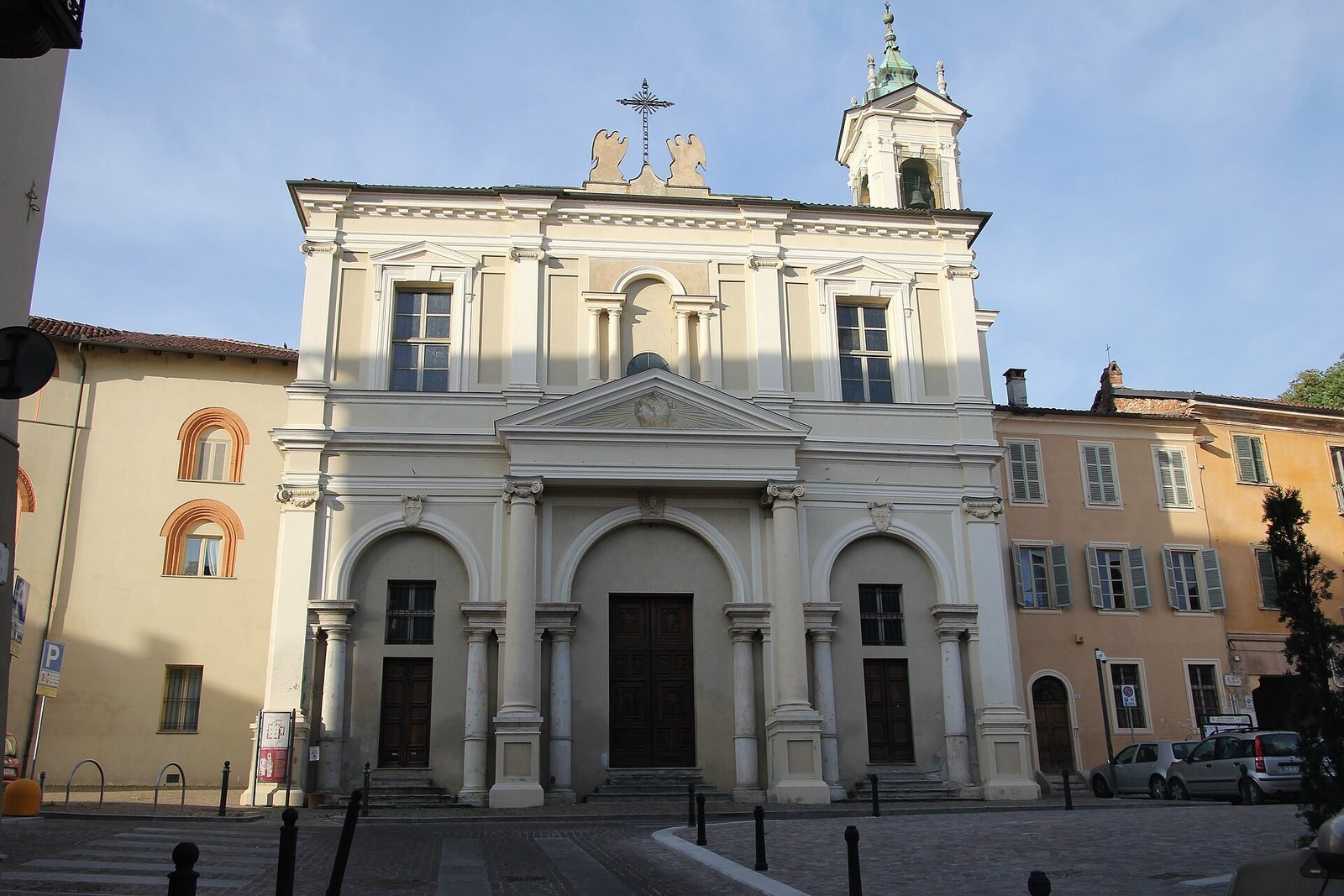
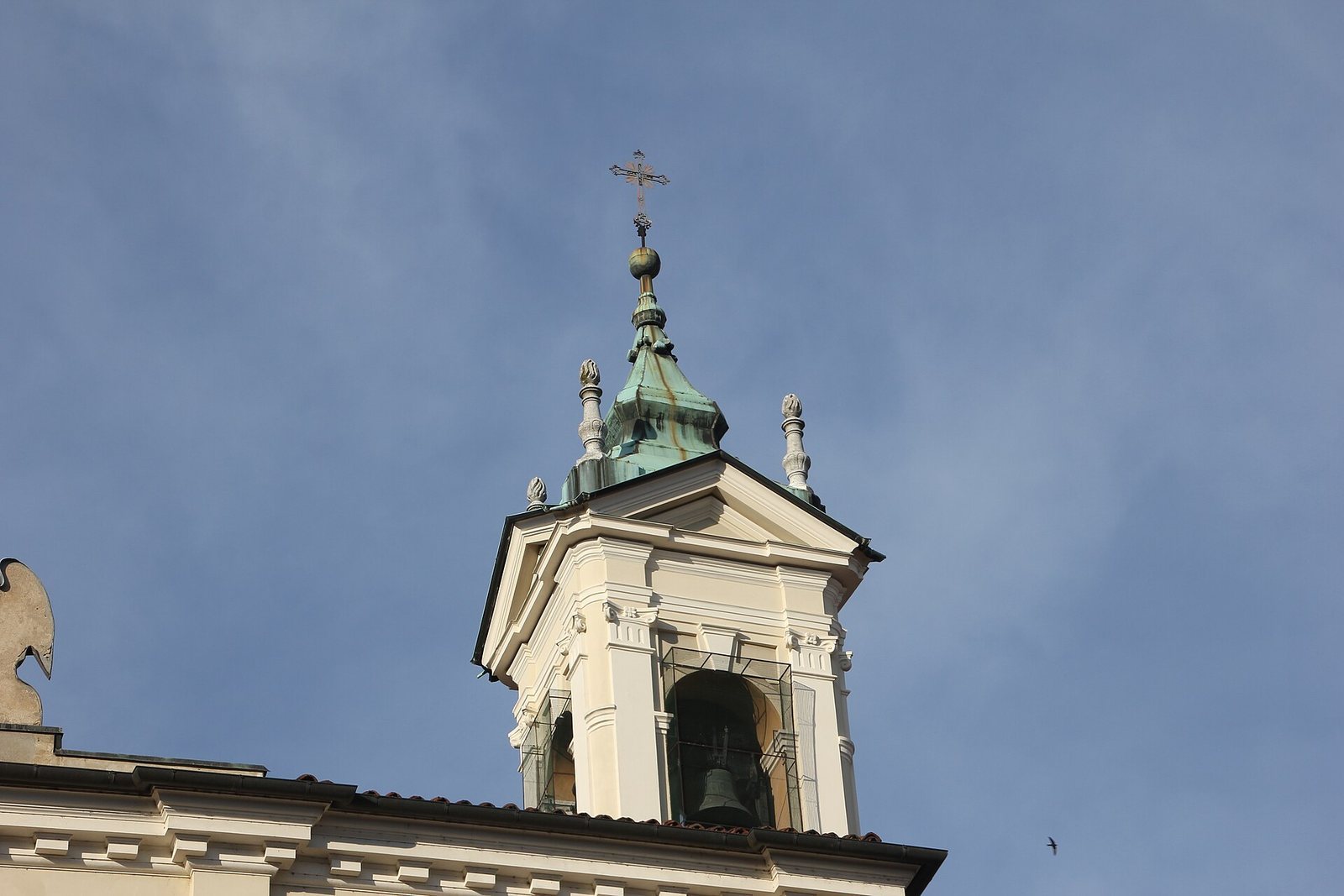
The confraternity’s building work included a portico planned by Michelangelo Garove in 1689. In 1753 relics, bodily remains venerated as connected with a saint, of Saint Theodore the Martyr arrived from Rome; a local surgeon reassembled the skeleton. A new bell tower was designed in 1777 by Giuseppe Michele Vaj. Around 1837 the portico was enclosed to widen the nave. Francesco Benedetto Feroggio drew up plans for a new façade, but they were not carried out; Felice Courtial designed and built the present façade in 1840.
The church’s interior received eighteenth-century decoration, and the Confraternity of the Holy Spirit’s archive preserves documents dating from the seventeenth century. A record of valuable liturgical furnishings was made in the 1960s.
Remains
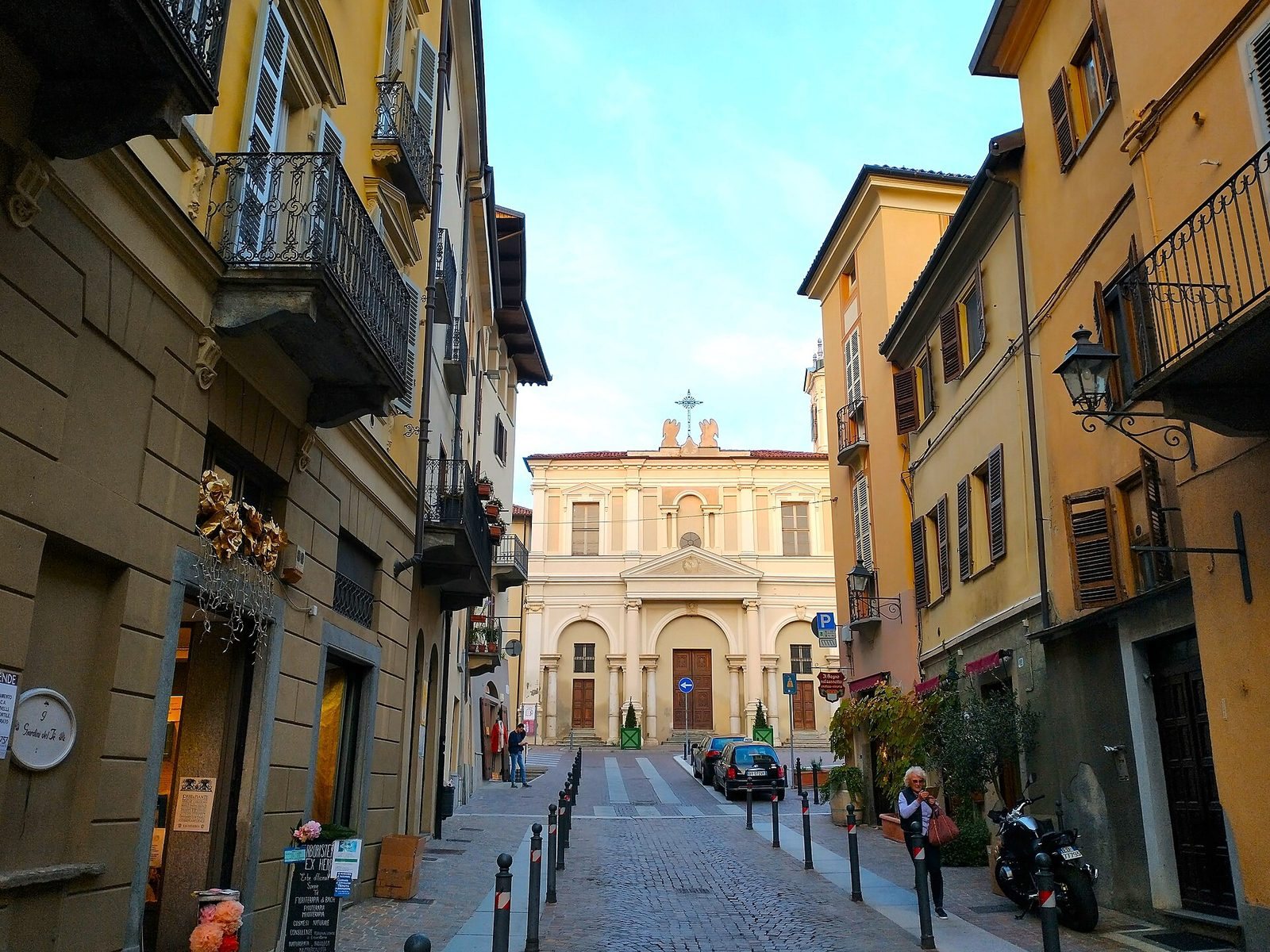
The church’s surviving form brings together Gothic and Baroque work. Its apse retains fifteenth-century features, while the later enclosure of the portico allowed the nave to be widened. The church stands beside Palazzo Mercadillo, an urban palace.
Exterior and structure
Apse and church fabric
The apse, the rounded or recessed end of the church, preserves forms from the fifteenth century. The broader building combines medieval Gothic elements with later Baroque features.
Portico and bell tower
A portico was added in 1689 as part of an expansion planned by Michelangelo Garove. Around 1837 it was enclosed to make more room in the nave. The Baroque bell tower follows a design by Giuseppe Michele Vaj, dated to 1777.
Façade
Designed and built by Felice Courtial in 1840, the façade has pilasters, half-columns, rectangular windows, triangular crowns above openings, round arches set against solid wall surfaces, and a small entrance porch. Its formal arrangement is distinctive among Chieri’s churches.
Interior, furnishings, and artworks
Altar and side chapel
Eighteenth-century Rococo stucco, a decorative style, enriches the interior. Francesco Riva sculpted the main altar, which is crowned by an altarpiece made in 1741 by Giuseppe Antonio Riva of Carignano. A circular painting of the Eternal Father blessing, by an unknown artist and dating to the seventeenth century, is also on the altar. A nearby side chapel contains a fifteenth-century wooden crucifix donated by the Broglio family and Francesco Fea’s Adoration of the Magi, painted before 1632.
Paintings and relics
Eighteen canvases depict Christ, the Madonna, four other saints, and the twelve Apostles. A seventeenth-century painting of Saint Louis of Toulouse is attributed to an unknown artist, though the identification is unconfirmed. In the right aisle, a niche holds the reassembled relics of Saint Theodore in a richly carved coffin. Relics of Saint William are kept in the sacristy, the room used to prepare for services and store religious objects.
Organ and wall paintings
The organ dates from 1766. Its mechanism has probably been restored since then, while the choir loft is original. Traces of frescoes of undetermined date remain on the walls.