San Gallo: A Renaissance Oratory in Venice
Site at a Glance
- Popularity
- Low
- Country
- Italy
- Primary era
- Early Modern
- Eras represented
- Early Modern
- Civilizations
- Venetian
- Site type
- Religious
- Remains
- Chapel
On this page11 sections
History
San Gallo is a Renaissance oratory dedicated to Saint Gall on Campo San Gallo in Venice, Italy, built around 1581. Although commonly called a church, it is more precisely a small place of worship established for the renovated Orseolo hospice. Saint Gall was an early medieval missionary and monastic founder. San Gallo belongs to the Catholic jurisdiction of the Patriarchate of Venice and serves as a branch church of the parish of San Moisè, within the San Marco-Castello ecclesiastical district.
Foundation and enlargement
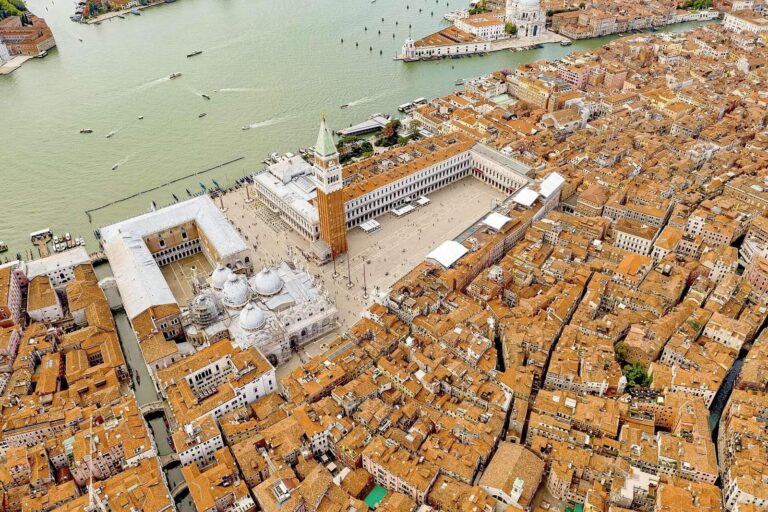
The Orseolo hospice had been moved from St Mark’s Square to make room for the Procuratie Nuove, a Venetian administrative complex whose construction was provisionally completed in 1640. San Gallo was built around 1581 to serve the renovated hospice.
In 1703, the hospice confraternity received permission from the Procurators of St Mark, officials responsible for the basilica and its property, to enlarge the oratory onto land belonging to St Mark’s Basilica. The authorization limited the building to nine paces in width and twenty in length, while requiring the well in the square to remain in use.
Eighteenth-century changes
During the eighteenth century, the Venetian painter Gaspare Diziani restored the principal altarpiece. Relics associated with the three altars, meaning sacred remains or objects connected with holy figures, were transferred to the Patriarchate of Venice’s collection. The church’s paintings were also moved to a museum.
Urban change and present use
Urban changes around 1900 altered the church’s setting. It now stands between the buildings of the Banca Nazionale del Lavoro and Banco di Napoli; the latter dates to 1914. The interior is used for exhibitions, mainly those devoted to individual contemporary artists.
Remains
Setting and plan
The building stands on Campo San Gallo, a square on Isola San Gallo, an island surrounded by canals including Rio di Ferati and Rio di Orseolo. The island lies north of the northwest end of St Mark’s Square, behind Bacino Orseolo. The oratory faces the square. Its exposed left side runs along Calle del Cavalletto, a street, while its apse, the projecting end of the building, and its right side adjoin neighboring buildings. A well stands in front of the oratory.
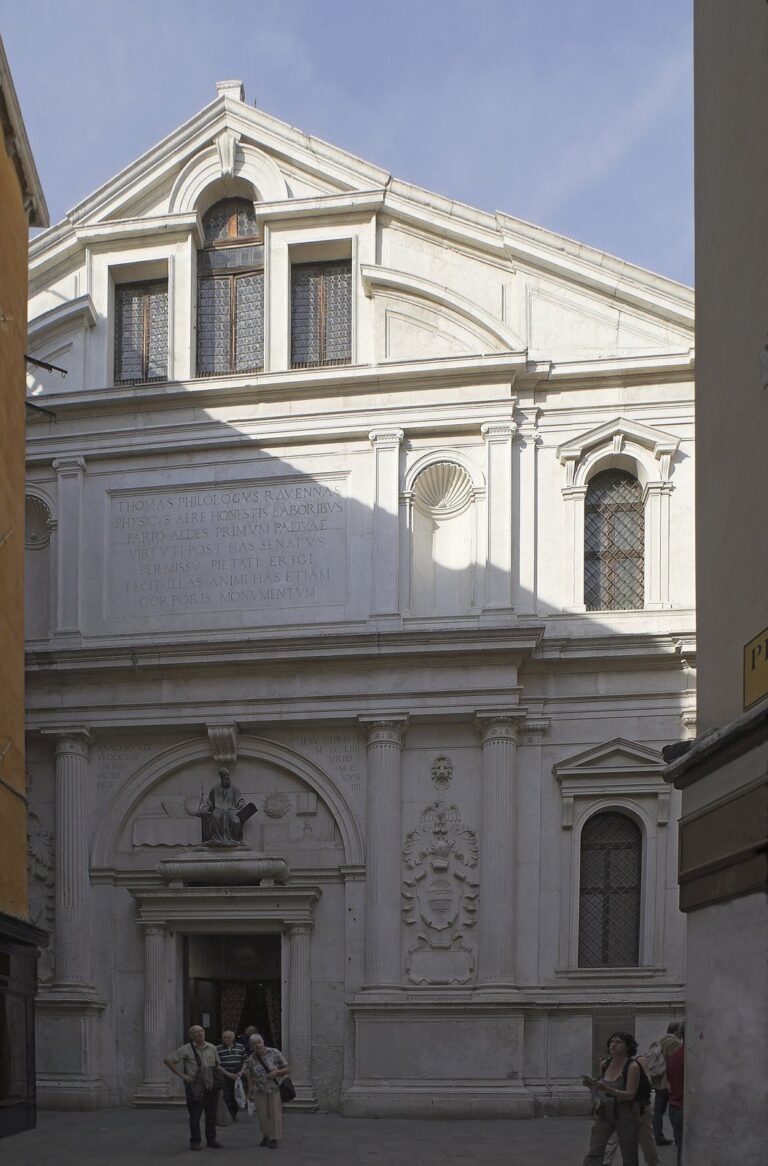
The building is Renaissance in style. Inside, a single nave, the main body of the church, has a flat ceiling and contains three altars.
Facade
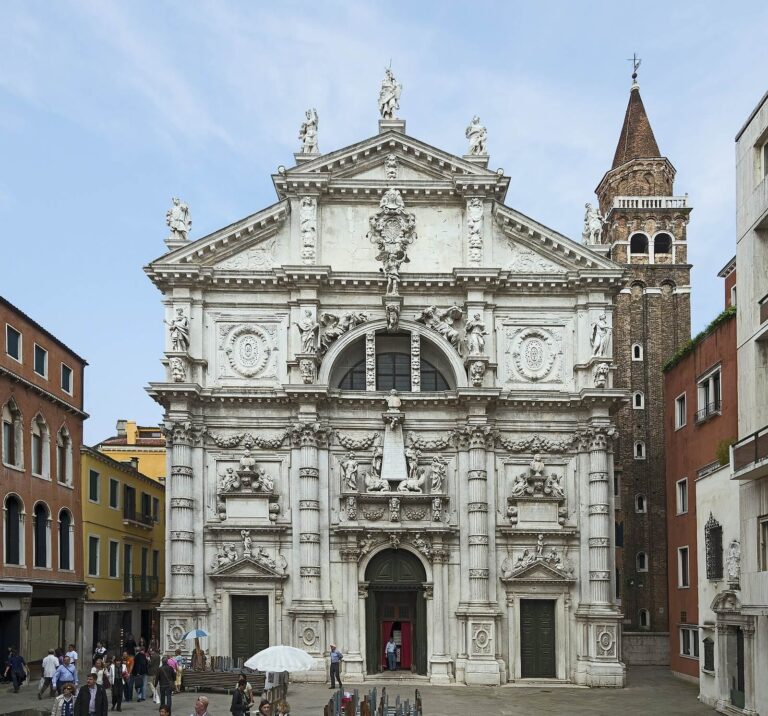
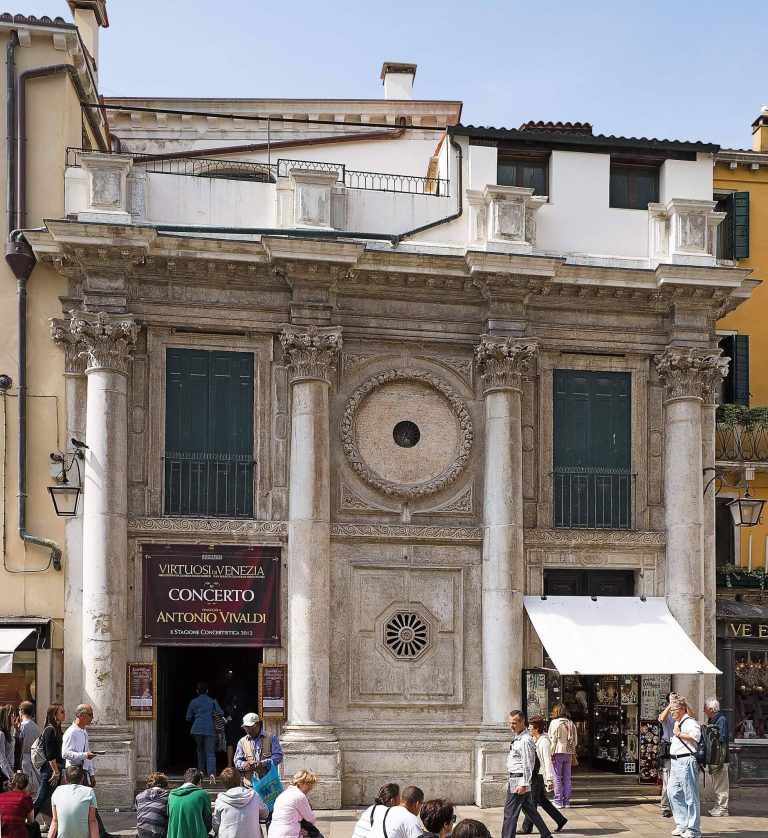
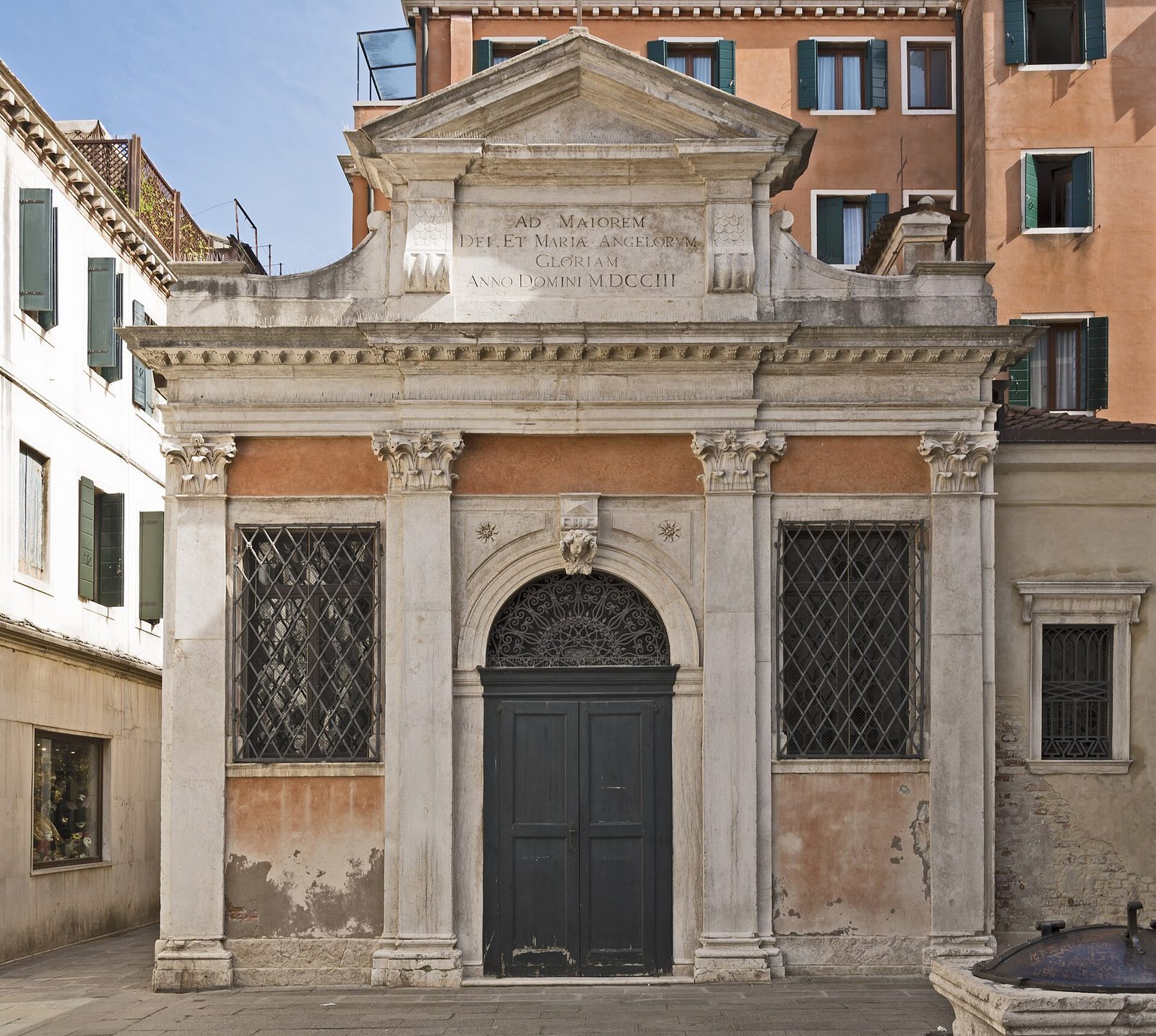
The facade is arranged around a portal and two side windows. Corinthian pilasters, shallow column-like features with leaf-decorated capitals, divide it into three sections and support a cornice, or projecting horizontal molding. Above this is a triangular pediment, the upper section of the facade, with a tympanum, its central enclosed area, and volutes, spiral scroll forms, at the sides. An inscription below the pediment reads, “For the greater glory of God and Mary of the Angels, in the year of our Lord 1703.”
Interior and altars
Three small wall altars contain the church’s original statues. Their dedications and associated artworks reflect the oratory’s devotional history.
Principal altar
The principal altar’s painting, The Redeemer between Saint Gall and Saint Mark, depicts those three figures. It is attributed either to the Venetian painter Jacopo Tintoretto or to Bonifazio Veronese, a painter of the Venetian Renaissance. The painting is now in the Diocesan Museum of Sacred Art at Sant’Apollonia.
Left altar
The left altar is dedicated to Saint Veneranda and was associated with an eighteenth-century ivory crucifix and a small painting of the saint.
Right altar
The right altar is dedicated to Our Lady of Good Counsel, a devotional title of the Virgin Mary. It has a small picture in an elaborately carved frame.