Chiesa della Madonna del Pilone: A Baroque Sanctuary in Turin
Site at a Glance
- Country
- Italy
- Primary era
- Early Modern
- Eras represented
- Early Modern, Modern
- Civilizations
- Duchy of Savoy, French, Kingdom of Sardinia
- Site type
- Religious
- Remains
- Sanctuary
On this page8 sections
History
The pillar and the sanctuary
The Chiesa della Madonna del Pilone is a Baroque Catholic sanctuary in Turin, Italy. Construction began in 1644 around a votive pillar, a religious monument dedicated as an offering, associated with devotion to the Virgin Mary. Baroque was a European artistic and architectural style especially associated with the 17th and 18th centuries.
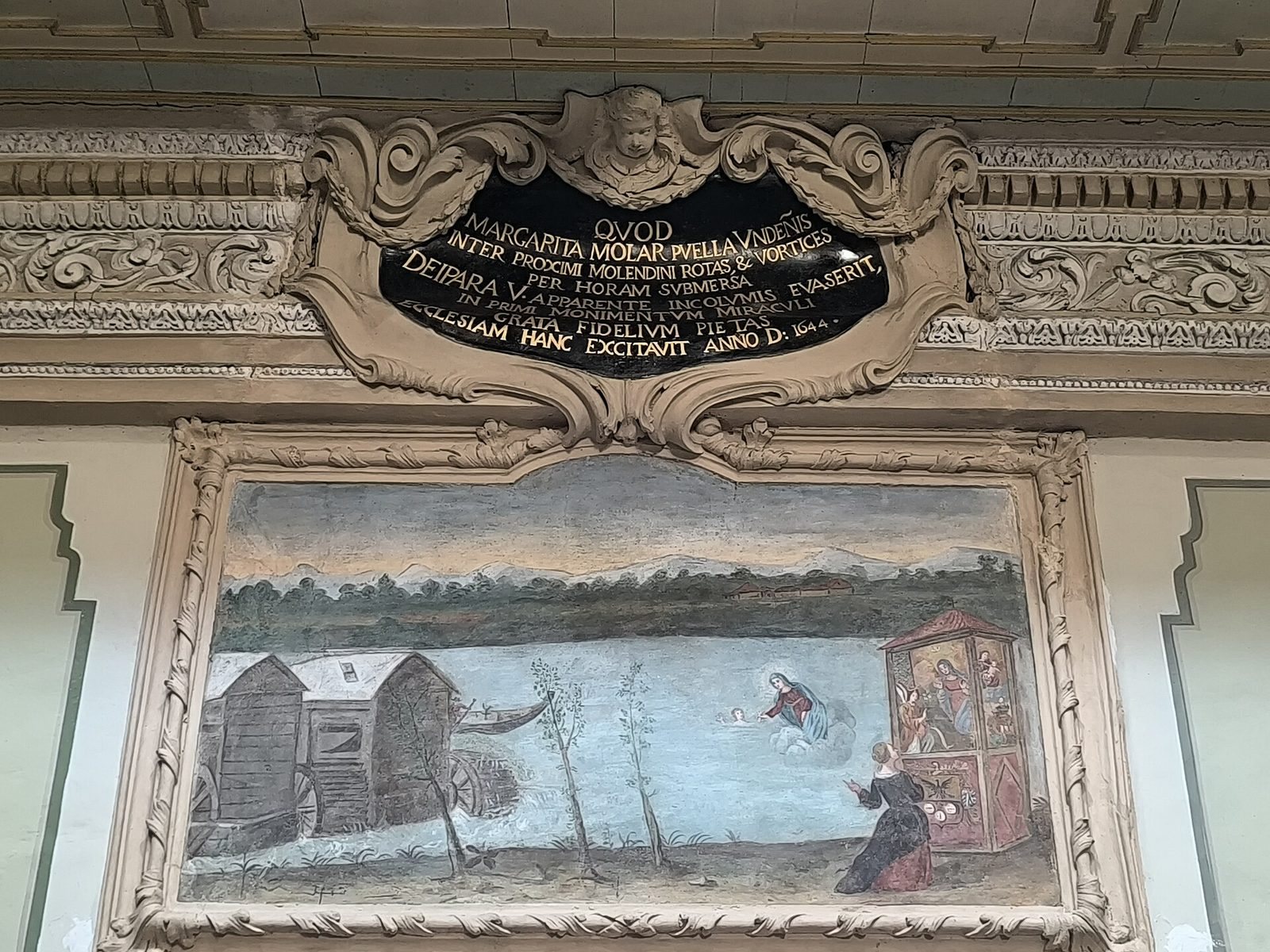
The story of the sanctuary began beside the Po, where a pillar bearing an image of the Annunciation was erected in 1587. A small mill, known as the Mill of the Chains, and a chapel stood nearby. On 29 April 1644, eleven-year-old Margherita Molar, the miller’s daughter, fell into the river. Her mother prayed before the pillar, and Margherita was rescued. Tradition held that a miraculous light guided rescuers and that Margherita was lifted from the whirlpools and brought to safety by boat.
Offerings from the faithful and the urging of Christine Marie of France, then regent of Savoy, led to the sanctuary’s construction. It opened for worship on 25 March 1645. Christine Marie provided a fine-marble high altar and valuable furnishings.
Pilgrimage and papal affiliation
The sanctuary drew devotees from the House of Savoy, the ruling dynasty of Savoy and later Sardinia. Among them were Prince Maurice of Savoy, a cardinal, and Maria Giovanna Battista, duchess and regent of Savoy. Anne of Orléans, a French princess and duchess of Savoy, made foot pilgrimages at least weekly in 1697 and 1698, praying for a male heir. A son was born in May 1699. Prince Thomas Francis of Savoy and his son Emmanuel Philibert also showed deep devotion. Emmanuel Philibert visited almost daily for many years, sometimes with his wife, Maria Caterina d’Este.
Devotion following the 1644 rescue and other prodigies attributed to the Madonna of the River led to a spiritual affiliation with the Basilica of Saint Mary Major in Rome. Papal bulls, formal documents issued by popes, granted the affiliation in 1741 under Clement XII and Benedict XIV. After it lapsed, it was renewed on 25 February 2019 at the request of parish priest Gianni Tesio. Under the renewed arrangement, worshippers who meet specified conditions on designated occasions may receive a plenary indulgence, a remission of temporal punishment for sins whose guilt has been forgiven. The sanctuary also shares the basilica’s present and future privileges.
Expansion, parish use and later history
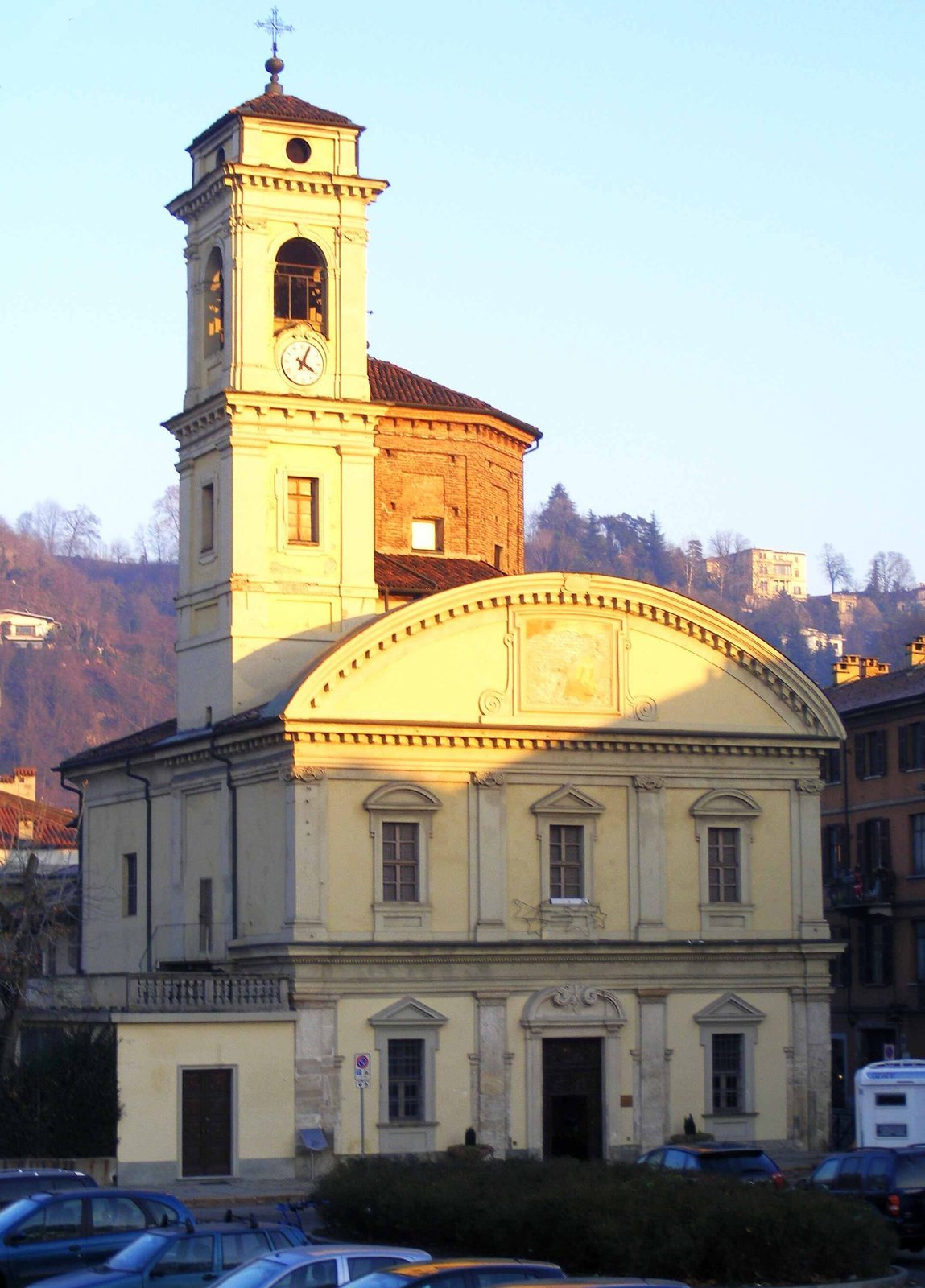
The church was enlarged in 1779. Napoleonic troops damaged it during the siege of Turin, and a bell tower was added in 1787. It became a parish church on 2 March 1807, when a baptistery was added; the choir dates to 1817. The parish belongs to the Roman Catholic Church and the Archdiocese of Turin, a major Catholic jurisdiction led by an archbishop, and follows the Roman rite, the principal liturgical tradition of the Latin Church.
Restoration work in 1925 and the 1960s altered the interior. In November 1994, flooding from the Po inundated the church and the square in front of it, causing serious structural damage. A major renovation followed. The sanctuary also gave its name to the surrounding Turin neighborhood.
Remains
Architecture and interior
Plan and exterior
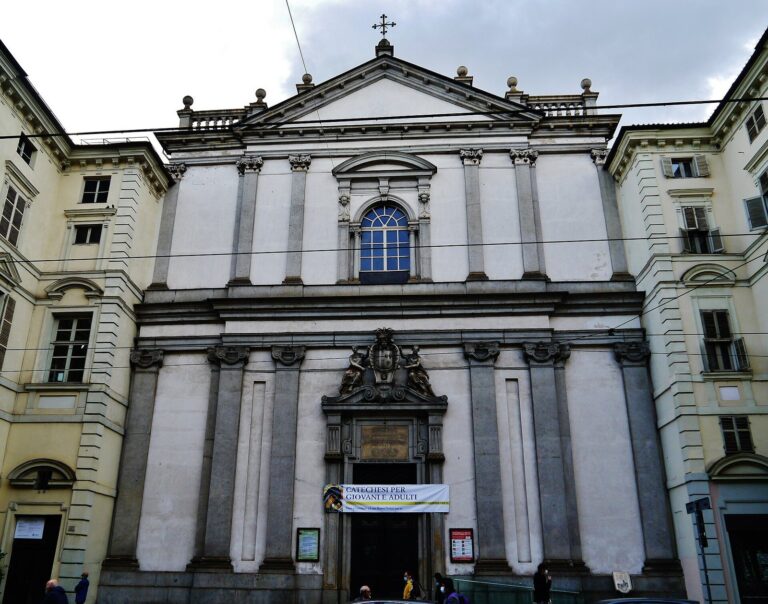
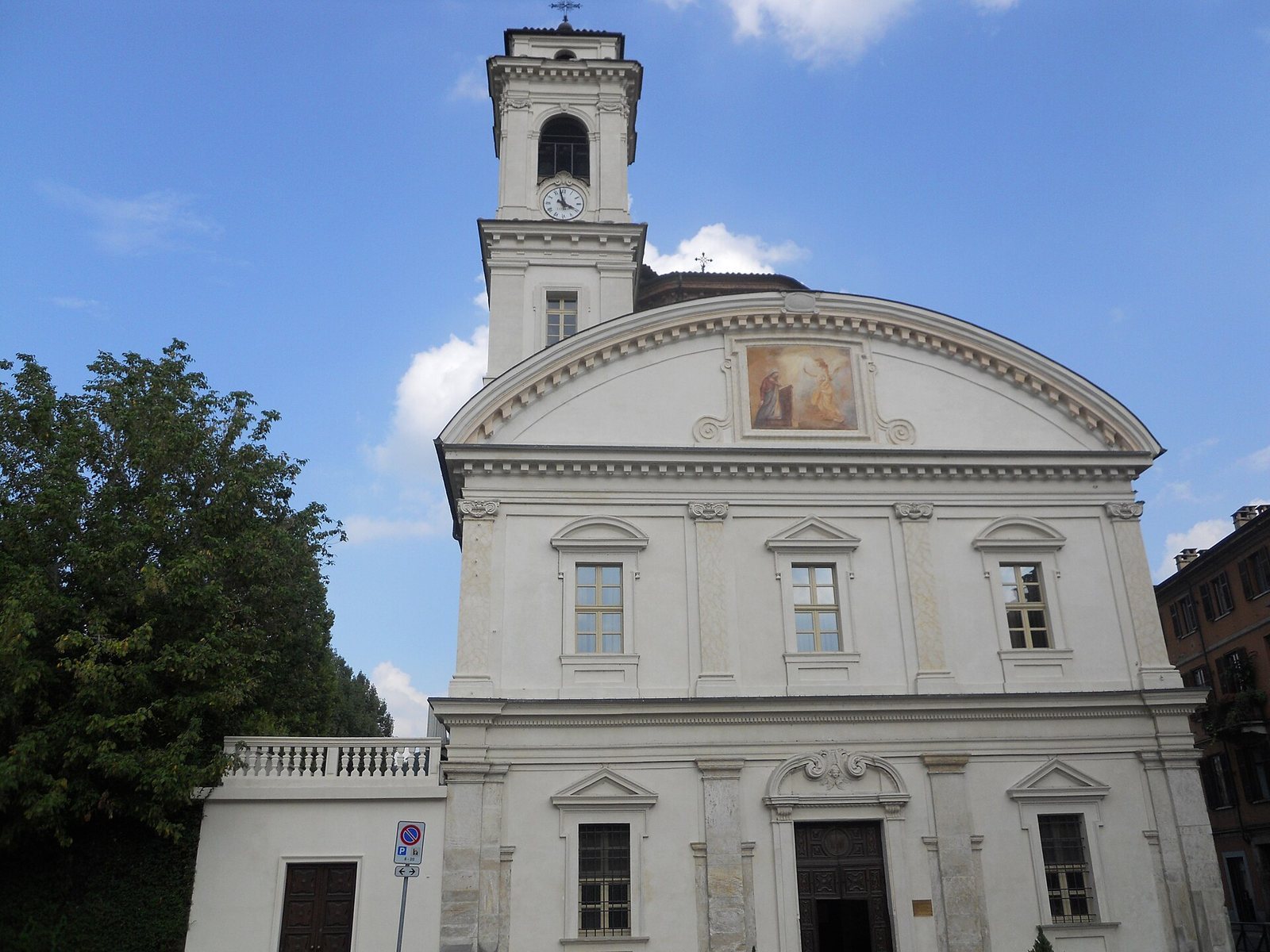
The Baroque church incorporates the votive pillar. Its façade follows the Castellamonte school, a local Baroque architectural tradition associated with the Castellamonte family of architects, and is topped by a semicircular pediment, the decorative upper section of a façade. Inside, a single nave (the main central space) is flanked by two side chapels. The dome rests on an octagonal drum, the upright section that supports a dome. The building also includes a bell tower, baptistery and choir.
Altar and decoration
The fine-marble high altar stands before the 16th-century image of the Annunciation. Restoration work in 1925 and the 1960s repainted the image. Surviving stucco decoration is attributed to Giovanni Andrea Casella, while paintings on the dome are attributed to Bartolomeo Guidobono. Giovanni Antonio Maro also worked on the church’s original decorative scheme.