Church of St. John Chrysostom, Vologda: A 17th-Century Orthodox Church
Site at a Glance
- Popularity
- Low
- Country
- Russia
- Primary era
- Early Modern
- Eras represented
- Early Modern
- Civilizations
- Russian
- Site type
- Religious
- Remains
- Church
On this page9 sections
History
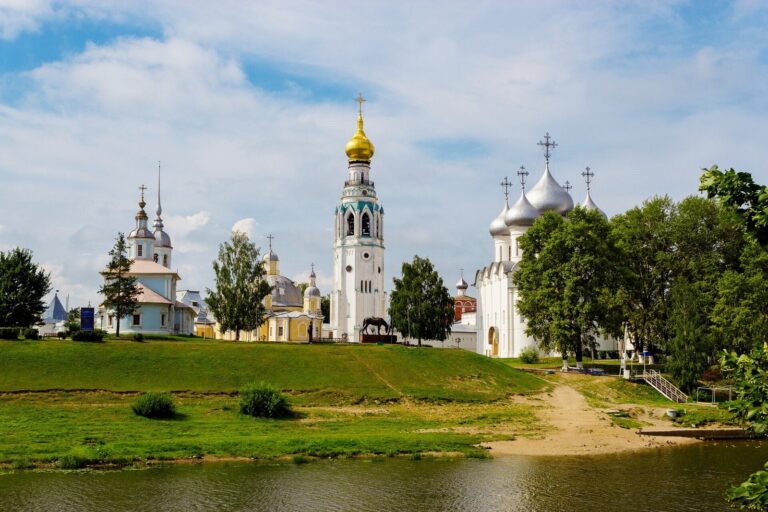
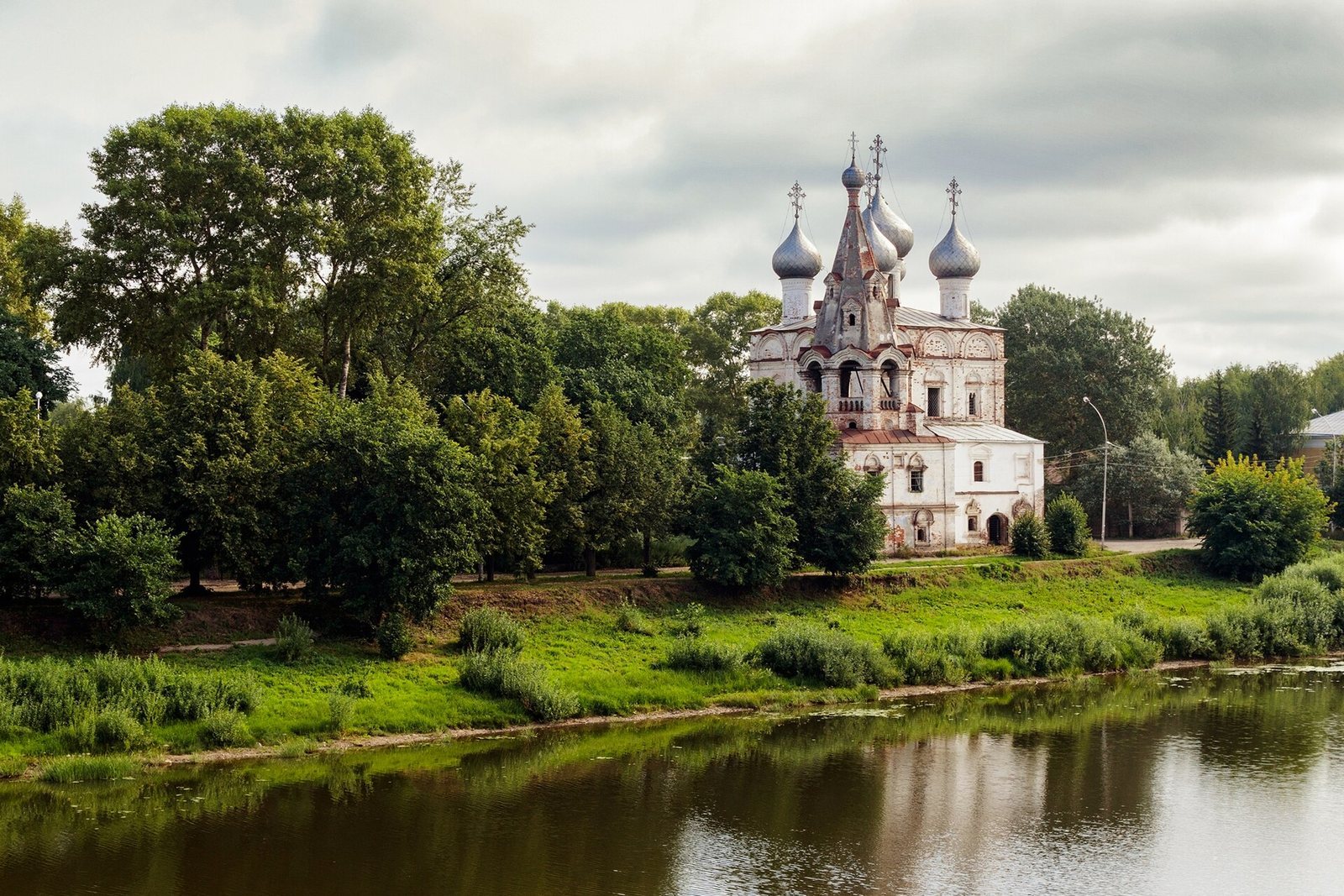
The Church of St. John Chrysostom is a Russian Orthodox church on the Vologda River embankment in Vologda, Russia, opposite St. Sophia Cathedral. Its construction is dated to 1664. The building reflects a local practice of combining a warm church, heated for winter worship, with a cold, unheated church generally used in summer.
Origins and worship
The lower altar was dedicated to St. John Chrysostom, a fourth-century Christian theologian and archbishop of Constantinople known for his preaching. The upper altar was dedicated to the Myrrh-bearing Women, who in Christian tradition came to Christ’s tomb to anoint his body. These dedications gave the building its occasional double name, the Church of St. John Chrysostom and the Myrrh-bearing Women.
A wooden church dedicated to the Myrrh-bearing Women may have stood on the site before the present building. Fifteenth-century manuscripts name the Myrrh-bearing Third, an urban quarter in Vologda’s riverside area.
Repression and military use
The church’s clergy faced repression in the 1920s. In April 1926, its rector, Archpriest Anatoly Popov, was arrested and sent to a labor camp. On 30 January 1930, the agreement that allowed the church community to use the building was terminated. The buildings passed to the military authorities that year and were used for storage, a use that may have helped preserve architectural and artistic features. A 1960 decree designated the church a cultural heritage monument of federal significance in Russia.
Return to worship
The church returned to worshippers in the early 2000s and has since served as an affiliated church of the Church of the Intercession at the Market, named for an Orthodox feast commemorating the Virgin Mary’s protection. A charity established in 2010 supported construction and restoration work. On 25 June 2014, Bishop Ignatius of Vologda and Veliky Ustyug ordered the establishment of a parish within the Russian Orthodox Church’s Vologda Diocese, a regional church district. Priest Alexey Kalin was appointed rector, and the church is active.
Remains
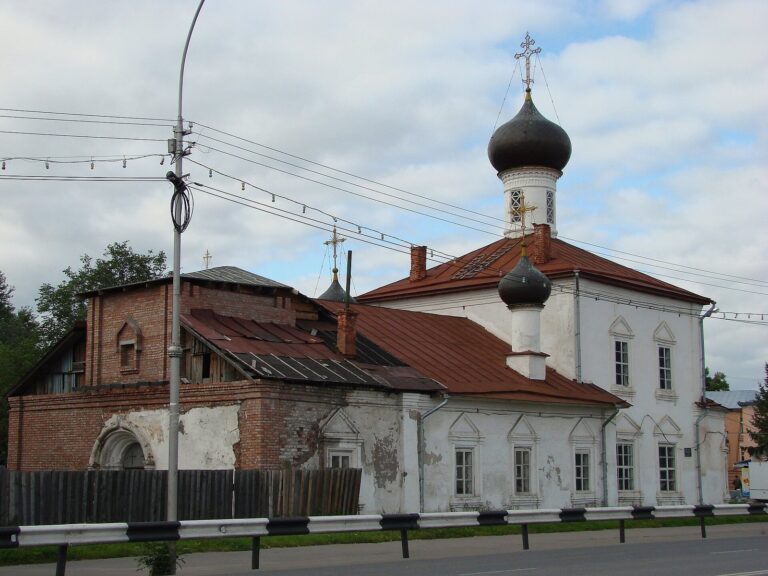
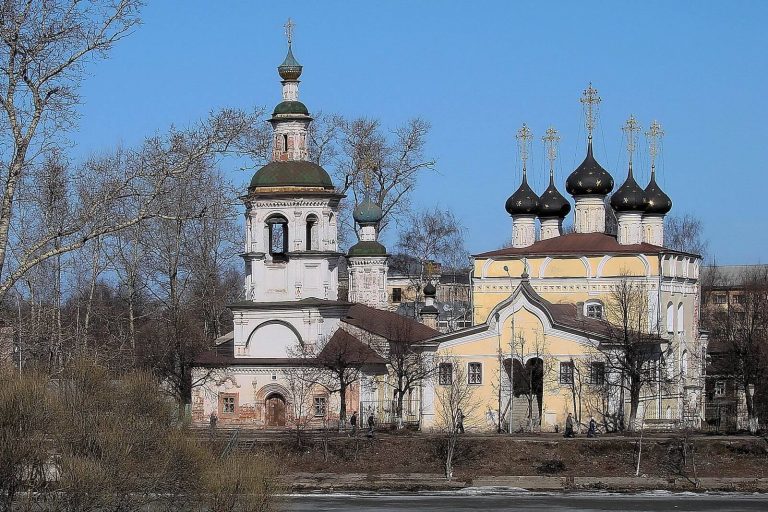
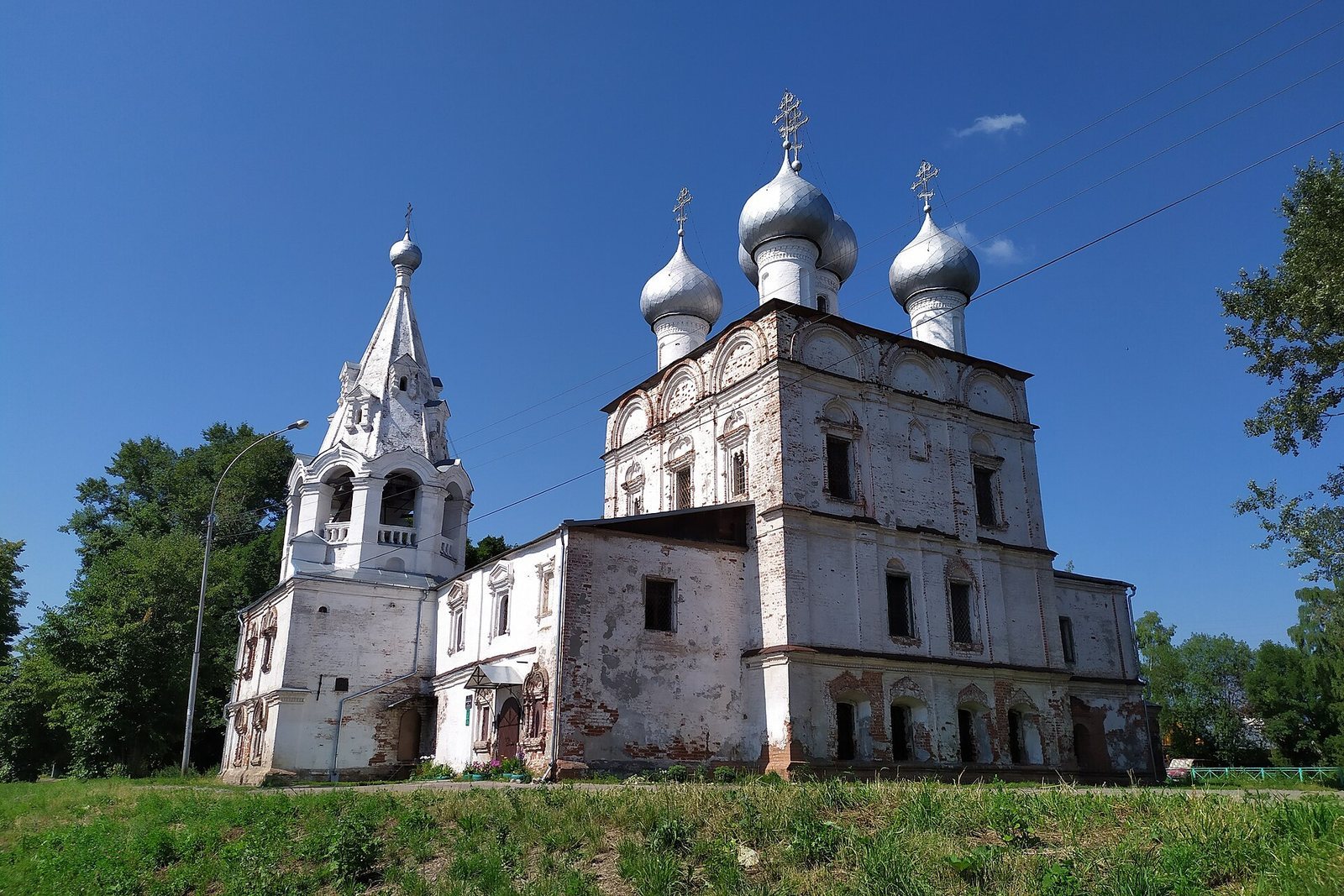
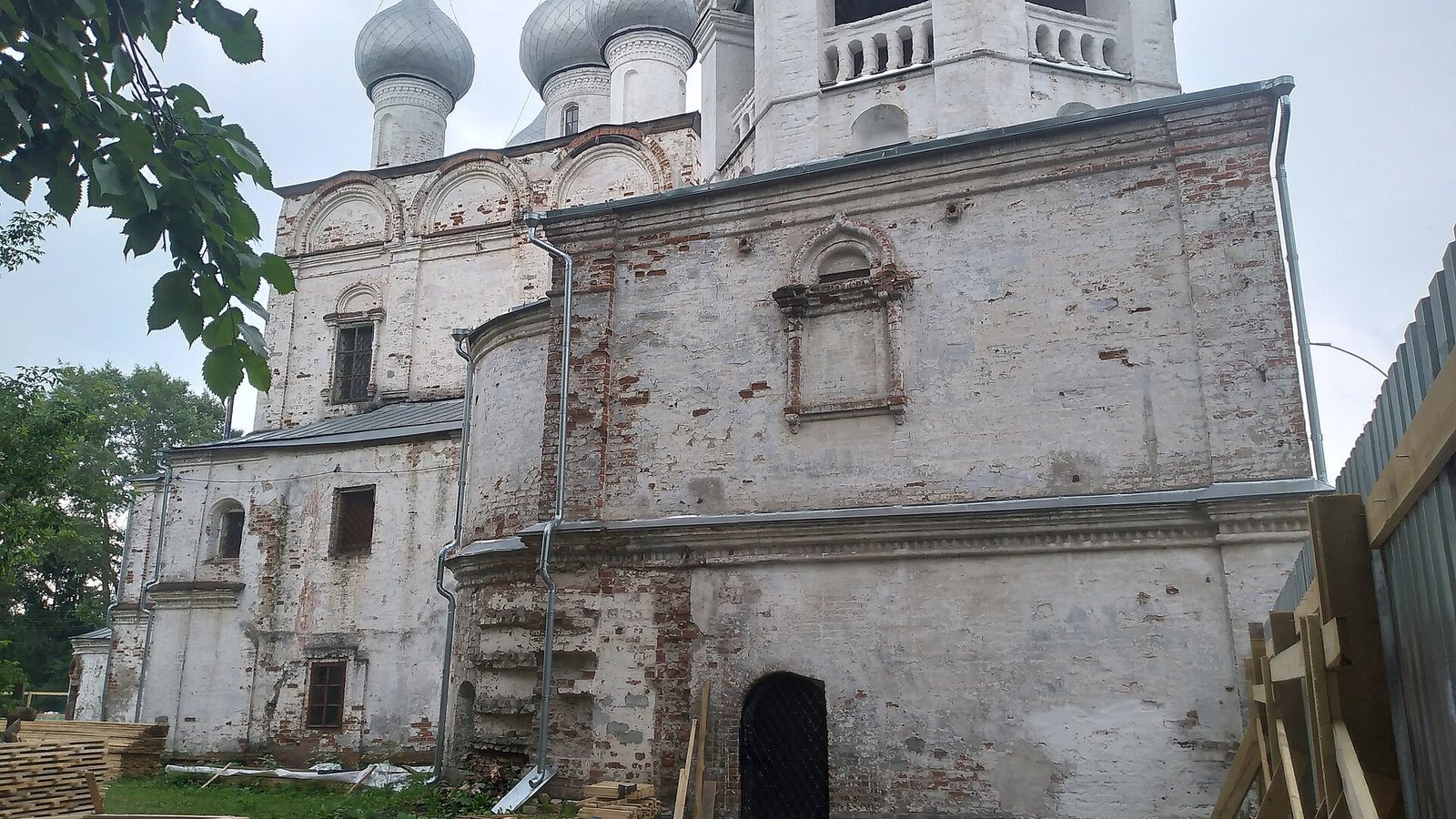
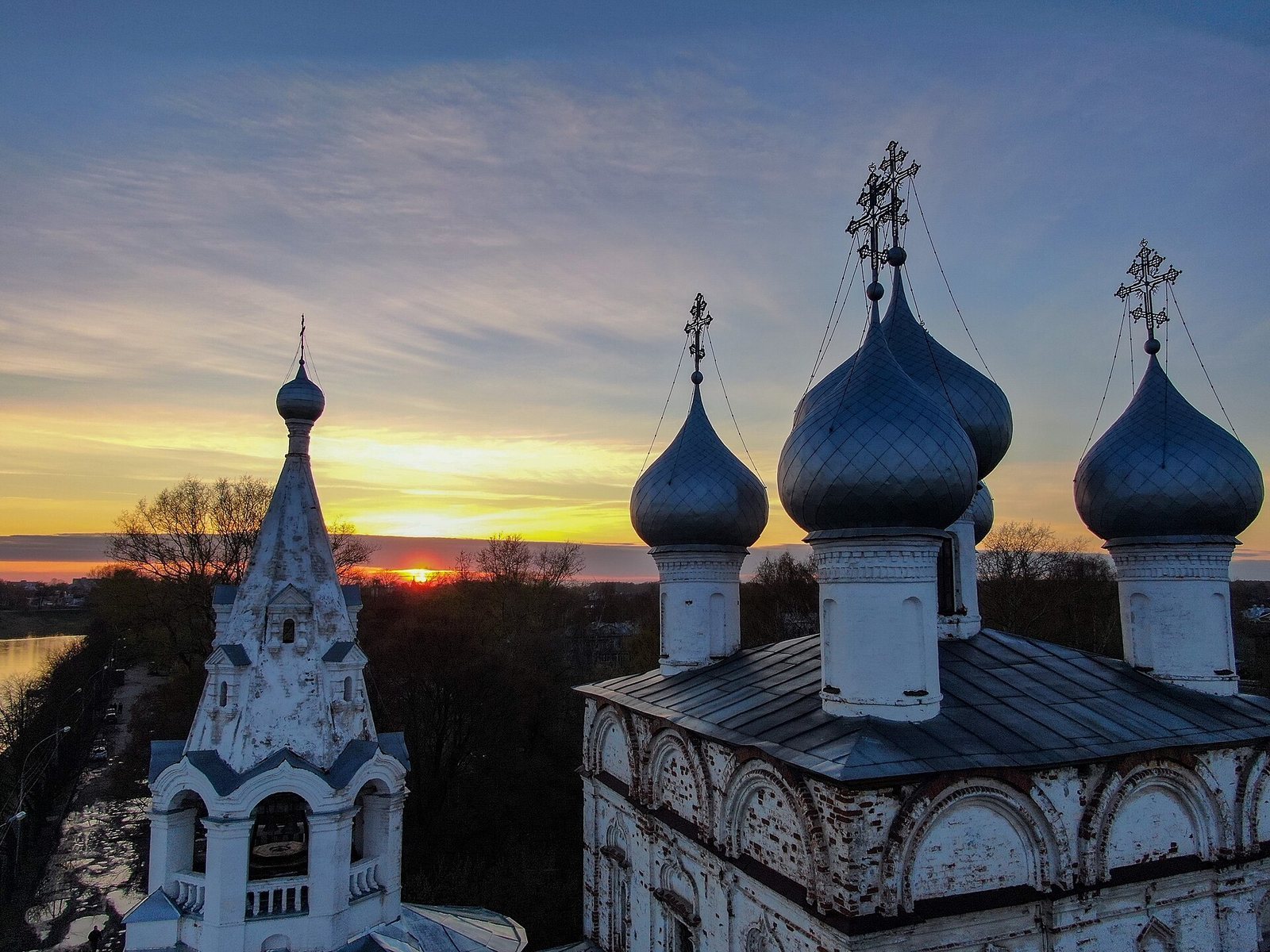
Standing on the Vologda River embankment opposite the city’s historic St. Sophia Cathedral, the brick church is raised on a basement level. Its two-tiered, five-domed square main volume is flanked by galleries on the north and west, while a tent-roofed bell tower rises at the northwest corner.
Church architecture
Main volume
The main church has a low, cubic form. A cornice divides the wall from curved, gable-like shapes along the roofline, and the windows are framed by ornamental surrounds. The upper church retains part of its stucco and painted interior decoration.
Bell tower
The tower’s broad, massive square base supports a narrower, eight-sided bell chamber. Its pyramidal stone tent roof has dormer openings arranged in two rows. The upper part’s more slender proportions contrast with the weighty lower section. Both parts were built at the same time; the masonry, stucco decoration, and ornamental forms point to a date before the eighteenth century.
Relics
A small portion of the relics of Alexander of Svir is kept in the church. He was a Russian Orthodox monk and saint of the fifteenth and early sixteenth centuries, associated with the Monastery of the Holy Trinity at Svir.