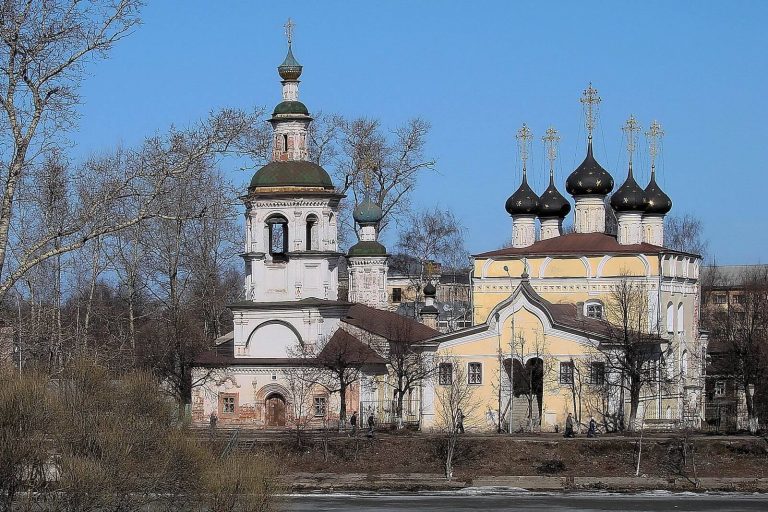
Church of Elijah the Prophet: A 17th-Century Orthodox Church in Vologda
Site at a Glance
- Popularity
- Low
- Country
- Russia
- Primary era
- Early Modern
- Eras represented
- Early Modern
- Civilizations
- Russian
- Site type
- Religious
- Remains
- Church
On this page9 sections
History
The Church of Elijah the Prophet is an Orthodox church in Vologda, Russia, built in stone in 1698 after a wooden predecessor and once part of the men’s Elijah Monastery. It is dedicated to Elijah, the biblical prophet venerated as a saint in Eastern Orthodoxy. The monastery’s foundation date is unknown, but it was established by the mid-16th century, during the reign of Ivan IV, commonly known as Ivan the Terrible and the first Russian ruler crowned tsar.
The monastery and the early 17th century
The monastery was small and poor. Traditions connect its foundation with a pagan sanctuary of Perun, a major Slavic deity associated with thunder. Another story links the area’s name to a stone pagan idol and a shrine said to have stood at the monastery. Neither tradition has reliable supporting evidence.
The church stands in an elevated district of Vologda, near the northern end of the old city boulevard. The area was known as Kamenye and as “in the hills.” Kamenye is thought to refer to limestone stockpiled for Ivan IV’s planned stone wall around the Vologda Kremlin. Historian I. K. Stepanovsky described the reserve as extending from the river toward Vladimir Church and proposed building sites. Supplies remained in the area into the late 18th or early 19th century, and some unused stone gradually sank into the ground.
Merchant Kondraty Akishev began supporting the monastery in 1610 and helped repair and rebuild it. Polish-Lithuanian forces invaded Vologda in September 1612, and the city was devastated in 1613. The monastery was looted and its cells burned. Its heated church of Varlaam of Khutyn, a Russian Orthodox monk and saint associated with Novgorod, was also burned, while the unheated wooden church of Elijah survived.
Akishev supported further rebuilding after the devastation. A new church of Varlaam, monastic cells, and a wooden enclosure were constructed. He also acquired land for the monastery and donated shops and stables.
Stone church and parish use
The wooden Elijah church had stood for about 90 years and had become dilapidated when it was replaced with the present stone building in 1698. The monastery was suppressed in 1738, when only an abbot remained and there was no brotherhood. The Elijah church then became a parish church.
The church in the 20th century and today
In the early 1920s, the church passed to the Renovationists, a reform movement within the Russian Orthodox Church that emerged during the early Soviet period. In 1924, parishioners removed the Renovationist priest Alexander Sakharov and unanimously elected Archpriest Alexei Uglitsky, formerly of the Assumption Monastery, who supported the patriarch.
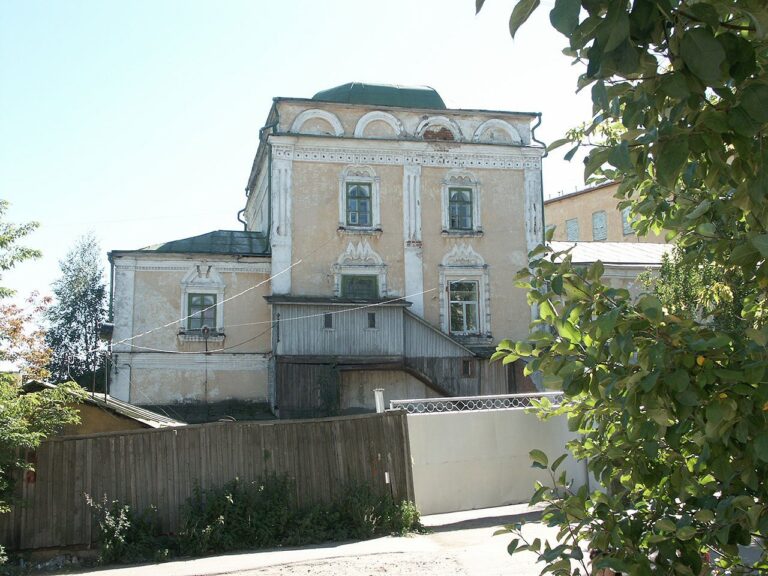
Vologda authorities ordered the church closed for worship on 24 February 1930. Its ancient icons were transferred to museum collections. The building was subsequently used as an archive, restoration workshops, and book storage, including from the 1950s through the 1970s. A decree of 30 August 1960 placed the former monastery’s church ensemble under federal-level state protection.
Restoration work took place in the 1990s and again in the 2000s. The church is active today and also houses the All-Russian Art Research and Restoration Center named after Academician I. E. Grabar.
Remains
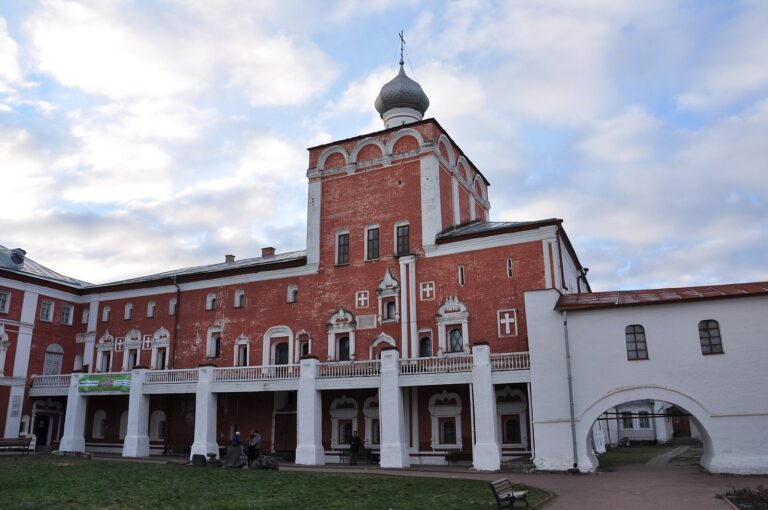
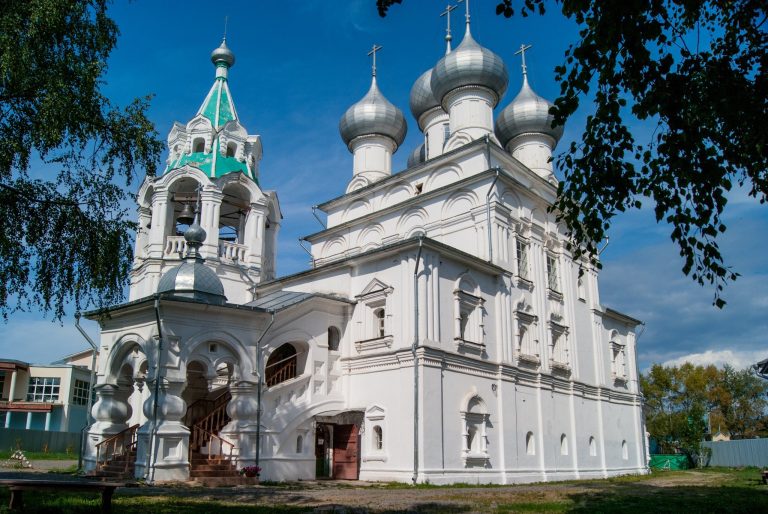
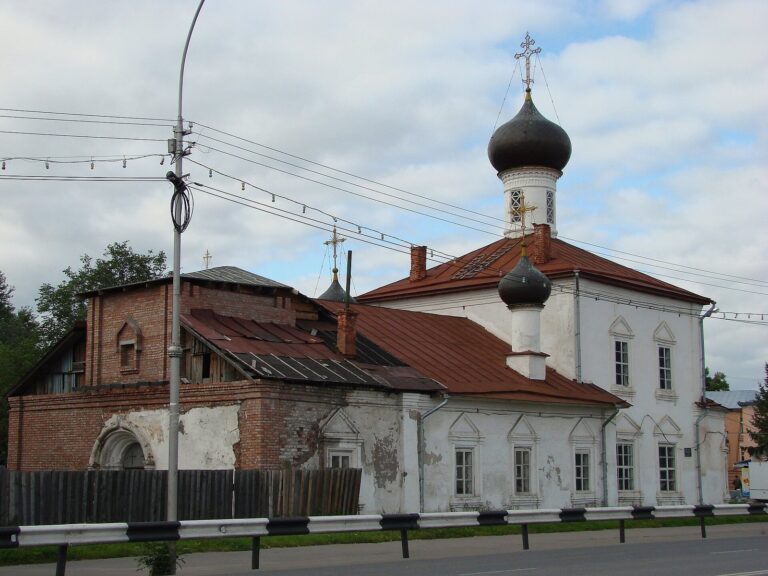
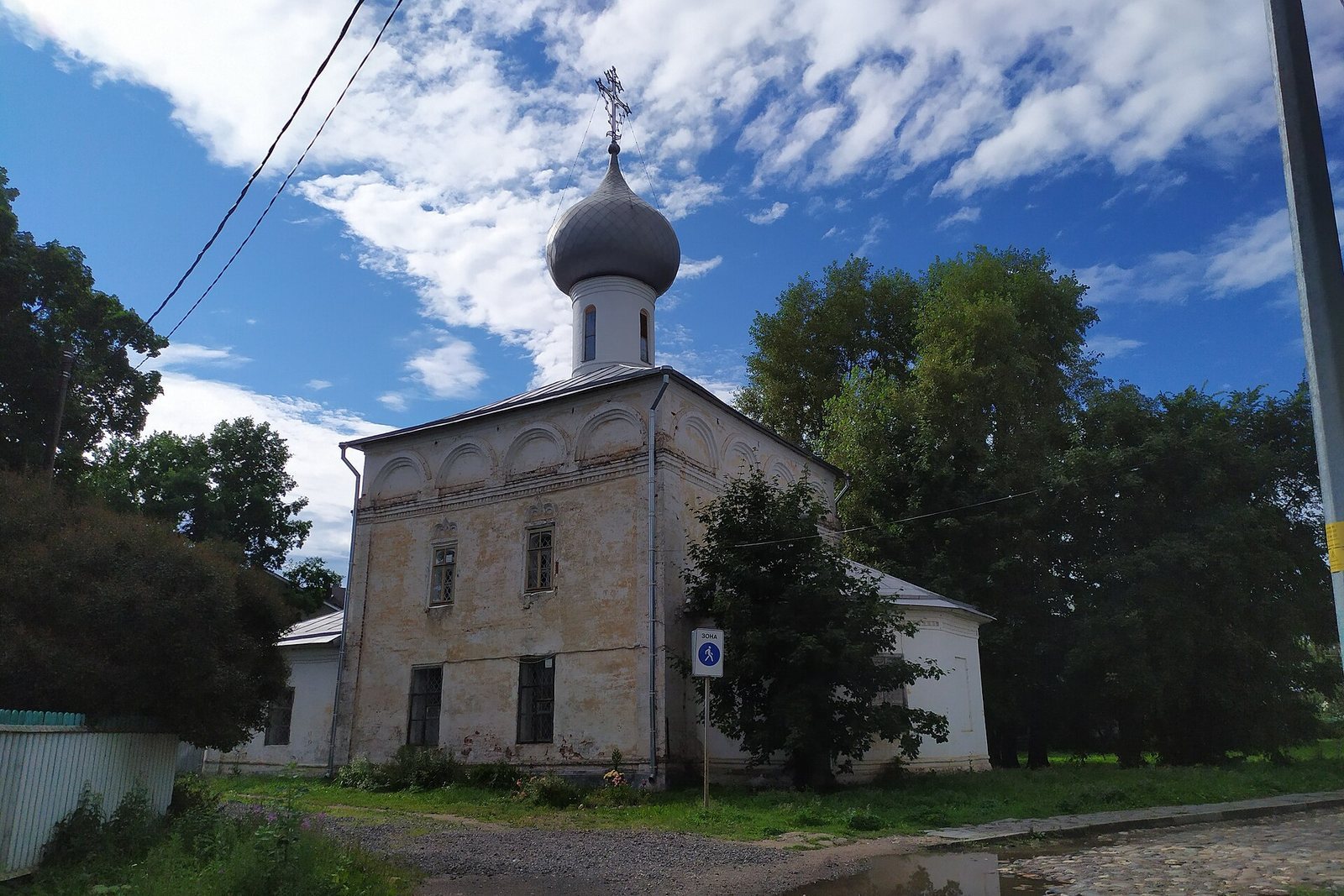
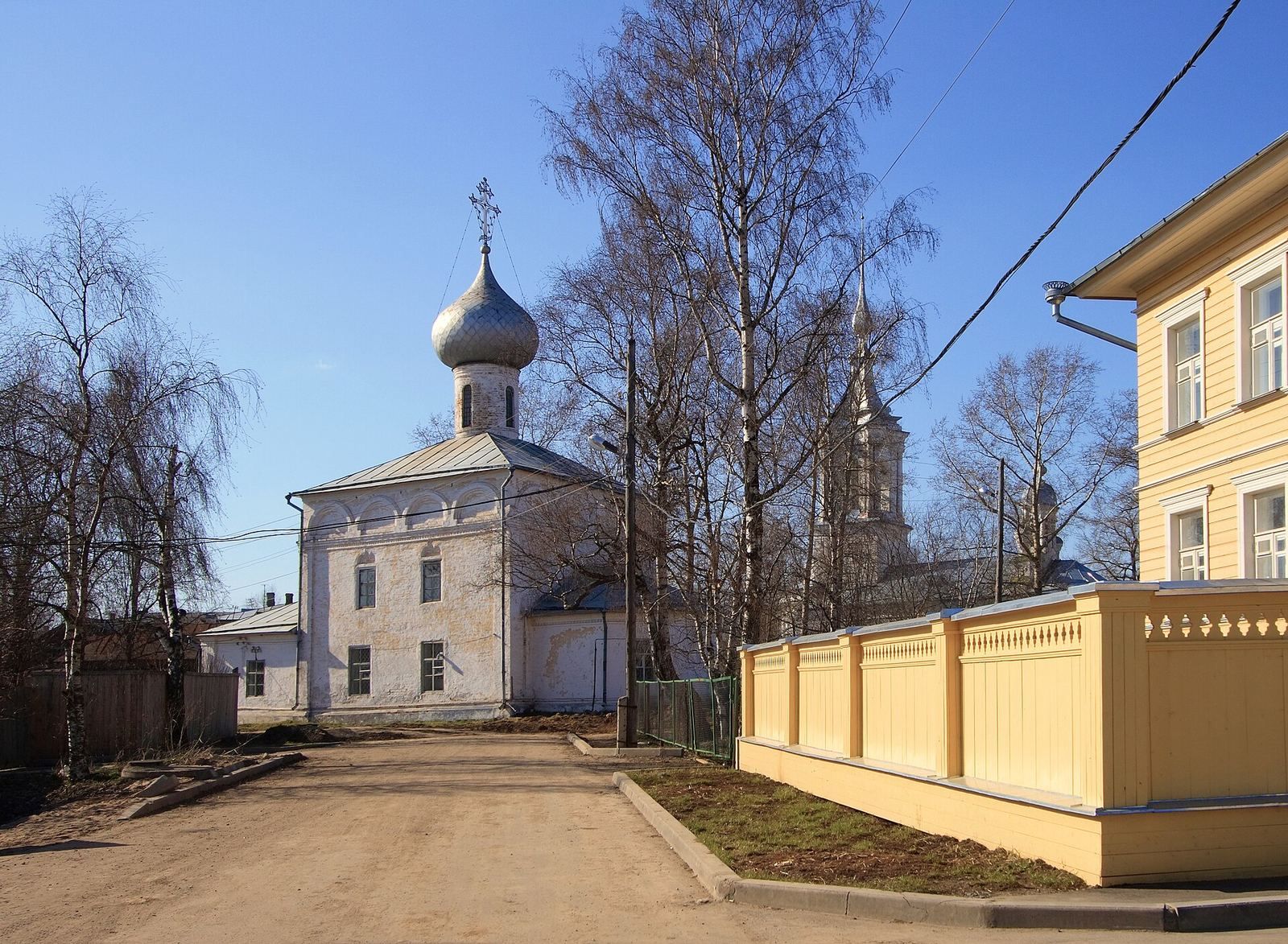
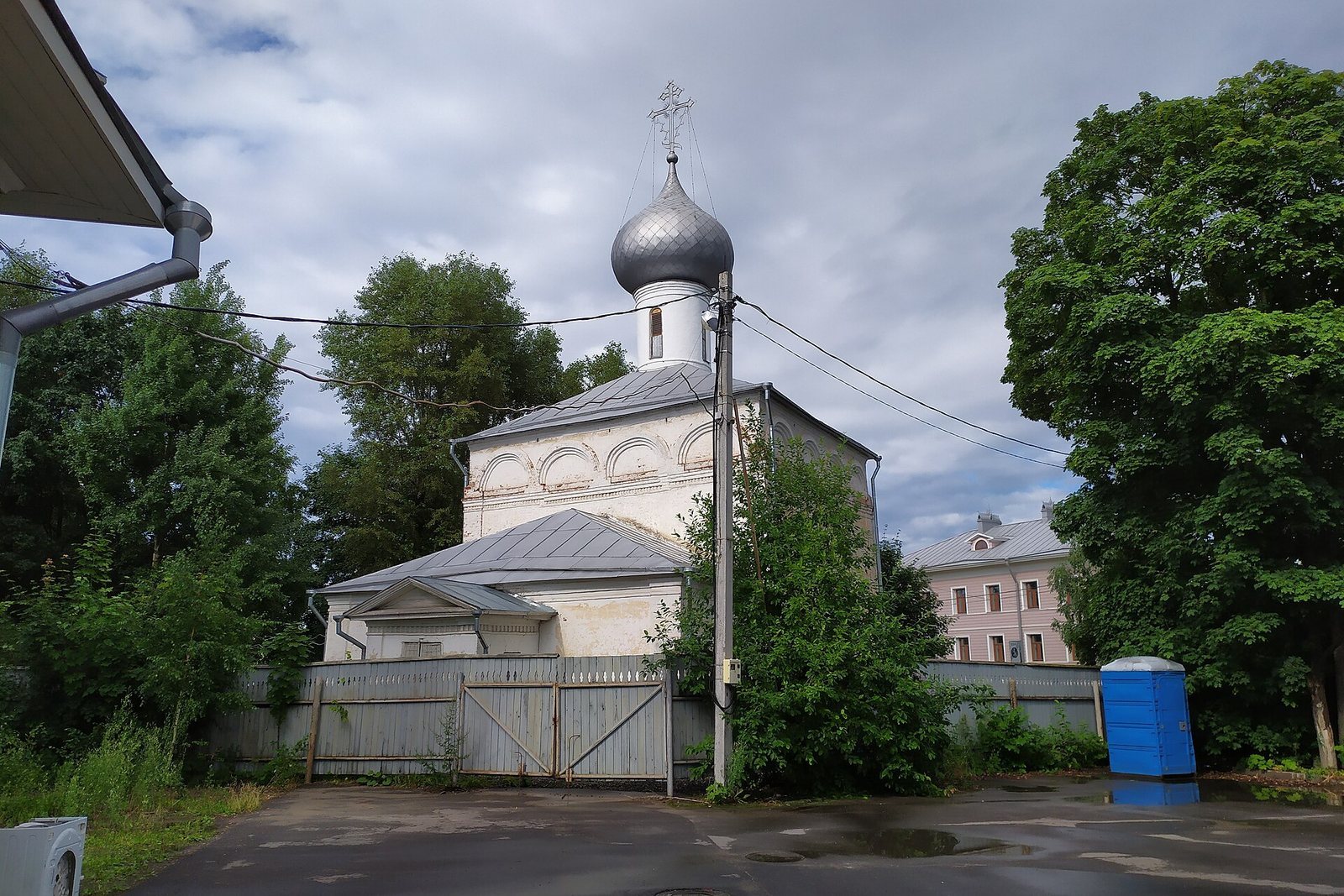
The former monastery’s church ensemble includes two stone buildings. The Church of Elijah is a small structure with a cubic main volume, one storey of double-height space, a single dome, a five-sided apse projecting from the altar end, and a short refectory, or communal dining room. The separate stone Church of Varlaam of Khutyn, built in 1780, is also part of the ensemble.
The exterior
Shallow vertical bands, or pilaster strips, mark the corners of the Elijah church. Its walls have a plain cornice, decorative arched forms called kokoshniks, and curved wall tops called zakomaras, shaped to follow vaults. A simple roof carries the single cupola. The apse was rebuilt in 1904.
Interior and icons
The iconostasis
The church has one altar dedicated to Elijah. Its iconostasis, the screen of icons separating the sanctuary from the main body of the church, was in place when worship ended in 1930 and was built in the second half of the 18th century. Divided into two vertical halves, it arranges images in squares of different sizes. The center of the right half shows the Descent of Christ into Hades, surrounded by 50 small panels depicting events from the Gospels. The left half contains a Jesse tree, a depiction of Christ’s genealogy, and nine smaller panels representing the Twelve Great Feasts, major annual observances in the Eastern Orthodox calendar.
Icons and inscription
An icon beside the central Royal Doors, the iconostasis’s central doors, was identified as an image of Mid-Pentecost, an Orthodox feast observed halfway between Easter and Pentecost. Another icon showed Elijah with scenes from his life and was regarded as very ancient in style. A local icon of the Resurrection of Christ was positioned on the south wall beside the right choir.
The Resurrection icon’s inscription dates it to 1568 and names its painter as Dmitry, son of Grinkov. It places the work in the reign of Ivan IV, under Metropolitan Philip and Joseph, Bishop of Perm and Vologda, and says it was installed in a church dedicated to Elijah and Varlaam.