Duomo di San Cassiano: The Co-Cathedral of Comacchio
Site at a Glance
- Popularity
- Medium
- Country
- Italy
- Primary era
- Early Modern
- Eras represented
- Early Modern, Modern
- Civilizations
- Italian, Papal States
- Site type
- Religious
- Remains
- Cathedral
On this page15 sections
History
The Duomo di San Cassiano is the Roman Catholic co-cathedral of Comacchio, Italy, dedicated to Saint Cassian of Imola. Its present building, in the Baroque style, a European artistic and architectural tradition associated especially with the seventeenth and eighteenth centuries, dates to 1694–1720. The church follows the Roman Rite, the principal liturgical tradition of the Latin Church, and continues a long history as Comacchio’s principal church.
From the first cathedral to the medieval church
The first cathedral on this site was built in 708 under Bishop Vincenzo, during the Byzantine Exarchate, an Italian territory governed for the Byzantine emperor by an exarch. It became the seat of Comacchio’s bishop, and the town remained an episcopal see, or the center of a bishop’s diocese, for more than a thousand years.
The cathedral was remodeled in the thirteenth century in the Gothic style, a form of medieval architecture. It had three aisles, or lengthwise divisions, supported by rows of marble columns. The capitals at the tops of the columns bore the city emblem, described as a flounder.
The Baroque replacement
Age and the continuing need for repairs led to a decision to replace the cathedral in 1659. On 25 March that year, Bishop Sigismondo Isei laid the new church’s cornerstone. Cardinal Legate Giuseppe Renato Imperiali, a cardinal serving as the pope’s representative, promoted the project. More than 35 years passed before work began on the foundations and masonry. The earlier cathedral was demolished in 1694, and the replacement followed its original Baroque design.
Bishop Giovanni Cavedi consecrated the new church on 12 April 1740. Its dedication to Saint Cassian of Imola, a Christian martyr, has remained central to its identity.
Cathedral status and chapter
Pope John XXIII raised the church to the rank of minor basilica in 1961, an honorific title granted by the pope. It had formerly been the seat of the bishops of Comacchio. After the Diocese of Comacchio was incorporated into the Archdiocese of Ferrara-Comacchio in 1986, the church became a co-cathedral, sharing cathedral status within the archdiocese. It houses the archives of the Bishopric of Comacchio, the cathedral chapter, and the archpriesthood.
Traditional canonical titles, formal church designations associated with endowed offices, included Saint Cassian the Martyr for the archpriesthood and Saint Pius V for the archdeaconry. Saint John Nepomuk’s title was normally assigned to the penitentiary, a church official authorized to hear certain confessions and grant absolution. Other titles honored Saint Jerome, Pope Saint Clement, Saint Francis of Paola, Saint Christopher, Saint Anthony, the Blessed Sacrament, the Holy Rosary, Saint Joseph, and Saint Gertrude. The now-disused mansionary titles, held by clergy assigned particular cathedral benefices, were Saint Gregory the Great and Saint Damasus.
Cathedral dignitaries held the title of monsignor and carried a handheld liturgical candle. A papal brief dated 22 September 1814 set out the archpriest’s prelatial dress, while a letter of 28 February 1835 concerned the archdeacon. Canons wore a purple mozzetta, a short shoulder cape, over a rochet, a liturgical garment with red silk cuffs. The cape was wool in winter and silk in summer. Mansionaries wore a black wool cape edged and fastened with purple, lined in purple silk, over a surplice, a liturgical garment.
Excavations in the cathedral’s immediate surroundings in 2006 recovered artifacts that were displayed in the 2009 exhibition The Bishop’s Island, held at the former S. Camillo hospital from 27 March to 28 June.
Remains
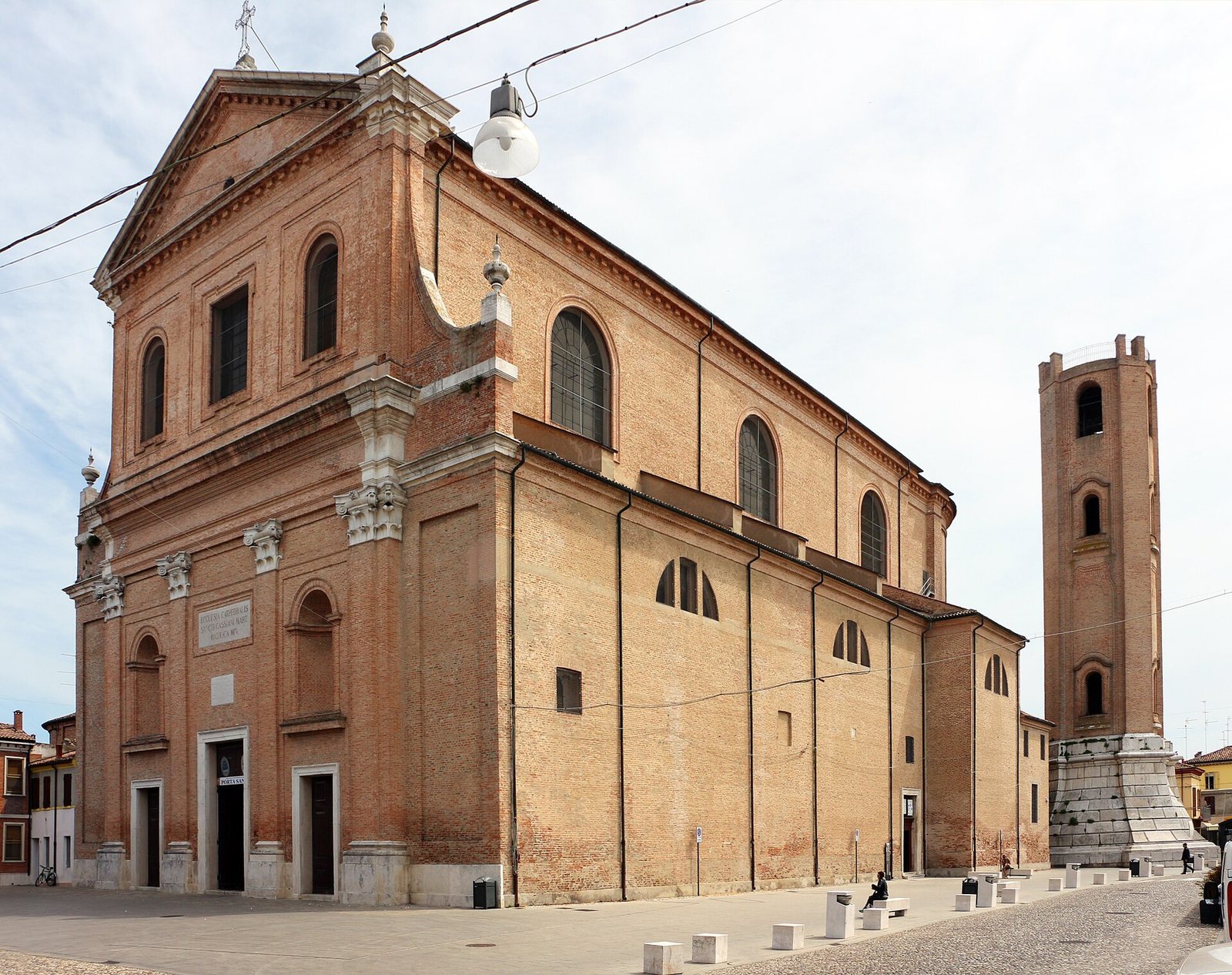
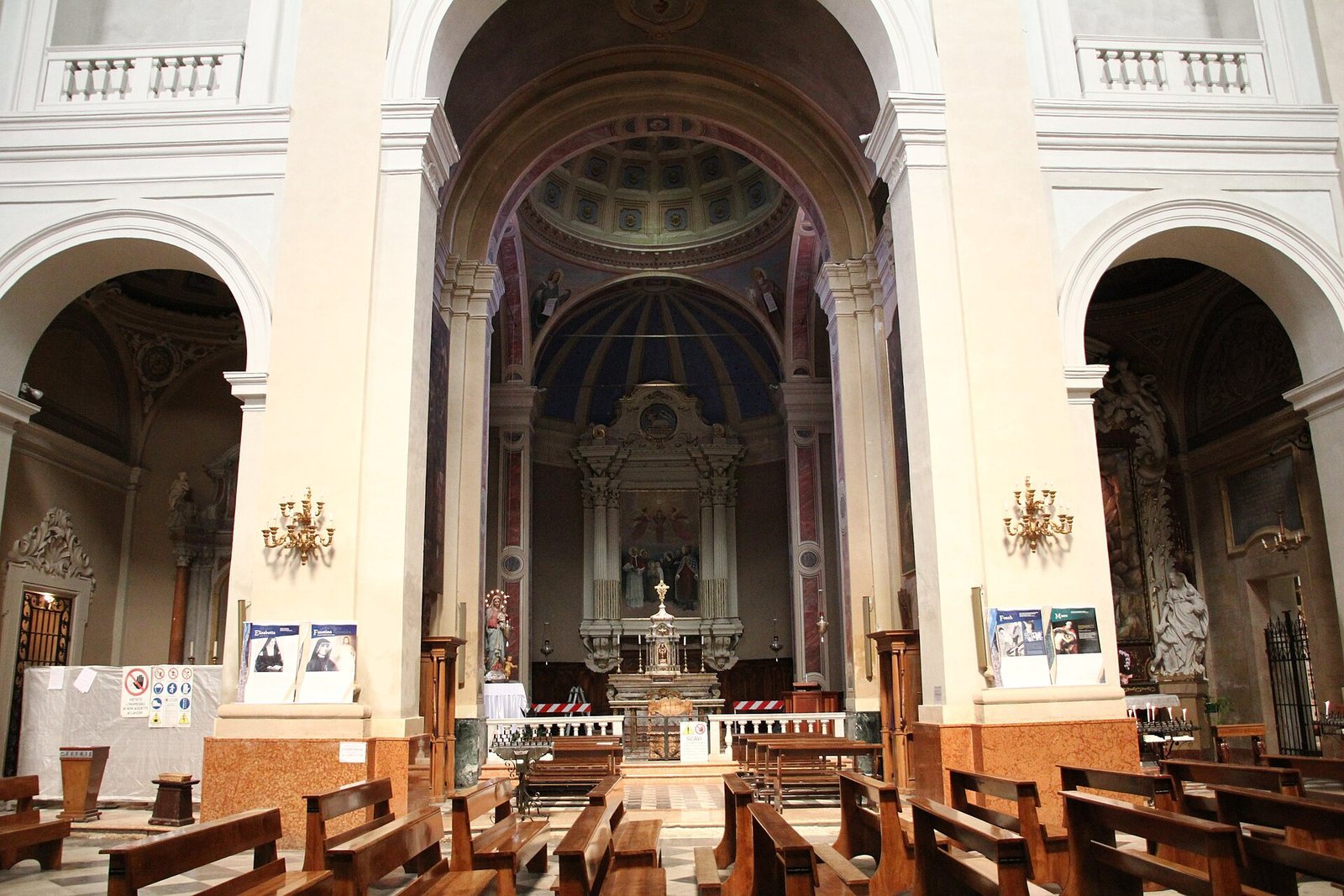
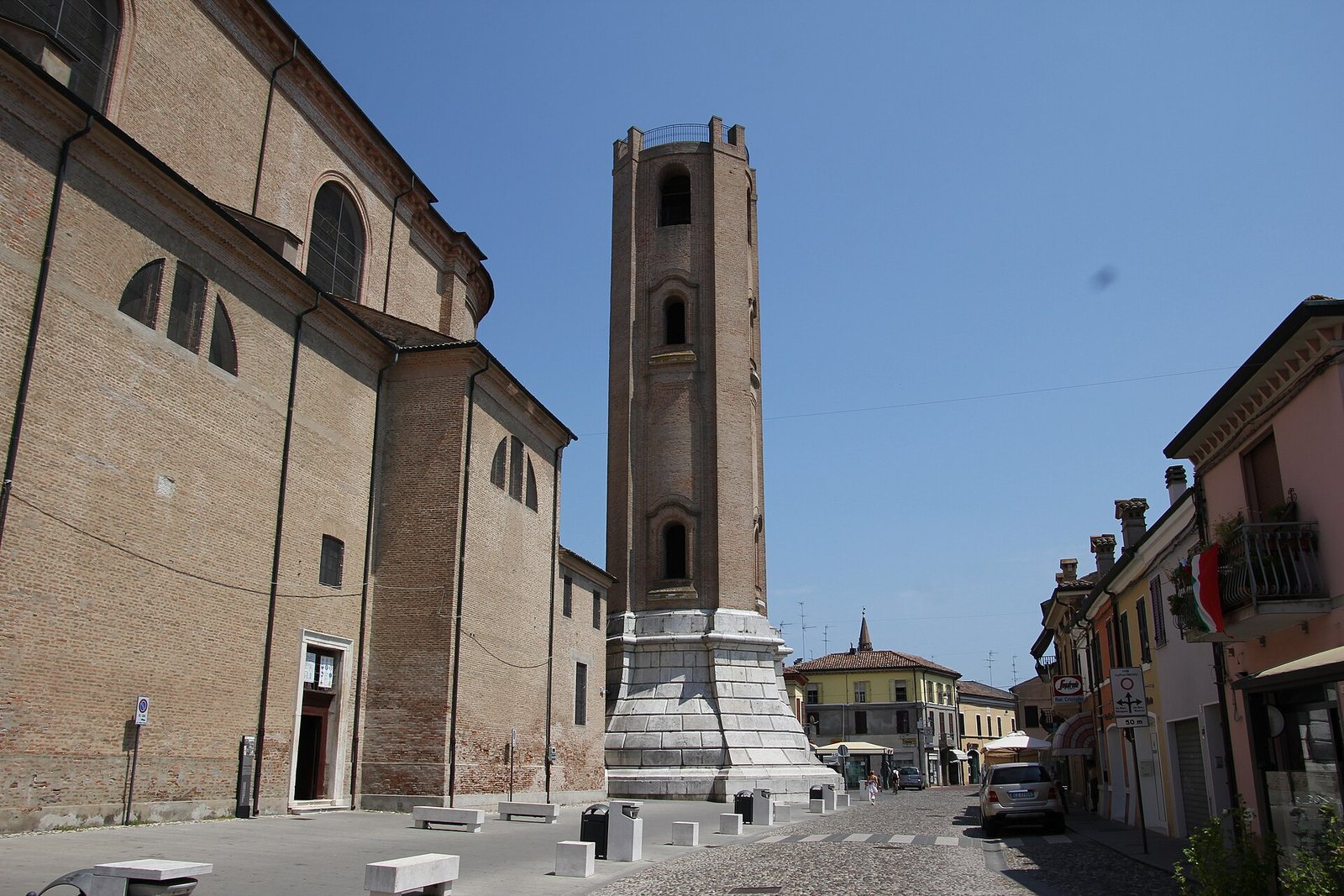
The present church has a single central hall flanked by six chapels on each side and measures 62 by 30 metres. A barrel vault, a continuous ceiling with a semicircular arch, spans the interior. The facade is chiefly brick; its carved capitals, flat wall columns, base blocks, and central cornice are made of Istrian stone.
Chapels and interior works
Chapels and furnishings
Named chapels include Saint John Bosco, formerly dedicated to Saint Francis of Paola; Saint Anne, formerly Saint Vincent Ferrer; the Sacred Heart of Jesus, formerly Saint Gertrude; the Holy Crucifix, formerly the Holy Name of Jesus; Our Lady of Good Counsel; Saint Joseph; Our Lady of Lourdes, formerly Saint Anne; the Blessed Sacrament chapel, also called the large chapel; and Our Lady of Sorrows. Another chapel contains Saint Homobonus and the shrine of Saint Lucy. The interior also has a pulpit, a former small chapel of the Blessed Sacrament, and a baptistery, a place for baptism.
Paintings and sculpture
The chapels contain paintings by artists of the Bolognese school, an artistic tradition associated with Bologna, including eighteenth-century canvases by Biagio Bovi. A wooden crucifix made by the Ferrarese sculptor Germano Cignani dates to the seventeenth century. A sculpture of Saint Lucy, attributed to the Venetian school, a regional artistic tradition associated with Venice, is dated to the fifteenth century.
The apse and adjoining chapel
Apse and choir stalls
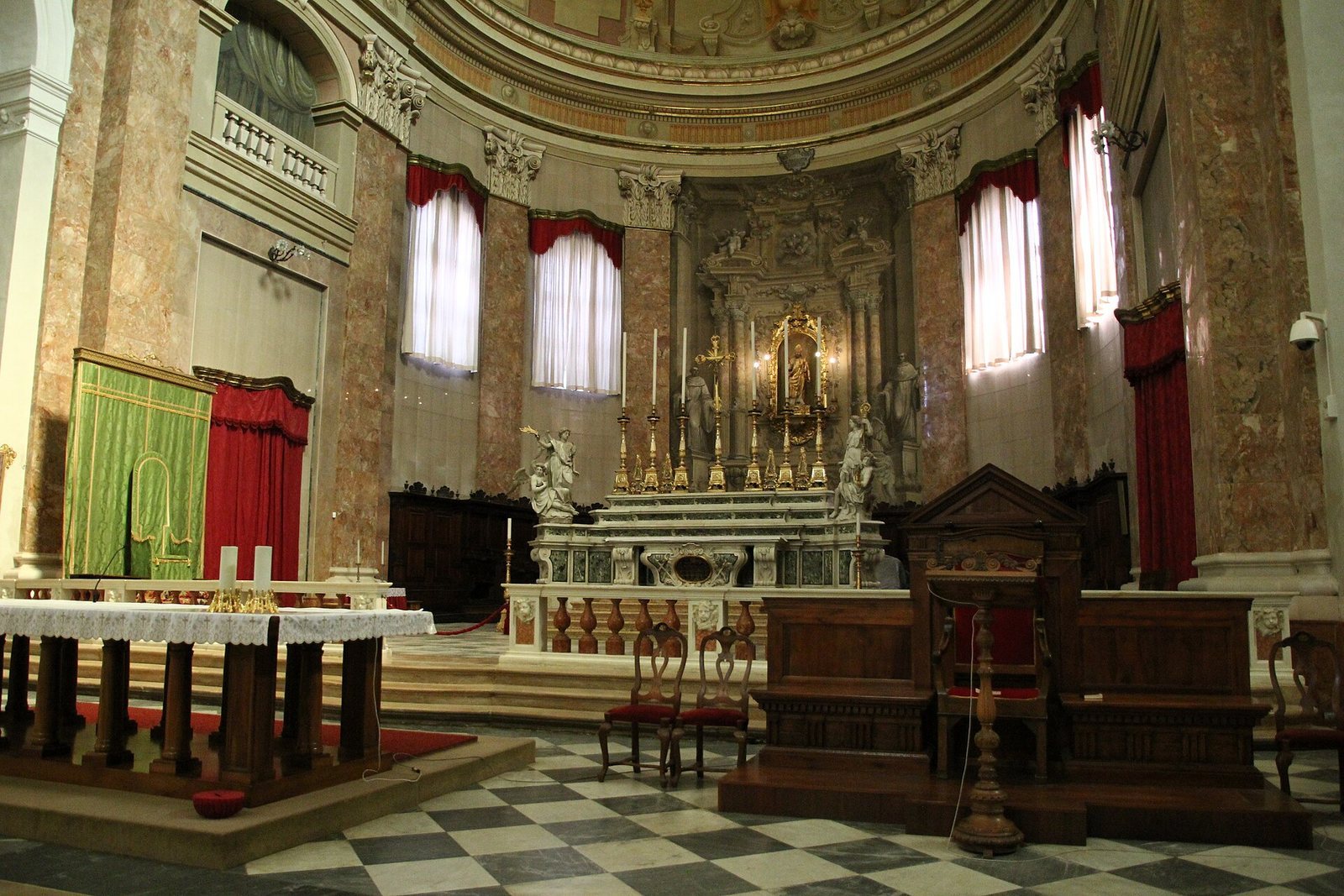
The apse, the curved sanctuary end of the church, contains an eighteenth-century marble altar decorated with winged angels. A wooden statue of Saint Cassian, dated to the sixteenth century, stands in a niche. Two rows of wooden choir seats donated by Bishop D’Arcano surround the apse.
Painting of Saint Cassian and old Comacchio
An oil painting displayed beside the apse has two scenes. An idealized image of Saint Cassian occupies the upper part; below it, the old town of Comacchio and its access bridge appear in silhouette, viewed from the east. The work is probably by a Ferrarese artist of the seventeenth or eighteenth century.
Chapel of Bishop Menegazzi
The side chapel immediately to the right of the apse contains the walled-in sarcophagus of Bishop Gherardo Sante Menegazzi, whose episcopate lasted from 1920 to 1938. An embedded plaque bears Latin inscriptions referring to Bishop Tullio Sericci, who served from 1883 to 1902. The chapel’s wooden altar is made to resemble marble.
Organ and bell tower
Organ
Above the entrance portal is an organ built in Modena in 1728 by Giovanni Domenico Traeri.
Bell tower
The bell tower stands beside the central hall, slightly apart from it. Its first version was built in 1751 and collapsed in 1757, leaving its massive round base of Istrian stone intact. A rebuilding begun in 1766 remained unfinished. A lower tower was later raised on the original base and completed in 1868.