Church of Saint Nicholas the Wonderworker in Vladichnaya Sloboda: A 17th-Century Orthodox Church
Site at a Glance
- Popularity
- Low
- Country
- Russia
- Primary era
- Early Modern
- Eras represented
- Early Modern, Modern
- Civilizations
- Russian
- Site type
- Religious
- Remains
- Church
On this page7 sections
History
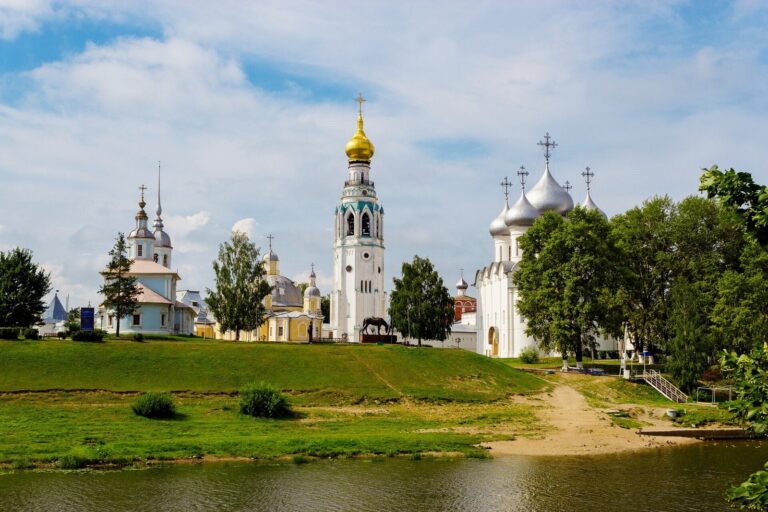
The Church of Saint Nicholas the Wonderworker in Vladichnaya Sloboda stands in Vologda, Russia, and was built of stone in 1669. It was the city’s eighth stone church and is counted as its third-oldest surviving church, after Vologda Sophia Cathedral and the Church of Dmitry Prilutsky at Navolok. Dmitry Prilutsky was a 14th-century monk and saint. This ranking excludes Spaso-Prilutsky Monastery, which became part of the city during the 20th century.
Construction and parish
Vladichnaya Sloboda was a district in Vologda’s Zarechye area. Its name reflects its former connection to the Vologda Archbishop’s House, the archbishop’s residence and administrative establishment, an association that lasted until 1649. The church served a large parish: in 1781 it was the city’s third largest, with 72 households. By 1892 it ranked second, with 847 parishioners.
Soviet closure and revival
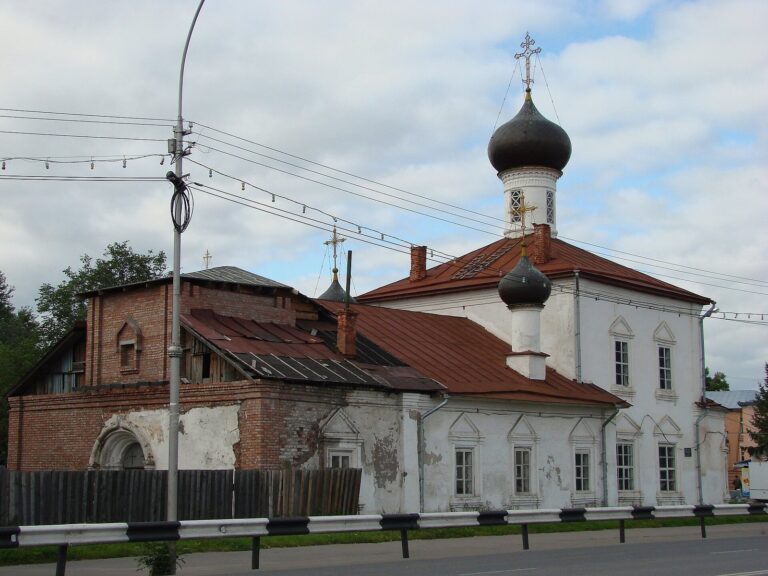
The church closed in February 1930, and its bells were taken away. It was first used to house people deported from central and southern parts of the Soviet Union and labelled “kulaks,” a term used for peasants considered relatively prosperous and also in campaigns of repression and deportation. Later, the building housed a toy factory and a felt-footwear factory. By this period, it had lost its cupola.
A parish community formed in the early 1990s and raised money to restore the church. It is now active and belongs to the Orthodox Church’s Vologda and Veliky Ustyug Eparchy, an ecclesiastical jurisdiction comparable to a diocese. On 26 September 1998, the relics of Anthony, Bishop of Vologda and Great Perm from 1585 to 1588, were transferred here from Vologda Sophia Cathedral. Great Perm was a historic region in northeastern European Russia. The church is a federally significant cultural heritage monument in Russia.
Remains
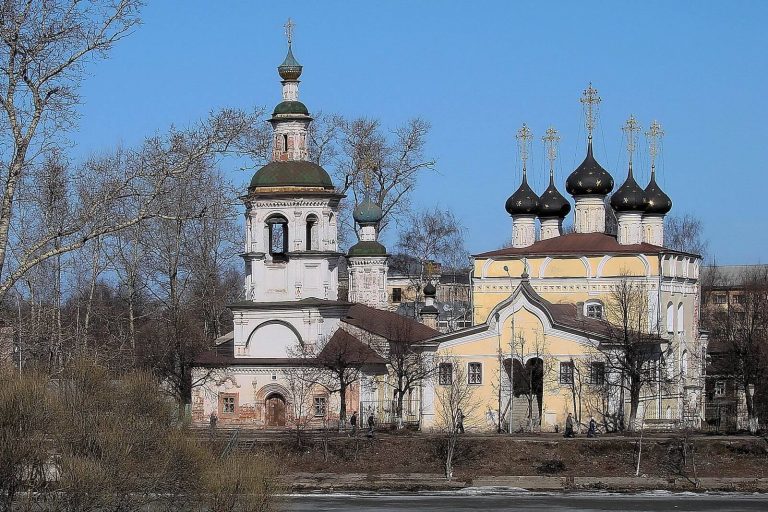
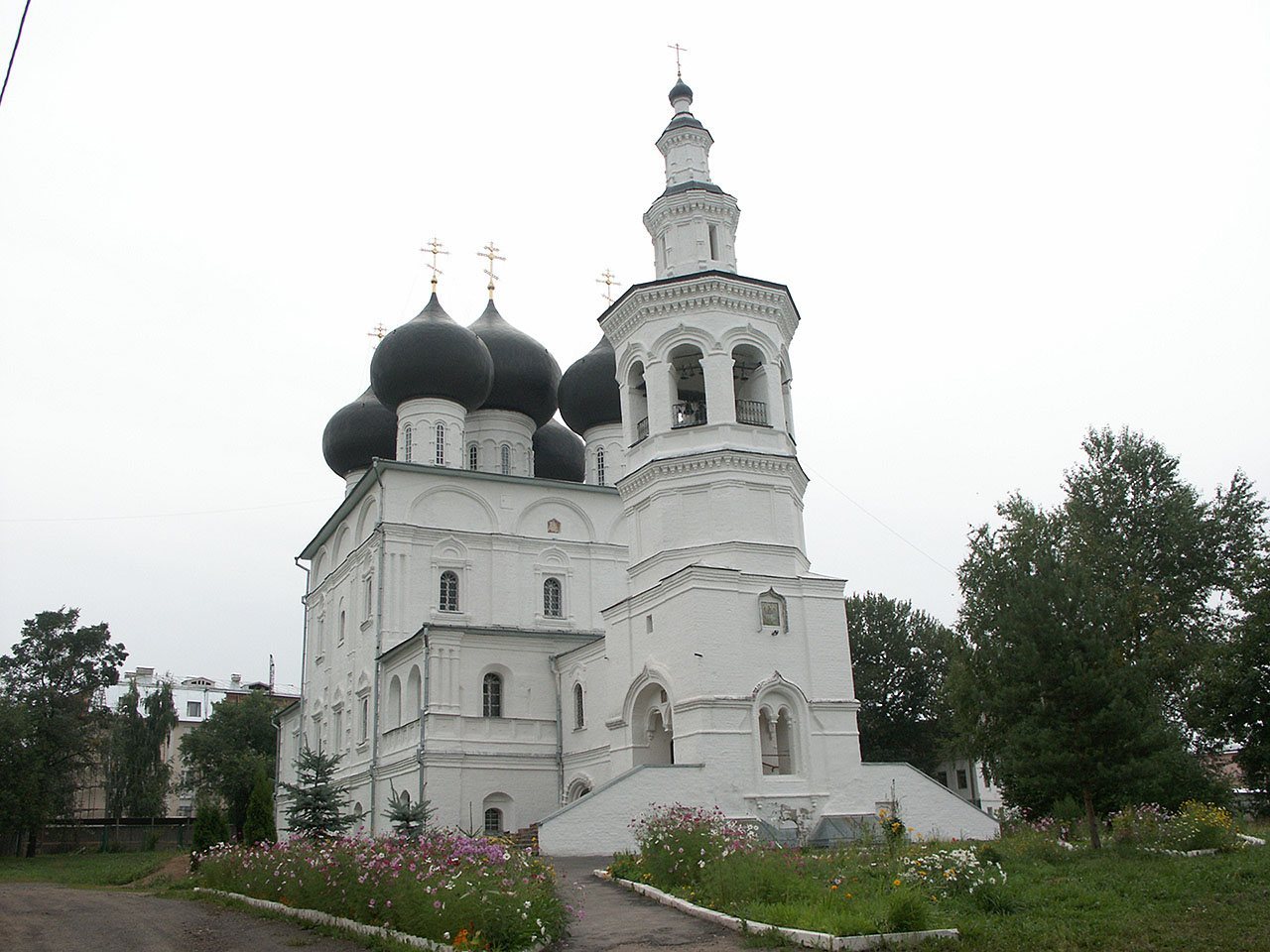
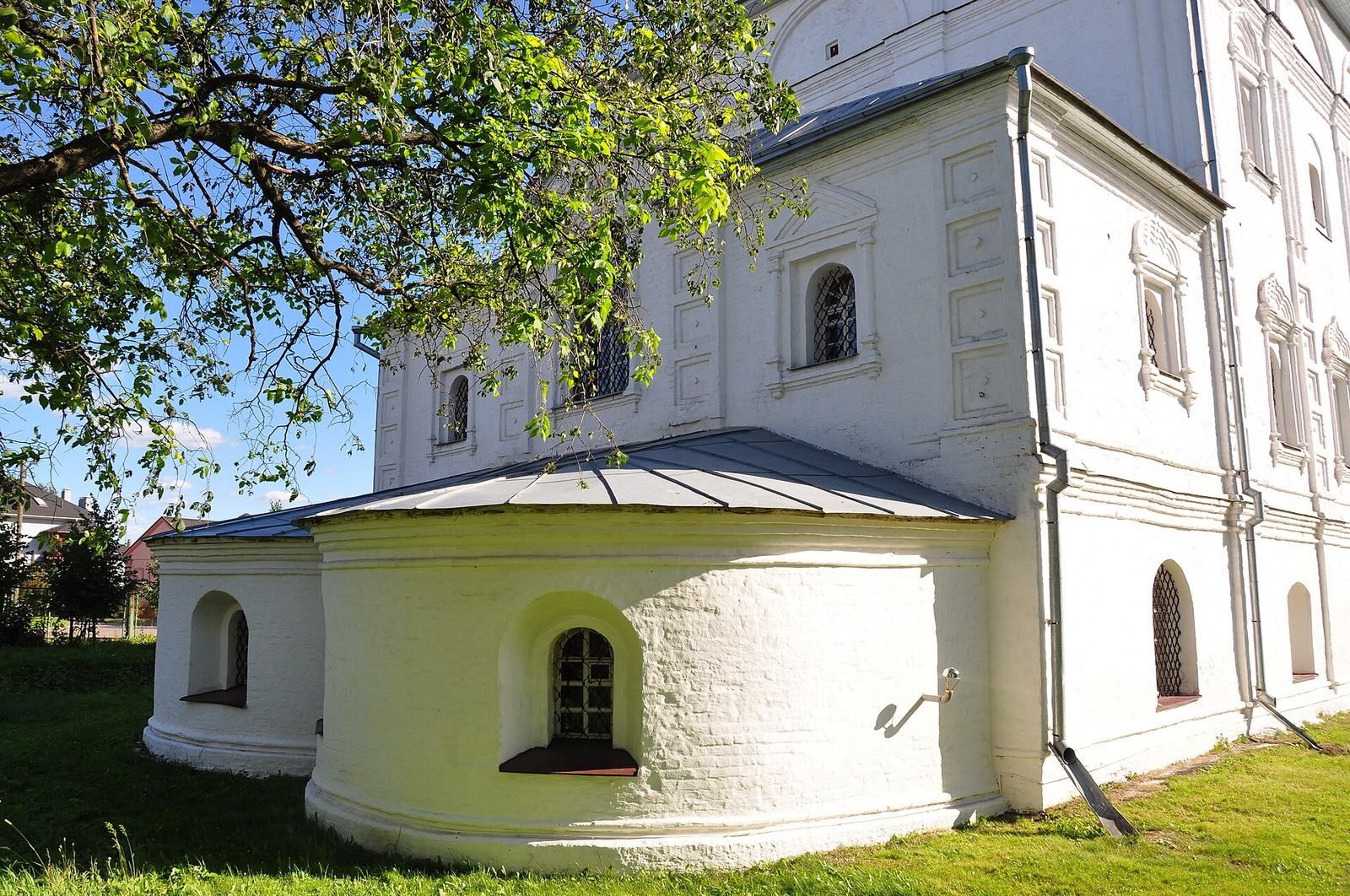
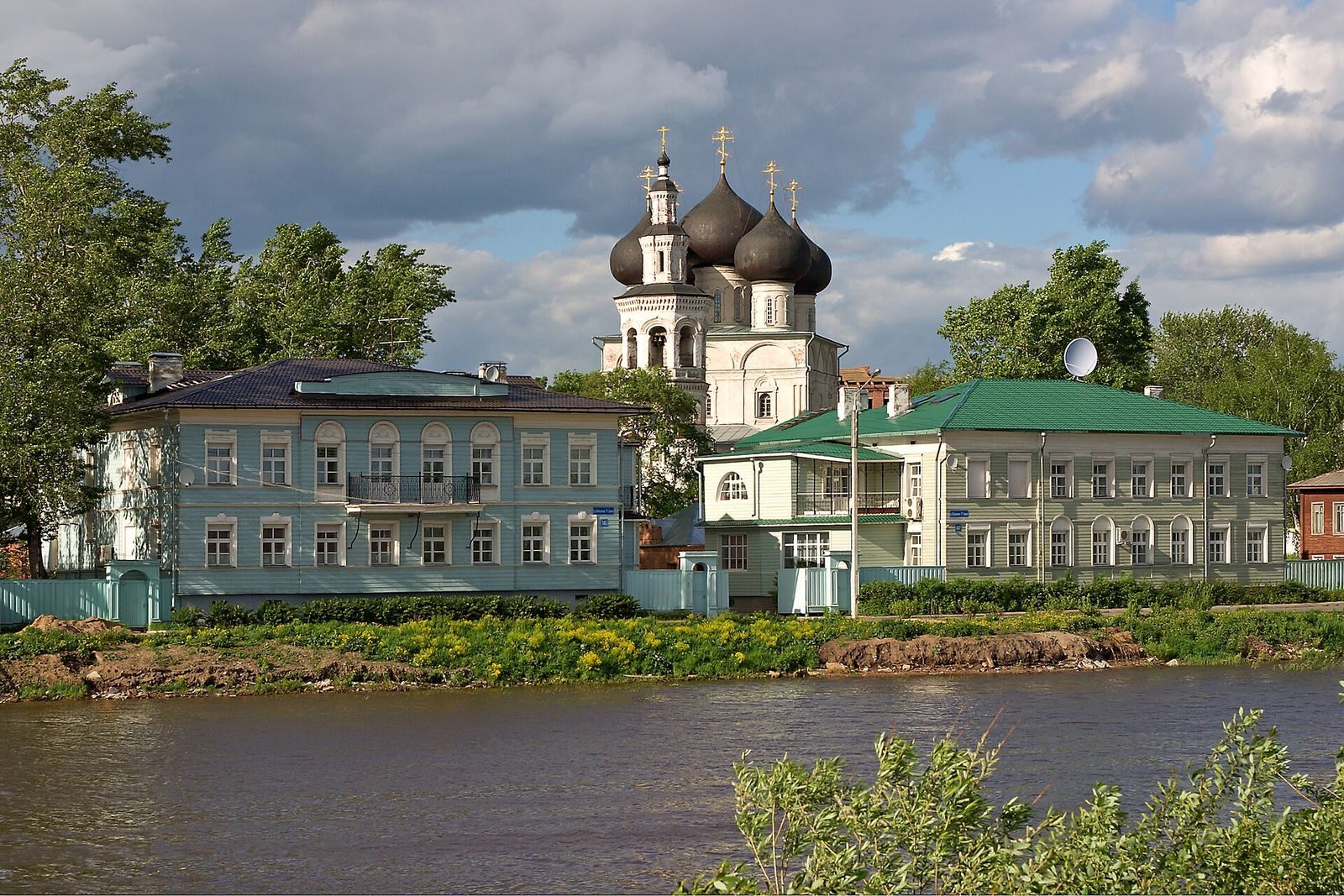
The church is larger than other Vologda churches built around the same time. Its tall, roughly cubic main body has five closely grouped cupolas above light-admitting drums, the structures supporting the domes. A high lower storey and a two-pillar support system are among its defining features. The altar projects to the east, while a refectory and tiered bell tower extend the building to the west.
Main church exterior
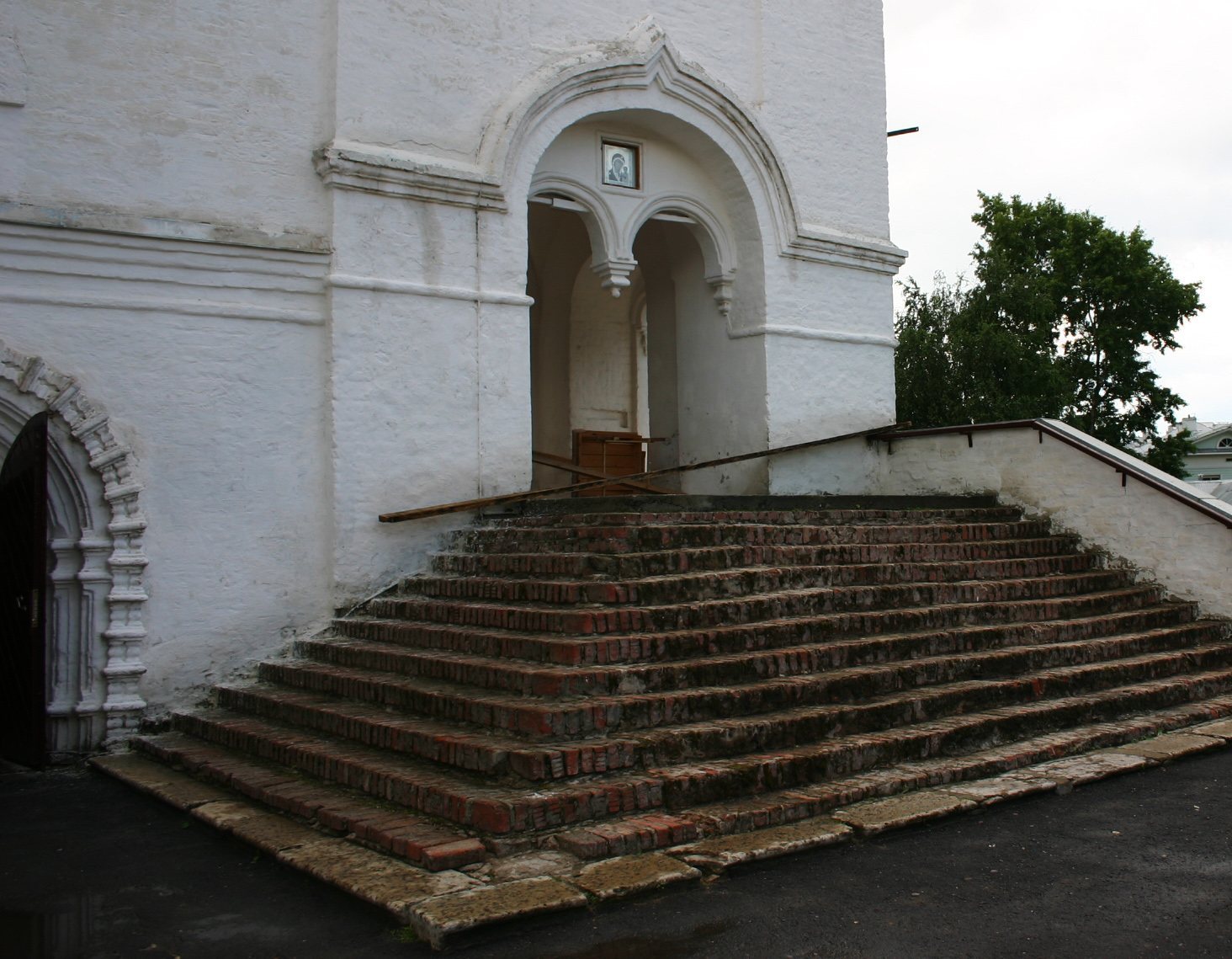
The five drums have openings that admit light and decorative bands of arches supported by columns, with bulb-shaped ornaments midway up the columns. Large arched forms, known as zakomaras, crown the façades and are separated from the walls by a cornice. At the start of the 20th century, painted panels depicting the Twelve Great Feasts, the major celebrations of the Eastern Orthodox liturgical year, remained on the upper façades. Wall paintings also decorated the stairs to the upper church. At the eastern end, the altar sits above a high lower storey and projects outward, terminating in two semicircular apses, or projecting parts of the church.
Interior
The interior was decorated in the Baroque style, an elaborate European artistic and architectural style. Rich ornamental stucco covered the vaulted ceilings, arches, and pillars instead of wall paintings. The church’s iconostasis, a screen of icons separating the sanctuary from the main body, combined painted and sculpted elements with wood carving in the Louis XVI style, a late-18th-century French decorative style.
Western refectory and bell tower
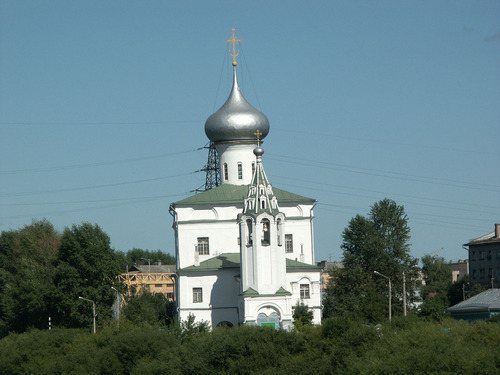
A refectory, or communal dining hall, joins the church to the bell tower on the west. Rebuilt during the 18th century, the tower took its described form by the middle of that century. It has a square lower stage, a tall octagonal stage for the bells, two smaller octagonal tiers, and a small cupola at the top. Its heaviest bell weighed two tonnes and was cast in Moscow in 1782 by a master bell-founder. Restoration work later installed new cupolas and added new brick masonry inside the building.