Muravytsia Hillfort: A Medieval Fortified Settlement in Ukraine
Site at a Glance
- Popularity
- Very Low
- Country
- Ukraine
- Primary era
- Medieval
- Eras represented
- Medieval
- Civilizations
- Kievan Rus
- Site type
- Military
- Remains
- Fortified Town
On this page6 sections
History
Muravytsia Hillfort is a fortified settlement site in northwestern Mlyniv, Ukraine, associated with the medieval town of Muravytsia. Its principal hillfort phase is dated broadly to the 9th–13th centuries, and the town was associated with the Volhynian Principality, a regional principality in western Rus.
Early settlement and medieval town
The archaeological monument is also assigned a date extending from the 2nd millennium to the 10th century BCE. A separate Slavic settlement phase is represented by a house from the late 8th century. Muravytsia appears as a town in the Ipatiev Chronicle, a medieval history of Rus, in 1149. The settlement later declined during the period of Kyivan Rus, the medieval East Slavic polity centered on Kyiv.
The town’s abandonment has been linked to a battle between the rival princes Izyaslav Mstislavich and Yuri Dolgoruky, who was then ruling in Kyiv. Yuri’s Cuman allies, a Turkic nomadic people of the Eurasian steppe, may have captured and plundered Muravytsia, although the chronicle does not directly describe an attack on the town. Muravytsia later appears as Muravin among Lithuanian cities in the medieval List of Rus’ Cities, Near and Far. It had declined to something closer to a settlement before regaining town status under Lithuanian and Polish political influence.
Town under Lithuanian and Polish rule
The earliest record from this later period dates to 6 June 1558, when Princess Kateryna Vyshnevetska transferred Muravytsia to her husband, Hryhorii Chodkiewicz. Further documents name the town in 1559, 1563, 1564, and 1568. Tax registers from the 1570s and 1580s and a 1629 hearth-tax register, which listed households liable for tax, also include it.
By the mid-16th century, Muravytsia had the right to hold an annual fair. It had 193 houses during the 16th century. The presence of a suburb has prompted the suggestion that a substantial castle may once have defended both the town and the surrounding district. Archaeological finds also indicate activity at the site during the 16th century.
Destruction and archaeological study
In 1648, during the Ukrainian war of liberation, a major uprising in Ukrainian lands led by Cossack leader Bohdan Khmelnytsky, the Muravytsia estate was destroyed. Settlement on the hillfort did not resume afterward. The village of Muravytsia continued into the 20th century, when it became part of Mlyniv.
By the early 20th century, historian and archaeologist V. B. Antonovych had included a brief account of the site in an archaeological map of Volhynia Governorate. P. O. Rappoport made the first detailed survey in 1960, prepared a plan, and tested the cultural layer with trial pits. I. K. Sveshnikov carried out the first excavations in 1965. Y. M. Nikolchenko’s expedition worked at the site from 1976 to 1980, followed by excavations led by B. A. Pryshchepa in 1982, 1984, and 1985.
Remains
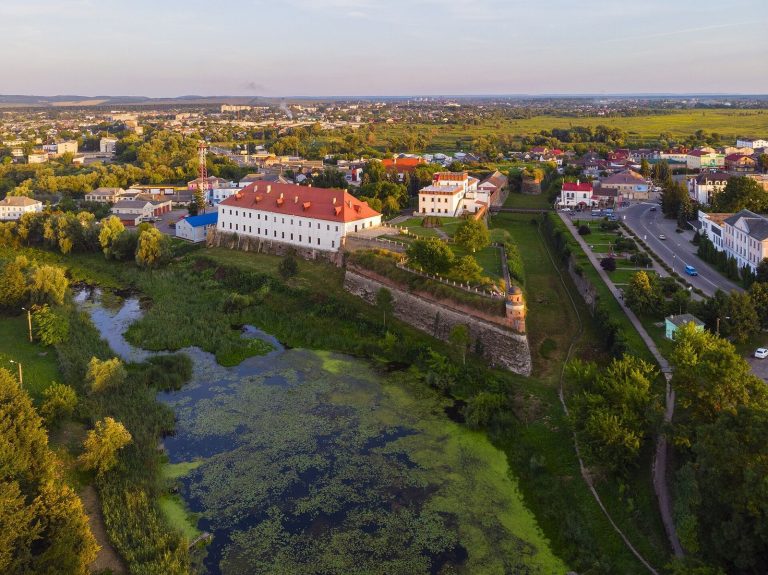
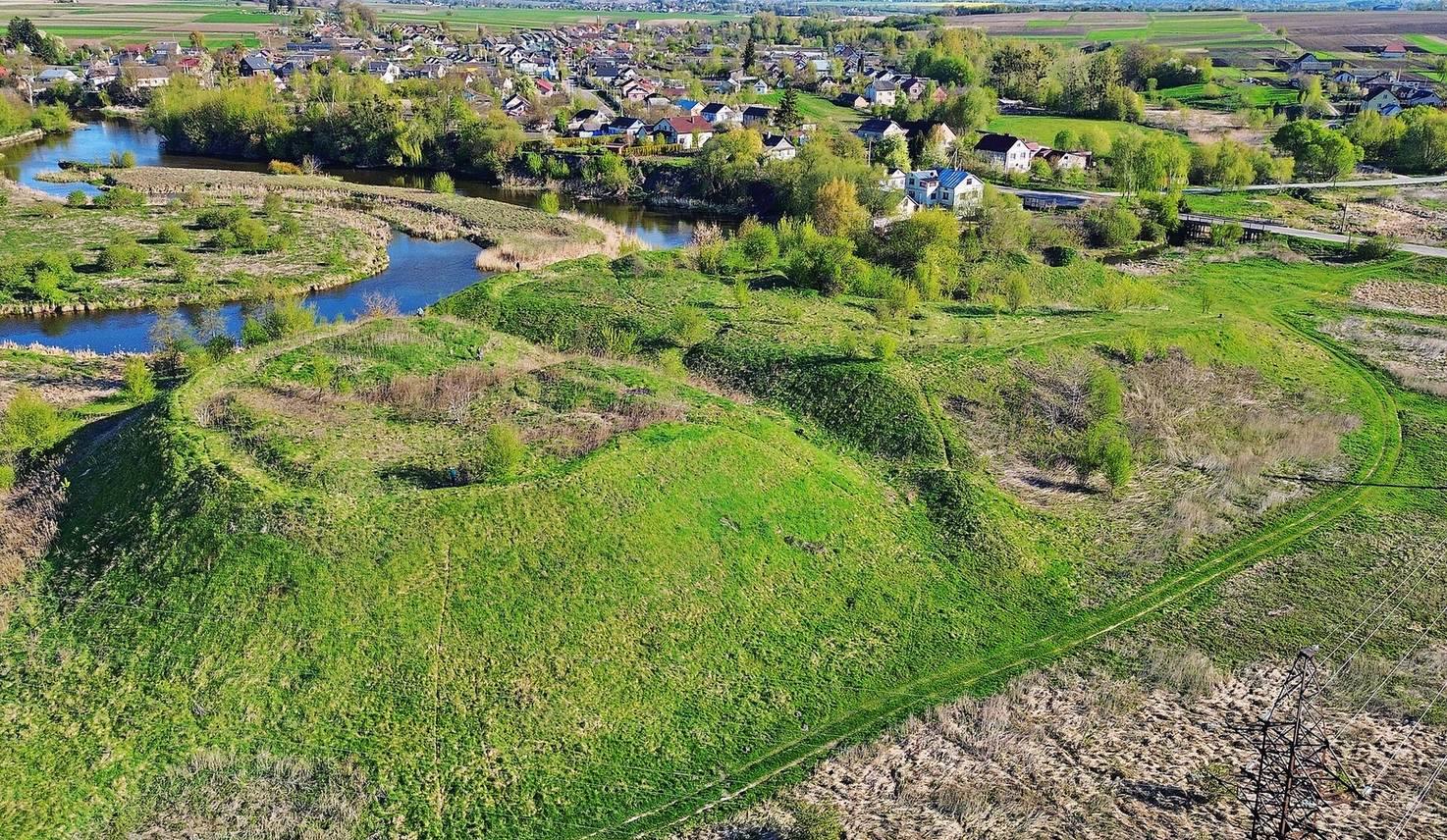
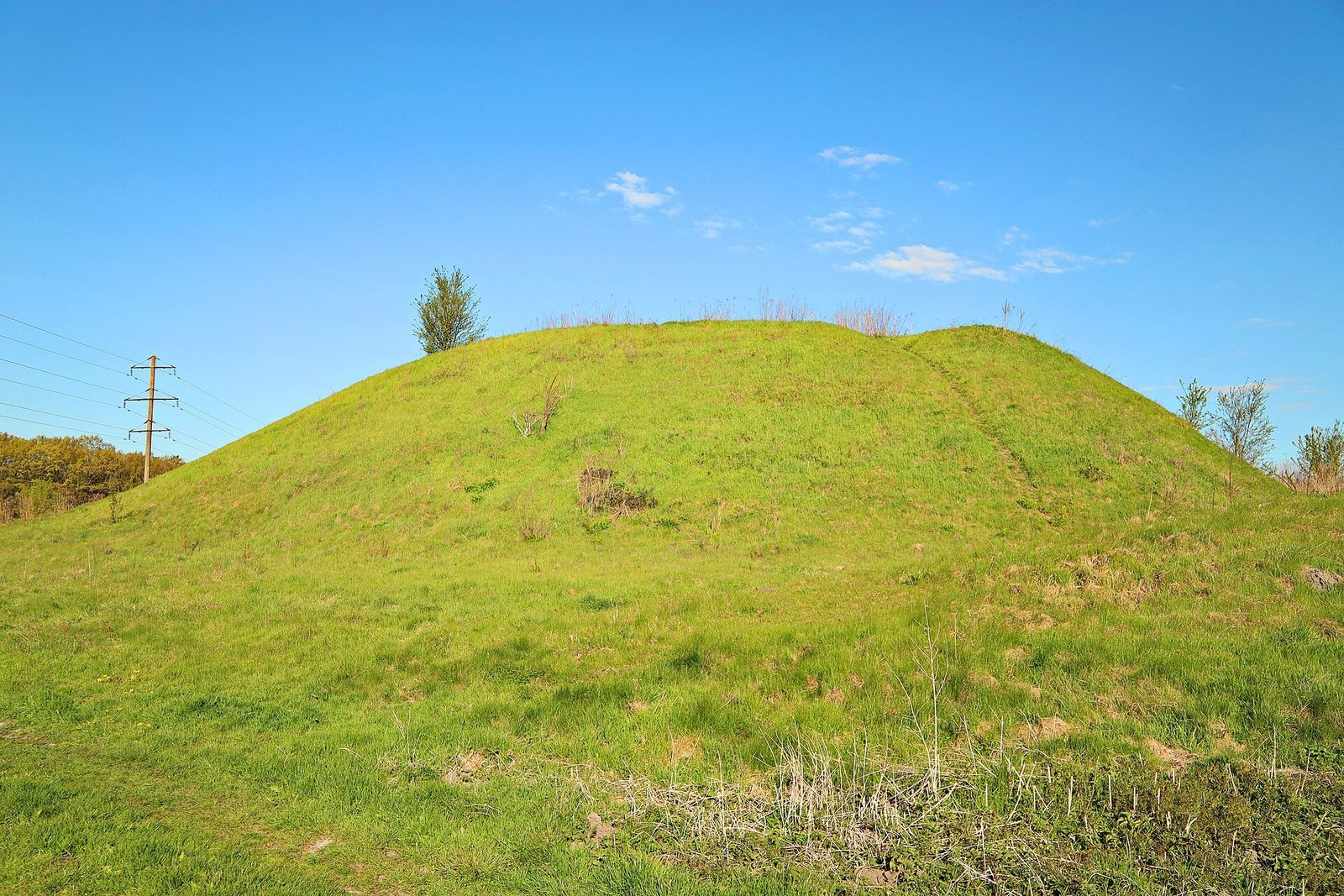
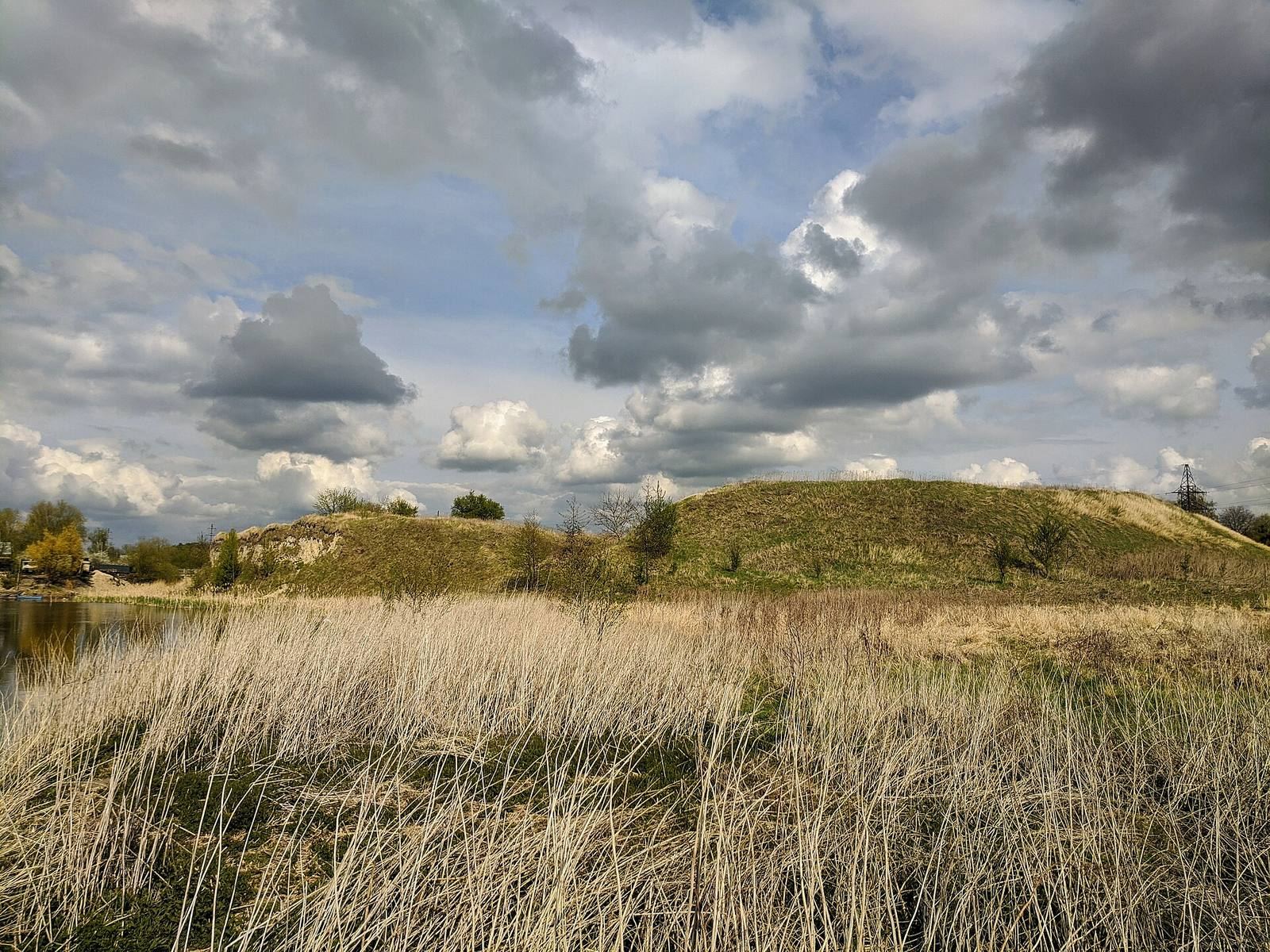
The hillfort occupies a natural rise, 6–8 m high, in the Ikva valley where the river meets a smaller watercourse. It stands on the Ikva’s right bank at a bend, in the northwestern part of Mlyniv; the former village of Muravytsia lay on the eastern side of the bend. The fortified area has two platforms. A small, irregularly rounded platform in the southwest measures 25 by 35 m and covers about 1,200 m². The larger, quadrangular platform measures 85 by 85 m and covers about 7,200 m².
Dwellings and excavated objects
A house from the late 8th century represents the separate Slavic settlement phase. Houses dated to the 10th–12th centuries were generally rectangular dwellings partly dug into the ground, with clay ovens. Finds include numerous fragments of pottery from the period after the 13th-century Mongol invasions of Rus. Excavated metal objects include spring-operated bow-shaped shears, sickles, chisels, locks and lock fragments, keys, a handle, arrowheads, bits, and stirrups. Other finds include fragments of glass bracelets, bone combs, whetstones, and spindle whorls, weighted tools for spinning yarn, made from Ovruch slate quarried in the Ovruch region.