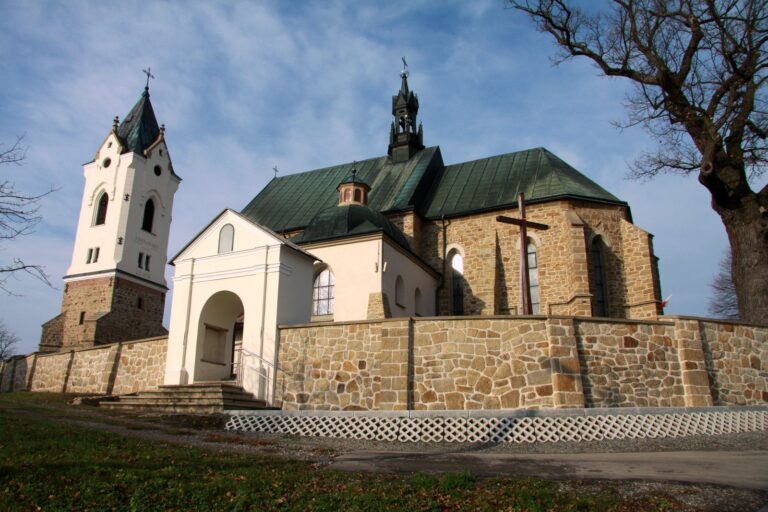
Church of the Assumption in Wielopole Skrzyńskie: A Roman Catholic Parish Church
Site at a Glance
- Popularity
- Low
- Country
- Poland
- Primary era
- Early Modern
- Eras represented
- Early Modern
- Civilizations
- Kingdom of Poland, Polish–Lithuanian Commonwealth
- Site type
- Religious
- Remains
- Church
On this page4 sections
History
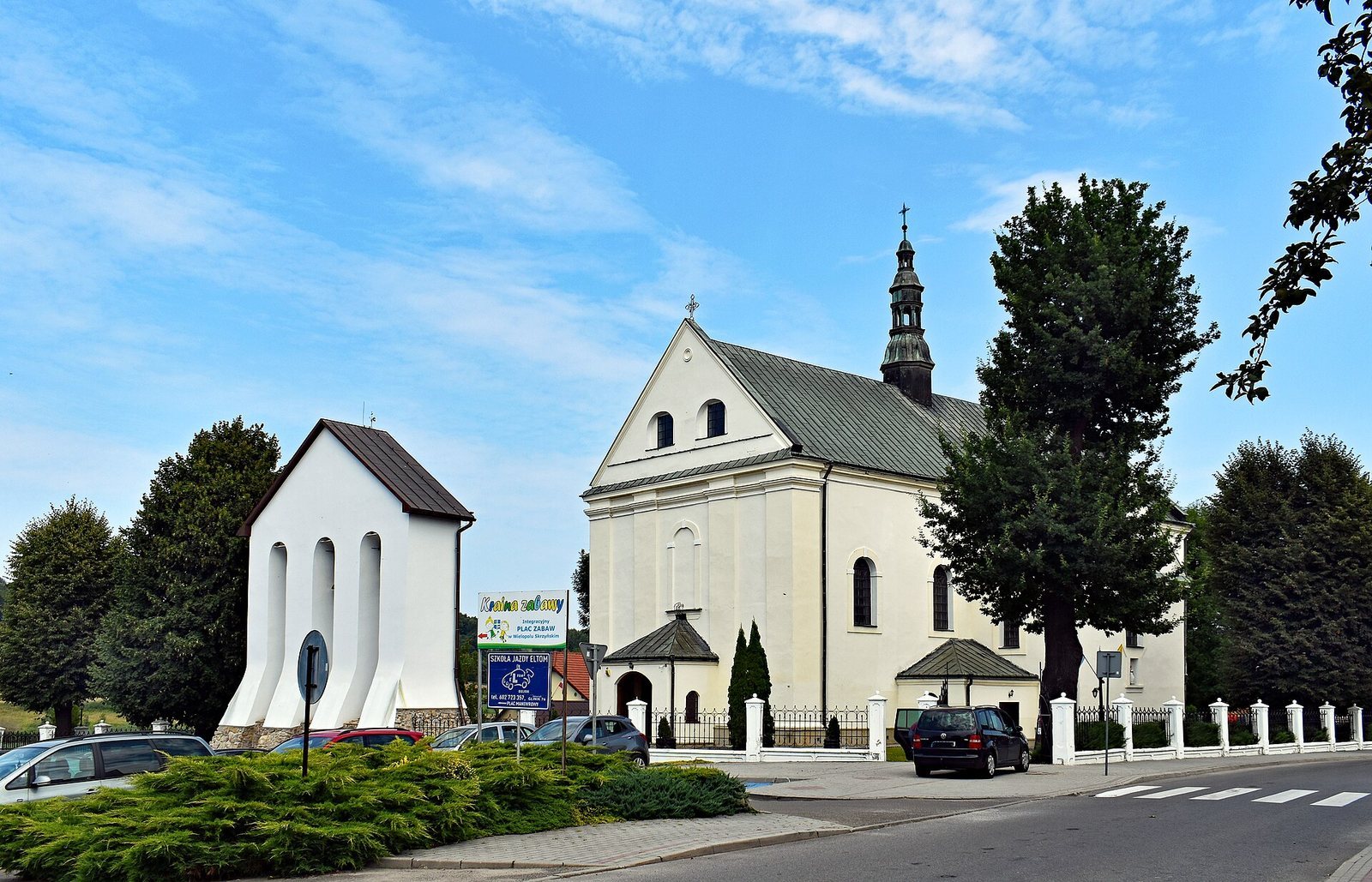
The Church of the Assumption in Wielopole Skrzyńskie is a Roman Catholic parish church in Poland, dedicated to the Assumption of the Blessed Virgin Mary, the Catholic belief that Mary was taken into heaven. It belongs to the Wielopole Skrzyńskie deanery, a subdivision of the Diocese of Rzeszów, and its feast is observed on August 15. Construction of the present church probably began in 1678 and was completed in 1683. Maciej Kłosiński, a priest and canon (a cleric belonging to a church chapter) of Sandomierz, funded the building. Mikołaj Oborski, the 17th-century Bishop of Kraków, consecrated it on November 1, 1683.
Priests Franciszek Jordan and Józef Radoniewicz carried out repairs. Further repairs took place after the Second World War under priest Julian Śmietana.
Remains
Building and layout
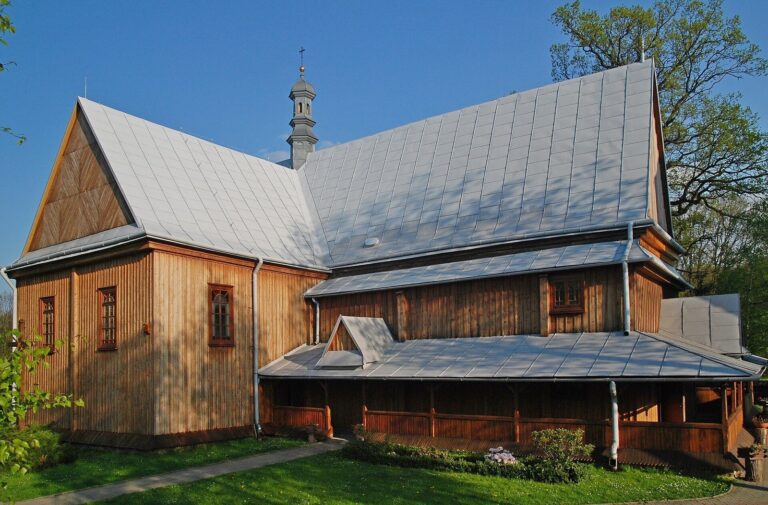
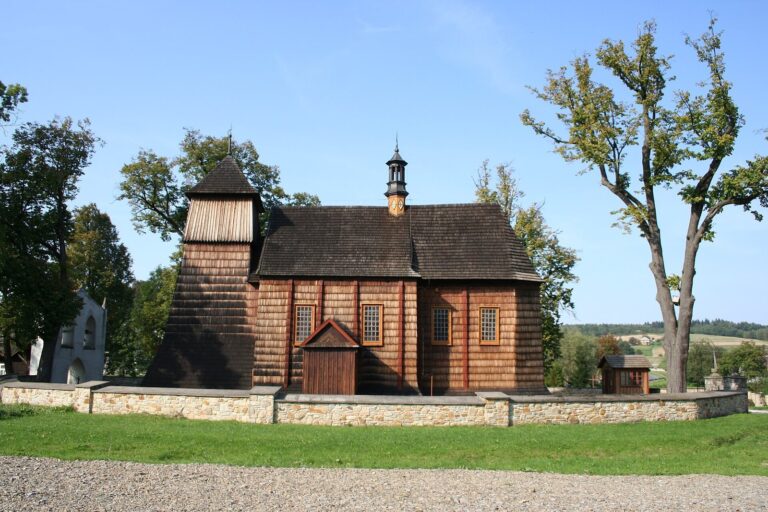
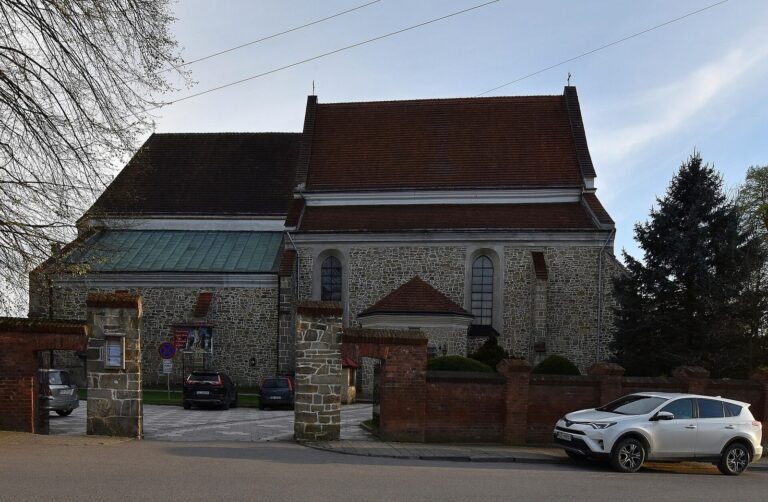
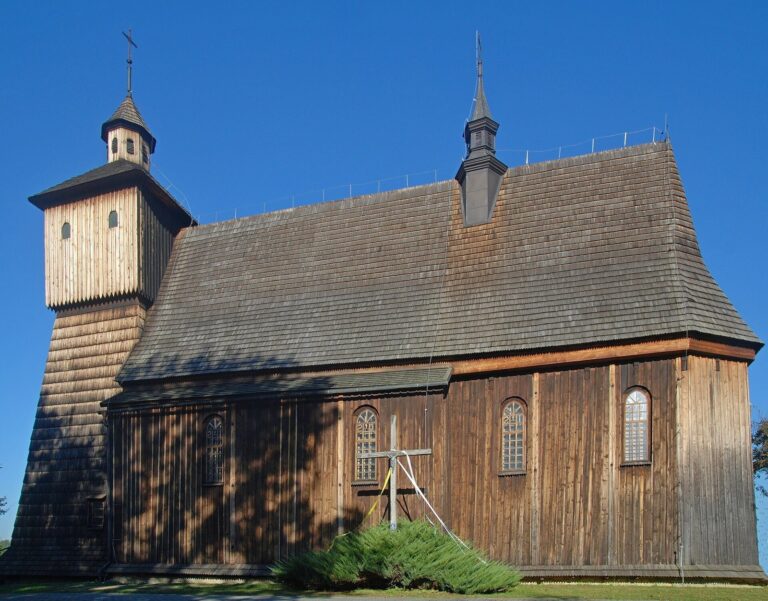
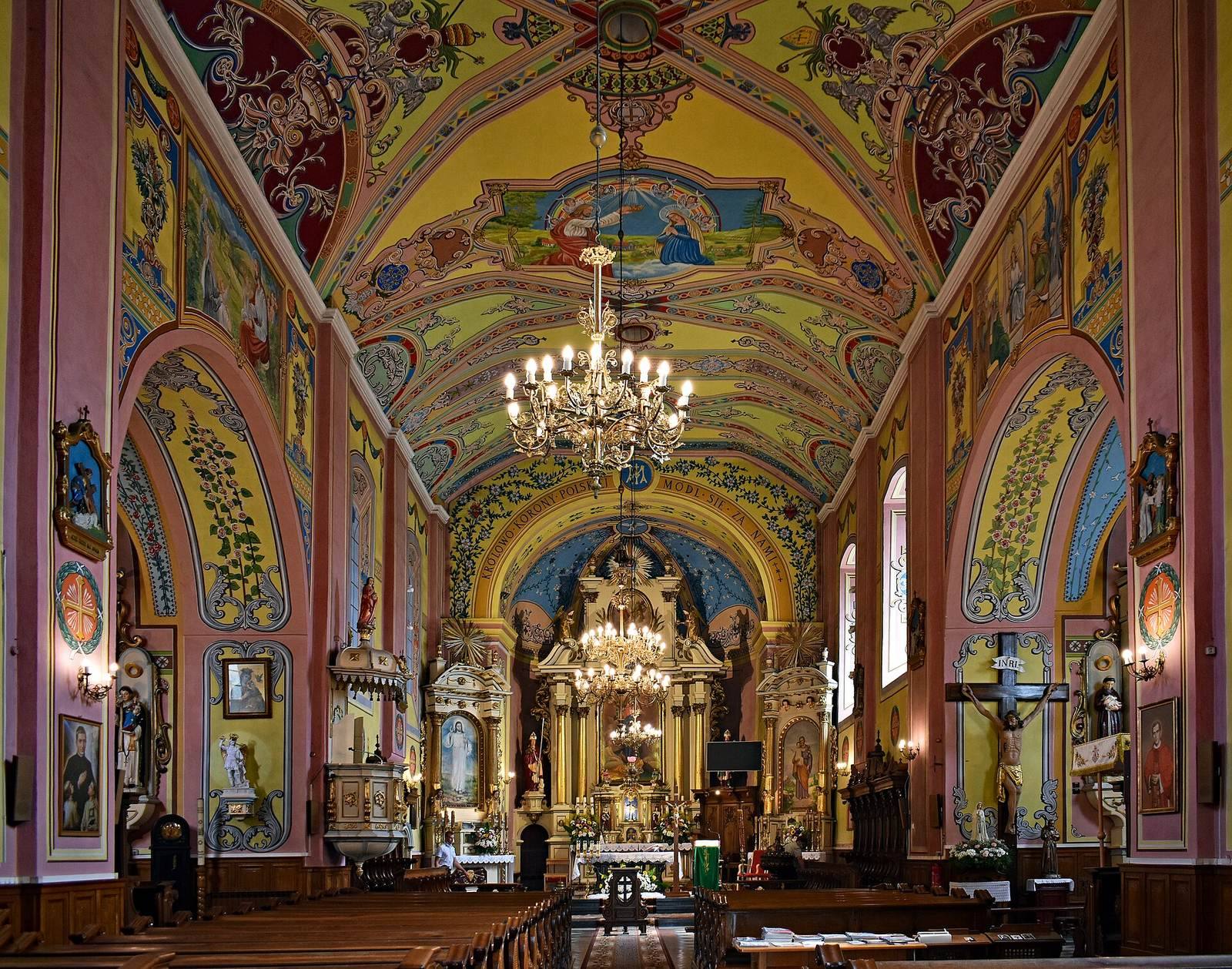
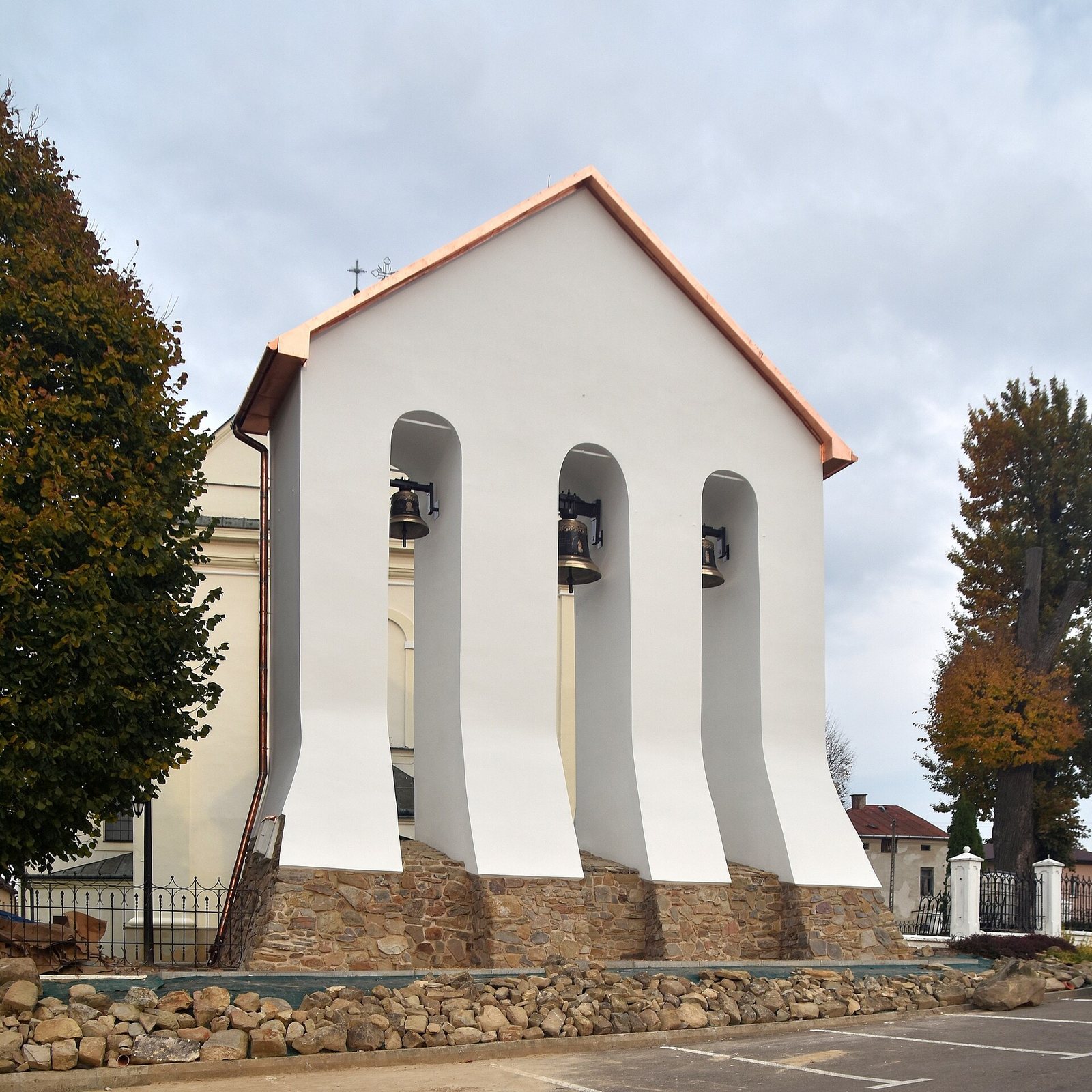
Built of stone and brick, the church combines Renaissance design, drawing on classical forms, with Baroque influences associated with more dramatic and elaborate effects. Its plan has a single nave and a symmetrical pair of transept chapels, which extend across the nave. The interior has three altars. A small roof bell turret, a structure on the roof that houses a bell, rises above the church, while a screen-like bell tower stands in front of the building.
Historic furnishings and fittings
The furnishings include a copper baptismal font dated to 1800 and two Baroque crucifixes from the 17th century. Sculptures of St. Adalbert, a medieval missionary bishop and martyr, and St. Stanislaus, an 11th-century bishop of Kraków and martyr, date to the mid-17th century. A painting of the Immaculate Conception, the Catholic belief that Mary was preserved from original sin from conception, was made in 1837. Iron doors from the early 16th century lead from the chancel, the area around the altar, to the sacristy, a room for clergy’s vestments and liturgical furnishings.