Catacombs of Sousse: An Underground Burial Complex in Tunisia
Site at a Glance
- Popularity
- Medium
- Country
- Tunisia
- Primary era
- Classical
- Eras represented
- Classical
- Civilizations
- Roman
- Site type
- Burial
- Remains
- Catacomb
On this page13 sections
History
The Catacombs of Sousse are an underground burial complex in Sousse, Tunisia, with an overall origin assigned to the late first century AD. Their burial areas include both pagan cemeteries, meaning those associated with religious practices outside Christianity, and Christian burial grounds. Together, they illuminate the city’s history from the first through fifth centuries AD.
Origins and Christian use
The burial areas developed at different times. One cemetery was established in the third century, while another saw substantial Christian use from the fourth century. Christian burials and other evidence date to the fourth and fifth centuries, including a principal Christian catacomb assigned to that period.
For Christians, the underground galleries served as a cemetery and also as a place for worship and refuge during persecution. The burials and inscriptions express beliefs about salvation, judgment, and the bond between Christians and Christ. They also reflect community life and charitable activity among people of different means.
Discovery and excavation
Colonel Vincent, a senior military officer, discovered the catacombs in 1888. Three of the four principal burial areas were fully excavated. After the earth was cleared, runoff water quickly damaged the exposed galleries.
Remains
Layout and burial architecture
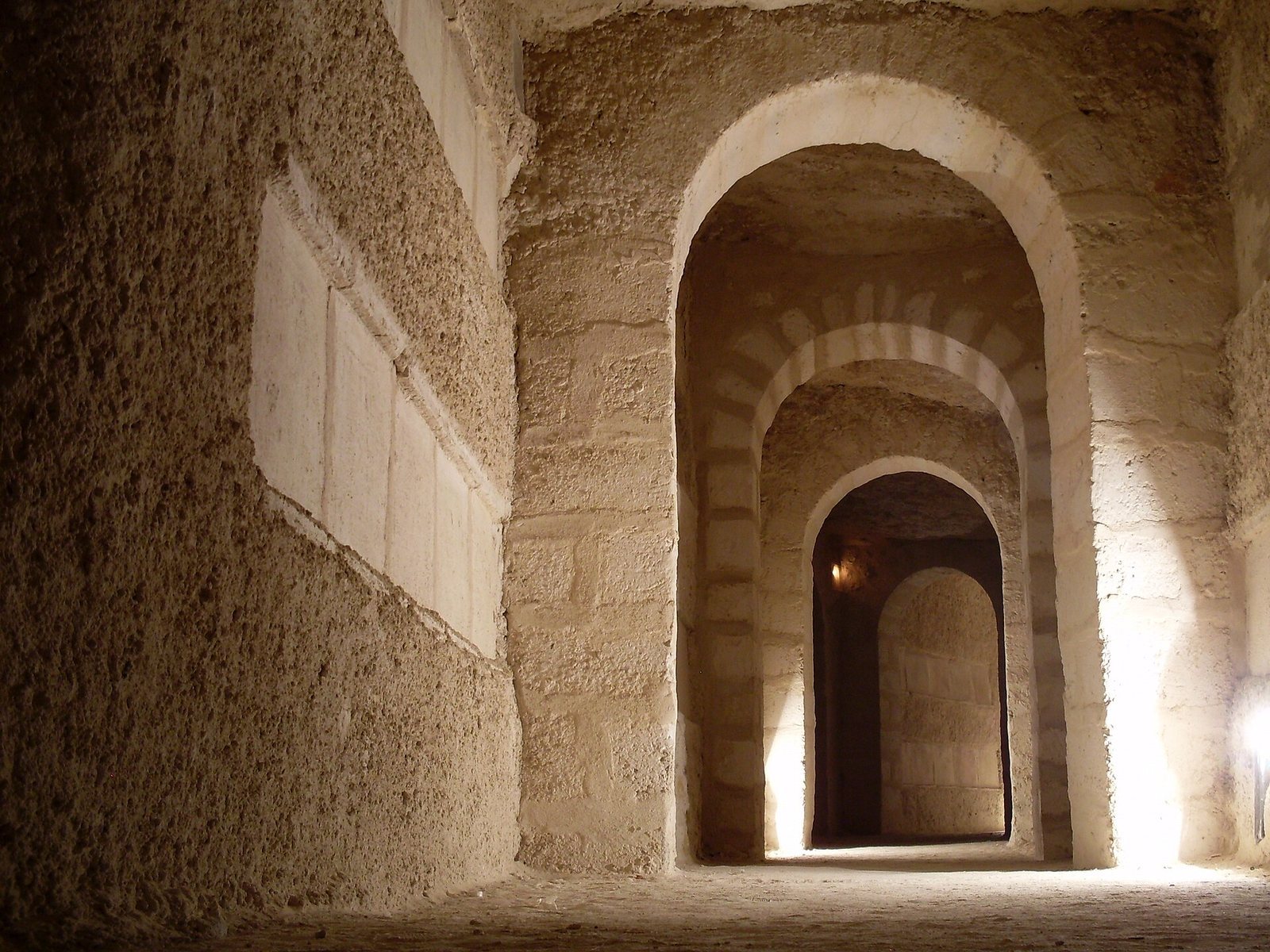
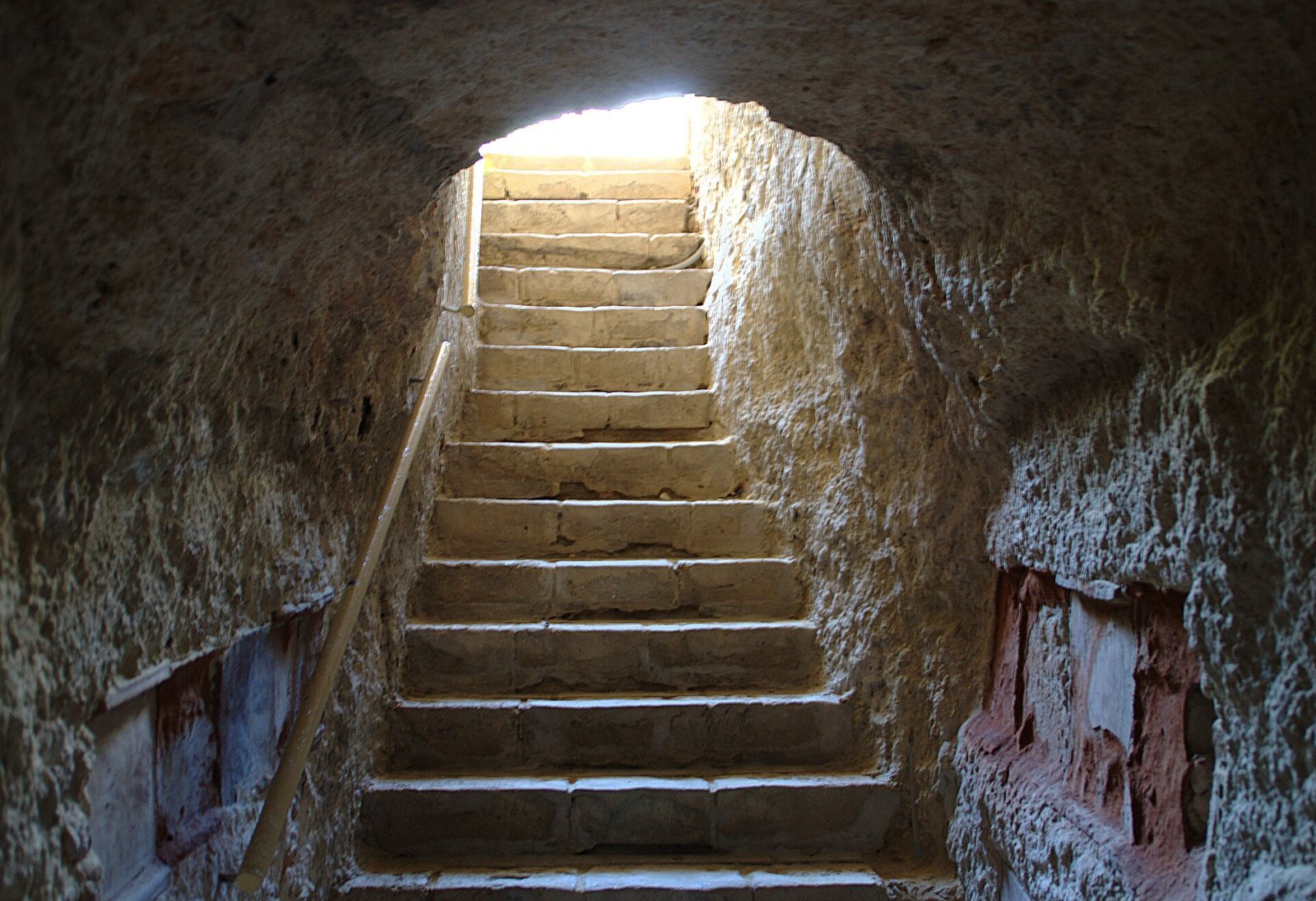
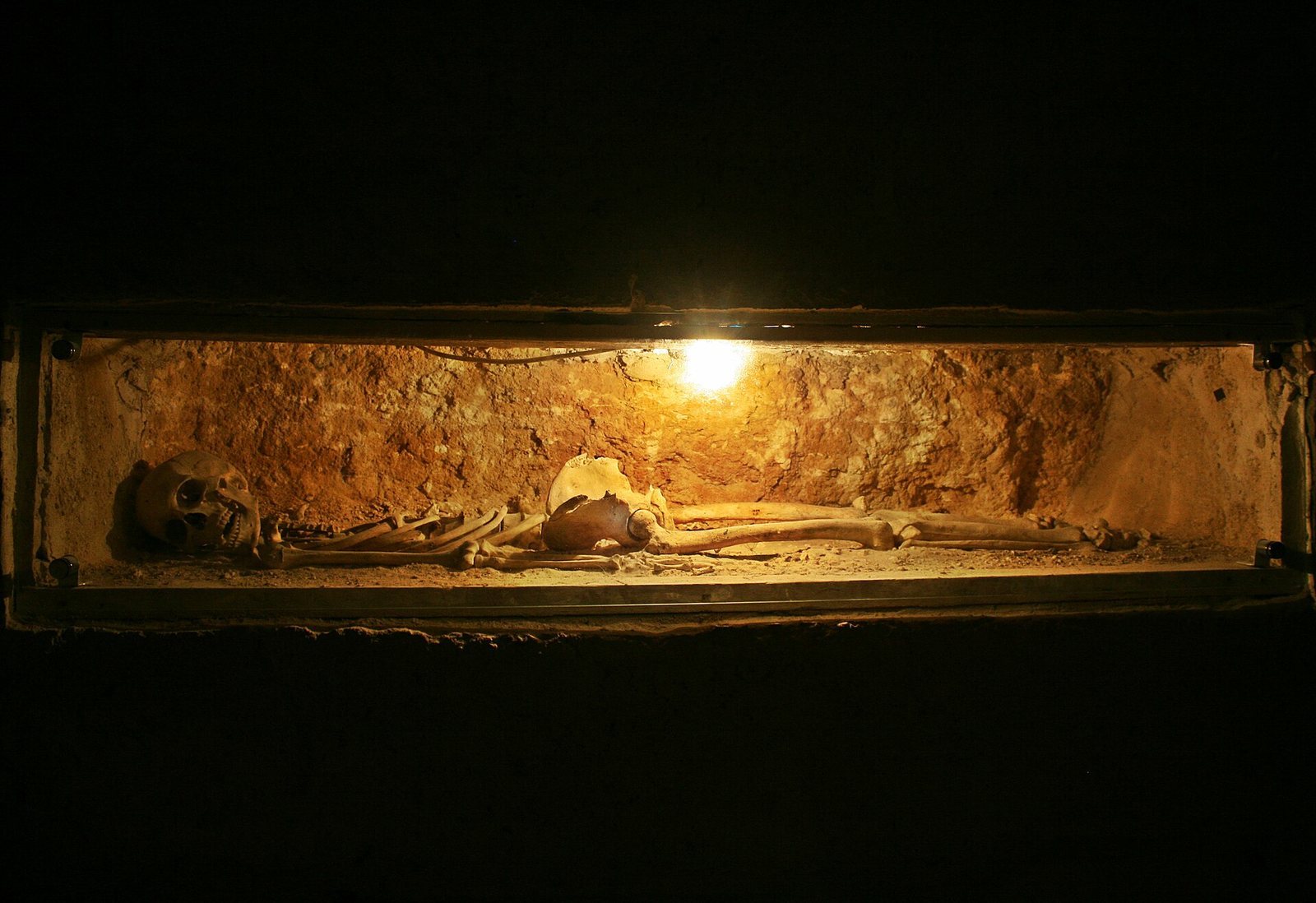
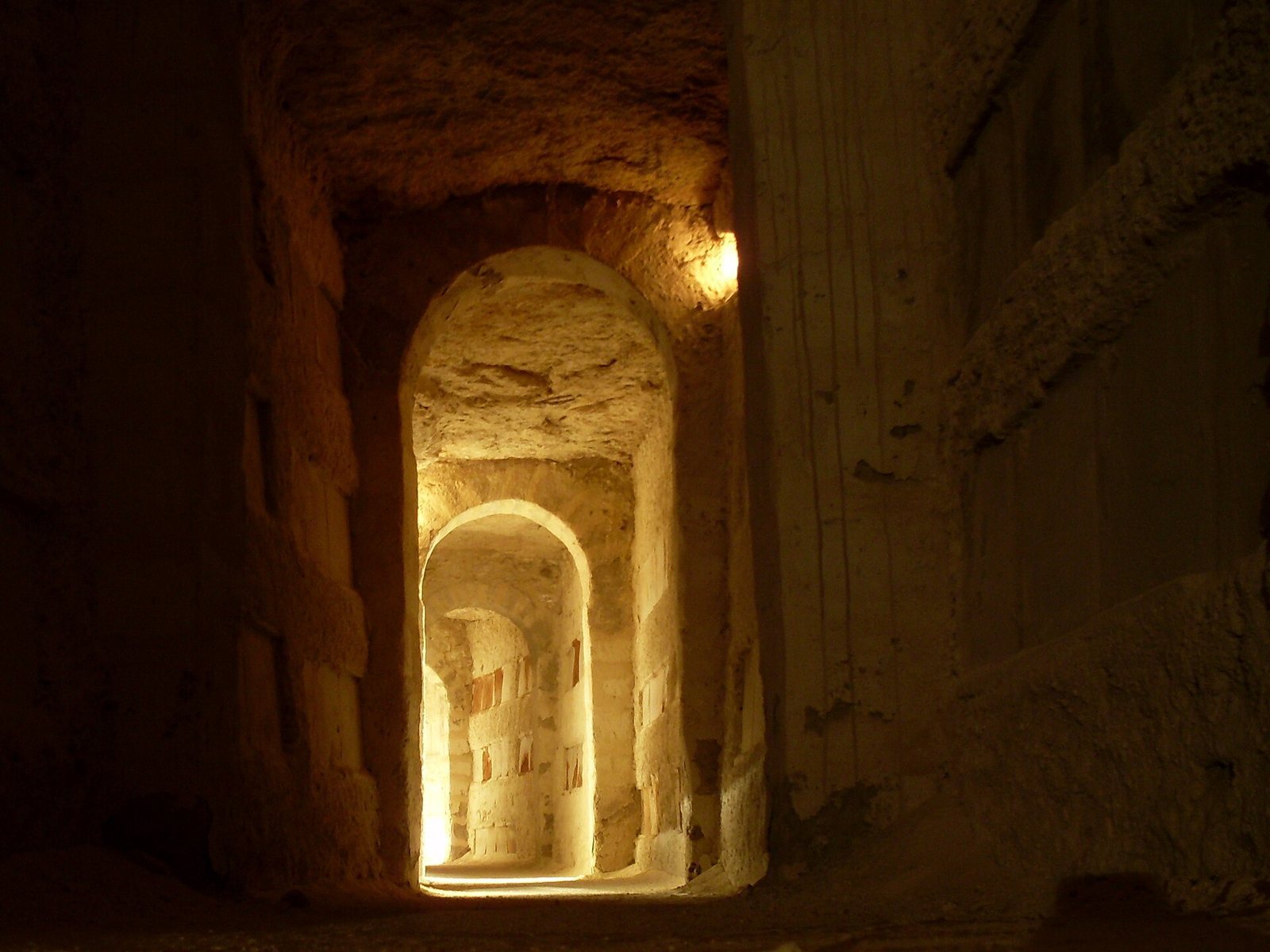
The underground galleries lie west of Sousse’s medina, in the northwestern part of the city. The complex is estimated to contain about 240 galleries, extending roughly five kilometres, and nearly 15,000 burials. Cut into rock, the galleries had openings for light and ventilation, as well as small wall recesses for oil lamps. Burial niches were cut into their sides, sometimes in rows of two to four; where the walls offered limited room, graves were also dug into the floors. Bodies were wrapped in shrouds and sometimes covered with lime. Terracotta tiles or marble slabs sealed the graves, and some bore names or religious signs. Burial places for people of distinction occupied curved recesses with painted or plastered decoration. Earth from newly opened galleries was placed in disused ones, helping preserve them. Their design has been compared with Rome’s catacombs, though those at Sousse are more modest in scale.
Principal burial areas
Good Shepherd Catacomb
This burial ground began as a pagan cemetery. It contains 115 galleries with a combined length of about 1,557.5 metres and 4,924 graves. Its features include two family burial chambers, a chapel, and a gallery set aside for infants. The catacomb’s modern name comes from an image of the Good Shepherd, a Christian representation of Christ caring for his followers.
Hermes Catacomb
Dating to the third and fourth centuries, the Hermes Catacomb has galleries extending about 545 metres and roughly 2,000 graves. About 500 of these were cut into gallery floors. Mosaics were found in family burial chambers associated with Hermes and Emilia Flora.
Fourth- or fifth-century Christian catacomb
This Christian burial area has galleries extending about 1,767 metres and contains 3,738 graves. It also includes family burial areas and rooms for meetings.
Third-century pagan catacomb
This burial area dates to the third century and comprises 18 galleries, about 170 metres in total length, with 172 graves.
Family chambers and funerary evidence
Family tombs and meeting rooms
Some galleries open into chambers for family burials, and the complex includes many underground family tombs associated with wealthy Sousse residents. Excavated rooms with benches may have been used for funeral meals. These rites drew on pagan customs.
Inscriptions, images, and objects
The labels Agrippa, Hermes, and Severus come from funerary inscriptions, while Good Shepherd refers to a figurative image. Inscriptions and burial objects from the catacombs are preserved at the Sousse Archaeological Museum. The finds include marble epitaphs, engravings of fish, doves, and the Good Shepherd, and a plain marble sarcophagus made for a child. Other Christian images include crosses, linked letters, fishing from a boat, anchors, doves carrying olive branches, and vessels filled with grapes.