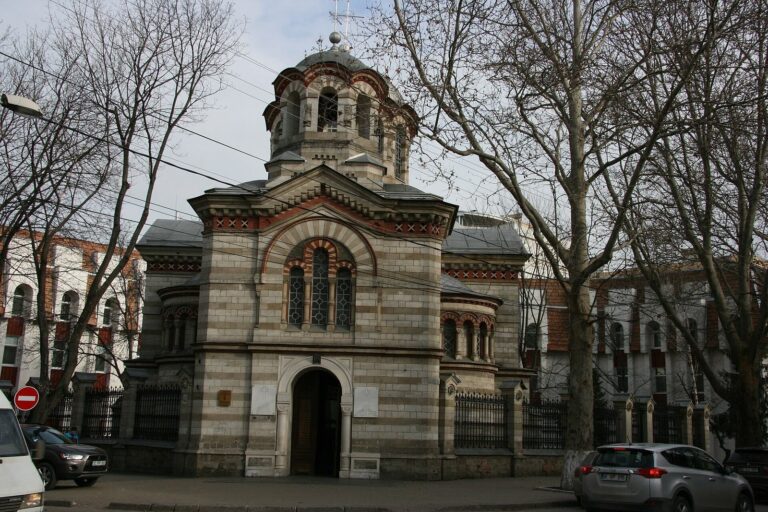
Former Jewish Hospital of Chișinău: A Historic Medical Complex
Site at a Glance
- Popularity
- Very Low
- Country
- Moldova
- Primary era
- Modern
- Eras represented
- Modern
- Civilizations
- Russian
- Site type
- Civic
- Remains
- Hospital
On this page11 sections
History
The former Jewish hospital of Chișinău is a Jewish community medical complex in Moldova. Its initial construction is dated to 1822–1830, while a 1872 report by senior board member Jidovețki gives 1823 as its foundation year. The later complex is associated with eclectic architecture, neoclassical elements, and Art Nouveau.
Foundation and administration
In November 1822, a proposal to the Bessarabian Regional Government described funds raised by Christian and Jewish communities to establish a hospital for Jewish patients. It began in two modest houses. In 1836, the institution was reorganized for 30 beds and placed under the Bessarabian Public Welfare Service, an imperial agency responsible for public assistance. It followed the rules for the city’s civilian hospitals. An economist and two guards, elected by the Jewish Society for three-year terms, served the institution.
In 1842, military governor P. I. Fedorov reported that the kitchen was cramped and deteriorated, and called for rooms for an office and food storage. A proposed service building included a kitchen, staff rooms, a bath, laundry facilities, and wards; a nearby stone auxiliary building was also considered necessary. Mikhail Vorontsov, governor of Bessarabia and Novorossiya, submitted the project to the Ministry of Internal Affairs, which approved 692 silver rubles and 42 kopeks for hospital service buildings. State Councilor Perovsky required the work to be carried out by contract or economically, with expenses accounted for and hospital funds carefully managed.
Expansion and reform
At the wish of Count Stroganov, governor-general of Novorossiya and Bessarabia, the Jewish Society expanded the hospital in 1862 by 50 beds and 20 places in its reception ward. In 1865, a board elected by the Jewish community for six-year terms took responsibility for the institution. Its funds came from both reserve capital and the Public Welfare Service.
The hospital was in poor condition when the new board took office on 25 November 1865. Premises and beds were infested with insects, clothing and bedding were dirty and torn, and patients slept on straw mattresses with hard, coarsely filled pillows. Donations from board members and the community enabled a pharmacy to open, supplying medicines to inpatients and providing them free to poor patients. Reforms introduced after 24 August 1866 allowed doctors to prescribe extra food and drink, including beef, bread, milk, and wine. Clothing and linen supplies increased, and the hospital was cleared of bedbugs and cockroaches. For more than six years, the board also gave tea and sugar each day to patients and people in need at the almshouse, a charitable residence.
Growth into a pavilion hospital
In the early 1870s, the hospital board sought space for at least 100 additional patients. Plans took shape for a larger institution spread across an extensive site, with separate hospital pavilions. An infirmary, a facility for treating sick or wounded people, was established there in 1878 and treated many wounded people the following year.
Despite its growth, the hospital faced serious constraints in the 1880s. It had 15 rooms and 120 beds, as well as an almshouse with 20 beds and a pharmacy, but its budget was limited. Carbolic acid was often its only antiseptic. Patients sometimes had to share beds, and urgent operations were performed on patients’ beds because there was too little space.
Reconstruction and later service
The main building was reconstructed in 1892, and plans for that work and an infectious-disease building were prepared in March of that year. Construction across the complex proceeded in stages from the 1880s into the early 20th century. The buildings opened in autumn 1898. By 1 January 1889, 117 patients were in the hospital; 1,527 had been admitted during the year, and 1,644 people had been treated in total. Of these, 1,374 recovered and 140 died, a mortality rate of 8.8 percent.
Chief physician M. B. Sluțki led the hospital for more than 35 years. During the 1903 Chișinău pogrom, a violent attack on the Jewish community, the hospital became a center for aid to victims. The hospital reopened during the Soviet period and was considered one of the city’s best. Its surgery, general medicine, and ear, nose, and throat departments were initially led by professors from the Leningrad Medical Institute who settled in Moldova after the war and joined its medical institute.
The complex is recognized as a historical, architectural, and art monument of national importance. It is included in Moldova’s state-protected monuments register as number 241.
Remains
Layout and buildings
Site plan
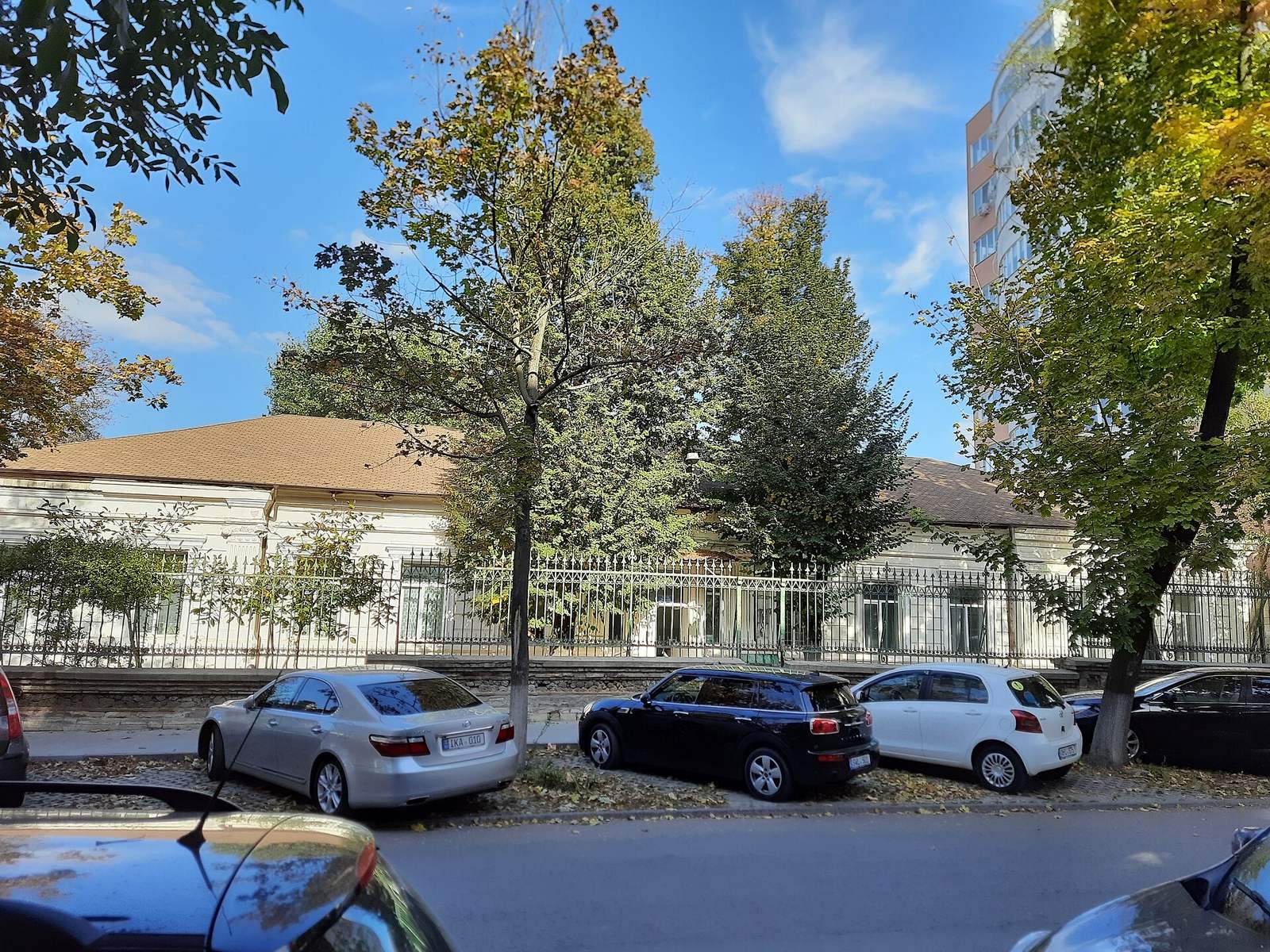
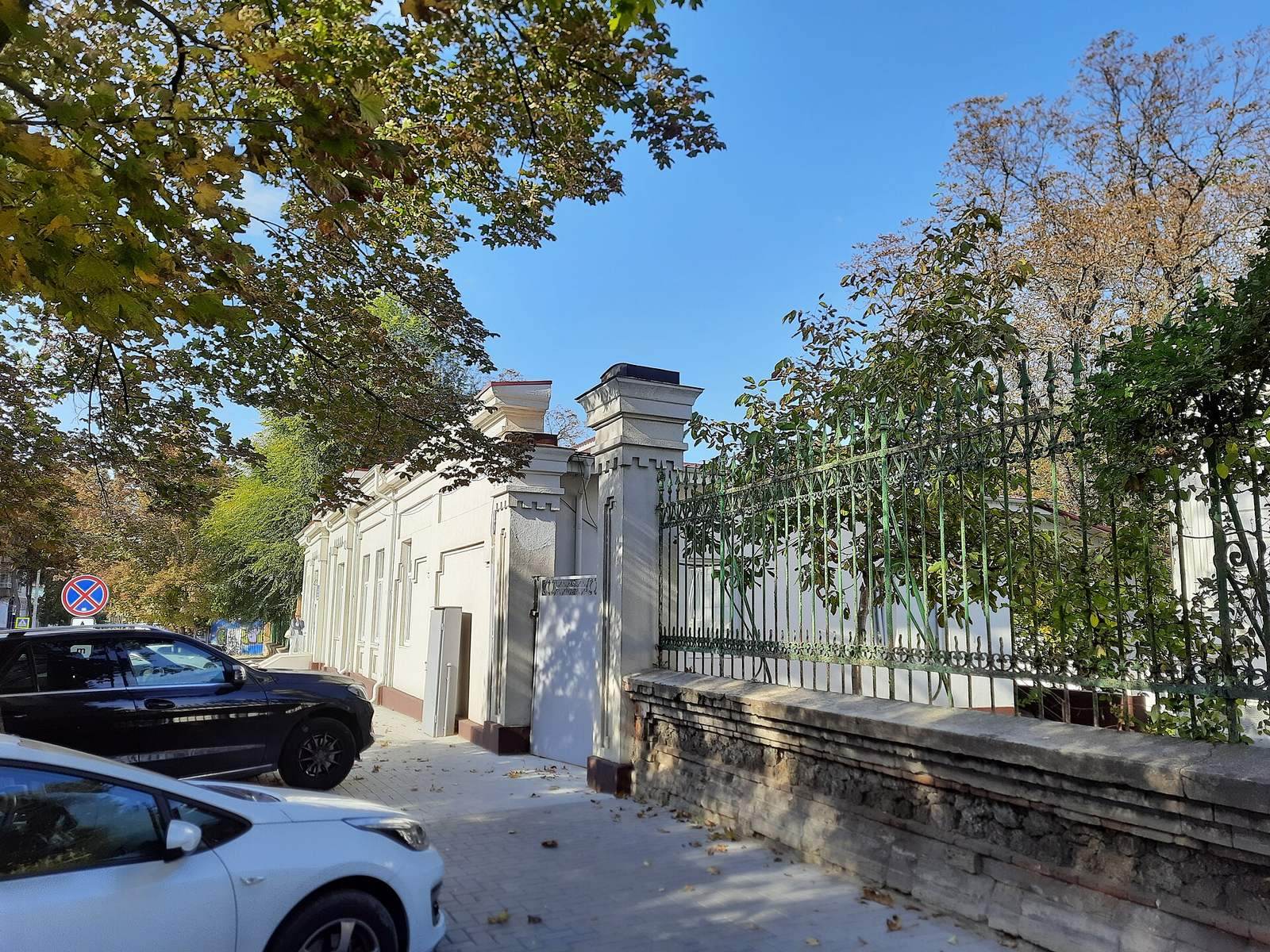
The hospital developed gradually across an extensive area, with separate pavilions arranged freely rather than in a rigid block. The surviving ensemble reflects this staged growth, which extended from the late 19th into the early 20th century.
Main building
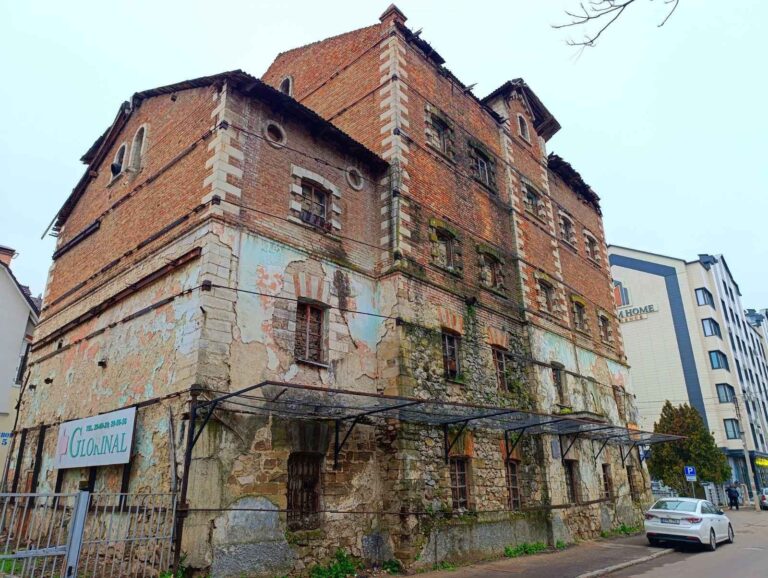
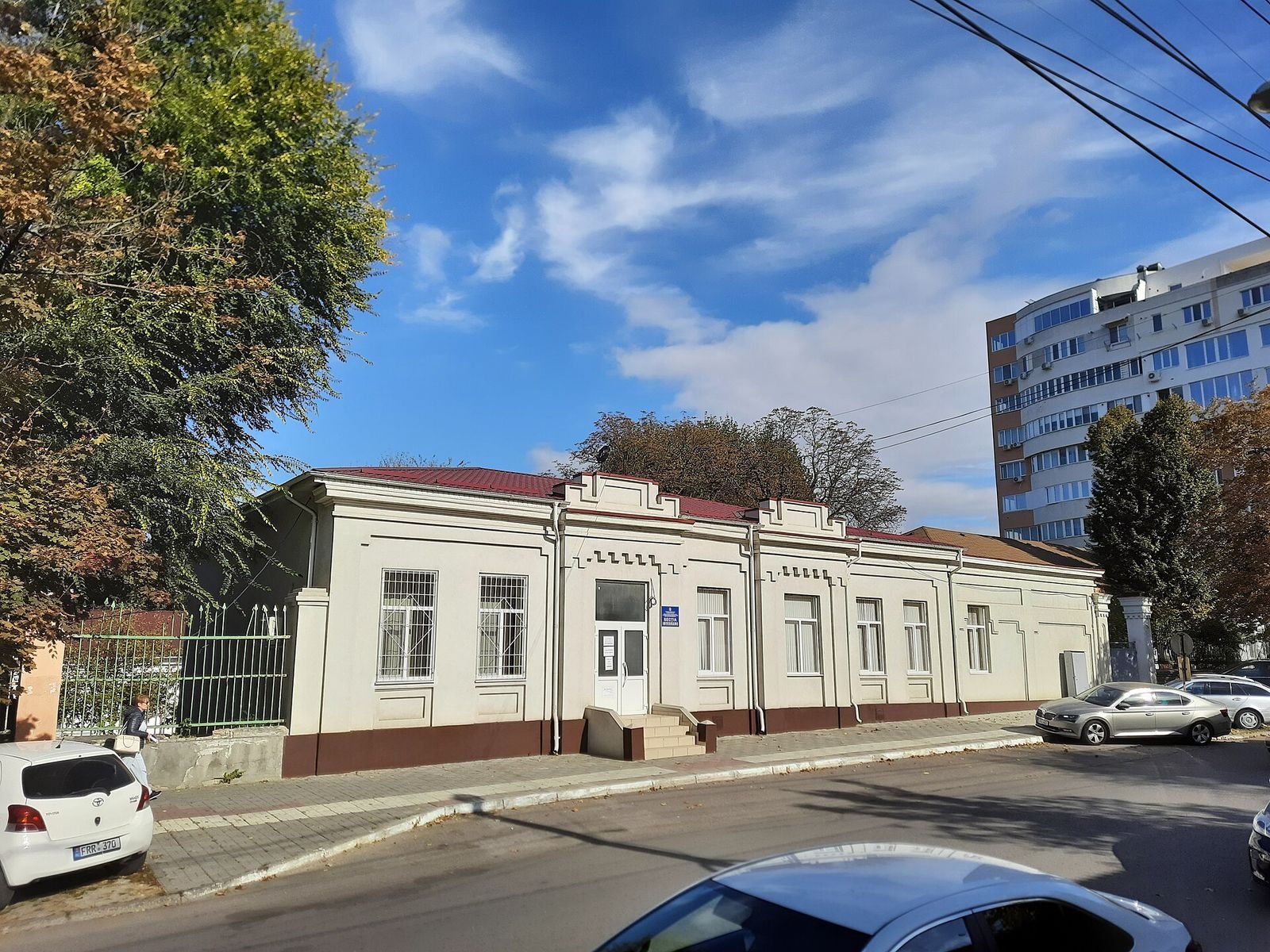
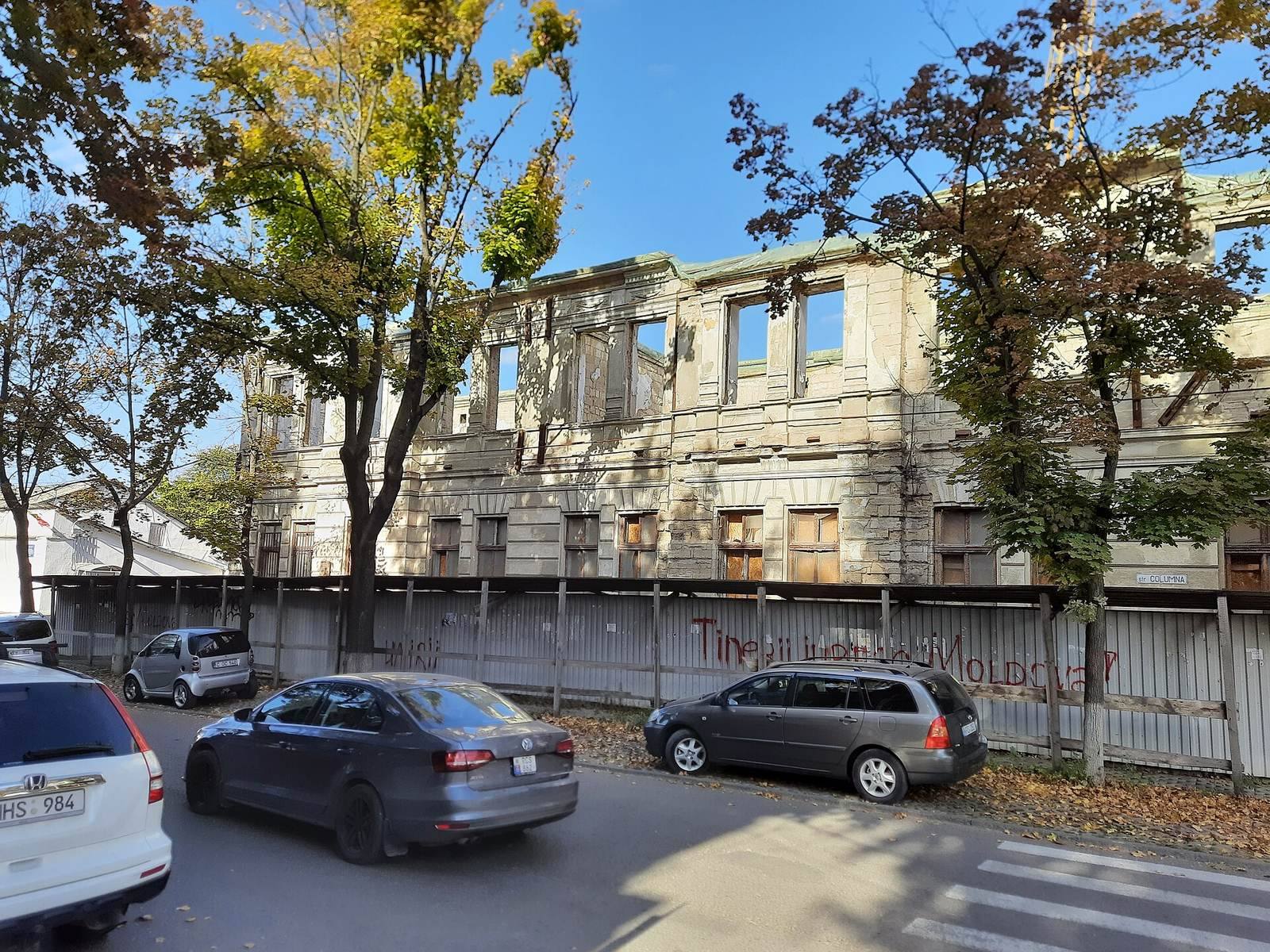
The main building rises two and a half storeys. Its principal front is symmetrical, with three projecting sections: one at the center and one on each side. Each projection is topped by a triangular pediment, and one contains the street entrance. Horizontal bands finish the ground-floor exterior. The building contained an outpatient clinic for patients not staying overnight, wards, and doctors’ apartments. The kitchen may have been located there, and it is there today.
Other hospital buildings
The complex included an administrative building, a pharmacy and laboratories, an old people’s home, an infectious-disease building, and several pavilions. The administrative building, pharmacy, and laboratories date to 1889–1890. A two-storey surgical pavilion was built between 1887 and 1901, while pavilions, the old people’s home, and the infectious-disease building were constructed in 1897–1898.
Condition
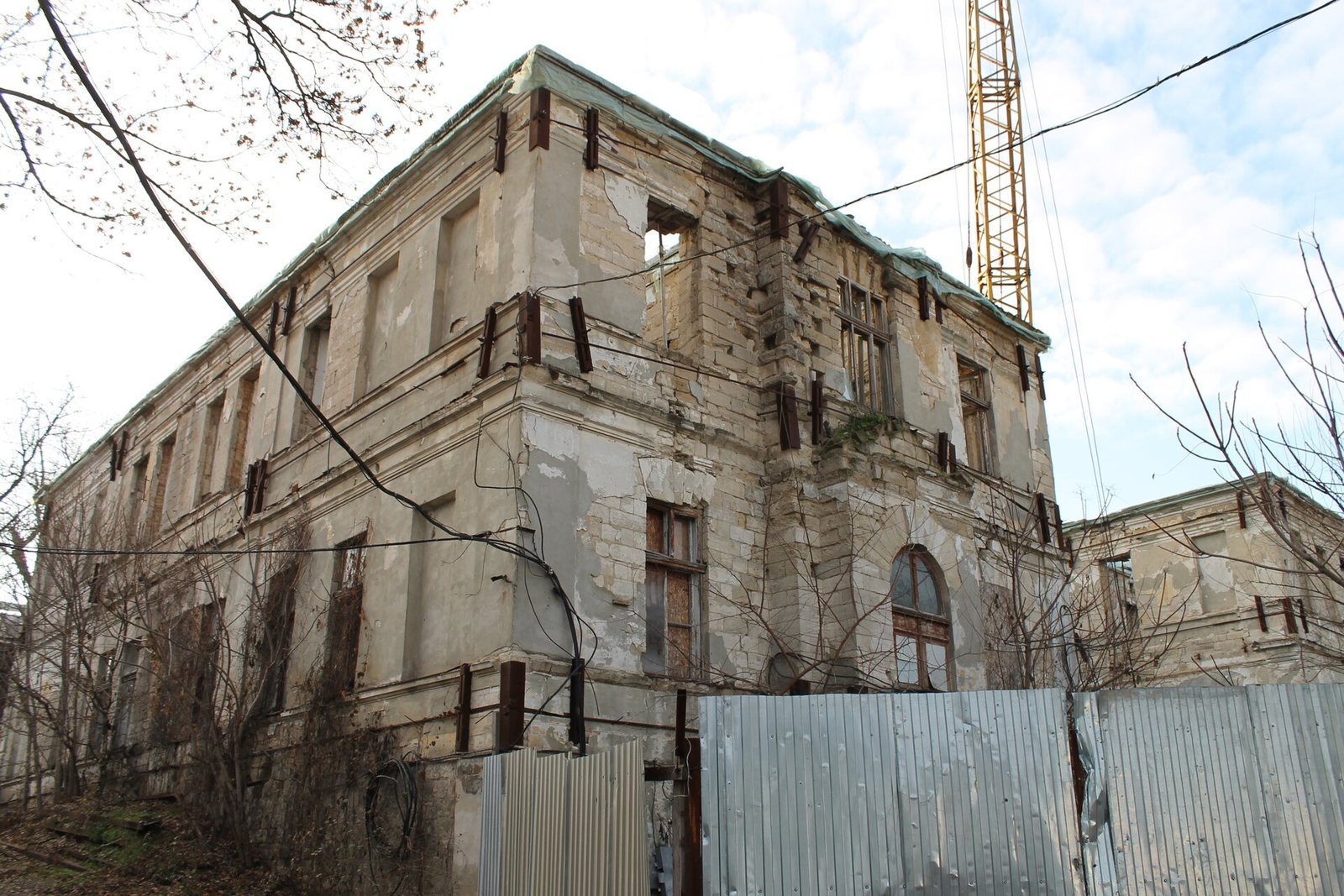
By December 2024, the building was ruinous and severely deteriorated.