Saint Cajetan Church, Rașcov: Moldova’s Oldest Catholic Church
Site at a Glance
- Popularity
- Low
- Country
- Moldova
- Primary era
- Early Modern
- Eras represented
- Early Modern
- Civilizations
- Polish–Lithuanian Commonwealth
- Site type
- Religious
- Remains
- Church
On this page4 sections
History
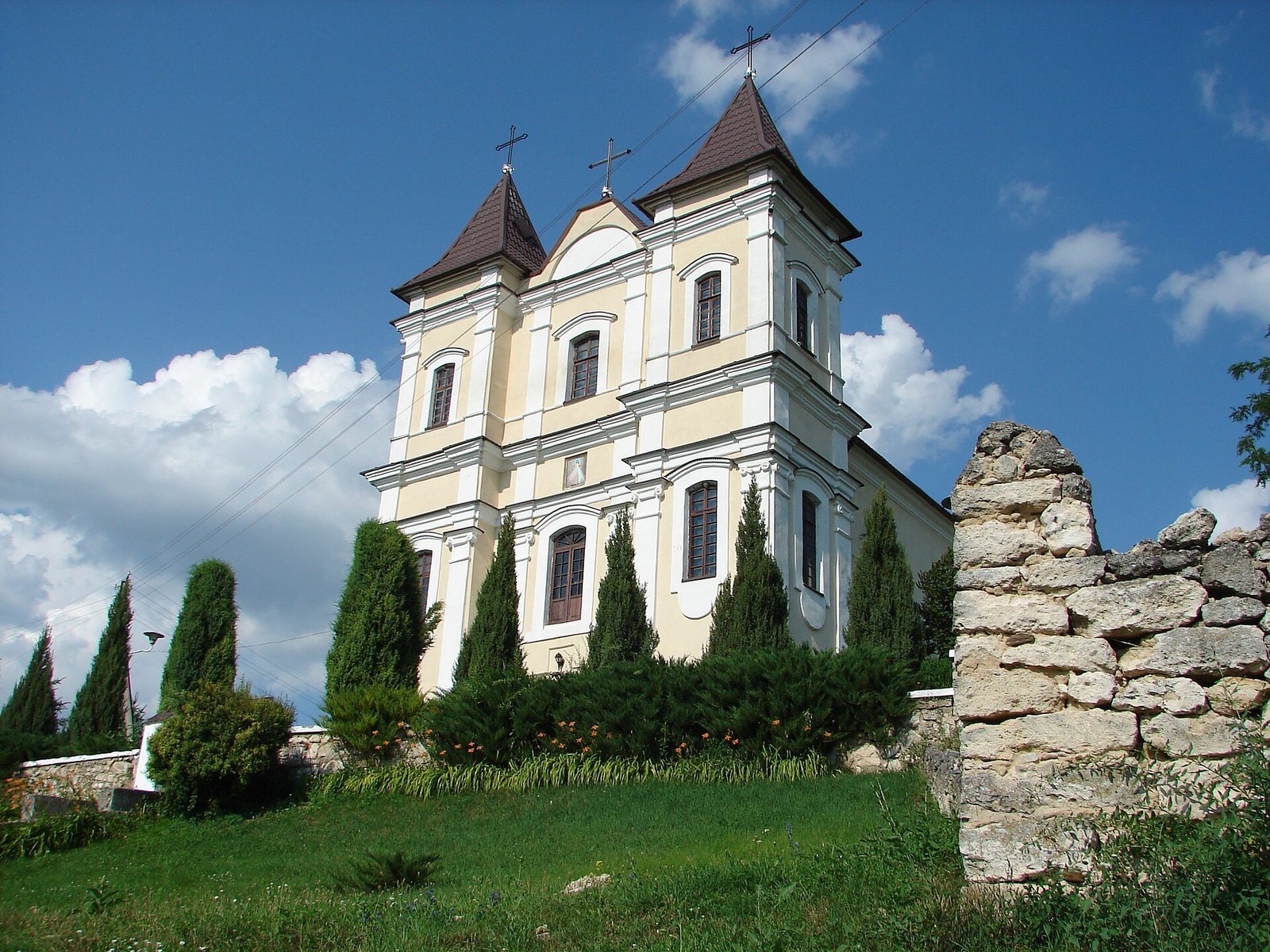
Saint Cajetan Church is an active Catholic parish church in Rașcov, Moldova, in northern Transnistria, a territory claimed by Moldova and administered de facto by Transnistrian authorities. Dedicated to Cajetan of Thiene, a sixteenth-century Italian Catholic priest and saint, it is Moldova’s oldest Catholic church. Its construction date is uncertain, but it was consecrated in 1791; its architecture is described as Neo-Gothic with Baroque elements.
Catholic settlement and consecration
Catholics began settling in Rașcov during the sixteenth century, as northern Transnistria became part of the Polish-Lithuanian Commonwealth, a state formed through the union of the Kingdom of Poland and the Grand Duchy of Lithuania.
A document from 1749 records local estate owner Józef Luborski’s intention to build a church in Rașcov. The church was initially intended for the Armenian Catholic community, whose Christian traditions remained in communion with Rome. In 1791, Jakub Walerian Tumanowicz, the Armenian archbishop of Lviv, consecrated it. By the late eighteenth century, the parish served 12 Armenian and 37 Polish families. By the late nineteenth century, Rașcov and its surroundings had 1,160 Catholics.
Closures and return to parish use
Soviet authorities closed the church in 1932. Romanian occupation authorities reopened it in 1942, but it was closed again in 1948 and used as a warehouse. In 1990, it was transferred to the local Catholic community and subsequently underwent extensive renovation. It now serves the Rașcov parish, follows the Latin Rite, and belongs to the Diocese of Chișinău, a church jurisdiction overseen by a bishop. The church also lies within the protected Rashkov Cultural-Historical Complex.
Remains
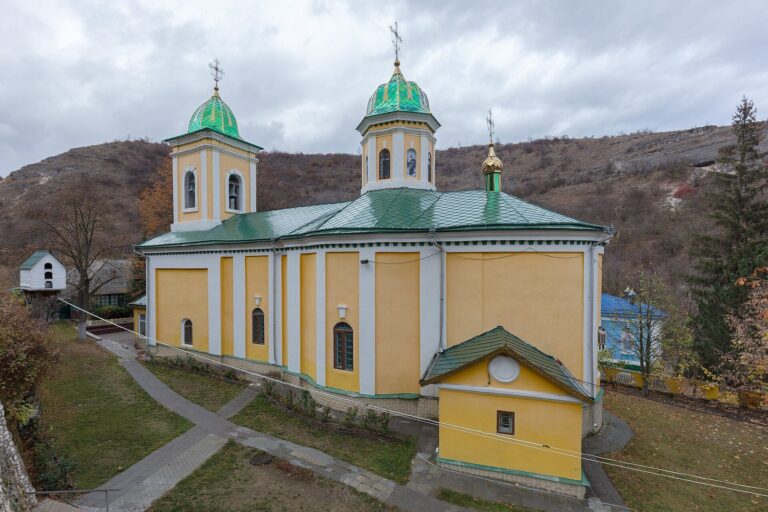
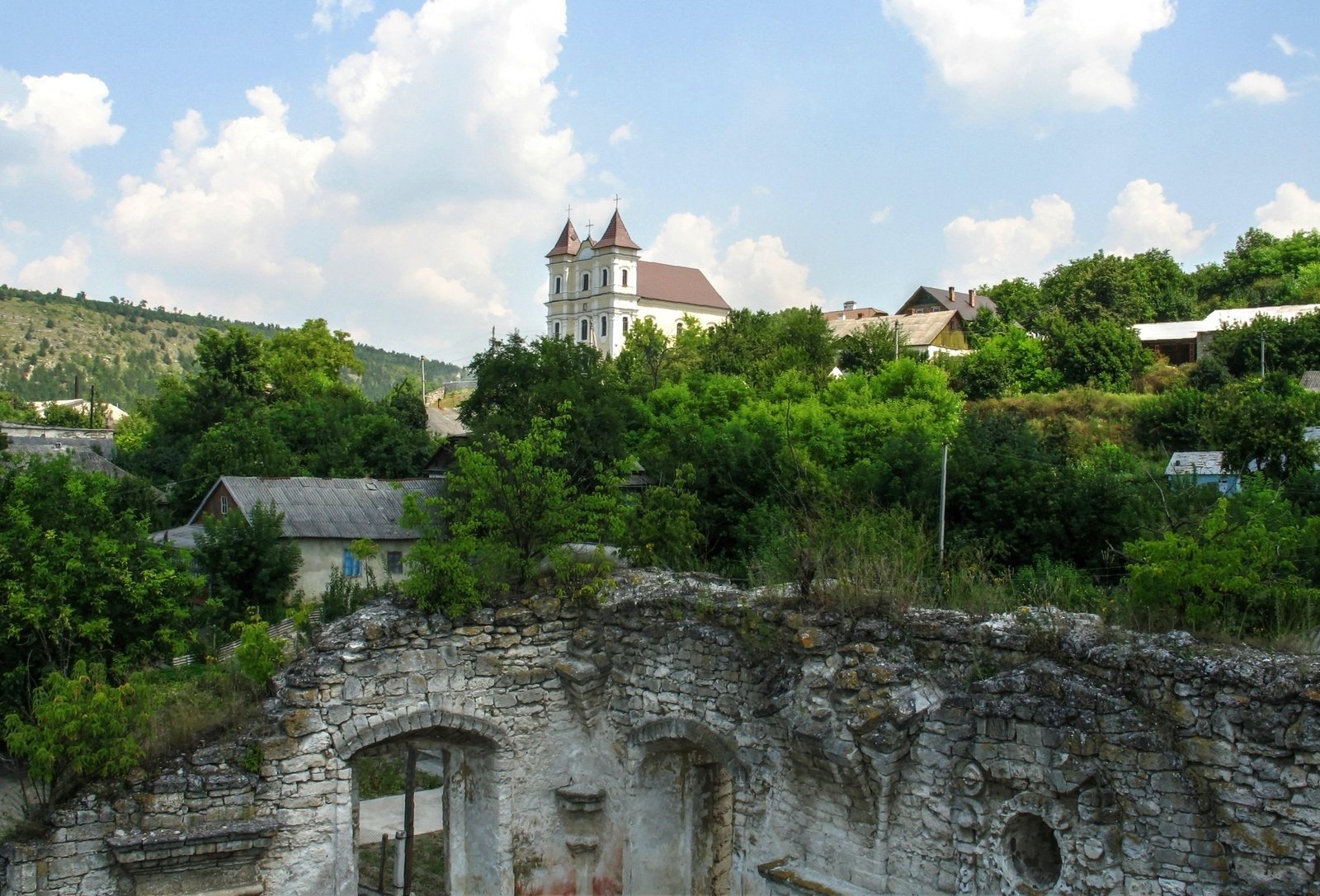
The church stands on a high, rocky bank of the Dniester. Together with the Orthodox Holy Trinity Church, built in 1779, it forms an architectural landmark of Rașcov. Projections divide the main façade and mark two towers, which are decorated with pilasters, shallow wall features resembling columns, in Ionic and Tuscan designs, two classical column styles. The wall pilasters have plant ornament on their upper sections, a detail associated with Renaissance design.