Saharna Monastery: An Eastern Orthodox Monastery in Moldova
Site at a Glance
- Popularity
- High
- Country
- Moldova
- Primary era
- Modern
- Eras represented
- Medieval, Early Modern, Modern
- Civilizations
- Ottoman, Principality of Moldavia, Russian
- Site type
- Religious
- Remains
- Monastery
On this page16 sections
History
Saharna Monastery is an Eastern Orthodox monastery in the Saharna valley of Moldova, founded in 1776 by the monk Bartholomew. It grew from an earlier hermitage into a religious community and pilgrimage center, and its churches continue to serve nearby communities.
Origins and foundation
Christian hermits probably lived in caves at Saharna from the 13th century. A small monastic community, or skete, is associated with the site in the 16th and 17th centuries. Saharna appears by name in a 1495 document of Ștefan cel Mare, also known as Stephen the Great, a 15th-century prince of Moldavia. In 1602, after local official Bucium died, his widow Antemia and their son were allowed to keep one-third of his land. Constantin Hrisoverghi owned Saharna by 1733.
Bartholomew left his home in 1766 and arrived at Saharna ten years later. According to local tradition, he saw a shining apparition of the Virgin Mary, the mother of Jesus in Christian belief, on Grimidon rock. He climbed to the rock and found a footprint in the stone, which the apparition was said to have identified as the place for a monastery. Bartholomew founded the community and built its first wooden church in 1776. Donations of land helped it expand, and he continued developing it until his death in 1798.
Growth in the 19th and early 20th centuries
The monastery’s principal summer church, used for worship in warmer weather, was built from 1818 to 1821 and dedicated to the Holy Trinity, the Christian belief in one God as Father, Son, and Holy Spirit. It was probably consecrated in 1821 by Metropolitan Veniamin Costache, a senior Moldavian Orthodox church leader. Its screen of icons was renewed in 1837. In 1842, the dissolved Gorodishche Monastery of the Dormition was attached to Saharna as a skete. The Dormition is the Orthodox feast commemorating the Virgin Mary’s death and being taken into heaven. The cave section was restored in 1857.
A winter church for worship in colder weather, dedicated to the Nativity of the Virgin, was built in 1883. The monastery leased a watermill from the Horodiște hermitage in 1884 for an annual rent of 25 rubles. A mill, warehouse, and guesthouse are associated with the years 1900 to 1911.
By 1904, the community had 20 monks and cultivated wheat, maize, barley, and beans. Benefactor Eugenia Apostolopulo-Bogdan supported renovations, established a primary school and an Archangel Michael Church in Saharna, and encouraged local grape growing. Local residents Ippolit Terletsky and Vasily Kornyanu reconstructed the caves in 1900.
Convent, closure and revival
In 1918, Saharna became a nunnery and took the name Regina Maria, meaning “Queen Marie,” in honor of Romania’s queen consort. The community grew to about 70 nuns, and the monastery prospered economically until around 1950.
Soviet authorities closed the monastery in 1964, suppressed religious practice, and destroyed church furnishings. The buildings were put to other uses as a psychiatric hospital: monks’ cells became wards, the summer church was used for storage, and the winter church became a cultural center. The monastery reopened as a men’s community on 19 April 1991 under Archimandrite Adrian Baciu, a senior rank in Eastern Orthodox monastic life. The summer church was restored from 1992 to 1998 and the winter church from 2005 to 2010.
Macarie Tincu (1888–1969), a former head of the monastery, was canonized in 1995 as Saint Macarius of Saharna; his remains are kept at the monastery. Saharna is a pilgrimage destination, and the Holy Trinity Church serves Saharna, Saharna Nouă, and Buciușca for Sunday worship, baptisms, weddings, and Orthodox memorial services for the dead. The monastery is recognized as an architectural monument of the Republic of Moldova. Its community has 20 residents and belongs to the Moldovan Orthodox Church, within the Chișinău Diocese of the Russian Orthodox Church.
Remains
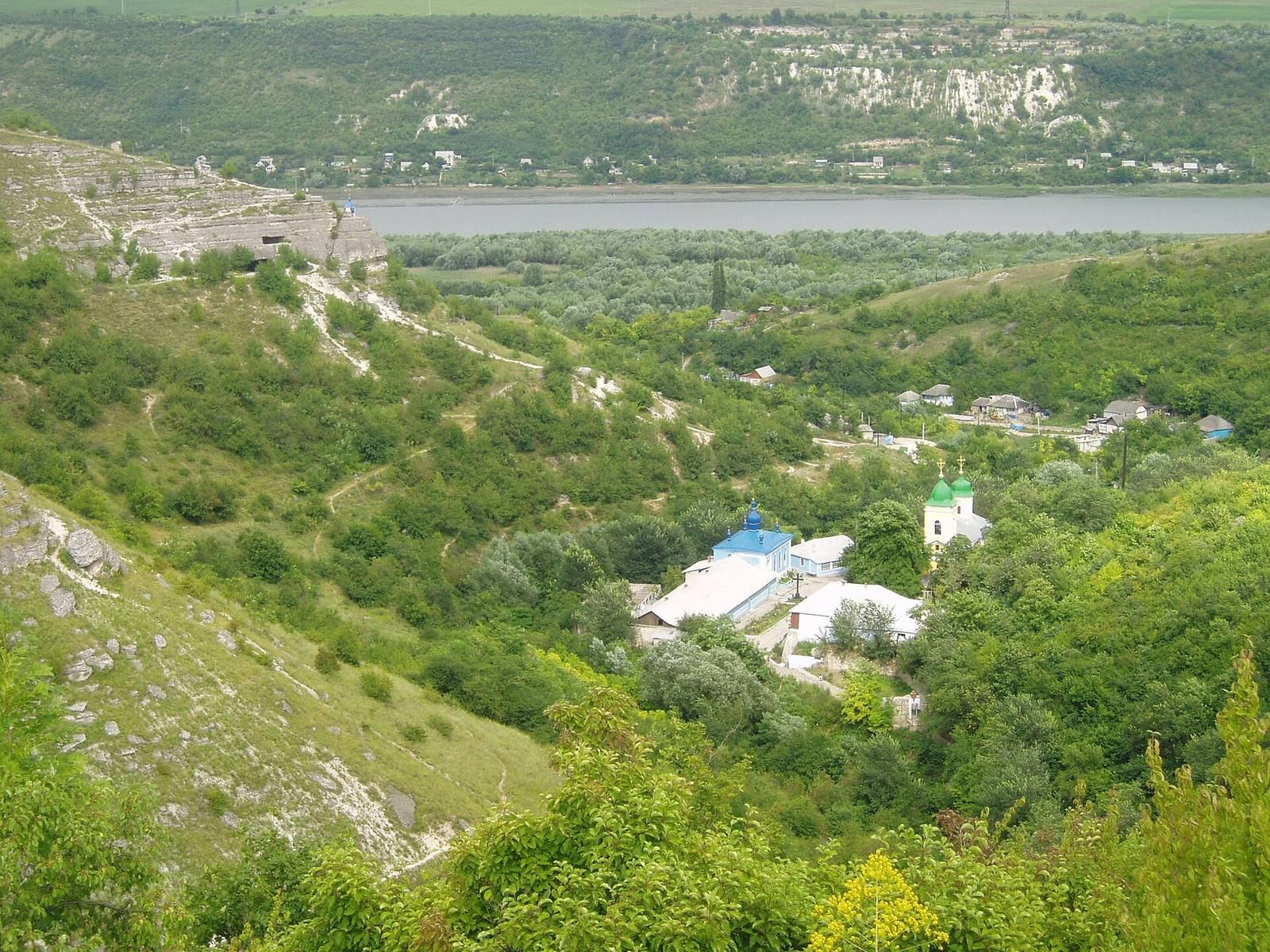
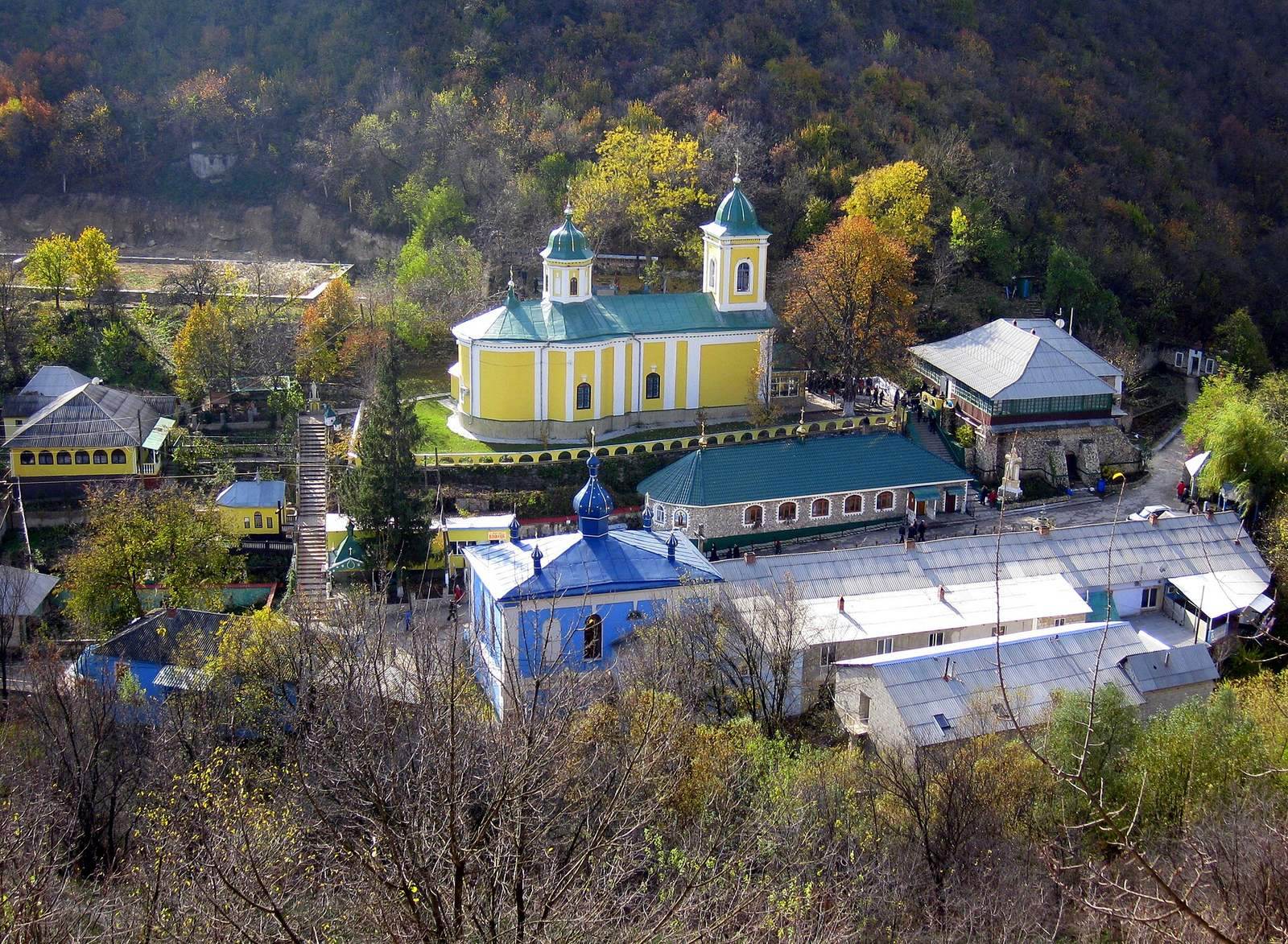
The monastery occupies three rising terraces in a narrow, water-rich side valley on the western bank of the Dniester River, about eight kilometres south of Rezina. Partly bare and partly wooded hills surround the complex. Its buildings include the winter and summer churches, an abbot’s house, a refectory with a kitchen and bakery, residential and service buildings, and wings of monks’ cells. A chapel and the refectory stand beside the winter church, and flower gardens occupy parts of the grounds.
Churches and monastery buildings
Winter church
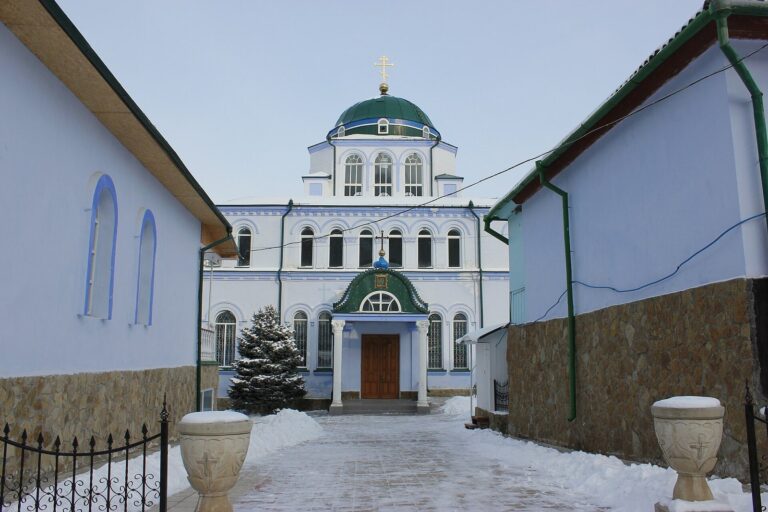
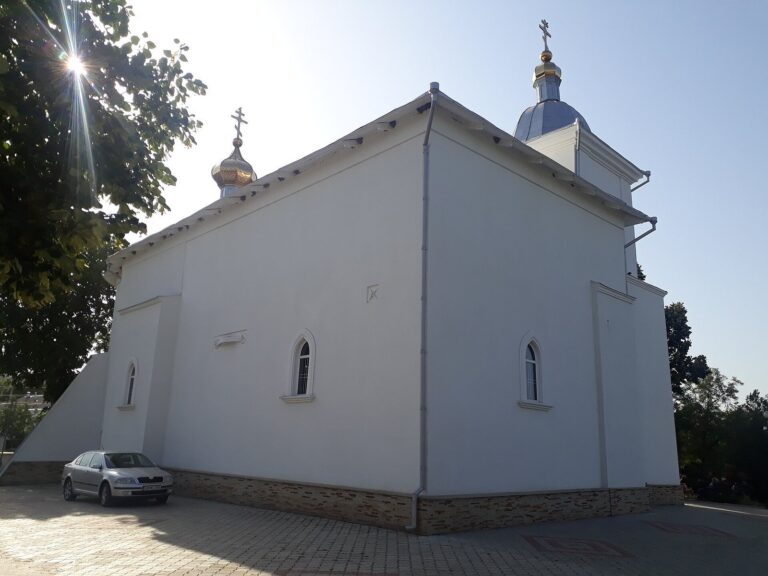
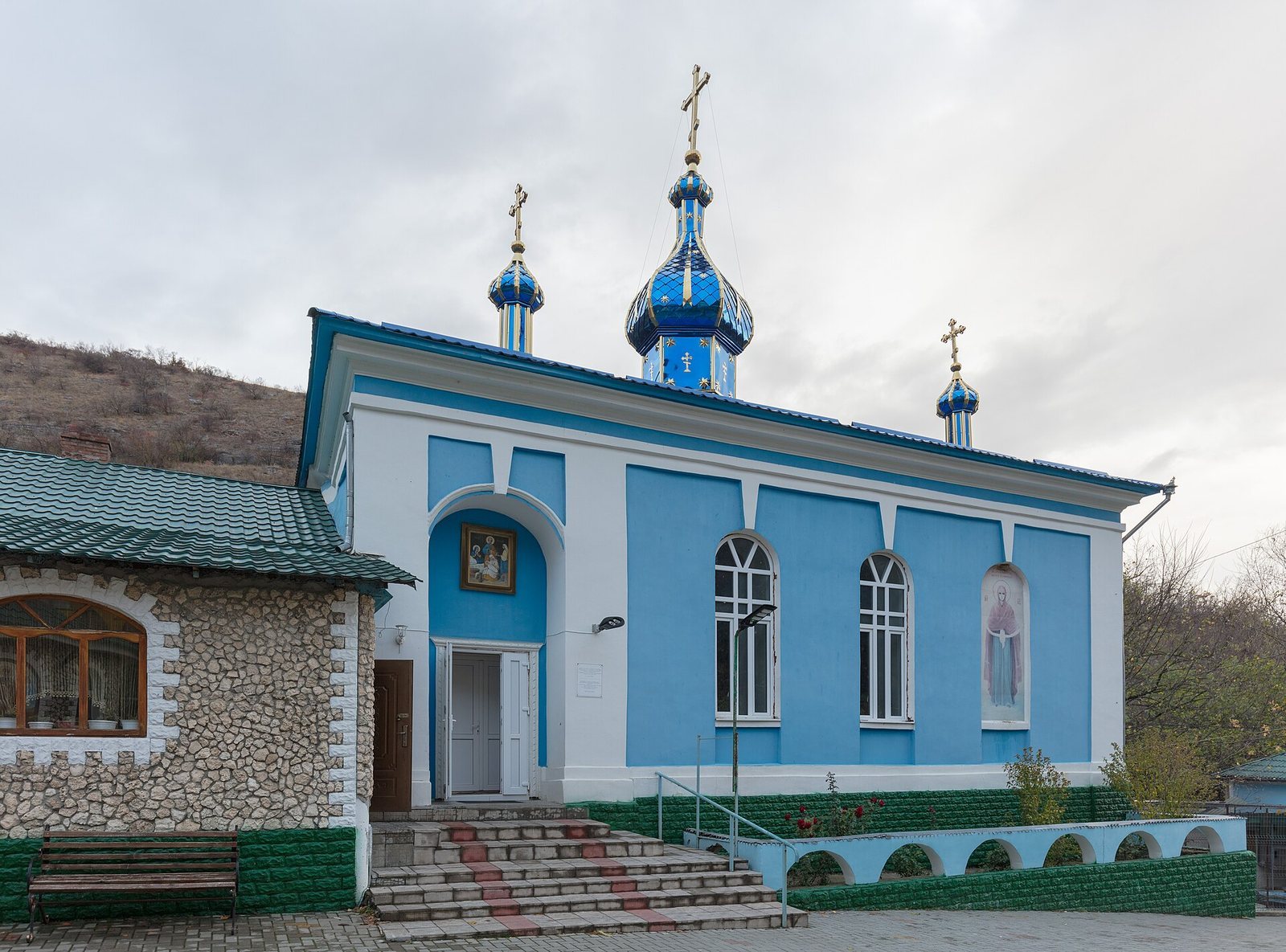
The winter church is a plain rectangle with one main room. A wooden screen of icons stands at its eastern end. A glass-fronted niche in the north wall displays skulls and bones.
Holy Trinity Church
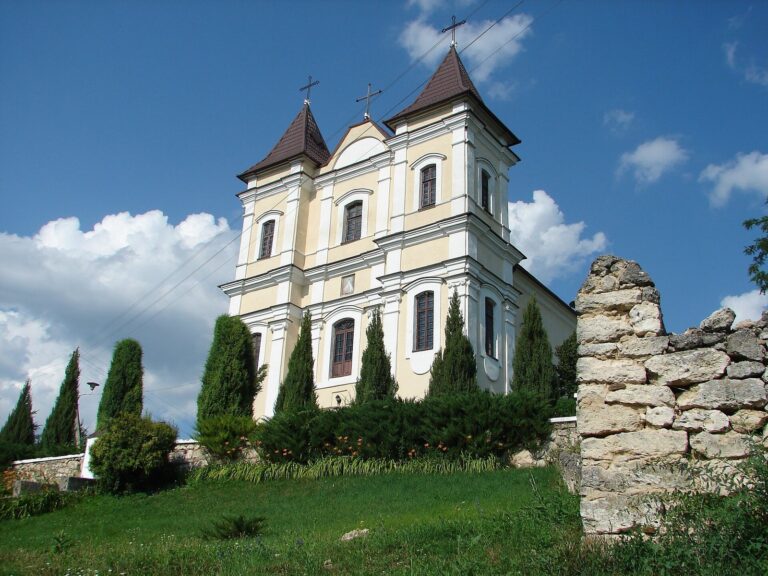
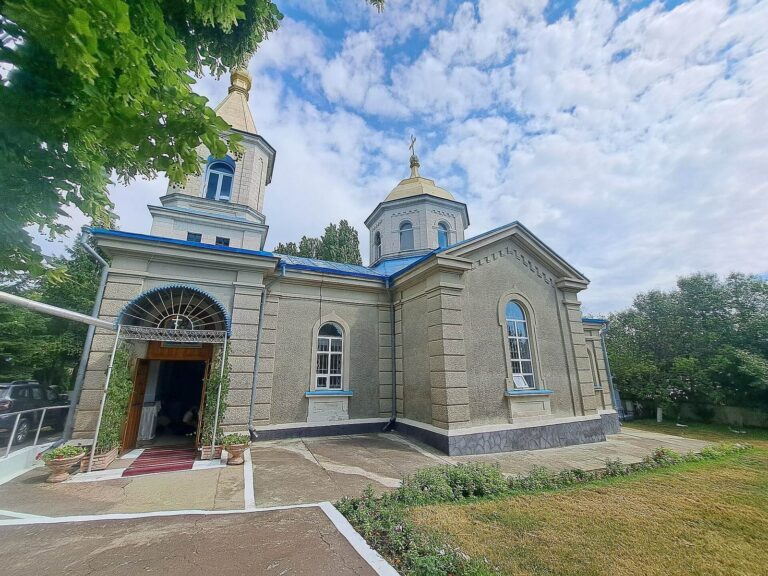
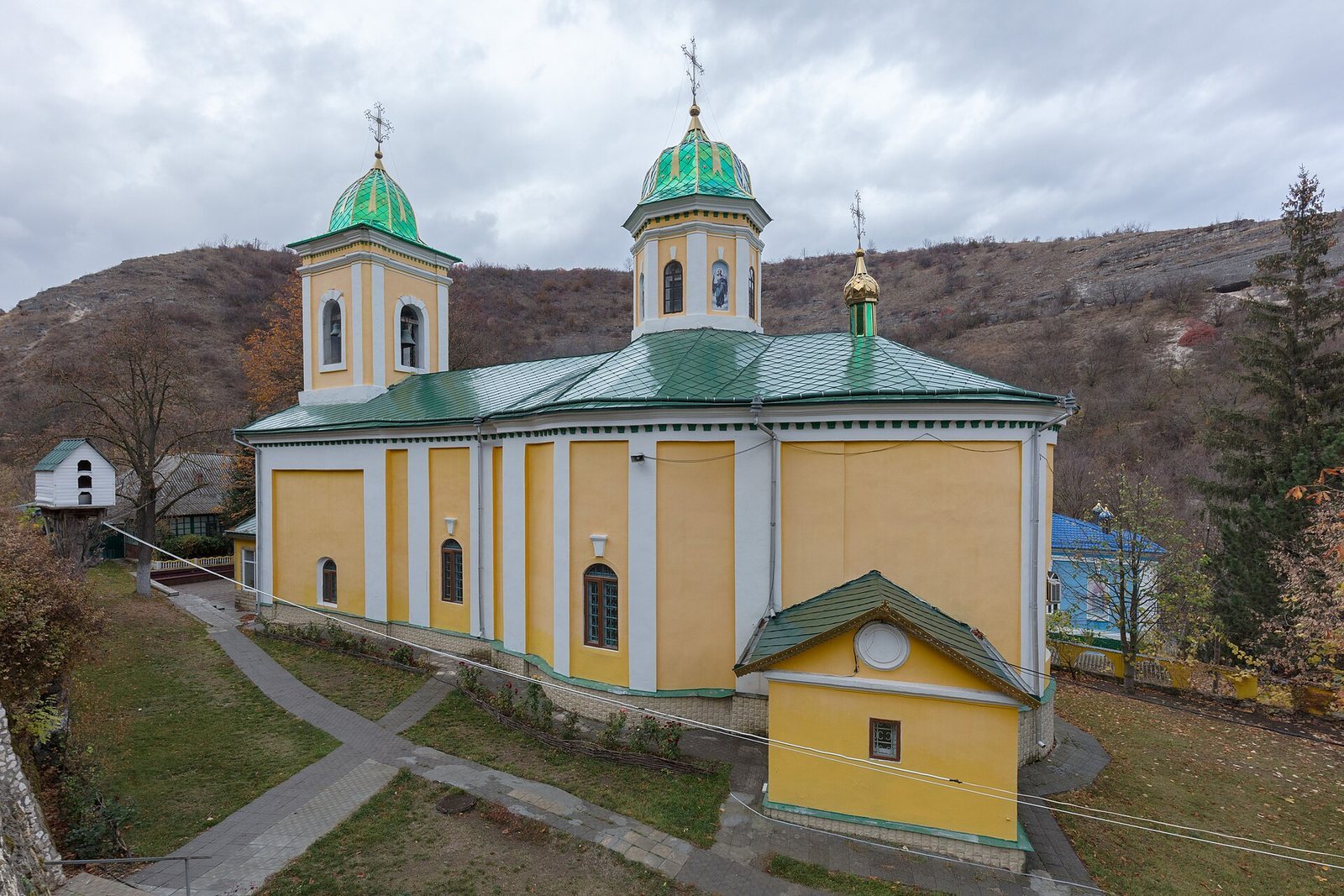
The higher summer church has a square bell tower above its entrance and a smaller, octagonal tower above the crossing, where the church’s crosswise sections meet. Its semicircular apse is the projecting end of the sanctuary. The transepts, the crosswise sections of the church, extend only slightly beyond its side walls. The church’s walls were entirely repainted during a later renovation.
Other buildings and religious objects
The abbot’s house, refectory, kitchen, bakery, residential and service buildings, and cell wings form the rest of the monastery complex. Some icons from the 18th and 19th centuries remain at Saharna, and a shrine within the monastery is especially venerated. An icon of the Virgin Mary is associated with a claim by priests that an image of Christ appeared on her cheek in 2000.
Caves and sacred sites
Cave hermitage
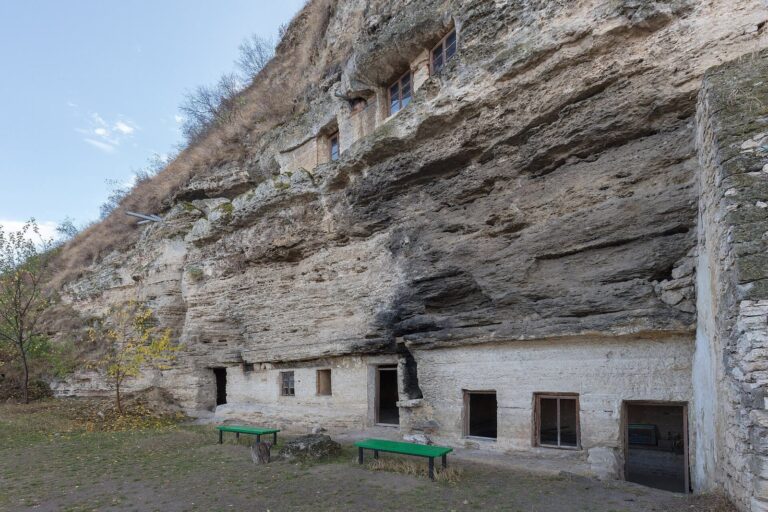
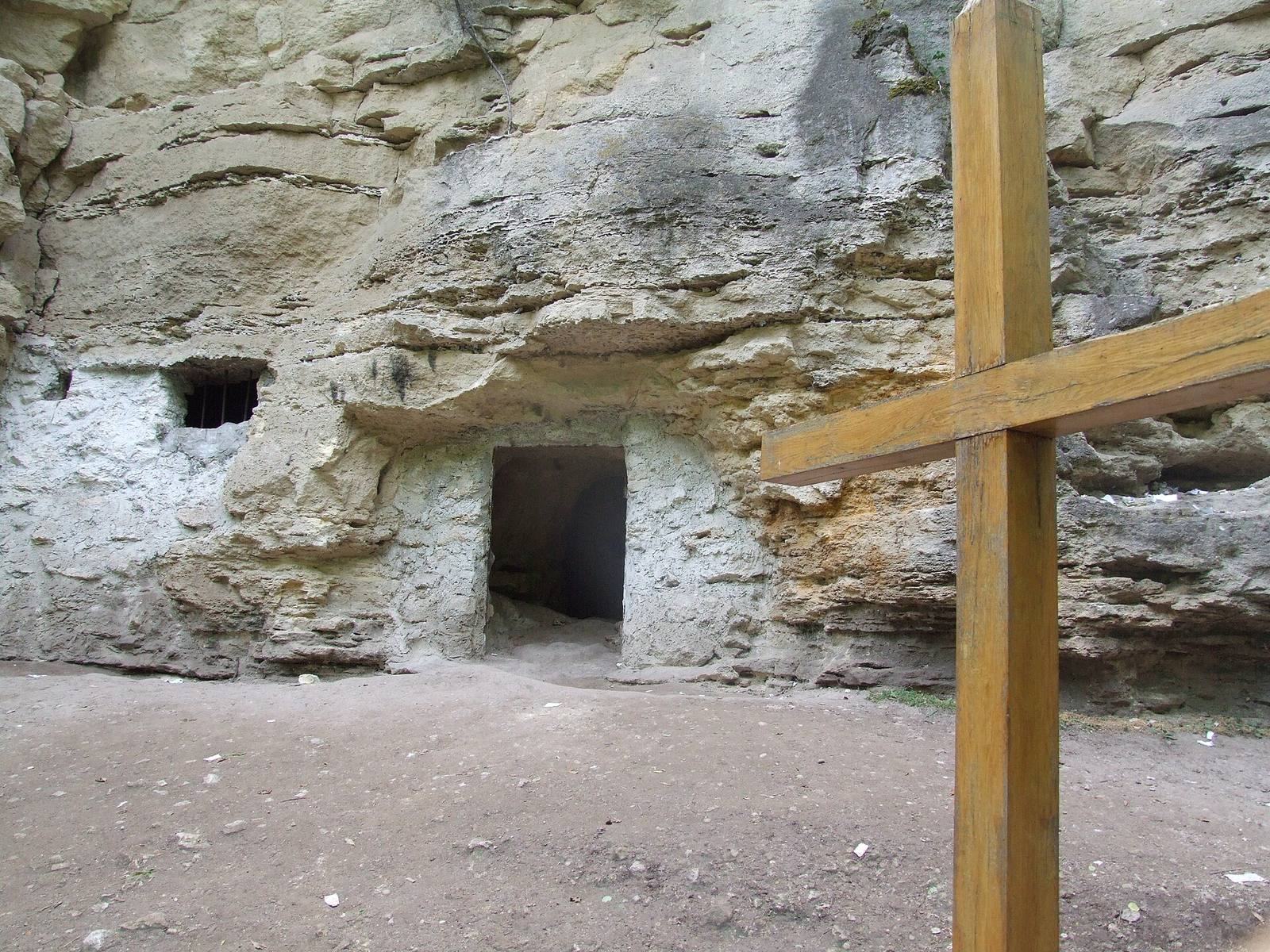
The former monastic caves are cut into a rock face in the densely wooded valley. They contain a cave church and former cells, with icons of saints hung on the walls. During the reconstruction in 1900, the wall separating the church from the cells was removed. The caves are now abandoned and dark.
Grimidon rock
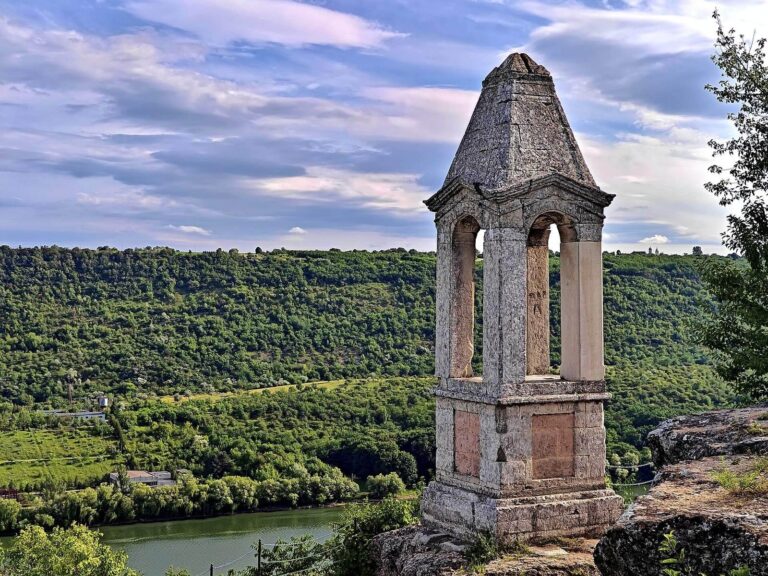
On Grimidon, the highest rock visible from the village, a footprint in the stone is traditionally attributed to the Virgin Mary. A chapel and cross stand beside it, and pilgrims also venerate Mary at a chapel on the summit.
Ritual bathing place
Outside the main complex, a pool receives water from a stream flowing out of a side valley. The water is cold, and people immerse themselves in it. Local belief regards bathing as health-giving and especially meritorious, and attributes cures for illness and infertility to the water.
Valley landscape and archaeological finds
Stream and waterfalls
The Saharna stream runs through the valley and is joined by smaller watercourses. Twenty-two small waterfalls descend over limestone terraces. The valley and adjacent hills together form a 670-hectare nature reserve.
Finds and farmland
More than 500 pre-Christian finds, including rock paintings, have been collected around Grimidon. Monks cultivate grain, vegetables, and grapes on ten hectares of monastery farmland.