Santa Maria di Porto Salvo: A Roman Catholic Church in Gaeta
Site at a Glance
- Popularity
- Low
- Country
- Italy
- Primary era
- Early Modern
- Eras represented
- Early Modern, Modern
- Civilizations
- Italian, Kingdom of Naples, Kingdom of the Two Sicilies, Spanish
- Site type
- Religious
- Remains
- Church
On this page14 sections
History
A church for Porto Salvo
Santa Maria di Porto Salvo is a Roman Catholic church in Gaeta, Italy, associated with Our Lady of Safe Harbor, a title of the Virgin Mary, and Saints Cosmas and Damian, early Christian saints traditionally linked with medicine. Construction began in 1624, and the church was completed in the second half of the seventeenth century. It was established to serve Porto Salvo, a coastal district that had begun growing beyond Gaeta’s medieval walls in the sixteenth century.
Fishermen, farmers, and artisans made up much of the district’s population, and the suburb continued to expand over the following centuries. In 1624, Francesco Santilli granted land to the Discalced Augustinians, a Catholic order in the Augustinian tradition whose observance involved simple footwear. Neapolitan artist Jacopo Lazzari designed the church and convent; his son Dionisio continued the work. The convent housed the friars until 1806.
During the eighteenth century, new furnishings and decoration enriched the church. In 1777, local residents, mainly fishermen, founded a confraternity of Our Lady of Safe Harbor, a lay religious association devoted to shared worship and activities. The group built an adjoining oratory.
Sieges and changing use
The 1806 siege of Gaeta took place during the Napoleonic era and badly damaged the convent, forcing the friars to leave. The convent was suppressed in 1809, and the complex was taken over and looted, although worship continued in the church. The convent suffered further damage during the 1860–61 siege, fought amid the campaigns for Italian unification. After the complex was abandoned, it fell into further decay.
Parish role and later work
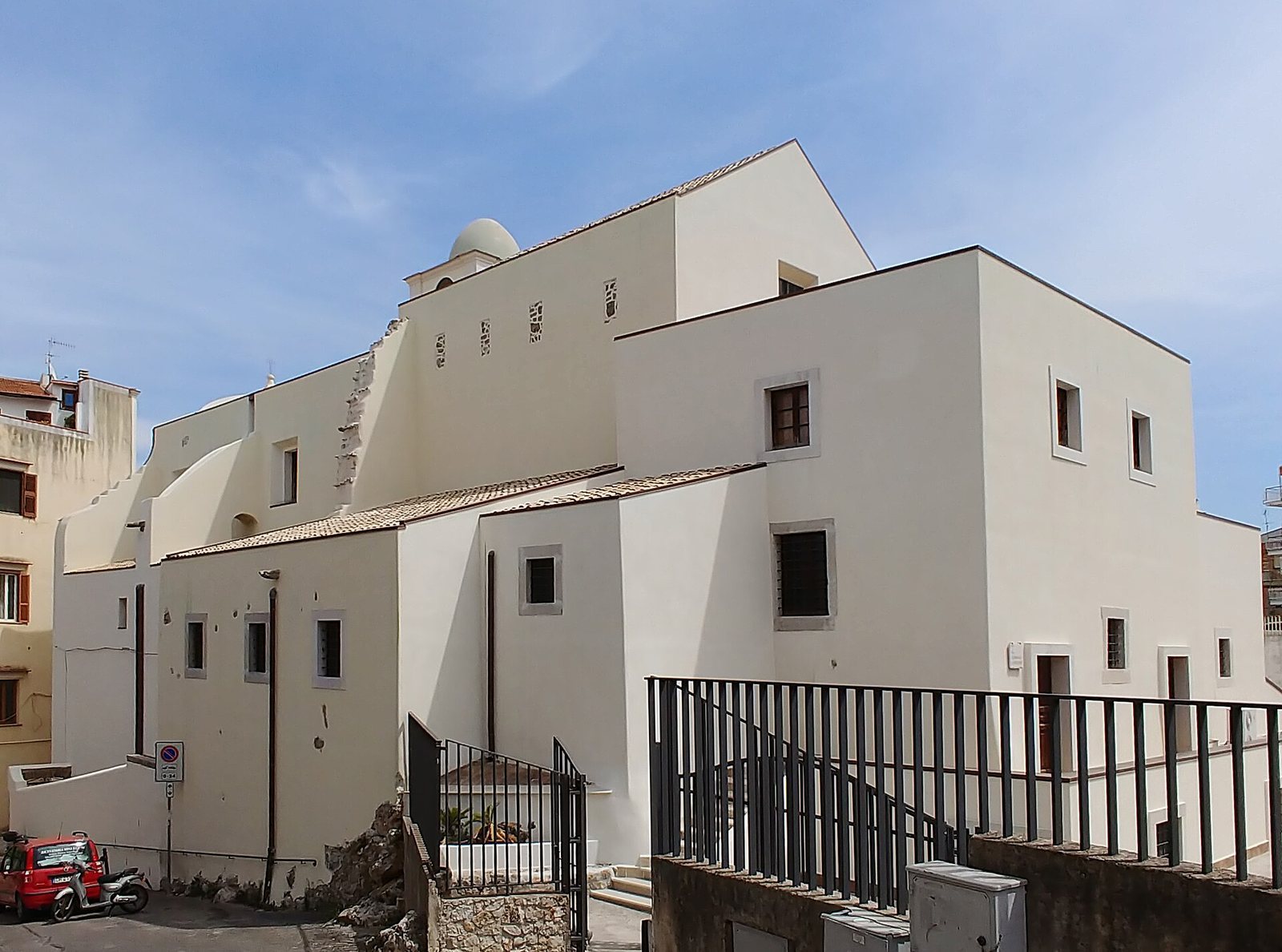
Since 1926, the statue of Our Lady of Safe Harbor has been carried in a procession through the district and out to sea on the Sunday after 15 August. In 1944, after the church of Saints Cosmas and Damian was partly destroyed during the Second World War, Santa Maria di Porto Salvo became the seat of that church’s parish. A restoration followed in 1950, with further work on the exterior and later additions during the 1980s. A conservation campaign covering the interior and exterior took place in 2013.
Remains
Exterior and approach
Salita degli Scalzi
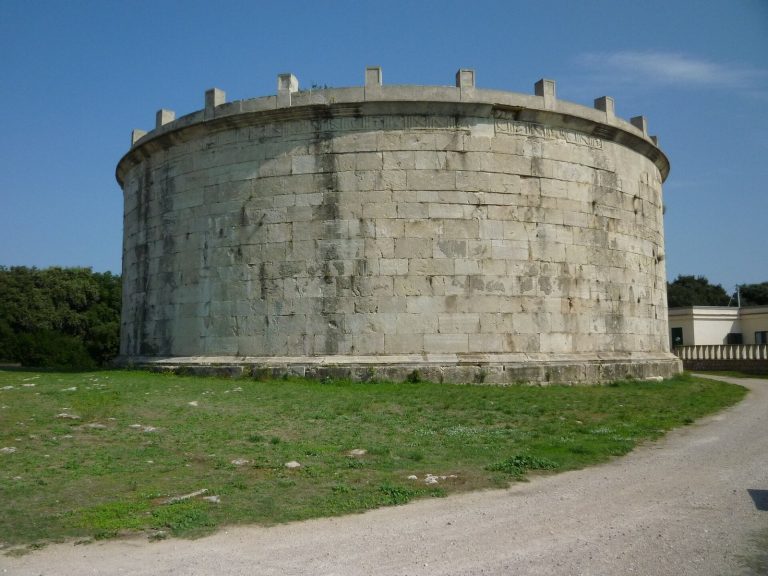
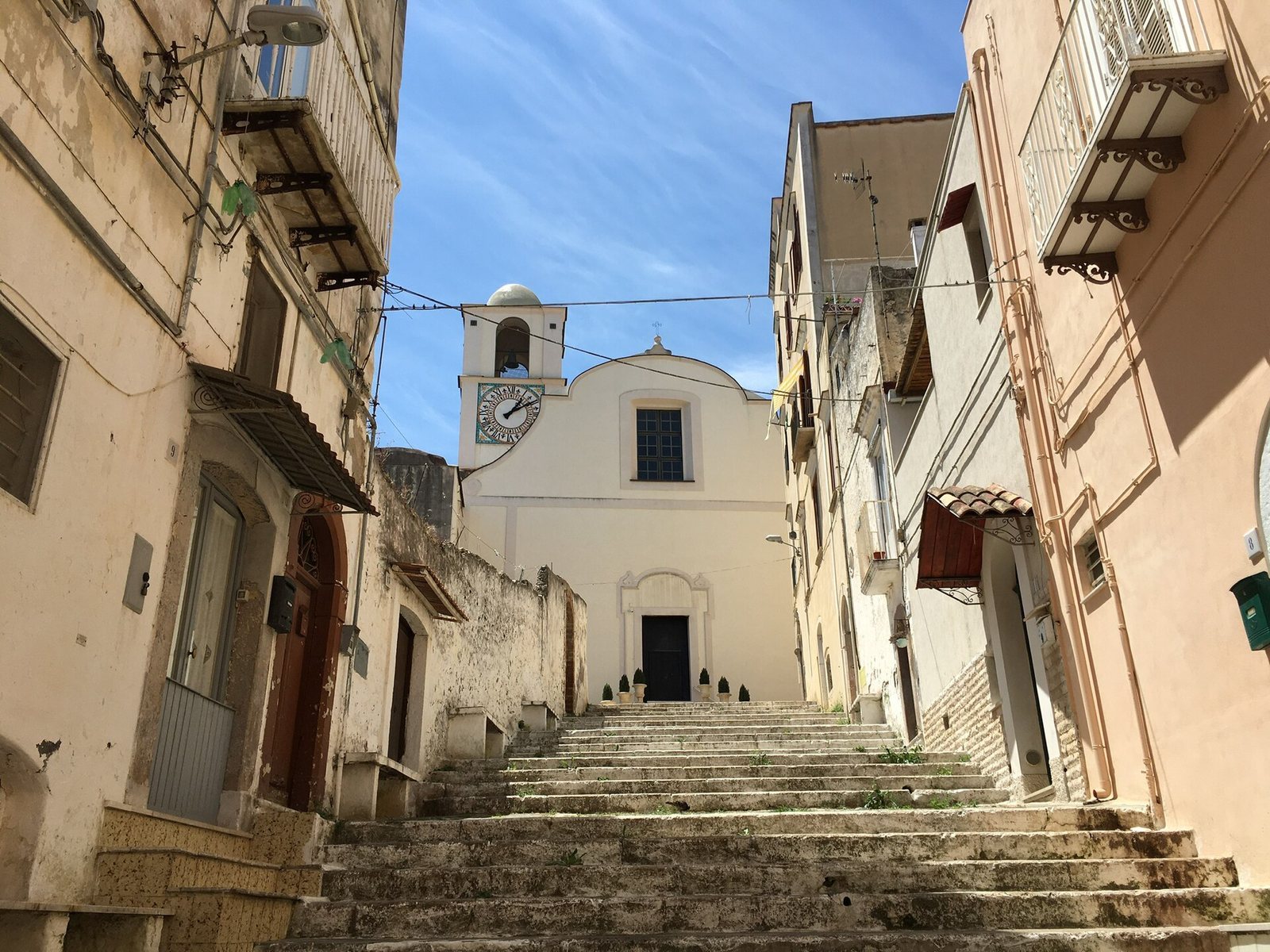
The monumental Salita degli Scalzi staircase climbs to the church. Built in 1656 to fulfill a vow to the Madonna, it incorporates stone taken from the outer facing of a nearby first-century BC mausoleum belonging to Lucius Sempronius Atratinius, a Roman political and military figure of the late Republic.
Façade and bell tower
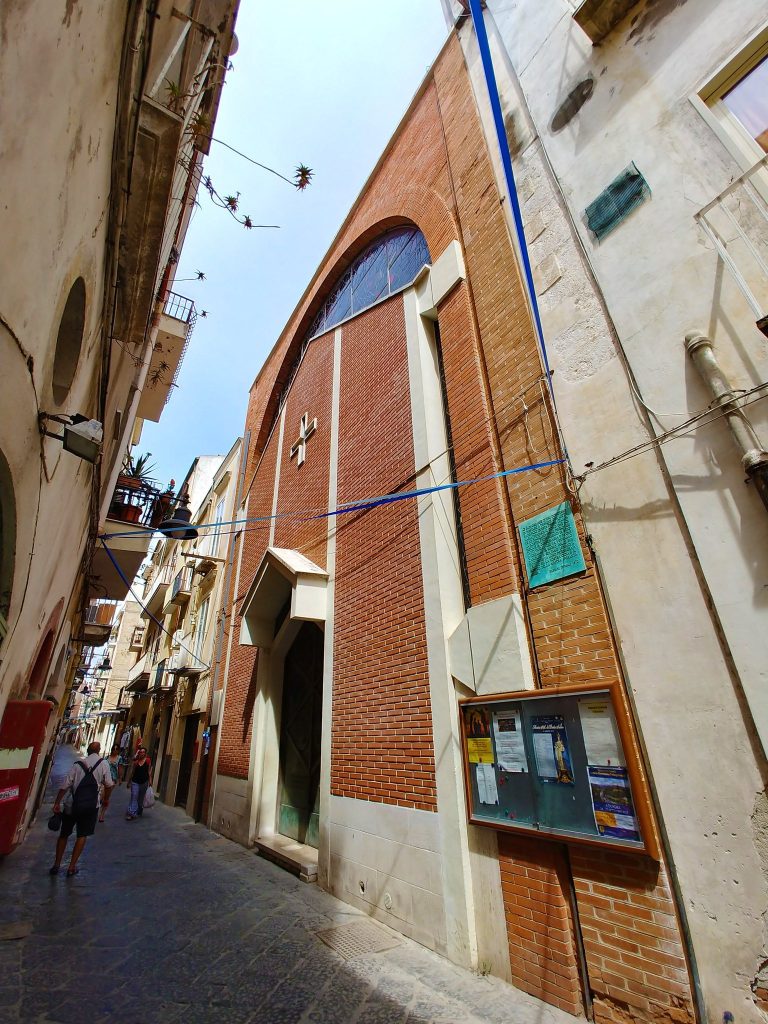
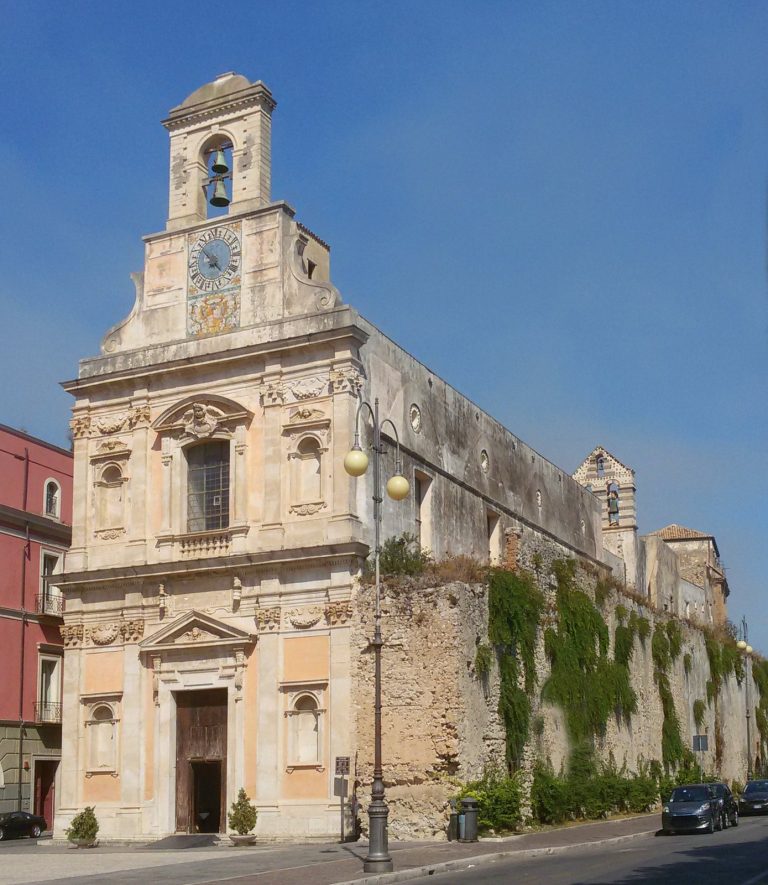
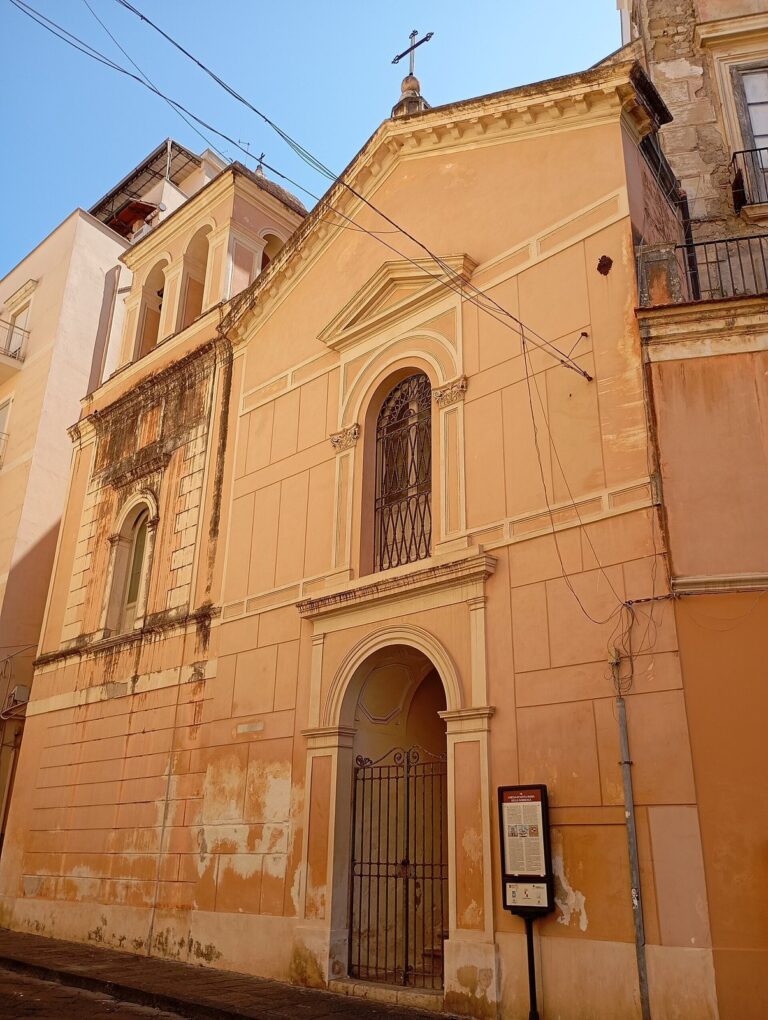
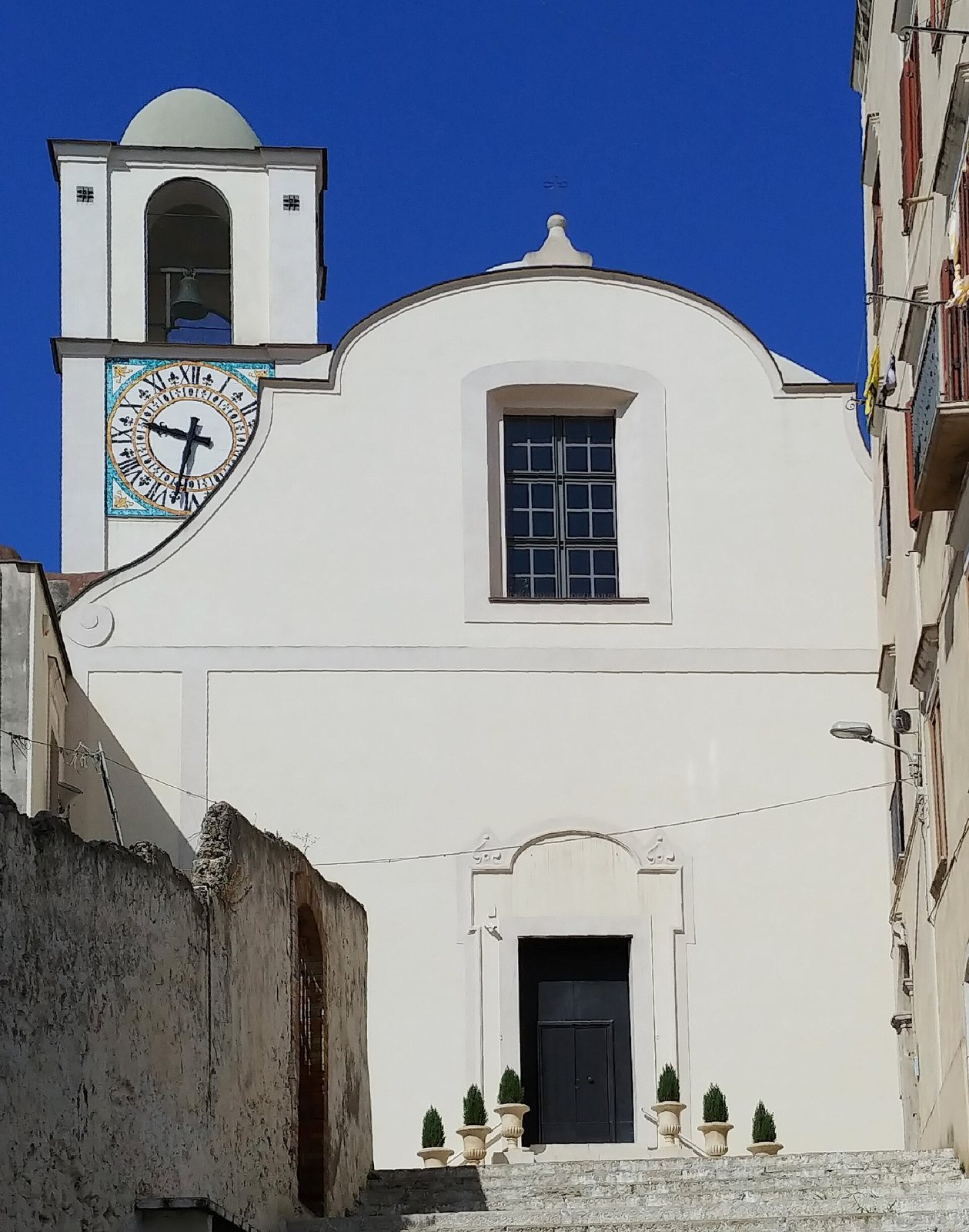
The light-colored plaster façade follows the church’s original coloring. Its upper edge forms a shallow arch, connected to the side walls by curled shapes. A single entrance portal aligns with a large rectangular window above it. To the left stands a square bell tower with a small domed roof. A clock below the bell chamber has a dial made of multicolored glazed tiles and dates to 1822.
Interior
Nave and wall decoration
The church has a single nave, or main worship space, beneath a barrel vault, a continuous ceiling with a curved profile. Curved recesses, known as lunettes, interrupt the vault. Four rectangular chapels open off the nave through rounded arches, two on each side. Niches holding multicolored statues of saints alternate with the chapels. Blue plaster and white stucco ornament the walls, while a stucco coat of arms of the Discalced Augustinians appears on the entrance wall.
Side chapels
The first chapel on the left has a polychrome-marble altar installed in 1950, with Baroque-style details and a wooden statue of Saint Francis of Paola, founder of the Minims. The first chapel on the right is dedicated to Saint Anthony of Padua, a Franciscan preacher, and holds a statue used in processions. Its modern marble altar table rests on small columns. In the second chapel on the right, a polychrome-marble altar combines elements from several Baroque works. Wooden processional statues of Saints Cosmas and Damian, made in 1837, were brought here from their namesake church in 1945. The second chapel on the left retains an altar made using scagliola, a decorative plaster technique that imitates colored marble. A crucifix and a figure of Mary occupy the niche above it.
Apse and high altar
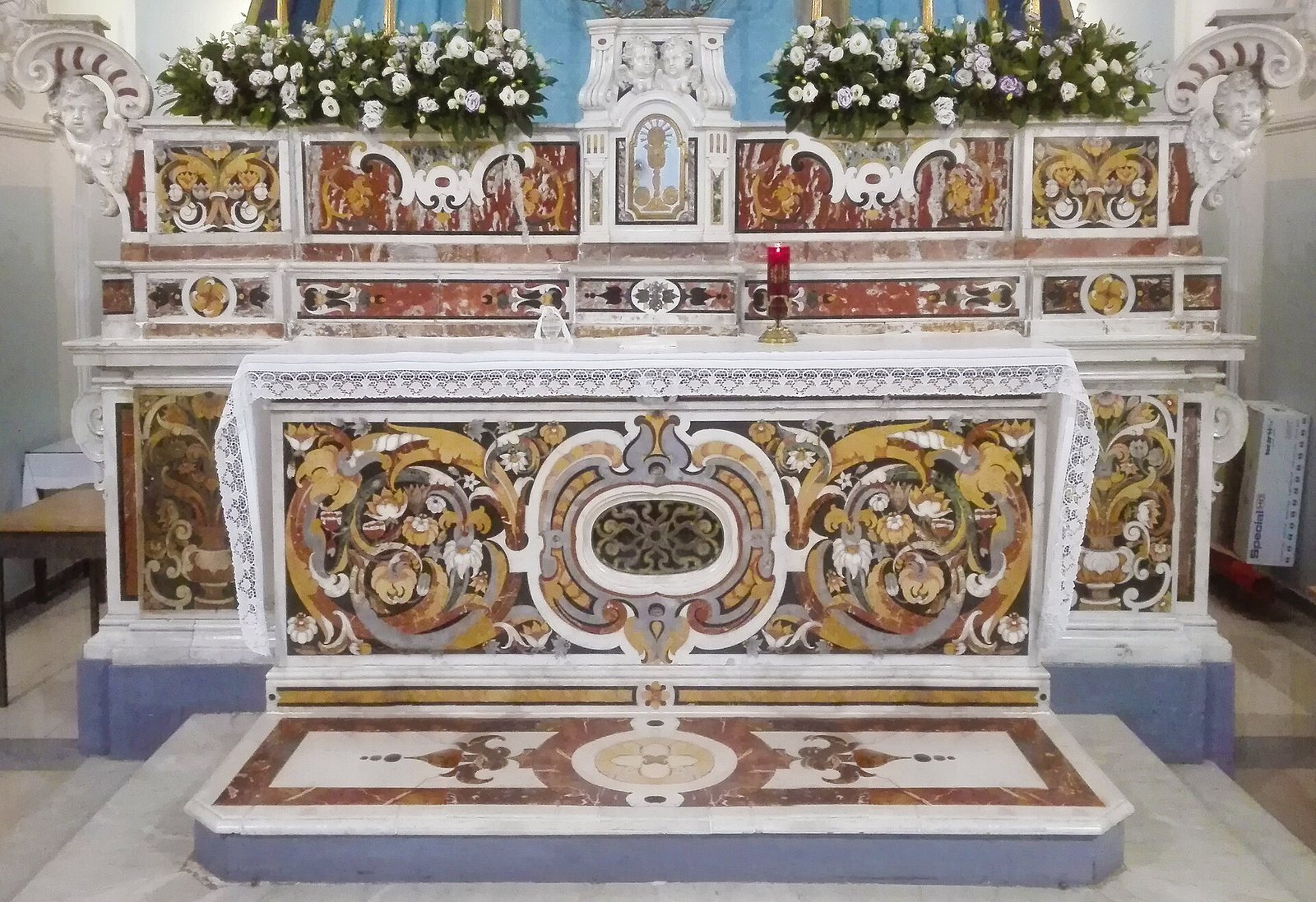
The deep, square apse, a sanctuary space at the end of the church, rises above the nave. It has a barrel vault with lunettes and a large rectangular window in its rear wall. Dionisio Lazzari made the polychrome-marble high altar around 1675; it was altered later. The altar’s original parts include its decorated front panel, or altar frontal, and plant-patterned inlays. A tabernacle and two ornaments shaped as angel heads were added in the following century. The original carved and painted wooden crucifix, now without its base, is kept in the sacristy.
Devotional statue and choir gallery
The statue of Our Lady of Safe Harbor dates to the sixteenth century and underwent extensive restoration in 1831. Its richly decorated, gold-embroidered garment comes from that restoration. At the far end of the nave’s left wall is a plain choir gallery dating to 1950. It replaced a seventeenth-century gallery that had held an eighteenth-century pipe organ. During the nineteenth century, that organ was exchanged for a smaller instrument, and the right choir gallery was replaced by a wooden pulpit. The smaller organ was removed in 1950. A positive organ, a small type of organ, remained in the oratory until the late 1970s.
Oratory of the Fishermen’s Congregation
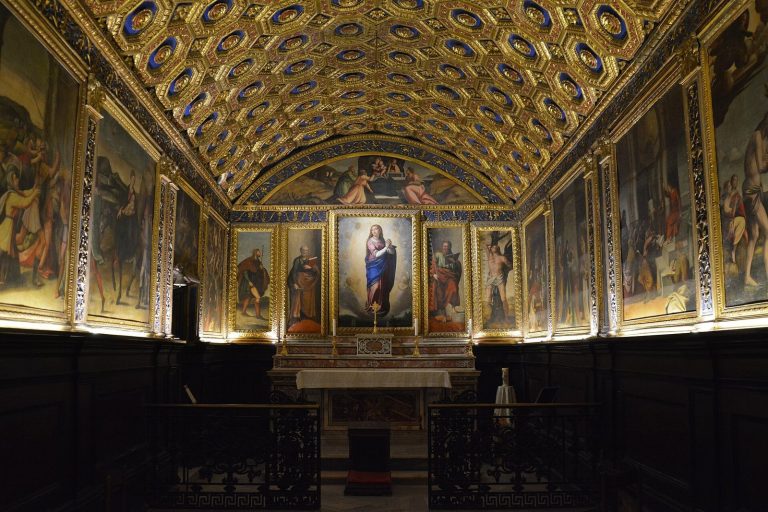
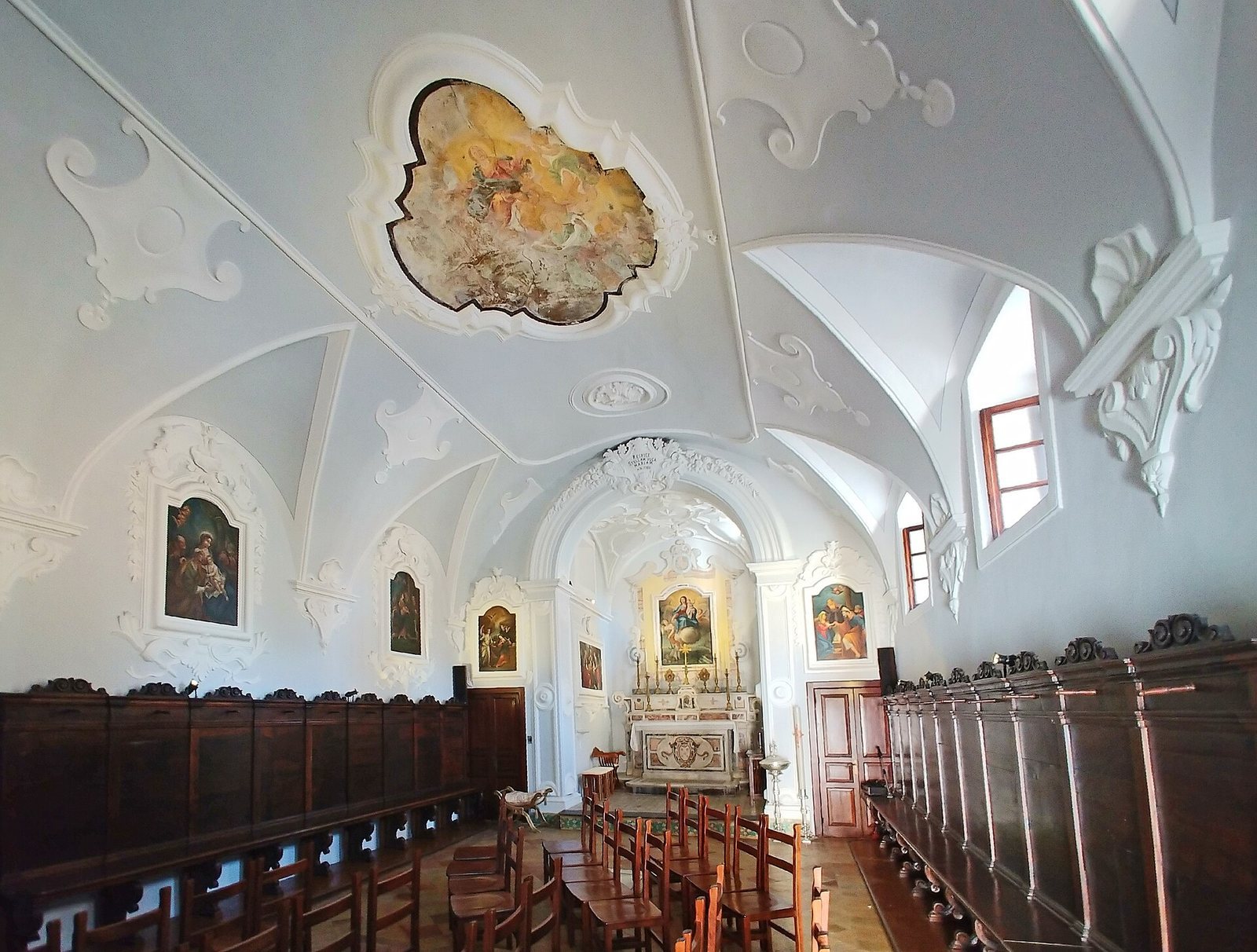
Beside the right side of the apse, the oratory dates to the second half of the eighteenth century. It has a rectangular plan, with one independent entrance and another from the church, and a small apse containing a polychrome-marble altar. Its furnishings include a floor of multicolored majolica tiles in the altar area, stucco decoration, and wooden seats along the walls. The oratory holds canvases by Baroque painter Paolo De Matteis depicting episodes from the life of Jesus, as well as his altarpiece of Our Lady of Safe Harbor.