Church of Santa Maria del Carmine: A Roman Catholic Place of Worship in Italy
Site at a Glance
- Popularity
- Very Low
- Country
- Italy
- Primary era
- Early Modern
- Eras represented
- Early Modern
- Civilizations
- Kingdom of Naples, Spanish
- Site type
- Religious
- Remains
- Church
On this page13 sections
History
The church of Santa Maria del Carmine is a Roman Catholic place of worship in Italy, dedicated to Our Lady of Mount Carmel. Angri’s nobles established it in 1611 after a proposal from Camaldolese monks, members of a Benedictine congregation shaped by solitary monastic life, and the church was consecrated that year. A complete refurbishment in the Baroque style followed in 1700. The church belongs to the Diocese of Nocera Inferiore-Sarno, a territorial jurisdiction overseen by a bishop.
Foundation and monastic use
The church was built alongside a monastery, and a confraternity, an association of laypeople organized around religious devotion, was established with it. The locality later became known as Camaldoli. The monastery was subsequently made a hermitage, a retreat or community associated with solitary monastic life, for the Camaldolese congregation of Maiori.
Renovation and changing use
Master craftsman Pietro Desiderio renovated the church in 1670. A more extensive refurbishment in 1700 gave it a Baroque character. A royal decree under the Napoleonic Code later suppressed the monastery, which was converted to civic use.
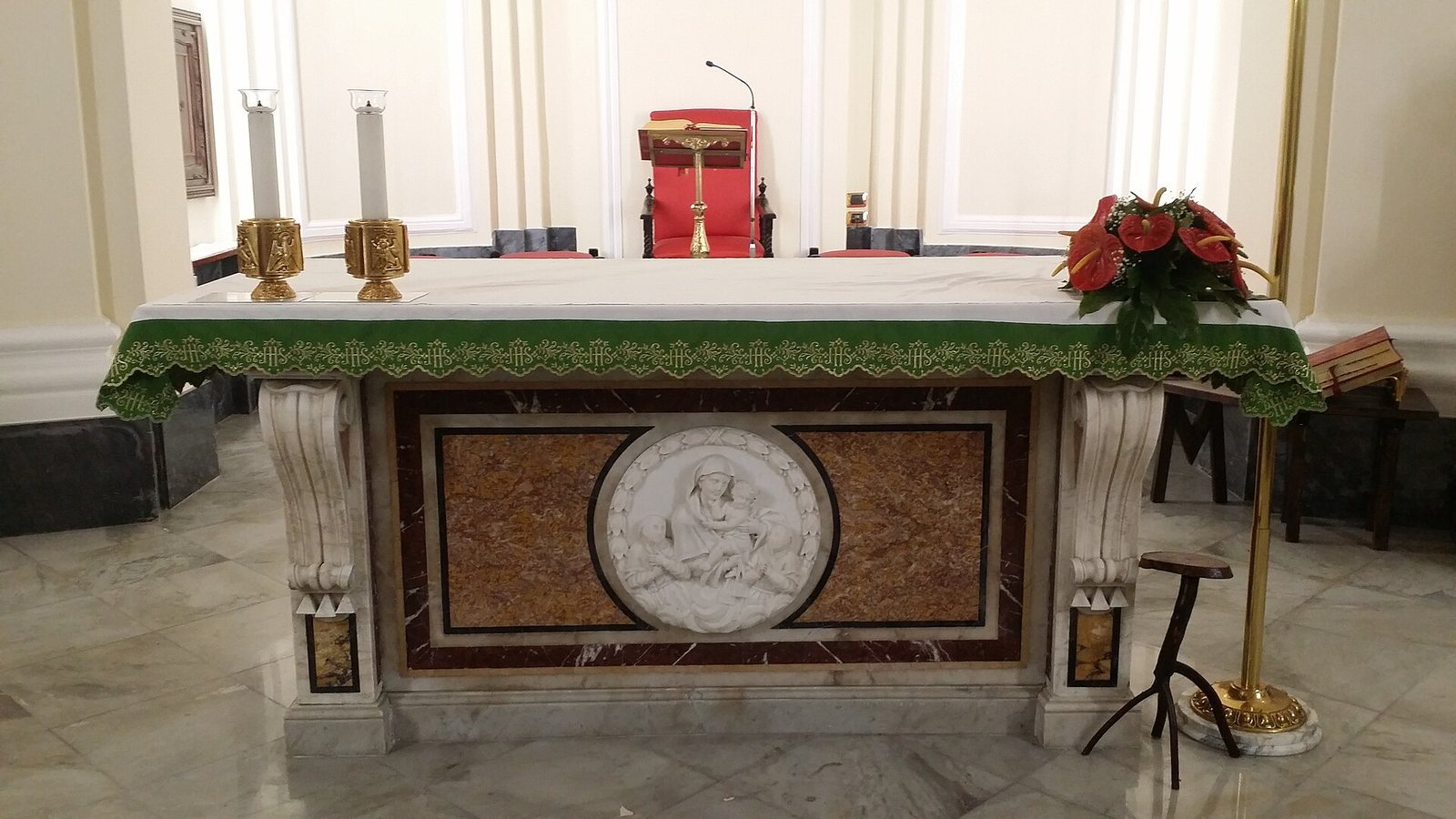
In 1925, priest Giuseppe Vaccaro oversaw modernization of the church floor. The main altar and two side altars were removed to adapt the building to the liturgy then in use. Vaccaro later became abbot of Angri’s Collegiate Church of Saint John the Baptist.
Earthquake, fire, and religious observances
The Irpinia earthquake of 23 November 1980 brought down the upper part of the façade and damaged the church inside and out. The collapse killed nine people and injured others. The church closed for an extended period before undergoing interior and exterior renovation. In 2003, the municipality placed a plaque in Piazza Annunziata commemorating those killed.
A fire in a church room in autumn 2005 damaged four statues. The eighteenth-century garments on the statues of Saint Agnellus of Naples and Our Lady of Mount Carmel were lost, while the statues of Saint Lucy and Jesus were scorched without serious damage. All four were restored in 2006.
The confraternity continues to organize religious observances, including Corpus Christi, a Catholic feast centered on the Eucharist, and the feast of Our Lady of Mount Carmel. Each year on 20 July, the church’s statue of the Virgin is carried in procession through Angri. For the feast of Saint Gerard Majella, worshippers from this church and the nearby Church of the Most Holy Annunciation process together through nearby streets, carrying the statue kept at the Annunciation church. A Caritas center, part of the Catholic charitable organization, was established in a room associated with the church after Caritas was created nationally.
Remains
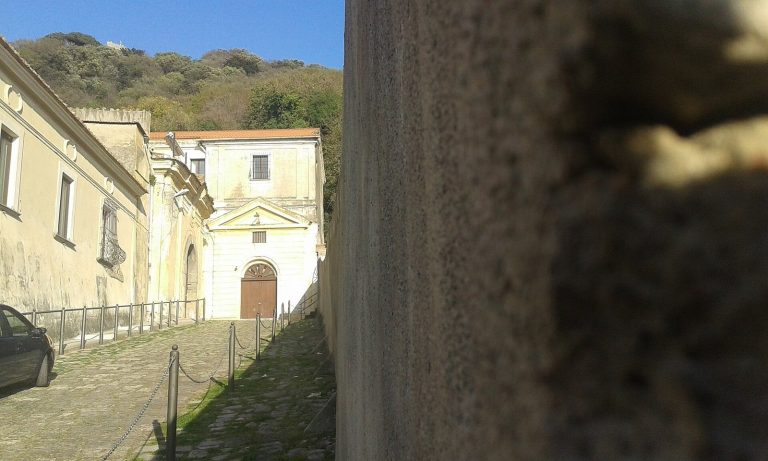
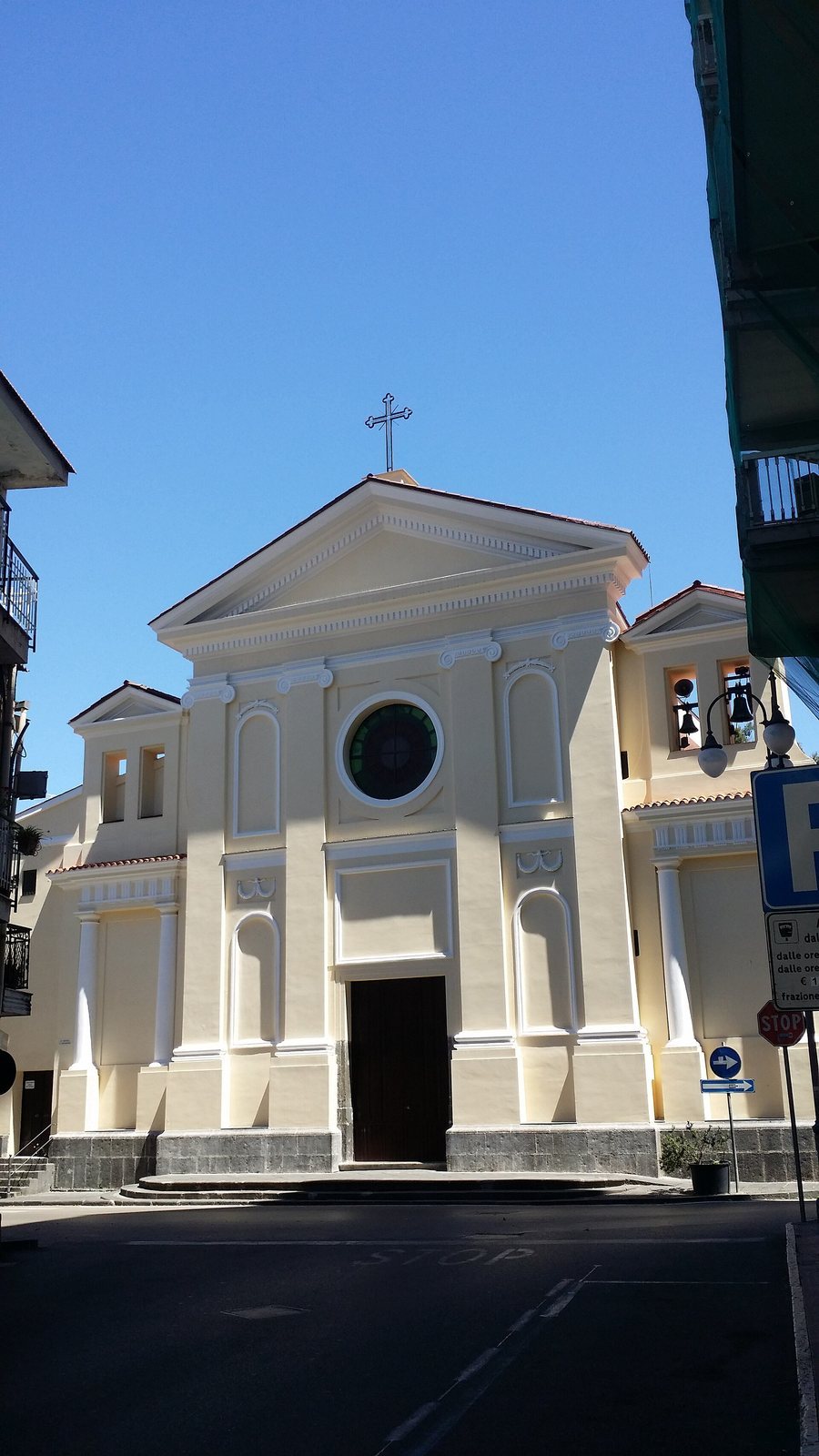
The church stands between Via Giudici and Corso Vittorio Emanuele II, a street historically known as the road of Santa Maria del Carmine. Its physical arrangement includes a main worship space and adjoining rooms connected to the entrance and sacristy. Two bell towers in the Doric style, a classical architectural order, form part of its exterior.
Exterior and windows
Three windows sit high on the church’s right side and can be seen from the street. Two smaller windows flank the apse, the area at the end of a church around the principal altar. The window on the apse’s right is partly visible from the street, while the one on the other side is fully visible. Above the main entrance, a circular window can be seen from outside, behind the pipe organ positioned inside.
Interior and devotional furnishings
Worship space
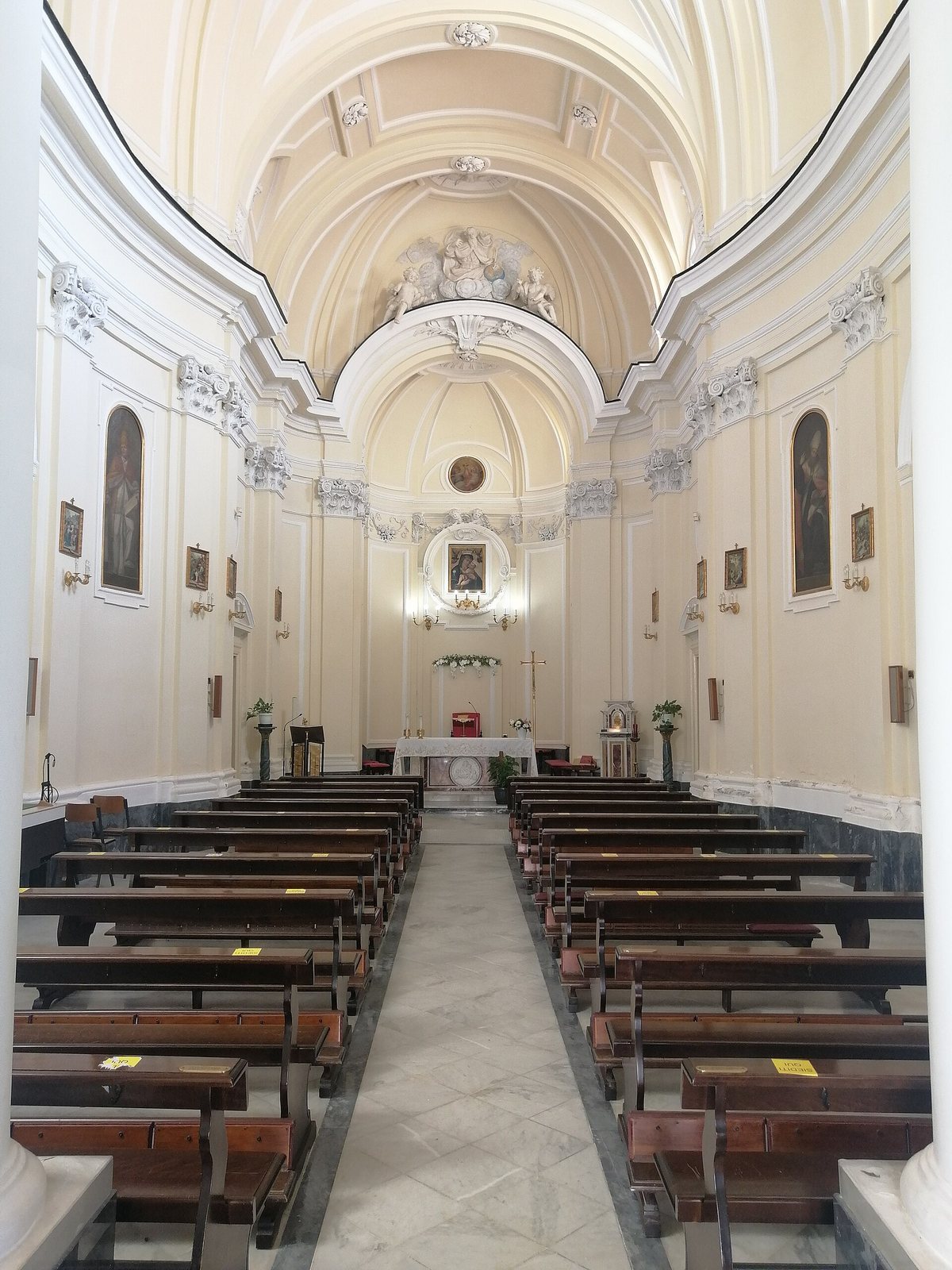
A barrel vault, a continuous arch-shaped ceiling, covers part of the nave, the main body of the church, but does not extend over the choir or apse. The old pipe organ stands above the main entrance and is visible from the choir and central area. A room to the right of the apse, shortly before the main altar, serves as a small side altar, with a kneeler and a large wooden crucifix. An eighteenth-century oval painting of the Assumption is set into the vault.
Paintings and statues
A seventeenth-century altarpiece depicting the Brown Madonna, a devotional name for a dark-complexioned image of Mary, has been kept in the church since that century. Other paintings depict Saint Lucy and Saint Benedict. Four historic statues are arranged in protective glass cases in pairs: Saint Agnellus of Naples, an early medieval saint venerated in Naples, stands with Saint Lucy, while an adult Jesus is paired with Our Lady of Mount Carmel holding the infant Jesus. The same room also contains a large crucifix, a plastic statue of Saint Alfonso Maria Fusco with two children, a painting of Jesus, and a painting of a cardinal with a penitent.
Adjoining rooms and associated chapel
Rooms beside the entrance
A door to the left of the main entrance opens into a large adjoining room with its own exterior entrance. It is used for storage and serves as the headquarters of the Madonna del Carmine confraternity. On the other side of the entrance, a room containing artworks and a small storeroom has an exterior door and a second door leading to the sacristy.
Sacristy and upper rooms
A staircase beyond the sacristy leads to several upper rooms used as residences for officiating priests. Another ground-floor room extending from the sacristy area also serves as a sacristy and connects to the choir and to an exterior room used by the Caritas center. Rooms not intended for worship formerly provided living quarters for the monks.
Cemetery chapel
A private chapel belonging to the confraternity stands in the town cemetery. It was created in the second half of the twentieth century.