San Giacomo Apostolo Church: A Catholic Church in Castelfranco Emilia
Site at a Glance
- Popularity
- Very Low
- Country
- Italy
- Primary era
- Early Modern
- Eras represented
- Medieval, Early Modern, Modern
- Civilizations
- Italian, Papal States
- Site type
- Religious
- Remains
- Church
On this page8 sections
History
San Giacomo Apostolo Church is a Roman-rite Catholic church in Castelfranco Emilia, Italy, dedicated to Saint James the Apostle. Its construction date is uncertain, but by 1252 the town had two churches, Santa Maria Assunta and San Giacomo, on opposite sides of the Via Emilia, the historic Roman road through northern Italy. One stood to the north and the other to the south, and each had its own cemetery. The church belongs to the Archdiocese of Bologna, a major territorial jurisdiction of the Catholic Church, and Augustinian monks served it.
Destruction and rebuilding
In 1527, San Giacomo was destroyed during an incursion by Landsknechts, German-speaking mercenary infantry active in European conflicts in the late fifteenth and sixteenth centuries. The church was rebuilt in 1532 on a smaller scale.
Expansion and later change
In 1568, Prior F. Guarnaschelli, a senior official in a religious community, enlarged the church by adding the main chapel, four altars, and a baptismal font. Further expansions and renovations followed between 1728 and 1804.
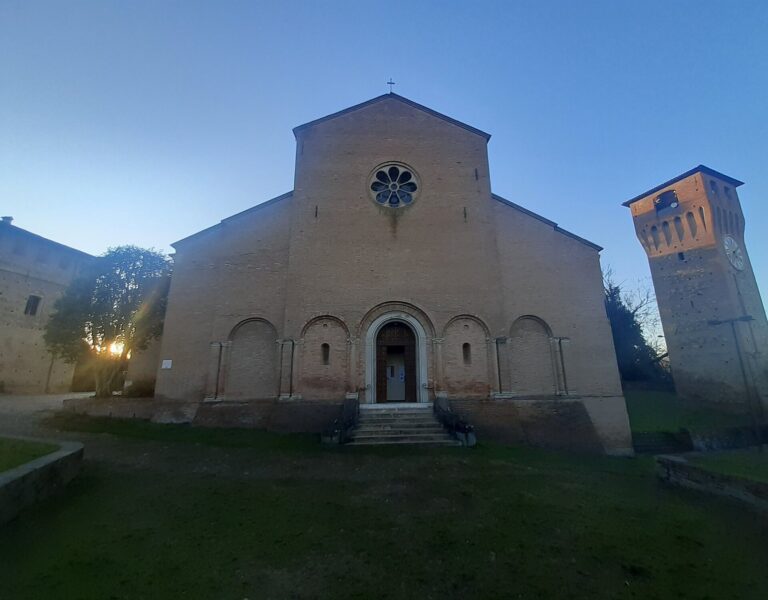
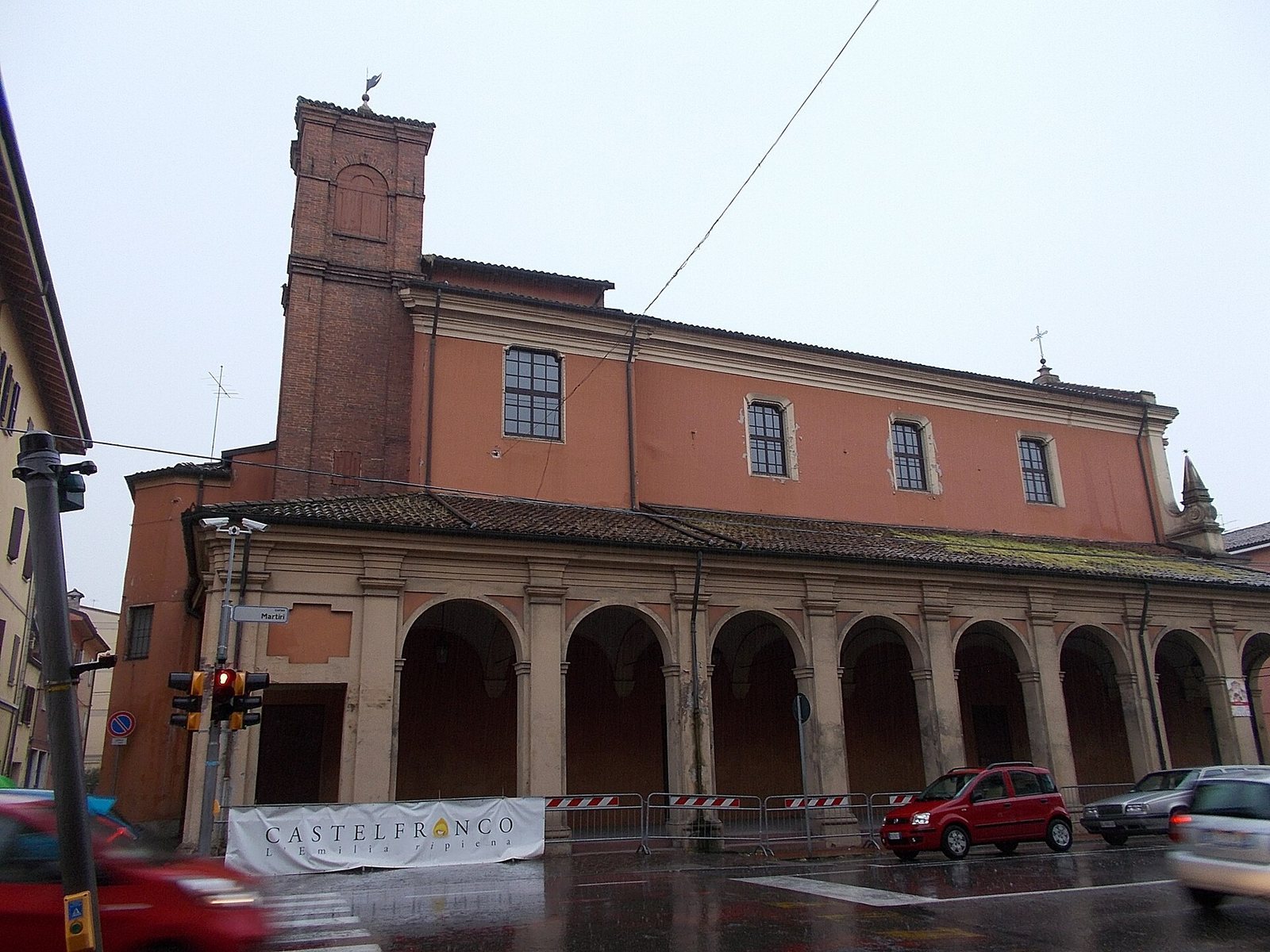
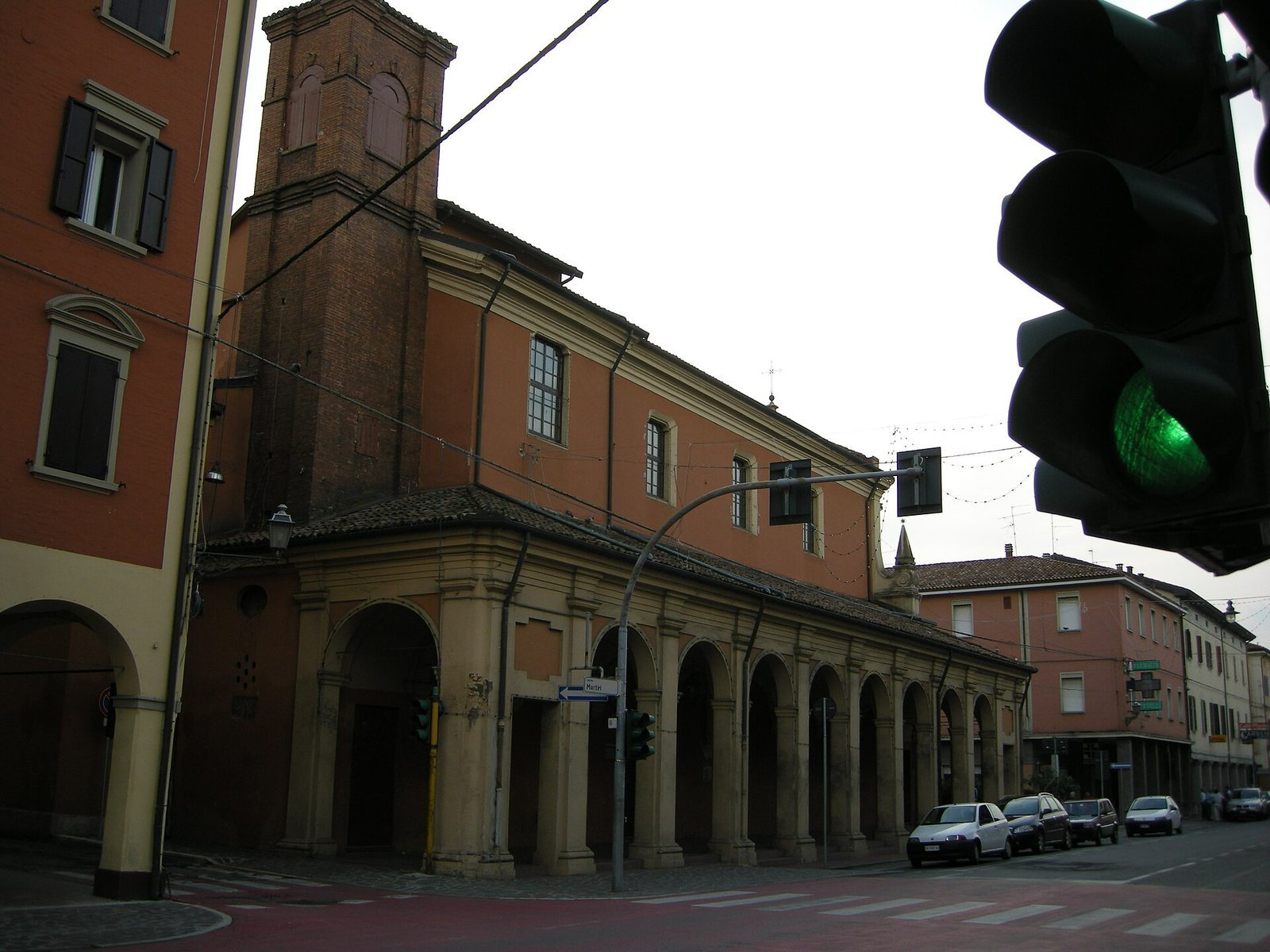
The present façade dates to 1910. Bombing during the Second World War destroyed the church’s right wing, which was rebuilt in 1949.
Remains
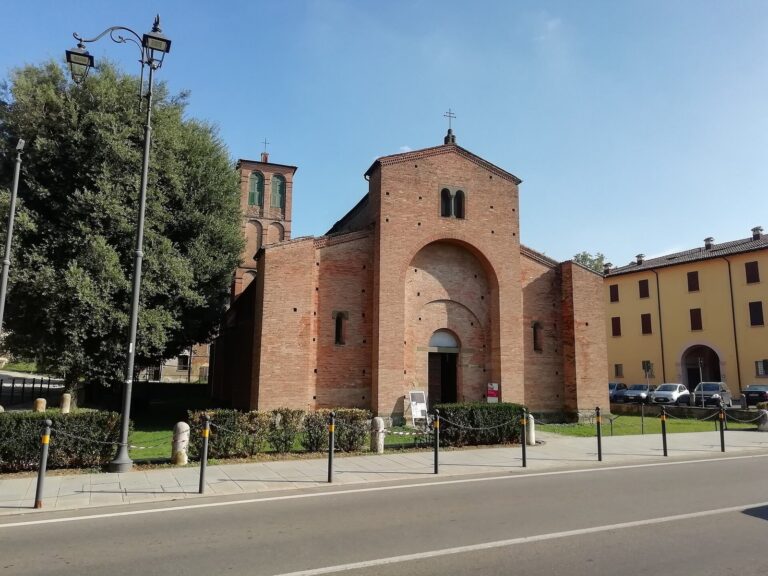
The church has a single nave and six side chapels. Its Neoclassical façade, a style reviving forms associated with ancient Greek and Roman art, stands beside a square Romanesque bell tower, built in a medieval architectural style. The tower’s original structure remains unchanged. Inside are four altars and a baptismal font.
Paintings and sculpture
Elisabetta Sirani’s altarpieces
The church contains Elisabetta Sirani’s Madonna of Loreto and Saints and her Saint James altarpiece. The latter reflects a shift away from the family style and the Renian tradition associated with Bolognese painter Guido Reni, both of which had influenced Sirani earlier in her career.
The Madonna of the Girdle and chapel figures
In the chapels on the right, four statues by Massimiliano Putti are made of stucco, a plaster-based material. Two, Saint Monica and Saint Augustine, flank Angelo Gabriello Piò’s Madonna of the Girdle, pairing Augustine with his mother. Piò’s devotional sculpture was intended for processions, a use indicated by its pedestal. Its graceful forms draw on Bolognese artistic traditions and Rococo, an eighteenth-century style of elegant, elaborate forms, rather than the classicizing taste prevalent in Bolognese art. The other two statues, Saint Maurus and Saint Gertrude, stand at the altar with Filippo Scandellari’s Saint Nicholas of Tolentino. Their arrangement reflects established devotional associations: Maurus is traditionally regarded as a disciple of Benedict, while Gertrude is associated with Benedictine monasticism. Putti’s statues unite devotional purpose with Neoclassical style; their elaborate compositions avoid easy emotional effects. Putti admired the Danish sculptor Bertel Thorvaldsen and specialized in tombs for Bologna’s Certosa.
Pipe organ
The church houses a pipe organ made by Domenico Traeri in 1743. It was restored in 1987.