Church of the Nativity of John the Baptist on the Volga: A Memorial Church in Uglich
Site at a Glance
- Popularity
- Medium
- Country
- Russia
- Primary era
- Early Modern
- Eras represented
- Early Modern
- Civilizations
- Russian
- Site type
- Religious
- Remains
- Church
On this page9 sections
History
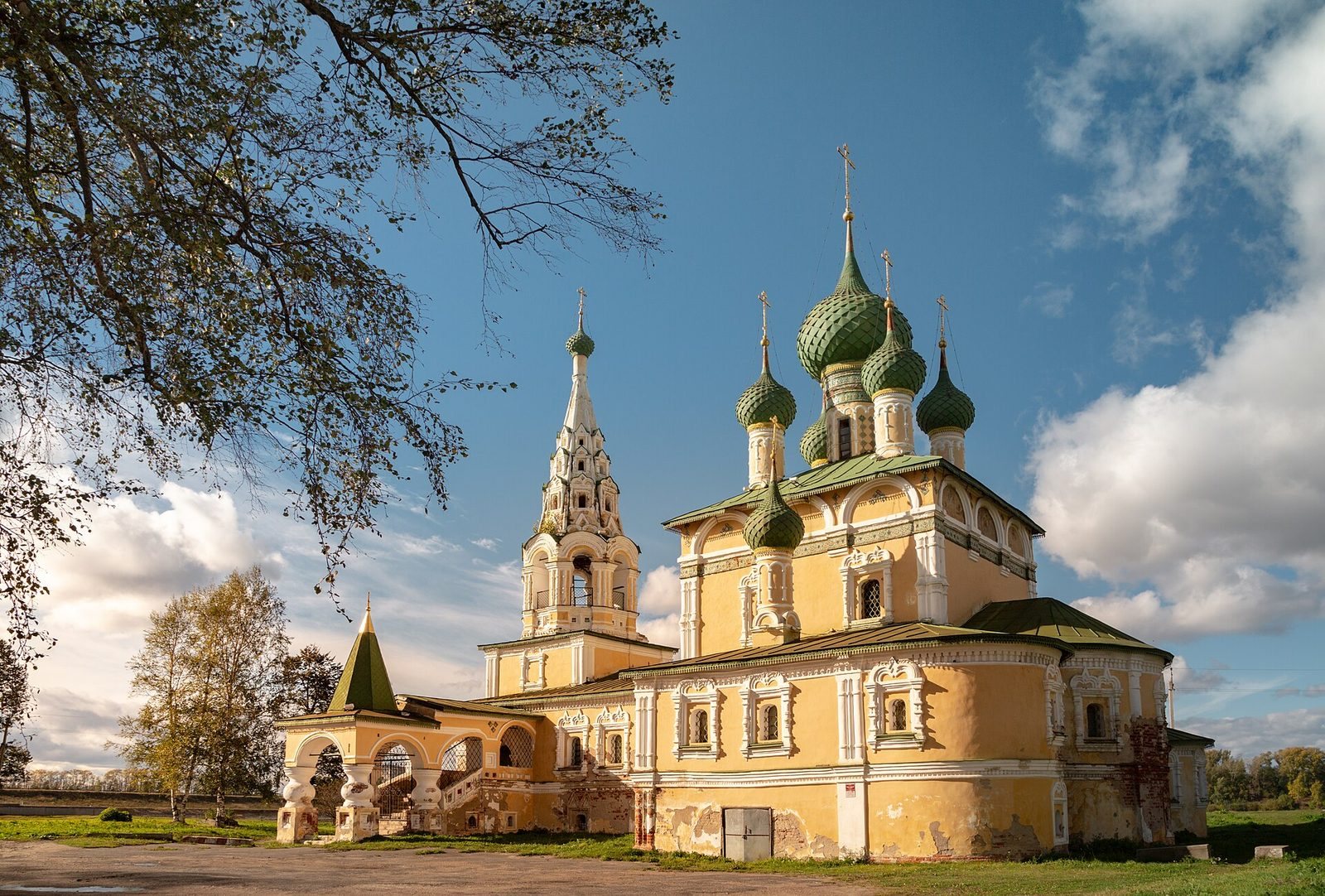
The Church of the Nativity of John the Baptist on the Volga is a Russian Orthodox church in Uglich, Russia. Dedicated to the birth of John the Baptist, a biblical preacher venerated as a saint in Orthodox Christianity, it was built in 1689–1690 as a memorial to Ivan Chepolosov.
Earlier churches on the site
By the late sixteenth century, four wooden churches stood here. They were dedicated to the Nativity of John the Baptist, Simeon Stylites, the Savior Not Made by Hands, and the Holy Martyrs Diomedes and Myron. During the Time of Troubles, a period of political crisis, famine, civil conflict, and foreign intervention in Russia, the churches were looted and burned. They were restored soon afterward and numbered among the few old churches in Uglich to be repaired.
Mid-seventeenth-century land registers describe a wooden Church of the Savior Not Made by Hands, a reference to an image of Christ traditionally believed to have been made miraculously. It had a side chapel dedicated to Simeon Stylites, an early Christian ascetic known for living atop a pillar. A heated Church of John the Baptist, with a refectory for communal meals or gatherings, was associated with it.
The Chepolosov memorial
In June 1663, six-year-old Ivan Chepolosov disappeared. His father, Nikifor Grigoryevich Chepolosov, was a wealthy Uglich merchant. Weeks later, Ivan’s body was found in a marsh. The family’s steward, Rudak, had abducted and stabbed the boy. His father paid for the present church in Ivan’s memory.
Preservation and present status
In the 1930s, early plans for a hydroelectric dam near Uglich would have left no room for the church. Its architectural value prompted a change, and the dam was built farther upstream to preserve the building, even during Stalin’s rule. Restoration work in the 1960s revealed a burial in the north chapel.
The church is no longer active and belongs to the Uglich deanery, a local grouping of Orthodox parishes. It is designated a federal-level cultural heritage monument in Russia.
Remains
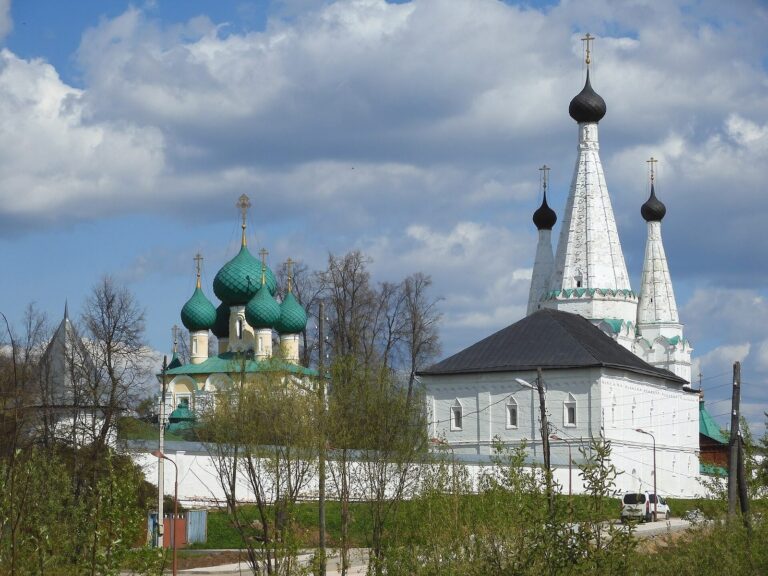
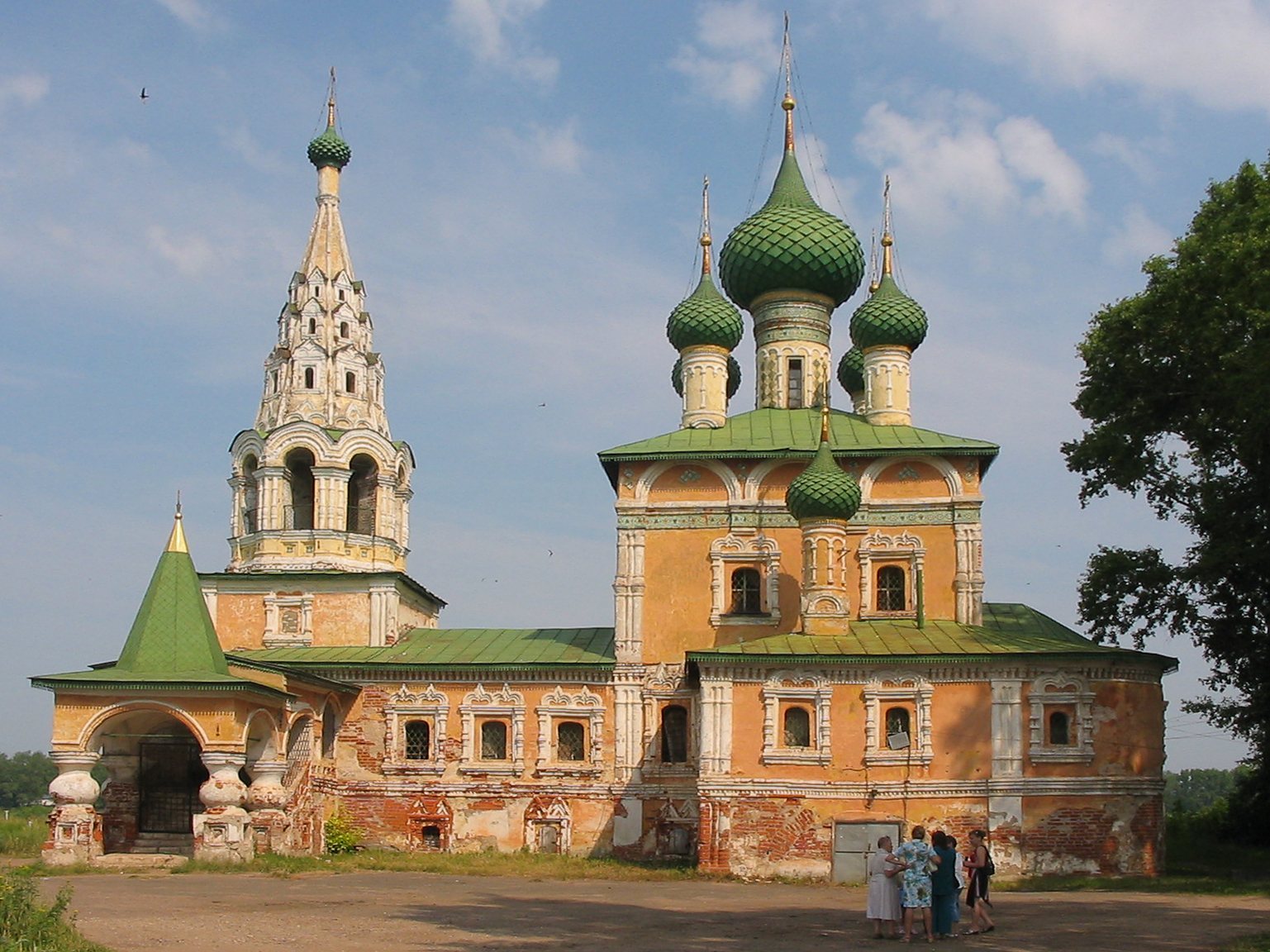
The church stands on the Volga bank at the end of Spasskaya Street, beside the Resurrection Monastery. Its raised basement supports a five-domed, pillarless building, meaning its roof is not carried by freestanding interior pillars. Side chapels and a refectory form part of the church, while a bell tower rises above the entrance.
Architectural features
Main church and decoration
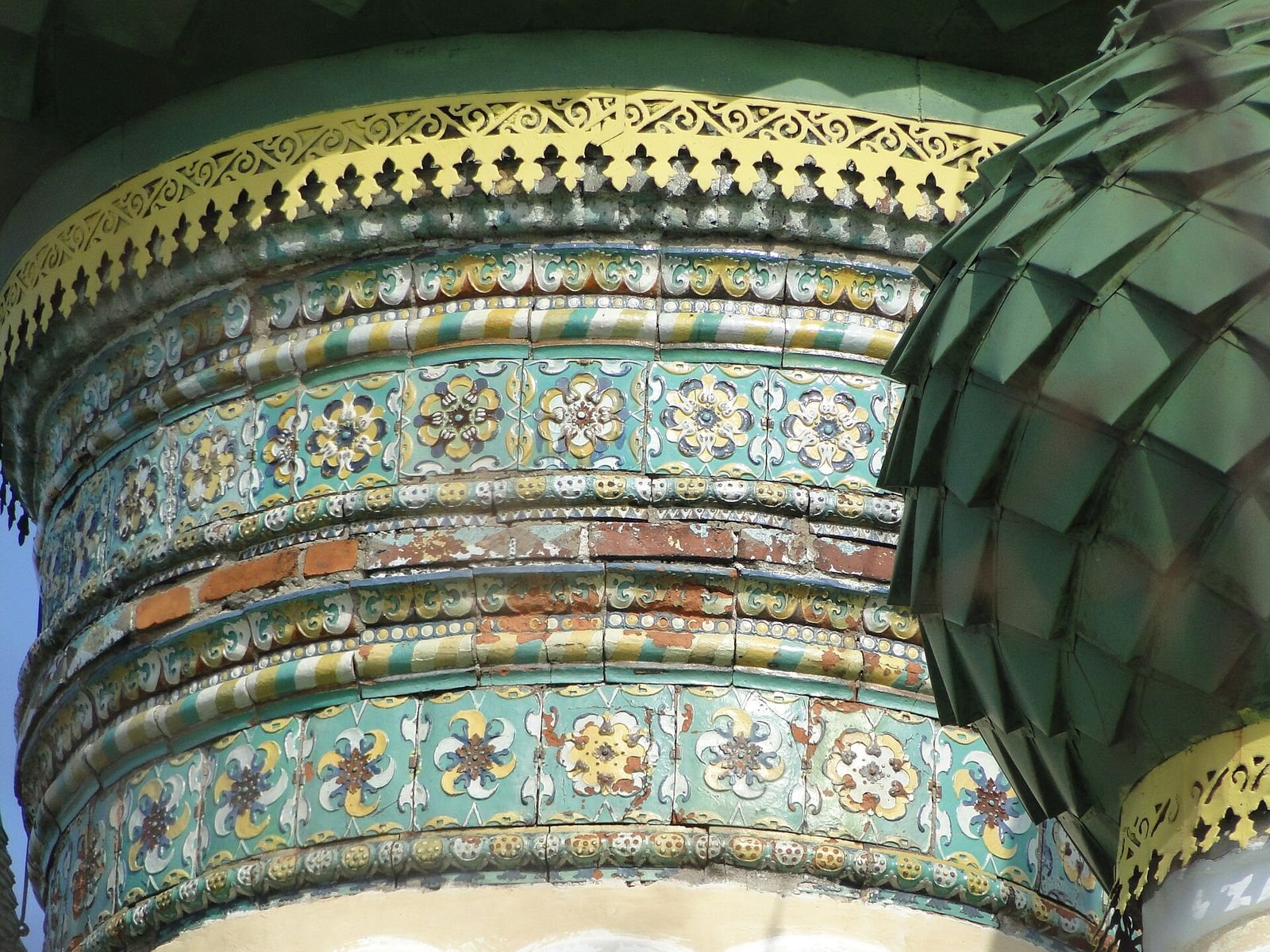
Ceramic tiles richly decorate the church. Its raised base and five domes define the exterior form, while the pillarless interior and attached chapels are features of its overall design.
Bell tower and porch
The bell tower has an ornate, tent-like shape, formed as an openwork pyramid above the entrance. A prominent porch rests on four stout columns. Russian painter Nikolai Roerich depicted it in his 1904 painting Uglich: Porch of the Church of John the Baptist.
North chapel tomb
An arcosolium, an arched recess used as a tomb, in the north chapel is the burial place of Ivan Chepolosov.