Kashin Kremlin: The Fortified Center of Kashin
Site at a Glance
- Popularity
- Medium
- Country
- Russia
- Primary era
- Modern
- Eras represented
- Early Modern, Modern
- Civilizations
- Russian
- Site type
- Military
- Remains
- Citadel
On this page12 sections
History
The Kashin Kremlin was the fortified central enclosure of Kashin, Russia, a town that emerged around the turn of the 12th and 13th centuries. A kremlin was the fortified center of a Russian town. The enclosure formed Kashin’s historic core, with settlements around it.
Early town and medieval conflicts
Kashin is first mentioned in 1238, when Mongol forces captured it. In 1288, the town withstood a siege by Dmitry Alexandrovich, Grand Prince of Vladimir.
Tatar forces and Ivan Kalita, prince of Moscow, sacked Kashin in 1328. Under Prince Vasily Mikhailovich, an Assumption Monastery was established inside the Kremlin. The Assumption refers to the Christian belief that Mary was taken bodily into heaven. Vasily’s mother, Anna of Kashin, became a nun there. In 1392, fire destroyed the timber Kremlin, which was then rebuilt.
Fortification and political change
Kashin had declined by the middle of the 15th century, but its fortifications were restored and the town was reestablished as a great town. In 1452, Prince Dmitry Shemyaka unsuccessfully besieged the new fortress.
After the Tver Principality was incorporated into the unified Russian state under Ivan III, stone construction began within the Kremlin. The early stone buildings and their dates are described below.
Wars, fires, and dismantling
In 1609, supporters of False Dmitry II, a pretender to the Russian throne, seized Kashin by assault. The army of Mikhail Skopin-Shuisky soon liberated it. Polish-Lithuanian invaders devastated the town in 1612. After the Time of Troubles, a period of political crisis and foreign intervention in Russia in the late 16th and early 17th centuries, the Kremlin was rebuilt in timber. In 1661, town builder Ivan Tyutchev repaired its walls and towers. A major fire destroyed half the Kremlin in 1676, after which it was restored.
A 1709 inventory described the Kremlin as dilapidated. It was dismantled in the first half of the 18th century, and its ditches were filled in 1813. In the 20th century, the Bolsheviks, the revolutionary movement that took power in Russia in 1917, demolished the Assumption Cathedral.
Remains
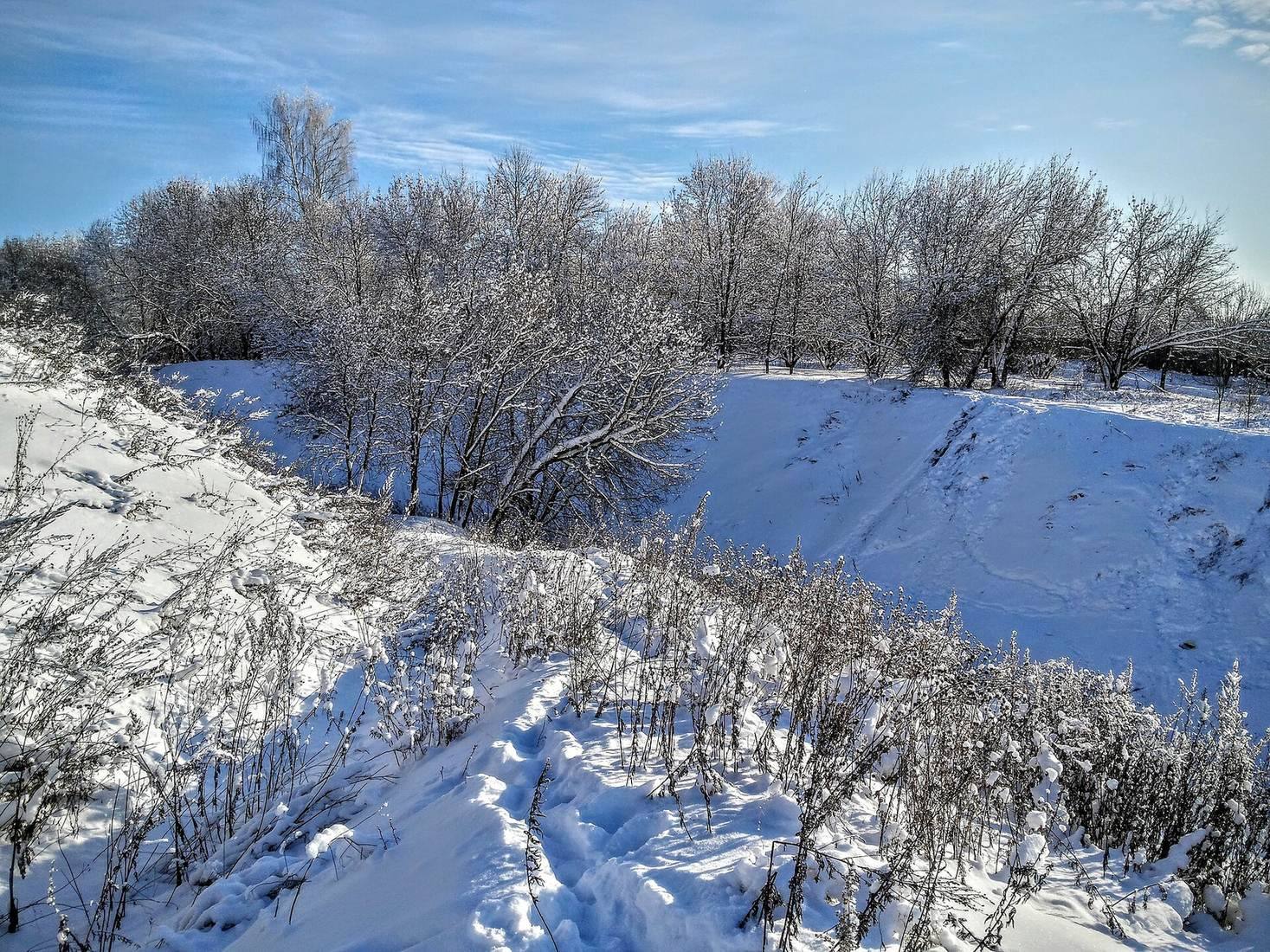
The former stronghold occupied an isthmus within a loop of the Kashinka River, on ground rising as much as 30 metres. Steep riverbanks protected its northeastern and southwestern sides. To the northwest, a rampart and ditch separated it from the posad, the settlement outside a fortified town’s central enclosure. A similar barrier divided it from higher Holy Spirit Hill to the southeast. Timber walls and earthen ramparts formed the main defenses.
Walls and outworks
Main enclosure
The timber wall extended about 997 metres and had 15 towers. Three towers, named Resurrection, Archangel, and Holy Spirit, had passages through them; the others had no passage. A concealed passage linked the Secret Tower with the river to provide water. The fortified area covered about eight hectares.
Holy Spirit Hill
Holy Spirit Hill served as an outwork, a defensive position beyond the main enclosure. A stockade stood on an earthen rampart about 320 metres long and up to 6.5 metres high. The hill also had a wooden Holy Spirit Monastery.
Buildings within the Kremlin
Stone churches
The Resurrection Cathedral, named for Christ’s rising from the dead, was built in the early 16th century as the Kremlin’s first stone building. The Assumption Cathedral followed in 1664–1672.
Civic and military buildings
Other stone structures included an administrative office, an archbishop’s courtyard, and courtyards for cathedral clergy, people in state service, and townspeople. Siege courtyards belonged to monasteries, local nobles, and people of the hereditary service class known as children of boyars. A stone chamber held gunpowder and other military supplies.
Later structures and earthworks
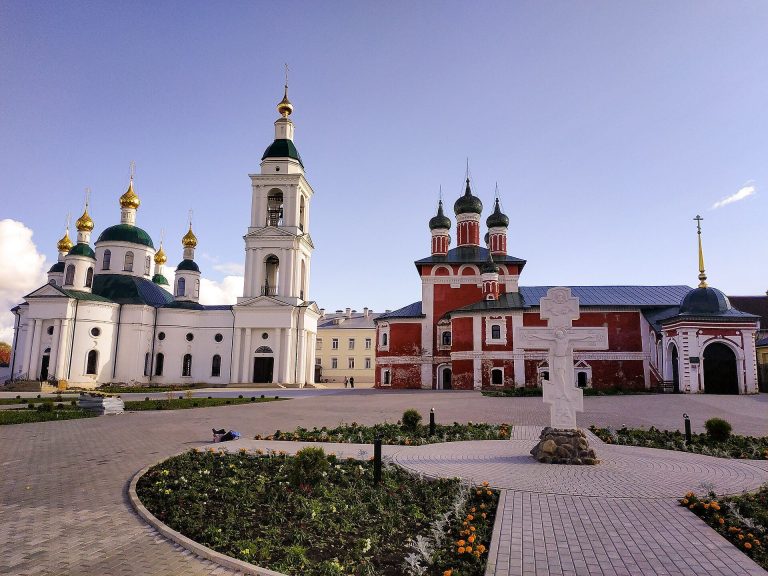
The Kremlin grounds include a later Resurrection Cathedral dated 1796–1804, along with a bell tower, a refectory (communal dining hall), and a treasury building. Earthen ramparts from the former fortifications also survive.