Ancient Theatre of Epidaurus: A Sanctuary Theatre for Worship and Healing
Site at a Glance
- Popularity
- Very High
- Country
- Greece
- Primary era
- Classical
- Eras represented
- Classical
- Civilizations
- Ancient Greek
- Site type
- Entertainment
- Remains
- Theatre
On this page7 sections
History
The Ancient Theatre of Epidaurus stands near modern Lygourio in Argolis, Greece. Greek builders constructed it in the late fourth century BCE, with its date usually placed around 340–300 BCE. Its design belongs to the Hellenistic period, which followed Alexander the Great’s conquests and preceded the spread of Roman rule across the Greek world. Pausanias, a Greek travel writer and geographer, attributed its construction to the architect Polykleitos the Younger.
Hellenistic foundation and use
The theatre formed part of the sanctuary of Asclepius, the ancient Greek god of medicine and healing. It hosted music, singing, and dramatic contests connected with worship. Performances also formed part of patient care, since they were believed to benefit both mental and physical health.
Unlike many Greek theatres, Epidaurus underwent no alterations during the Roman period. Its stage building, however, developed in two construction phases, a history reflected in the surviving structure.
Archaeology and modern performances
Archaeological work began in 1879, followed by systematic excavation from 1881 under Panayis Kavvadias on behalf of the Archaeological Society. Restoration took place in 1907, from 1954 to 1963, and from 1988 to 2016. In 1988, the Sanctuary of Asclepius at Epidaurus, including the theatre and the Temple of Asclepius, was inscribed on the UNESCO World Heritage List for its exceptional architecture and aesthetic qualities.
The first modern performance was Sophocles’ Electra in 1938, directed by Dimitris Rontiris and starring Katina Paxinou and Eleni Papadaki. Performances paused during the Second World War and returned as part of an organized festival in 1954. Ancient drama became an annual summer feature in 1955, and the Epidaurus Festival continues. The festival also hosted Maria Callas in Norma in 1960 and Médée in 1961.
Remains
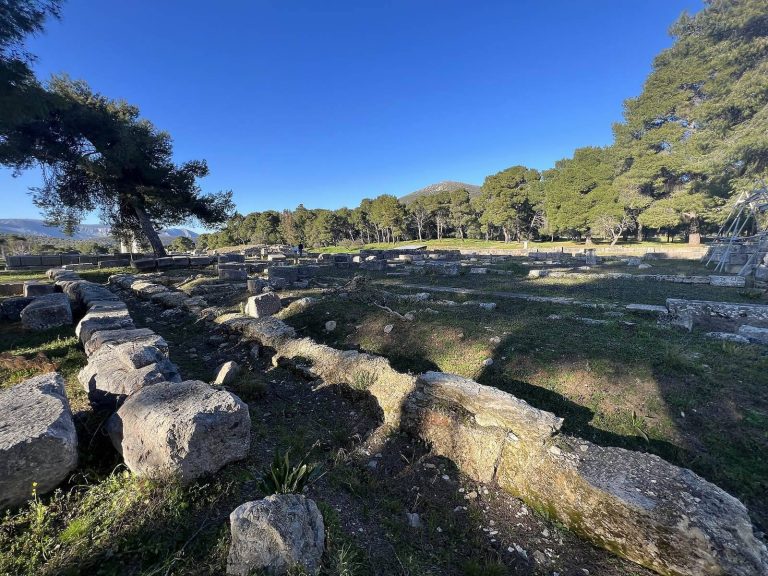
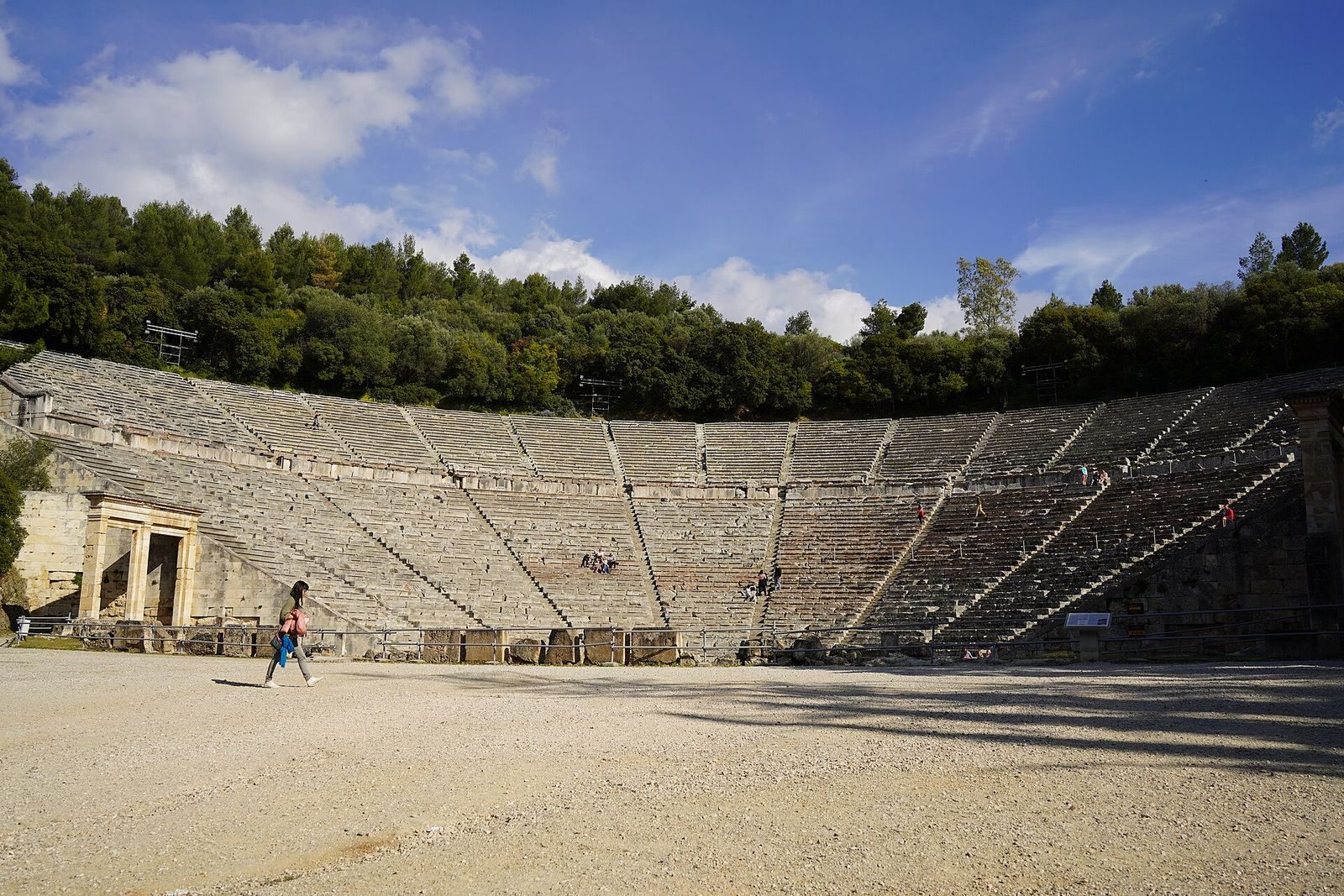
At the sanctuary’s southeastern edge, on the west-facing slope of Mount Cynortion, the Hellenistic theatre is arranged around three main elements: an auditorium, a circular orchestra, and a stage building. The remains are partly restored.
Auditorium
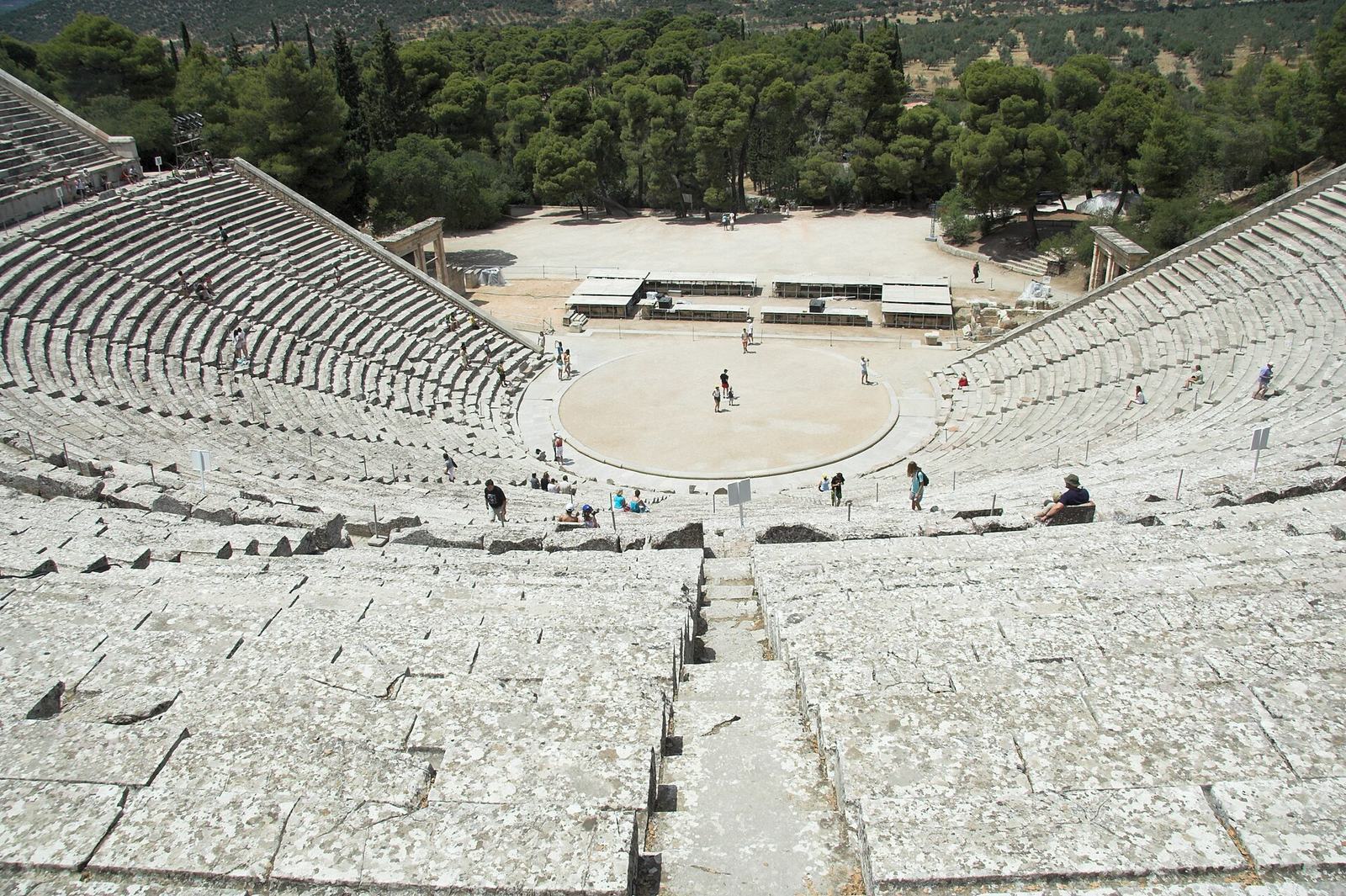
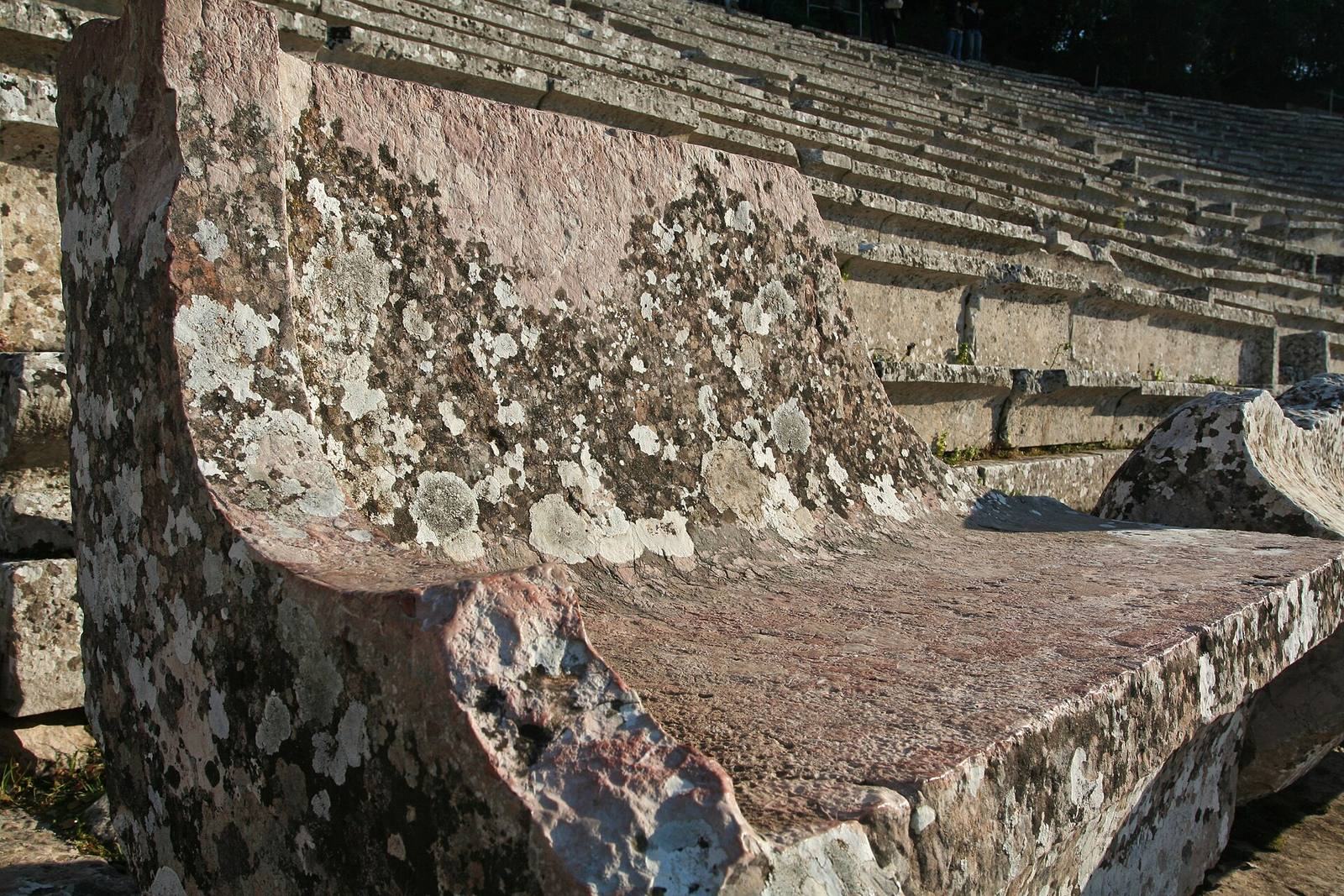
The auditorium has two unequal seating tiers divided by a horizontal passage 1.82 metres wide. Twelve wedge-shaped blocks make up the lower tier and twenty-two the upper one; the lowest rows of each included seats reserved for people of importance. Three geometric reference points guided the seating layout, which was designed to provide clear views and acoustics. Sound from the central area at the bottom carries to the highest seats.
Orchestra and drainage
The circular orchestra measures 20 metres across. A round stone slab at its centre served as the base of an altar. An underground drainage channel, 1.99 metres wide, runs around the orchestra and was covered by a circular stone walkway.
Stage building and gates
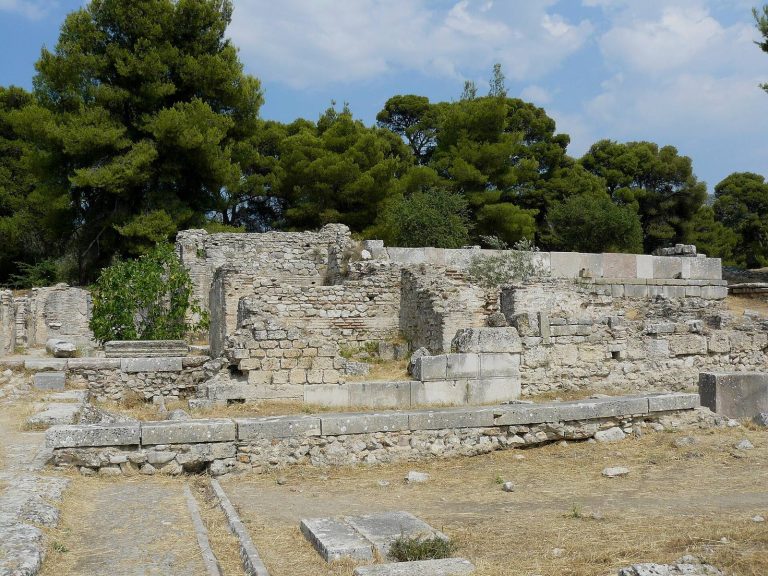
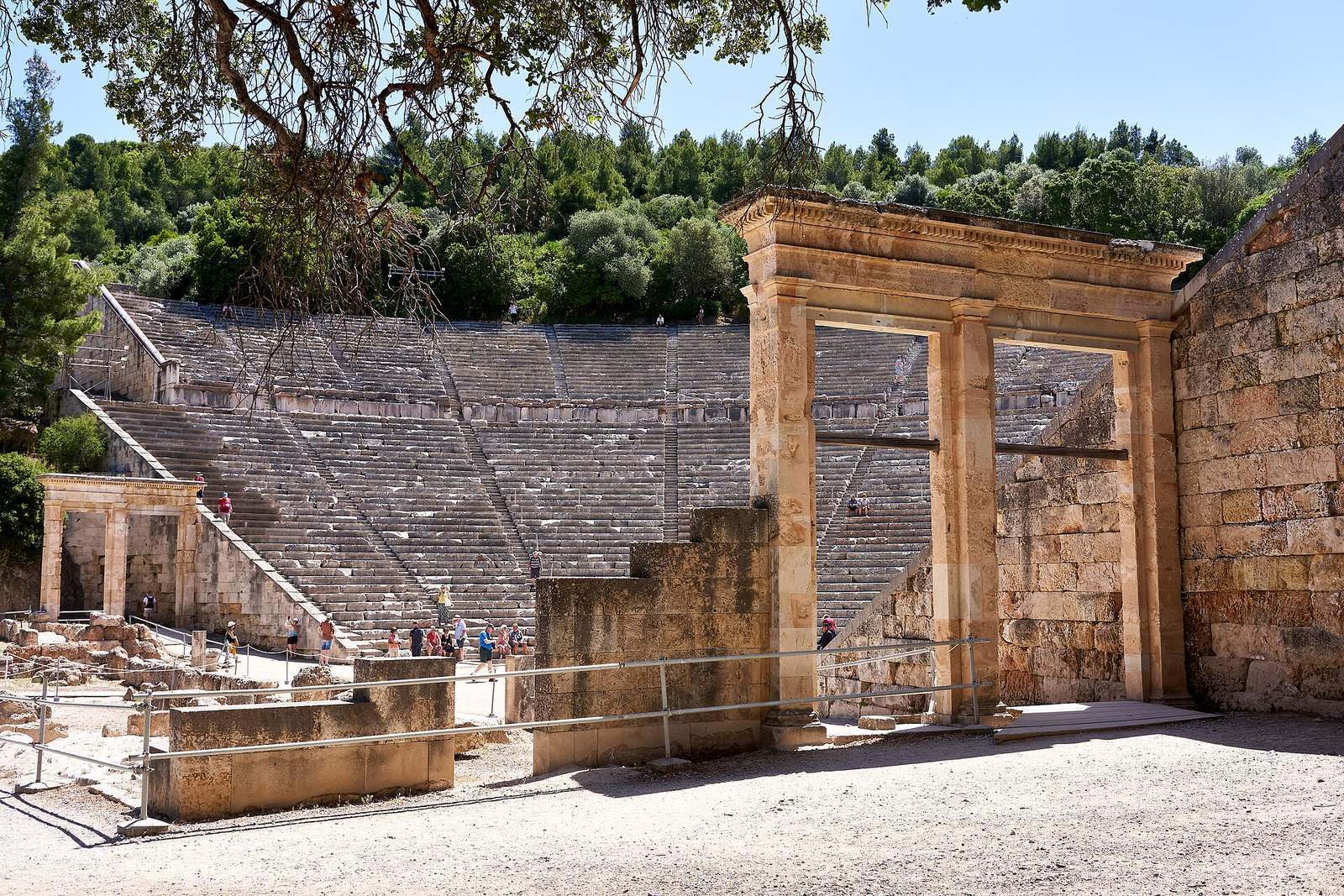
Partly preserved behind the orchestra and opposite the auditorium, the stage building has two storeys. Its front structure, called the proscenium, once carried a colonnade. Two slightly projecting backstage structures flanked it, with a small rectangular performers’ room to the east and another to the west. Ramps led to the roof of the proscenium, which later served as the actors’ raised performance area. The theatre’s two gates have been restored. Restoration has returned nearly all of the theatre apart from the stage building to its original form.