Kazarma Mycenaean Bridge: A Bronze Age Road Bridge in Greece
Site at a Glance
- Rating
- 4.5
- Popularity
- Low
- Country
- Greece
- Primary era
- Bronze Age
- Eras represented
- Bronze Age
- Civilizations
- Mycenaean
- Site type
- Infrastructure
- Remains
- Bridge
On this page7 sections
History
Mycenaean Construction and Military Use
Kazarma Mycenaean Bridge, also known as the Arkadiko Bridge, is a limestone bridge in Greece built by the Mycenaean civilization around 1300–1190 BC, during Late Helladic III, the final phase of the Bronze Age Mycenaean world. It formed part of an ancient military highway between Tiryns and Epidauros, within a wider road network connecting Mycenaean centers with the port of Palea Epidavros.
The road enabled troops to move rapidly between settlements and also carried regional travelers and goods. The bridge’s alignment and broad roadway indicate that chariots could cross it, while its width also accommodated pedestrians and other local traffic. Its construction belongs to a period when fortified centers such as Tiryns played important roles in the Argolid, the region of northeastern Peloponnese where these routes developed.
Later Use and Name
The bridge remained in use into the twentieth century and continues to serve local traffic. Although officially approved only for pedestrians, vehicles still cross it. Its survival through millennia and numerous earthquakes reflects the durability of its construction.
The name Kazarma comes from the remains of a small fourth-century BC fortification on a nearby hill. The hill rises 28 metres and carried stone walls about 2.5 metres thick and up to 5.2 metres high, together with four circular towers. The bridge is regarded as one of the oldest surviving passable arch bridges and as the oldest preserved bridge in Europe.
Remains
Bridge Structure and Roadway
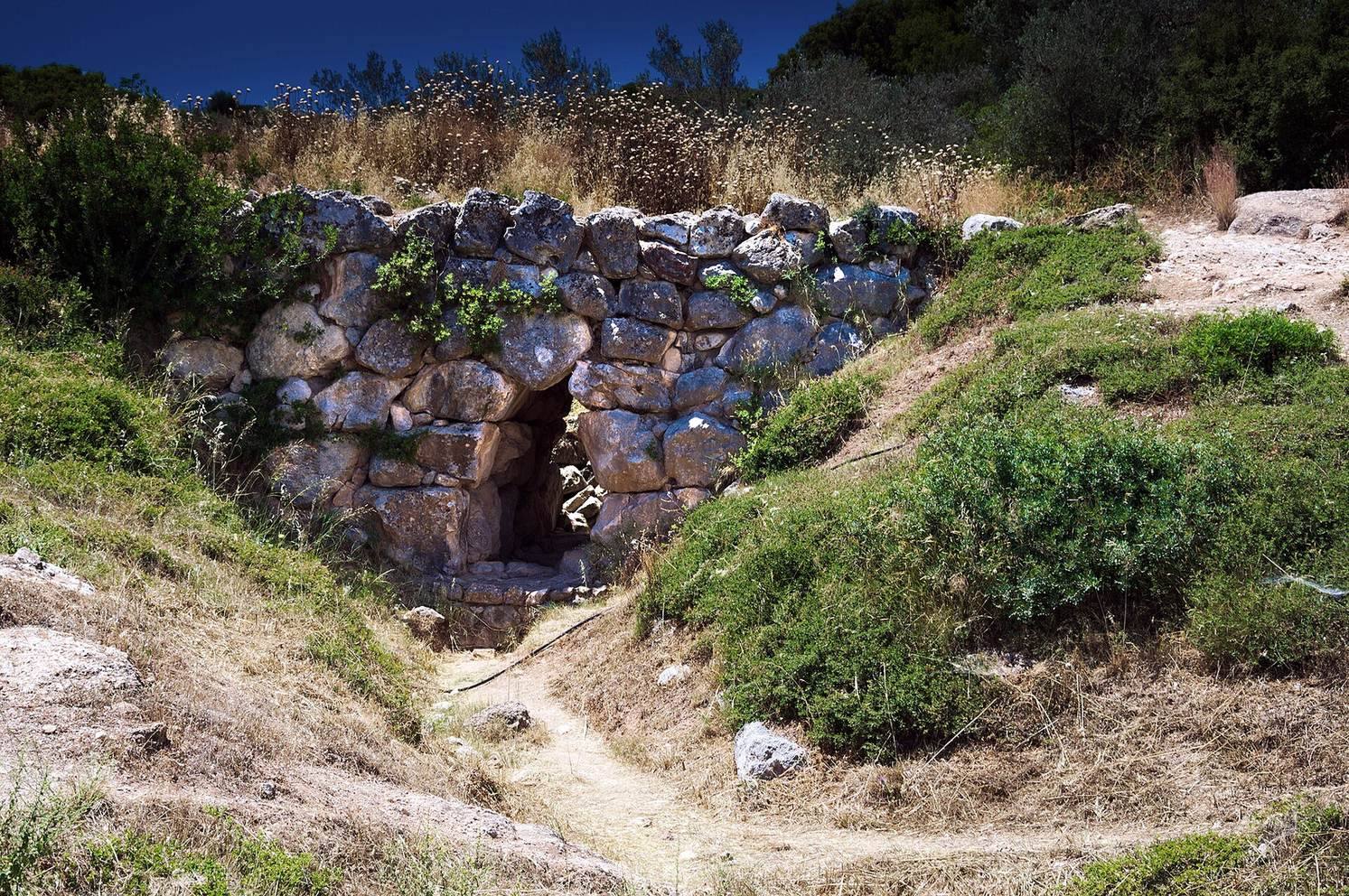
The single-span bridge is about 22 metres long, 5.6 metres wide at its base, 4 metres wide at the top, and 4 metres high. Its roadway is approximately 2.5 metres across. Stone guide curbs survive along it, helping keep chariot wheels on their intended line and away from the edges.
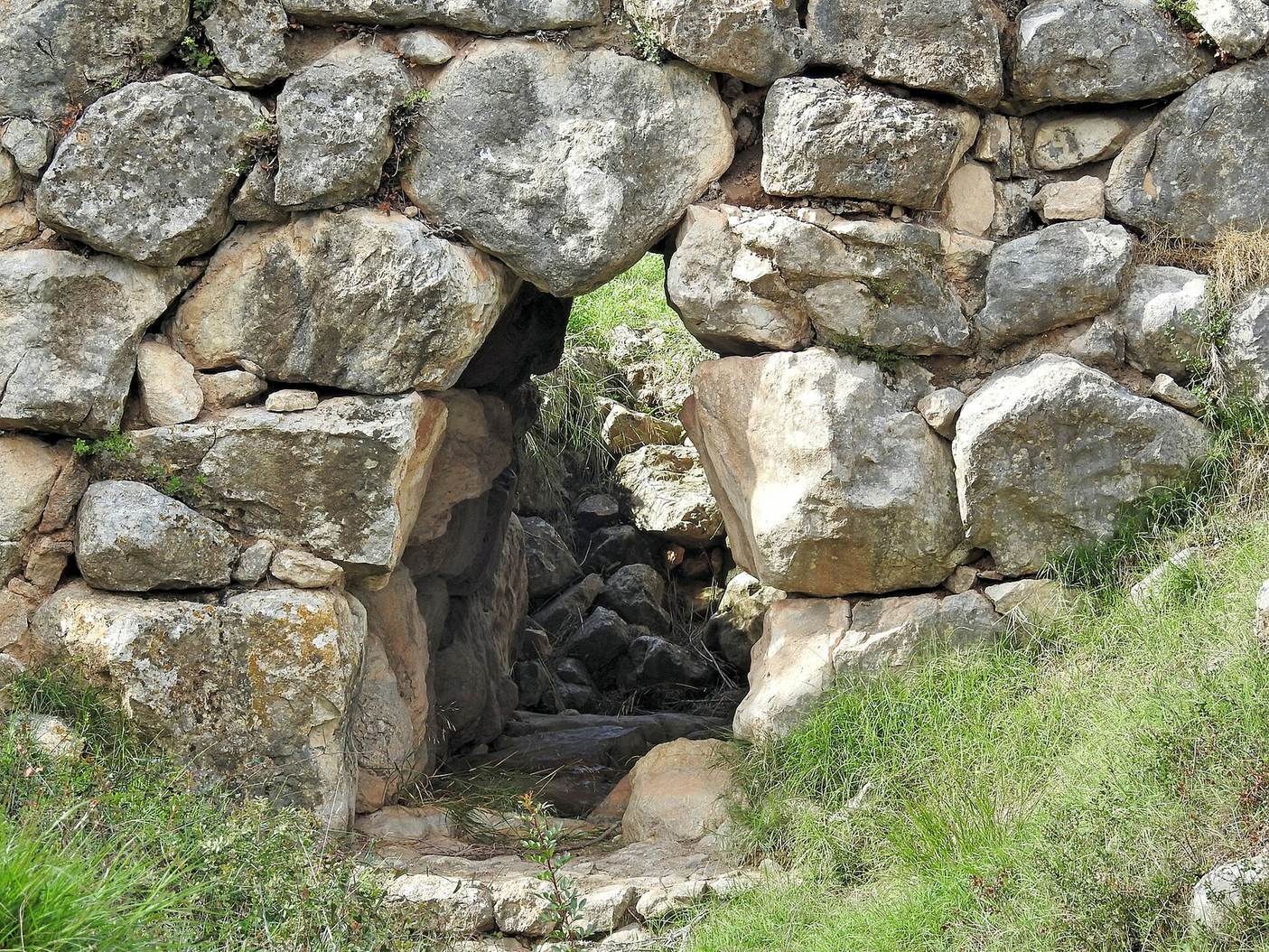
The bridge crosses a culvert about 1 metre high over a stream bed that is now usually dry. The water passage is paved horizontally with stones, a treatment that reduced the speed of flowing water and limited erosion. The lower platforms are flat, helping stabilize the arch walls and protect the structure from scour.
Corbel Arch and Masonry
The bridge uses a corbel arch, formed by successive courses of stones projecting inward until they meet near the top, rather than a semicircular arch built from wedge-shaped blocks. Its Cyclopean masonry consists of large, roughly worked limestone blocks fitted together without mortar or another binding material. Smaller stones fill the gaps, while the weight of the limestone and the vertically symmetrical placement of the blocks stabilize the structure.
The arch is approximately 2.16 metres high and 1.5 metres wide at the outlet. The inlet is somewhat wider and higher. Structural studies have concluded that the outlet behaves more like a true arch than a simple corbelled construction and may therefore have required temporary support during building. Another interpretation holds that earthquakes displaced some stones and changed the arch’s present structural behavior.
Setting and Related Bridges
Kazarma Bridge lies about 140 metres west of Agios Ioannis and about 500 metres southwest of the Kazarma acropolis. It crosses a mostly dry stream bed and stands approximately 25 metres from the modern road. The Arkadiko area contains three other Mycenaean bridges of similar age and construction.
Petrogefyri Bridge, about 1 kilometre west, crosses the same former watercourse and belonged to the same Bronze Age road. It is similar in size and appearance, although it has a larger span and a slightly higher vault. A less well-preserved bridge at the eastern edge of Arkadiko has two small passages, with its lower section buried by sediment. Another bridge survives about 300 metres north of the cemetery church of Agios Ioannis.